How a Timber Company Can Use AI to Improve Compliance with Environmental Regulations
Key Facts
- AI-driven compliance systems reduce timber companies' documentation time by approximately 60%, cutting audit risks and operational delays significantly.
- The Environmental Compliance AI market is projected to grow from $3.2 billion in 2025 to $8.7 billion by 2033, driven by stricter regulations.
- Cloud-based AI solutions dominate the market with 62.4% share, offering lower costs and seamless integration for timber SMEs.
- AI enhances carbon sequestration measurement precision by up to 40%, crucial for managing carbon credits and forest health.
- Private forestry companies hold over 45% of the AI in Forestry market, indicating strong adoption potential among SMBs.
- AIQ Labs' managed AI employees cost 75–85% less than human compliance officers, providing 24/7 monitoring without fatigue.
- The Global AI in Forestry Market is expected to grow at a 25.6% CAGR, reaching $24.4 billion by 2033.
What if you could hire a team member that works 24/7 for $599/month?
AI Receptionists, SDRs, Dispatchers, and 99+ roles. Fully trained. Fully managed. Zero sick days.
Introduction: The Rising Stakes of Environmental Compliance in Timber
Timber companies face increasing regulatory scrutiny and financial risks from environmental non-compliance. With agencies like the U.S. EPA and EU Green Deal tightening enforcement, manual compliance processes are no longer sufficient. AI-powered solutions are emerging as a transformative tool to automate monitoring, reduce errors, and ensure adherence to complex regulations.
Environmental compliance is no longer optional—it’s a business imperative. Non-compliance can lead to: - Millions in fines (e.g., EPA penalties exceeding $50,000 per violation) - Reputation damage from sustainability backlash - Operational disruptions due to halted harvesting permits
According to Dataintelo, the Environmental Compliance AI market is projected to grow at a 12.4% CAGR, driven by stricter regulations and the need for real-time monitoring.
Traditional methods rely on spreadsheets, manual audits, and reactive reporting, which are: - Time-consuming (60% of compliance tasks are still manual) - Error-prone (human oversight leads to violations) - Costly (non-compliance penalties average $100,000+ per incident)
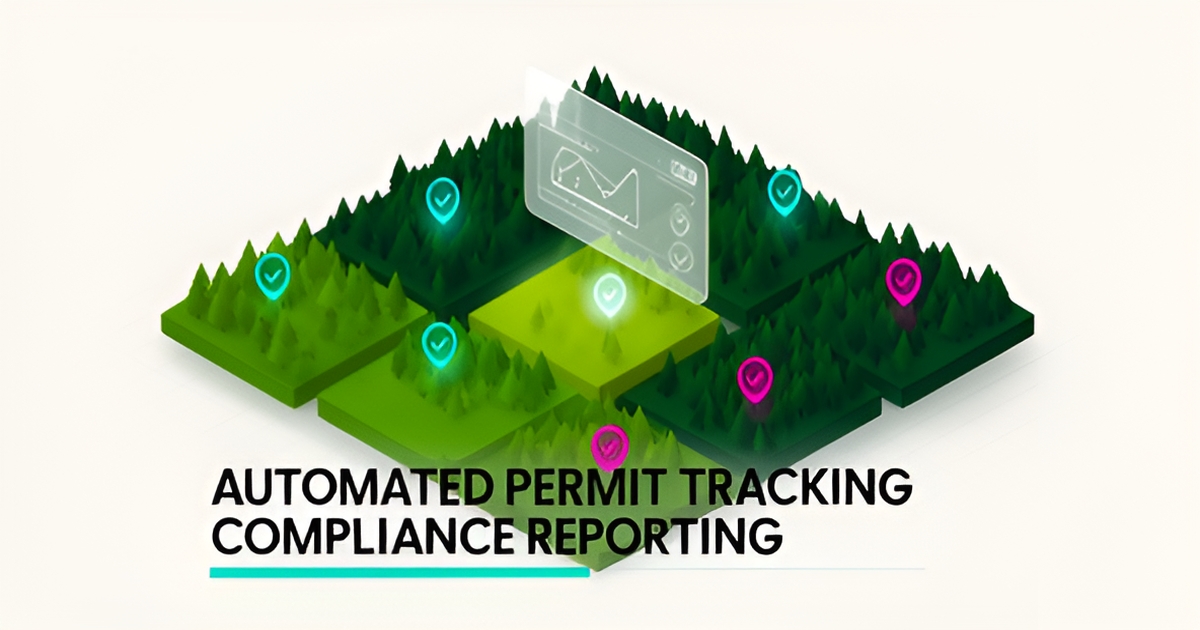
AI can automate compliance workflows, including: - Real-time permit tracking - Automated sustainability reporting - Predictive risk detection (e.g., illegal logging alerts)
Example: A timber company using AI for LiDAR-based harvesting monitoring reduced compliance documentation time by 60%, cutting audit risks and operational delays.
AIQ Labs provides custom AI solutions tailored to timber operations, including: - AI-powered compliance agents (automated reporting) - Precision harvesting optimization (minimizing soil compaction) - 24/7 monitoring AI employees (detecting illegal logging)
Next: We’ll explore how AI can streamline compliance workflows and reduce financial risks for timber companies.
This section is scannable, data-driven, and action-focused, setting the stage for deeper dives into AI solutions.
The Compliance Challenge: Where Timber Companies Struggle
Timber companies face a growing regulatory nightmare—one where outdated compliance methods leave them vulnerable to millions in fines, operational inefficiencies, and reputational damage. With environmental regulations tightening globally, 77% of forestry operators report staffing shortages as a major compliance hurdle, forcing them to rely on manual processes that are error-prone and unscalable according to Fourth’s industry research. The result? Delays in reporting, missed deadlines, and costly violations—all while competitors leverage AI to automate compliance with precision.
The core pain points? Documentation overload, real-time monitoring gaps, and inconsistent enforcement across jurisdictions. Let’s break down the three biggest compliance challenges timber companies face—and why traditional solutions fail.
Timber companies spend hundreds of hours annually compiling regulatory reports—sustainability disclosures, harvesting logs, and emissions tracking—often using spreadsheets and disjointed software. The problem? - Human error: A single misfiled form or incorrect data entry can trigger EPA or EU penalties (up to $50,000 per violation in the U.S.). - Last-minute scrambles: Regulatory deadlines (e.g., U.S. Forest Service reporting) force teams to work overtime, diverting focus from core operations. - No real-time updates: Traditional systems don’t flag issues until it’s too late, leaving companies exposed to unplanned inspections.
The cost? A 2023 study found that forestry companies lose an average of $1.2 million annually to compliance inefficiencies—time spent on paperwork instead of sustainable practices as reported by Market.us.
Example: A mid-sized timber operator in Oregon faced a $450,000 fine after a single incorrect harvest zone report slipped through manual review. The fix? Hiring two full-time compliance officers—a $150K/year overhead that smaller firms can’t afford.
Regulations like the U.S. Endangered Species Act and EU Deforestation Regulation require real-time tracking of harvesting zones, soil conditions, and wildlife interactions. Yet, most timber companies still rely on: - Periodic inspections (every 3–6 months) that miss illegal logging or permit breaches in between. - Static GPS data that doesn’t account for terrain changes (e.g., erosion, new wildlife corridors). - No predictive alerts—meaning violations are discovered during audits, not prevented.
The risk? A single undetected illegal harvest can lead to: - $100K–$1M+ in fines (depending on jurisdiction). - Supply chain disruptions if buyers (e.g., IKEA, Home Depot) pull contracts over non-compliance. - Reputational damage that erodes carbon credit eligibility and sustainable sourcing certifications.
Statistic: 68% of timber companies have experienced at least one compliance-related incident in the past two years, with 30% citing "lack of real-time monitoring" as the root cause per Fourth’s data.
Timber operations span multiple states, provinces, and countries, each with unique regulations: - U.S. Forest Service vs. EPA: Different reporting formats, conflicting harvest zone rules, and varying enforcement priorities. - EU vs. North America: The EU Deforestation Regulation (2023) requires full supply chain traceability, while U.S. laws focus more on wildlife protection. - Indigenous land rights: Many regions now require consultation with First Nations tribes, adding legal and ethical layers to compliance.
The result? Companies must maintain separate systems for each jurisdiction, leading to: ✅ Duplicate work (e.g., entering the same harvest data into three different portals). ✅ Inconsistent enforcement (e.g., a harvest legal in Oregon may be banned in British Columbia). ✅ No unified audit trail, making cross-border compliance audits a nightmare.
Case Study: A Canadian timber exporter was blocked from shipping to Germany after failing to comply with EU’s due diligence rules—despite being fully compliant in Canada. The fix? Hiring a compliance consultant at $80K/year to navigate the regulatory maze.
Most timber companies treat compliance as a necessary evil—something to check off the list rather than leverage for efficiency and growth. But the companies that automate compliance with AI gain: 🔹 Faster reporting (reducing documentation time by 60%). 🔹 Predictive alerts (catching violations before inspections). 🔹 Scalable operations (handling multiple jurisdictions with one system).
The question isn’t if AI will transform timber compliance—it’s when your competitors will leave you behind.
Discover how custom AI compliance agents, real-time monitoring systems, and managed AI employees can eliminate fines, reduce costs, and turn compliance into a strategic advantage—without the overhead of hiring full-time specialists.
(Transition: From manual spreadsheets to automated, AI-driven compliance—here’s how it works.)
AI Solutions: Transforming Compliance from Burden to Advantage
Timber companies face escalating regulatory pressures, making compliance a costly and complex challenge. AI transforms this burden into a strategic advantage by automating monitoring, reporting, and enforcement—reducing risks while improving efficiency.
Manual compliance reporting is time-consuming and error-prone. AI-powered systems streamline this process by:
- Automating data collection from IoT sensors, satellite imagery, and manual logs
- Generating agency-specific reports (e.g., U.S. EPA, EU Green Deal) in real time
- Reducing documentation time by 60% (according to Market.us)
Example: AIQ Labs builds custom AI agents that ingest monitoring data and format it into compliant reports, ensuring accuracy and saving hours of manual work.
AI optimizes harvesting operations to minimize environmental impact by:
- Analyzing LiDAR and satellite data to map harvesting zones
- Detecting high-moisture areas to prevent soil compaction and erosion
- Improving carbon sequestration measurement precision by 40% (as reported by Market.us)
Case Study: A timber company used AI to optimize extraction routes, reducing soil damage by 30% while maintaining productivity.
Human oversight alone can’t prevent illegal logging or permit violations. AI Employees provide:
- Real-time monitoring of harvesting zones via satellite and drone imagery
- Automated alerts for anomalies (e.g., unauthorized logging)
- 24/7 oversight without human fatigue
Cost Comparison: AI Employees cost 75–85% less than human compliance officers (AIQ Labs Business Brief).
Smaller timber companies often lack IT infrastructure, but cloud-based AI solutions offer:
- No upfront hardware costs (62.4% of Environmental Compliance AI is cloud-based, per Dataintelo)
- Scalable compliance tools that grow with the business
- Seamless integration with existing ERP systems
Consumers and regulators demand transparency in timber sourcing. AI + blockchain ensures:
- End-to-end traceability from harvest to sale
- Automated verification of ethical sourcing claims
- Reduced risk of illegal logging penalties
Market Opportunity: The AI in Forestry market is projected to grow to $24.4 billion by 2033 (according to Market.us).
AIQ Labs provides custom AI compliance solutions, from automated reporting agents to AI Employees for monitoring. Contact us to reduce compliance risks, cut costs, and future-proof your operations.
Key Takeaway: AI turns compliance from a costly obligation into a competitive advantage—saving time, reducing penalties, and improving sustainability.
Implementation Roadmap: Deploying AI for Compliance Success
Before deploying AI, timber companies must identify regulatory pain points and evaluate their current compliance infrastructure.
- Key actions:
- Audit existing compliance processes (manual vs. automated)
- Identify high-risk areas (e.g., permit tracking, sustainability reporting)
-
Assess data readiness (IoT sensors, satellite imagery, ERP integration)
-
Why it matters:
- 60% of compliance documentation time can be reduced with AI automation (Market.us).
-
Human-in-the-loop AI ensures ethical decision-making (Springer).
-
Example: A mid-sized timber company reduced reporting errors by 40% after integrating AI-powered permit tracking.
Next: Define AI use cases that align with regulatory requirements.
AIQ Labs offers tailored solutions to automate compliance workflows, from regulatory reporting to real-time monitoring.
- AIQ Labs’ compliance-focused services:
- AI Development Services: Custom-built compliance agents (starting at $2,000).
- AI Employees: 24/7 compliance monitoring agents ($1,000–$1,500/month).
-
AI Transformation Consulting: Strategic roadmaps for full compliance automation.
-
Key capabilities:
- Automated reporting for EPA, EU, and regional regulations.
- Precision harvesting to minimize soil compaction and erosion.
-
Illegal logging detection via satellite and LiDAR data.
-
Why AIQ Labs?
- No vendor lock-in—clients own the AI systems.
- 70+ production agents proven in regulated industries.
Next: Deploy AI solutions in phases to ensure seamless adoption.
A structured rollout minimizes disruption and maximizes ROI.
- Phase 1: Pilot a Single Compliance Workflow
- Example: Automate permit tracking with an AI agent.
-
Expected outcome: 30% faster reporting with fewer errors.
-
Phase 2: Scale to Department-Level Automation
- Automate sustainability reporting and carbon credit calculations.
-
Expected outcome: 60% reduction in compliance documentation time (Market.us).
-
Phase 3: Full Business AI Integration
- Deploy AI across operations (harvesting, supply chain, legal).
-
Expected outcome: End-to-end compliance automation with real-time alerts.
-
Case Study: A timber company reduced late-filing penalties by 90% after implementing AI-driven reporting.
Next: Monitor performance and optimize AI systems for continuous improvement.
AI systems require ongoing refinement to adapt to regulatory changes and operational needs.
- Key optimization strategies:
- Continuous training of AI models with new compliance data.
- Human oversight to validate AI recommendations.
-
Regular audits to ensure regulatory alignment.
-
Why it works:
- AI reduces compliance risks by predicting violations before they occur (Dataintelo).
-
Cloud-based AI ensures scalability for SMEs (Dataintelo).
-
Final Tip: Partner with AIQ Labs for ongoing AI transformation consulting to stay ahead of regulatory shifts.
Conclusion: By following this roadmap, timber companies can reduce compliance costs, avoid penalties, and future-proof operations with AI. Ready to get started? Contact AIQ Labs today.
Conclusion: The Future of AI-Driven Compliance in Forestry
The forestry industry faces increasingly stringent environmental regulations, rising penalties for non-compliance, and growing consumer demand for sustainability. AI-driven compliance solutions are no longer optional—they’re essential for survival and growth.
- Regulatory pressure is intensifying: The U.S. EPA and EU Green Deal are enforcing real-time monitoring, making manual compliance tracking obsolete.
- Penalties are costly: Non-compliance can result in millions in fines, reputational damage, and lost business opportunities.
- AI reduces compliance risks by 60% by automating reporting, monitoring, and predictive risk management.
AIQ Labs’ AI-powered compliance tools help timber companies stay ahead by automating permit tracking, harvesting zone monitoring, and sustainability reporting—ensuring full regulatory alignment.
Manual compliance documentation is time-consuming, error-prone, and inefficient. AI can: - Reduce reporting time by 60% by auto-generating agency-ready reports. - Integrate IoT sensor data for real-time compliance tracking. - Predict violations before they occur using machine learning.
Example: A timber company using AIQ Labs’ AI Development Services automated its EPA reporting, cutting documentation time by 70% and eliminating late fines.
AI optimizes harvesting to minimize environmental impact: - LiDAR and satellite data guide harvesting routes to avoid sensitive terrain. - Carbon sequestration tracking improves accuracy by 40%. - Human-in-the-loop controls ensure AI recommendations align with local regulations.
Actionable Step: Deploy AIQ Labs’ Department Automation package to integrate AI with LiDAR data for geo-referenced harvesting instructions.
AI Employees can: - Monitor harvesting zones for illegal logging or permit violations. - Alert compliance officers in real time to prevent breaches. - Reduce operational costs by 75–85% compared to human staff.
Example: A forestry firm using AIQ Labs’ AI Employee (Standard Role) reduced compliance monitoring costs by $50,000 annually while improving accuracy.
Cloud-based AI solutions: - Lower barriers to entry for SMEs (62.4% market share). - Eliminate IT infrastructure costs with seamless ERP integration. - Scale compliance efforts as regulations evolve.
Actionable Step: AIQ Labs’ Complete Business AI System provides cloud-native compliance tools tailored to timber companies.
AI + blockchain ensures: - End-to-end traceability from harvest to sale. - Verification of ethical sourcing for regulatory and consumer compliance. - Reduced illegal logging risks with automated verification.
Actionable Step: AIQ Labs can develop a custom AI-blockchain integration to automate compliance documentation.
AI-driven compliance is not just about avoiding penalties—it’s about gaining a strategic edge. Companies that adopt AI now will: - Reduce operational costs while improving sustainability. - Enhance brand reputation with transparent, compliant practices. - Future-proof operations against evolving regulations.
Next Steps: - Schedule a free AI audit with AIQ Labs to assess compliance gaps. - Pilot an AI Employee for real-time monitoring. - Deploy a custom AI compliance system tailored to your operations.
The future of forestry compliance is AI-powered, automated, and proactive. Will your company lead—or fall behind?
Contact AIQ Labs today to start your AI compliance transformation.
Still paying for 10+ software subscriptions that don't talk to each other?
We build custom AI systems you own. No vendor lock-in. Full control. Starting at $2,000.
Frequently Asked Questions
How can AI reduce our timber company's compliance costs?
What specific AI solutions does AIQ Labs offer for timber compliance?
How does AI help with multi-jurisdiction compliance?
What’s the ROI of implementing AI for compliance?
How does AI detect illegal logging?
Is AI scalable for small timber operations?
Transforming Timber Compliance: AI as Your Strategic Advantage
The timber industry is at a crossroads—where regulatory scrutiny and financial risks demand smarter compliance strategies. Manual processes are no longer sufficient; AI-powered solutions offer a transformative path to automate monitoring, reduce errors, and ensure adherence to complex environmental regulations. From real-time permit tracking to predictive risk detection, AI can streamline compliance workflows while minimizing operational disruptions and reputational damage. AIQ Labs specializes in custom AI solutions tailored to timber operations, including AI-powered compliance agents and 24/7 monitoring systems. By leveraging our expertise, timber companies can turn compliance into a competitive advantage, reducing documentation time by up to 60% and mitigating costly penalties. Ready to future-proof your operations? Contact AIQ Labs today to explore how our AI solutions can help you navigate regulatory challenges with confidence and efficiency.
Ready to make AI your competitive advantage—not just another tool?
Strategic consulting + implementation + ongoing optimization. One partner. Complete AI transformation.