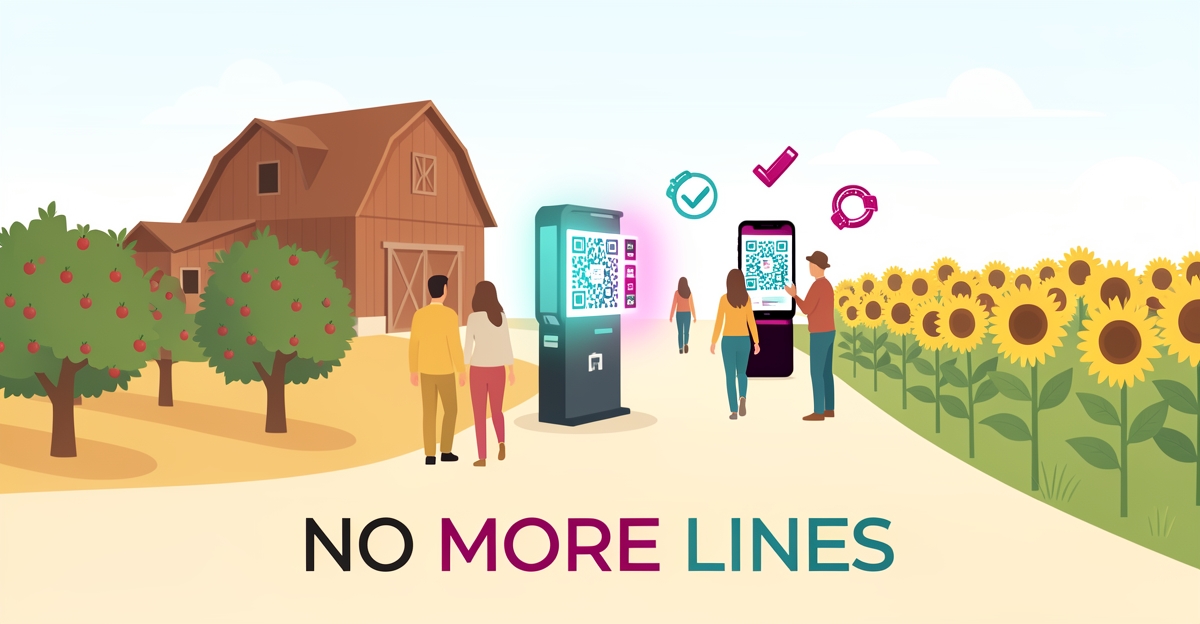
How Agritourism Farms Can Use AI to Automate Guest Check-Ins and Reduce Wait Times
Key Facts
- Queues can stretch past the 20-minute mark during peak arrival windows at agritourism farms according to AIQ Labs research
- SMS/QR self-service check-in typically cuts physical queue time to under 60 seconds per AIQ Labs implementation data
- AI voice agents manage inbound volume 24/7 without seasonal staffing spikes as shown in AIQ Labs deployments
- Real-time PMS sync keeps housekeeping, activities, and billing aligned in AI-powered check-in systems per AIQ Labs architecture
- Staff hours redirected from check-in to experience delivery convert administrative cost into revenue-generating activity per AIQ Labs ROI framework
- AI adoption enhances managerial productivity and deepens customer orientation in agritourism per Springer Nature systematic review
- Multi-agent orchestration routes complex requests to human staff only when necessary in AI check-in workflows per AIQ Labs implementation
Hire a team member that works 24/7 — for less than a part-time wage.
AI receptionists, SDRs, dispatchers and 99+ roles. Trained on your business, fully managed.
Not sure where to start? Ask our AI planner
The Bottleneck at the Barn Door: Why Manual Check-Ins Fail Peak Seasons
The Saturday morning rush hits the barn door like a sudden storm, and paper clipboards simply cannot keep pace. Families spill into the parking lot in unpredictable waves, each vehicle carrying guests who booked online weeks ago but now stand in a snaking line waiting for a staff member to manually verify names, print wristbands, and explain the day's schedule. Research into AI applications across the visitor economy confirms that intelligent automation and natural language processing are already reshaping trip generation and on-site experiences, yet many farms still rely on the same manual workflows they used a decade ago.
- Queues can stretch past the 20-minute mark during peak arrival windows
- Seasonal staff burn out answering the same three questions on repeat
- Upsell conversations — hayride upgrades, picnic bundles, pumpkin-cannon tokens — evaporate when the line is out the door
- No-show data stays trapped on paper, making real-time capacity decisions impossible
A systematic review of agritourism technology adoption highlights that AI architecture spans recommender systems, face recognition, and intelligent automation — tools that can verify a booking, assign a wristband, and suggest a relevant add-on in the time it takes a human to find a name on a printed list. When every minute of friction chips away at per-guest revenue and satisfaction scores, the bottleneck at the barn door stops being an operational nuisance and starts looking like a strategic liability. AIQ Labs works with farms to replace that pressure point with [custom AI workflow builds](/workflow-builds) that handle check-ins, deliver real-time updates, and integrate directly with existing booking platforms so the first impression feels as smooth as the hayride itself.
AI-Powered Check-In Architecture: From Voice Agents to Real-Time Sync
The check-in experience sets the tone for an entire farm stay, yet many agritourism operators still rely on paper logs and manual radio calls that create bottlenecks during peak arrival windows. Research into AI applications across the sector shows that natural language processing and intelligent automation are the architectural pillars enabling a shift from reactive front-desk management to proactive, self-service guest flows across trip planning and experience stages.
A modern check-in stack operates on three synchronized layers. First, an AI voice agent — the kind of managed [AI employee](/ai-employees) that handles front-desk and reception duties around the clock — manages pre-arrival calls: confirming reservation details, answering property-specific questions, and sending digital keys via SMS, so guests arrive informed before they reach the gate. Second, on-site QR codes and SMS triggers launch a lightweight web app that validates identity, captures liability waivers, and assigns lodging or activity slots in real time. Third, a middleware layer pushes every interaction instantly into the property management system (PMS) and booking engine, eliminating the double-entry errors that plague disconnected tools.
- Voice agents manage inbound volume 24/7 without seasonal staffing spikes
- SMS/QR self-service typically cuts physical queue time to under 60 seconds
- Real-time PMS sync keeps housekeeping, activities, and billing aligned
- Multi-agent orchestration routes complex requests to human staff only when necessary
This architecture mirrors the agentic workflow pattern gaining traction in agritourism: specialized agents handle discrete tasks—voice intake, document verification, room assignment—while a supervisory layer ensures data consistency across systems. AIQ Labs builds these custom workflows on multi-agent frameworks that maintain state across voice, text, and web channels, so a guest who starts check-in by phone can finish at the kiosk without repeating information. The result is a check-in process that scales with occupancy, not headcount, freeing your team to focus on the hospitality moments that drive reviews and repeat bookings.
Implementation Roadmap: Assess, Integrate, and Deploy Without Disruption
Rolling out AI-powered check-in automation doesn't require ripping out your existing systems overnight. The most successful deployments follow a deliberate assess gaps then implement methodology that respects the seasonal rhythm of agritourism operations.
Start with a workflow audit that maps every touchpoint from booking confirmation to gate arrival. Research shows AI architecture in agritourism spans deep learning forecasting, recommender systems, natural language processing, and face recognition, but your farm only needs the components that solve your specific bottlenecks. Identify where paper guest lists, manual ID checks, or radio chatter create friction, then prioritize API integration with your current booking platform — whether that's FareHarbor, Peek, or a custom system — so reservation data flows directly into the check-in engine without duplicate entry.
- Phase 1: Workflow audit and booking platform API integration (Weeks 1–2)
- Phase 2: Pilot with a single high-traffic event or weekend (Weeks 3–4)
- Phase 3: Staff training, data privacy guardrails, and full deployment (Week 5+)
Run the pilot during a representative weekend — not your quietest or busiest — so you capture real-world variance in group sizes, walk-ups, and connectivity hiccups. Critical review of every AI output during this window catches edge cases before they scale: mismatched names, expired QR codes, or guests without smartphones. Build in human-in-the-loop escalation so staff can override the system instantly without losing the guest's place in line.
Data privacy guardrails aren't optional. Configure the system to purge personally identifiable information after the visit window closes, encrypt data in transit, and maintain audit logs for compliance. AIQ Labs helps farms build these custom workflows with real-time updates and booking platform integration baked in, so the transition from pilot to full deployment feels like a software update rather than a new operating model.
Measuring Impact: Wait-Time Reduction, Staff Reallocation, and Guest Lifetime Value
Implementing AI-powered check-in systems marks a fundamental shift in how agritourism operators measure front-of-house performance. A systematic literature review confirms that AI adoption enhances managerial productivity and deepens customer orientation, but quantifying that value requires moving beyond simple labor savings to track the metrics that actually drive profitability.
- Average check-in duration — the baseline metric for throughput
- Peak-hour queue length — the direct driver of first-impression sentiment
- Staff hours redirected to experience delivery — the conversion of administrative cost into revenue-generating activity
- Post-visit sentiment scores — the leading indicator of repeat visits and referral volume
When guests bypass a paper logbook for a conversational AI flow that verifies identity, prints wristbands, and pushes real-time schedule updates to their phones, the check-in window compresses from minutes to seconds. That compression cascades: shorter queues during the Saturday morning rush mean hosts spend less time managing lines and more time upselling hayride upgrades or answering questions about the corn maze. Research into agentic AI workflows highlights that these systems integrate directly with existing booking platforms, ensuring the data captured at arrival feeds immediately into capacity planning and personalized follow-up sequences.
The ROI framework becomes clear when you assign a dollar value to every reclaimed staff hour. A team member freed from the check-in table can manage the U-pick orchard flow, troubleshoot a birthday party reservation, or capture content for social channels — activities that directly influence guest lifetime value. Post-visit surveys tied to the same AI interaction loop then close the feedback circuit, turning sentiment data into the next season's operational roadmap.
Still paying for 10+ subscriptions that don’t talk to each other?
We build custom AI systems you own outright. No vendor lock-in. Full control.
Not sure where to start? Ask our AI planner
Frequently Asked Questions
How does AI actually speed up guest check-ins compared to our current paper clipboard system?
We use FareHarbor for bookings — will an AI check-in system integrate with it or do we need to switch platforms?
What happens when a guest has a complicated issue the AI can't handle, like a mismatched name or expired QR code?
How do we protect guest data privacy when using AI for check-ins and liability waivers?
What's the realistic timeline to get this running before our fall festival season?
Beyond shorter lines, how does automated check-in actually increase revenue per guest?
The First Five Minutes Set the Tone for the Whole Stay
The Saturday morning rush doesn't have to be a stress test for your team. Replacing paper clipboards with AI-powered check-in workflows — voice agents that confirm details before arrival, QR-based self-service that validates identity in seconds, and real-time PMS sync that keeps every department aligned — turns a known bottleneck into a strategic advantage. The data backs this up: a systematic review of AI in agritourism confirms that intelligent automation and natural language processing are already reshaping on-site experiences across trip planning and experience stages. When check-in drops from 20 minutes to under 60 seconds, staff reclaim hours to upsell hayride upgrades, manage U-pick flow, or simply greet guests by name. That shift — from administrative friction to hospitality momentum — is what drives repeat bookings and five-star reviews. AIQ Labs builds these custom workflows on multi-agent frameworks that integrate with your existing booking platform, so deployment feels like a software update, not an operational overhaul. Ready to see what the first five minutes could look like on your farm? Start the two-minute Fit Check at [aiqlabs.ai/apply](/apply) and book a free 30-minute strategy call to map your highest-ROI automation opportunity.
Make AI your competitive advantage — not just another tool.
Strategy, implementation and ongoing optimization. One partner, end to end.
Not sure where to start? Ask our AI planner