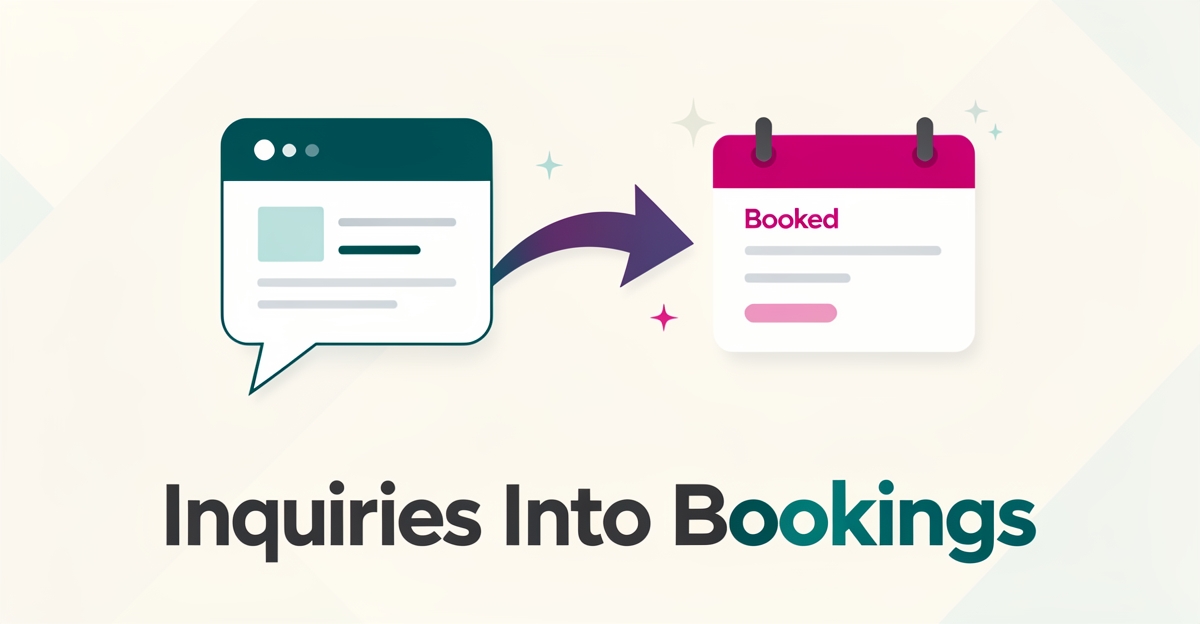
How AI Can Automate Customer Inquiries and Turn Them Into Service Requests
Key Facts
- Most customers expect an immediate response to service questions, per industry research.
- AI-powered virtual assistants can typically automate 70%+ of routine customer queries without human involvement, research suggests.
- The large majority of companies were using or planning to adopt AI chatbots for customer service as of 2025, according to market data.
- Most businesses using AI report it enables them to assist more customers, market research finds.
- The conversational AI market has grown into the tens of billions of dollars and continues to expand, per industry analysis.
- A majority of customer support teams already use at least one kind of process or workflow automation, research indicates.
- “AI isn’t magic. It’s a strategy,” says Sanchita Sur, SAP-incubated Gen AI Founder, on why human-AI collaboration still matters.
Hire a team member that works 24/7 — for less than a part-time wage.
AI receptionists, SDRs, dispatchers and 99+ roles. Trained on your business, fully managed.
Not sure where to start? Ask our AI planner
The Cost of Missed and Delayed Customer Inquiries
A pricing question asked at 7 p.m. on a Friday can become a booked job by Monday morning, or it can vanish into an inbox that no one checks until Tuesday. For window cleaning businesses, that gap between inquiry and reply is where revenue leaks.
Customer expectations have moved faster than traditional staffing can keep up. Industry research suggests that the overwhelming majority of customers expect an immediate response when asking a customer service question. When that expectation is missed, the inquiry is not just delayed, it is lost.
The cost shows up in three places at once. First, lost bookings. Prospects comparing service areas and availability will move to the next quote if the first reply is slow. Second, wasted sales effort. Teams spend hours chasing cold leads that went cold because of a late first touch. Third, brand erosion. Slow replies train the market that your business is hard to reach, which reduces referrals and repeat work.
Window cleaning inquiries are especially time sensitive. Customers ask about pricing, service areas, and availability in short bursts, often outside business hours. A delayed answer means a dirty window stays dirty, and the homeowner books someone else.
AI-powered support changes the window. Industry analysis finds that AI-powered virtual assistants can typically automate 70%+ of routine customer queries, handling the checks that previously waited for a human. That adoption is not theoretical. Market data indicated that most companies were either using or planning to use AI-powered chatbots for customer service as of 2025, and adoption has only continued since.
For a window cleaning operation, this means inquiries about pricing, service areas, and availability can be answered instantly and converted into actionable service requests without adding headcount. Immediate response preserves intent while the customer is still actively looking.
The operational pain is measurable in everyday moments:
- Evening inquiries about weekend availability sit unanswered until Monday
- Pricing questions receive generic callbacks instead of instant quotes
- Service area checks bounce between email, phone, and voicemail
- Follow-ups are manual and inconsistent across technicians
AIQ Labs designs context-aware support systems that integrate with existing CRM tools, so an AI employee can qualify an inquiry, confirm service area, check availability, and create a service request in one conversation. The result is fewer missed opportunities and a faster path from question to booking. See how this works in practice at AIQ Labs' AI Employees.
When replies are immediate and accurate, inquiries turn into scheduled jobs instead of lost leads.
How AI Chatbots Automate Routine Customer Inquiries
Window cleaning businesses face a steady stream of routine customer inquiries about pricing, service areas, and availability, questions that consume valuable staff time but follow predictable patterns. AI-powered chatbots excel at handling these repetitive queries without human involvement, using natural language processing to understand intent and deliver instant, accurate responses. According to industry research, AI-powered virtual assistants can typically automate 70%+ of routine customer queries, allowing teams to redirect focus toward service delivery and complex issue resolution.
These systems integrate directly with scheduling and CRM tools to provide real-time availability checks and generate service requests automatically when a customer expresses interest. For example, a chatbot can confirm service eligibility for a specific postal code, provide a customized quote based on window count and accessibility, and book an appointment, all within a single conversation. This end-to-end automation ensures inquiries are not just answered but converted into actionable workflows.
- Most companies were either using or planning to adopt AI-powered chatbots for customer service as of 2025, with adoption continuing to grow
- Most businesses using AI report that it enables them to assist more customers
- The overwhelming majority of customers expect an “immediate” response when asking a customer service question
By deploying context-aware chatbots trained on their specific service offerings, window cleaning providers can maintain 24/7 responsiveness while reducing the burden on front-office staff. AIQ Labs builds these systems with clear escalation to human agents when needed, ensuring no customer falls through the cracks. The result is a more efficient inquiry-to-service pipeline that captures opportunities outside business hours and improves overall customer satisfaction.
From Chatbot Conversation to Confirmed Service Request
The gap between a helpful answer and a booked job is where most window cleaning businesses lose revenue. A prospect asks about pricing for a three-story home, gets a generic range, and disappears, because no one captured the address, the window count, or the urgency to move the conversation toward scheduling.
Context-aware AI closes that gap by treating every inquiry as the start of a structured intake process. Instead of serving static FAQ responses, intelligent chatbots ask follow-up questions that qualify the request: property type, square footage, last cleaning date, preferred timing. Each answer builds a structured service request that flows directly into a CRM or scheduling tool, no manual re-entry, no dropped details. According to industry research, AI-powered virtual assistants can typically automate 70%+ of routine customer queries while still capturing the data needed to convert them.
This approach outperforms basic bots because it maintains conversational context across multiple turns. A homeowner mentions "hard water stains" in passing; the AI flags it as an upsell opportunity for mineral deposit treatment and adds the line item to the quote. Market research finds most businesses report AI enables them to assist more customers, but the real gain comes when that assistance produces actionable, structured data rather than just closed tickets.
- Collects property details, access instructions, and timing preferences in a single conversation
- Qualifies leads against service area, crew capacity, and minimum job thresholds
- Pushes confirmed requests into scheduling tools with crew assignments and job notes
- Triggers automated follow-up for quotes, confirmations, and reminder notifications
AIQ Labs builds these intake workflows using multi-agent architectures that reason through each conversation, not just match keywords. Branching logic, knowledge retrieval, and CRM writes run in a single orchestrated flow. When a prospect says "I need this done before my in-laws arrive Friday," the system checks crew availability, proposes slots, and books the job, all without human intervention unless an exception arises. Businesses that want this kind of workflow rebuilt end-to-end can explore AIQ Labs' AI Workflow Builds.
The result: every chat becomes a qualified service request, not just a conversation log.
Why Human-AI Collaboration Still Matters in Customer Service
While AI chatbots excel at handling routine inquiries about pricing, service areas, and availability, they often struggle with complex quotes that require nuanced assessments or emotionally charged complaints where empathy is critical. Even advanced systems can misinterpret unusual job requirements, leading to frustrated customers and unresolved issues. According to industry research, AI-powered virtual assistants can typically automate 70%+ of routine customer queries, but the remainder, especially those involving nuance or emotion, still require human judgment to ensure satisfaction. This limitation underscores why treating AI as a standalone solution risks undermining the very customer experience it aims to enhance.
The most effective implementations recognize that AI works best as a strategic tool within a broader human-AI collaboration framework. Rather than expecting chatbots to handle every scenario, businesses should design clear escalation paths where complex or sensitive issues are seamlessly transferred to human agents. As Sanchita Sur, SAP-incubated Gen AI Founder, emphasizes, "AI isn’t magic. It’s a strategy." This means investing in thoughtful integration, such as training AI to recognize frustration cues or routing emotionally charged conversations to experienced staff, so that automation amplifies, rather than replaces, human expertise. For window cleaning businesses, this might mean using AI to qualify leads and schedule standard jobs while reserving human agents for custom high-rise bids or service recovery situations.
Prioritizing customer experience is essential when deploying AI in support roles. Carolyn Healey, AI Strategy Advisor, warns that "Your CFO sees efficiency gains. But your customers may be experiencing something very different." To bridge this gap, businesses must map AI touchpoints against trust sensitivity, instrument interactions for feedback, and ensure every automated exchange includes a visible, easy-to-use human exit. By treating AI as an augmenting force, not a replacement, and grounding its use in real customer needs, window cleaning companies can achieve both operational efficiency and genuine satisfaction. This balanced approach turns automation into a sustainable advantage, not a source of friction.
Implementing AI Customer Service Automation: A Practical Roadmap
Window cleaning businesses receive a high volume of repetitive inquiries about pricing, service areas, and availability, often consuming staff time that could be spent on actual jobs. By implementing AI-powered chatbots, these businesses can automate responses to common questions and seamlessly convert inquiries into booked service requests. Market data showed most companies were either using or planning to adopt AI-powered chatbots for customer service as of 2025, signaling a clear shift toward automated, efficient support systems. This approach not only reduces manual workload but also ensures faster response times, which is critical since most customers expect an immediate reply when reaching out for service information.
The implementation process begins with auditing current inquiry workflows to identify where automation will have the greatest impact. Window cleaning companies should map out how customer questions flow from initial contact, whether via website, phone, or social media, to final booking or follow-up. This audit helps pinpoint bottlenecks, such as delayed responses during peak seasons or inconsistent pricing quotes. AIQ Labs uses this phase to design a custom chatbot architecture that aligns with the business’s specific service offerings and integrates directly with existing CRM tools, ensuring every inquiry is logged and actionable.
Next, businesses must define the scope of automation, starting narrow and scaling based on results. For window cleaning, this might mean automating responses to standard residential cleaning quotes while routing complex commercial inquiries to human agents. AIQ Labs follows a Build in Milestones approach, deploying the system in phases: first handling FAQs, then enabling appointment scheduling, and finally integrating payment or work order generation. Before launch, the system undergoes rigorous testing using real customer scenarios to refine responses and ensure accuracy. Once live, performance is monitored and improved based on actual interactions, allowing the AI to learn from real-world queries and continuously improve its ability to turn conversations into confirmed service requests. This iterative process ensures the chatbot remains effective, accurate, and aligned with customer needs over time. To explore how AIQ Labs can help implement this system, start with the two-minute Fit Check and a free 30-minute strategy call to assess your automation opportunities.
Still paying for 10+ subscriptions that don’t talk to each other?
We build custom AI systems you own outright. No vendor lock-in. Full control.
Not sure where to start? Ask our AI planner
Frequently Asked Questions
How can an AI chatbot actually turn a pricing inquiry into a booked service request for a window cleaning business?
What percentage of customer inquiries can AI-powered virtual assistants automate according to recent research?
Will using an AI chatbot make my window cleaning business seem less personal or responsive to customers?
How widely have companies adopted AI-powered chatbots for customer service?
What kind of customer inquiries should still be handled by human agents instead of AI in a window cleaning business?
How does AIQ Labs ensure their chatbot systems integrate with my existing tools like CRM or scheduling software?
Turn Every Inquiry Into a Booked Job, Not a Missed Call
The revenue leak in window cleaning isn’t the work itself, it’s the gap between inquiry and reply. When pricing, service area, and availability questions sit unanswered after hours, intent fades and prospects book with whoever responds first. AI closes that window by answering routine inquiries instantly, qualifying the request in conversation, and pushing structured service requests directly into your CRM and scheduling tools. With human-AI collaboration handling the remaining nuanced cases, teams keep 24/7 responsiveness without adding headcount and every chat becomes a qualified lead rather than a log entry. If most customers expect an immediate response when asking a service question, as industry research suggests, the competitive advantage belongs to businesses that can deliver it consistently. AIQ Labs builds context-aware intake workflows that integrate with existing tools and convert conversations to bookings end-to-end. Start with a clear audit of where inquiries stall, then test automation on one high-volume flow. Ready to map your biggest bottleneck? Start the two-minute Fit Check at aiqlabs.ai/apply for a free 30-minute strategy call to identify high-ROI automation opportunities with no obligation.
Make AI your competitive advantage — not just another tool.
Strategy, implementation and ongoing optimization. One partner, end to end.
Not sure where to start? Ask our AI planner