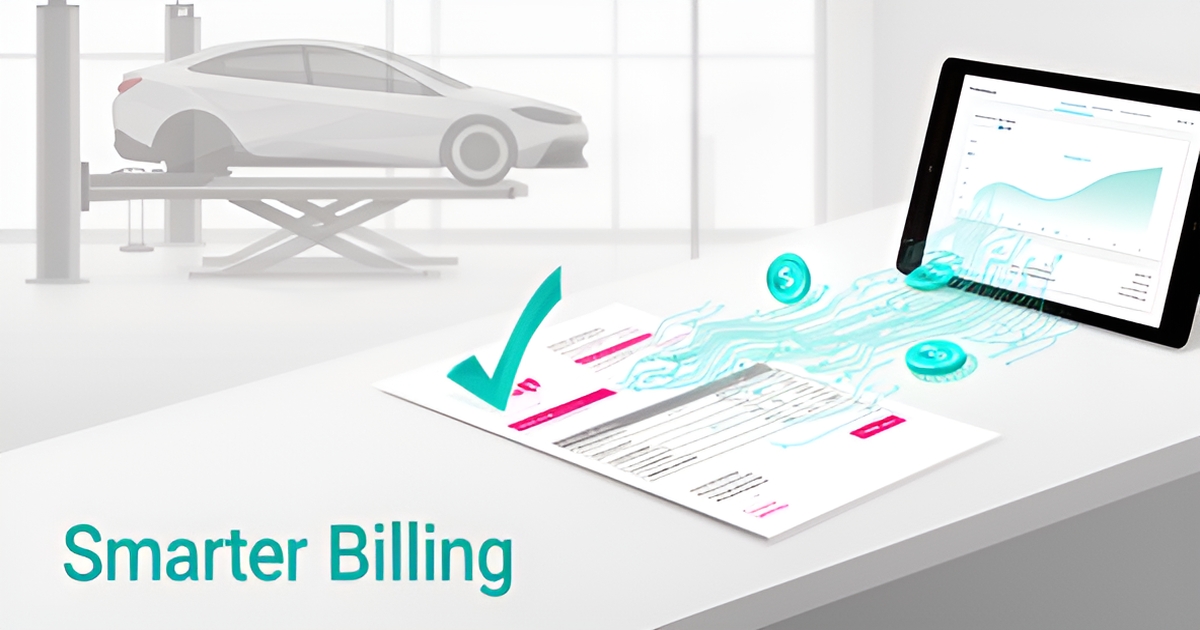
How AI Can Automate Customer Invoices and Payments in Auto Body Shops
Key Facts
- AI can automate a large share of routine billing admin in auto repair shops, typically cutting invoicing and payment-chasing time significantly.
- Integration with shop management systems reduces manual data entry, often saving several hours weekly per technician.
- AI tools built for small businesses have dropped in price significantly, making automation accessible for single-location shops as of late 2026.
- AI creates invoices directly from completed repair estimates and work orders, dramatically reducing keying errors.
- Payment tracking becomes proactive with automated reminders that reduce late payments.
- AI billing automation creates a live bridge between shop management platforms and accounting software for real-time sync.
Hire a team member that works 24/7 — for less than a part-time wage.
AI receptionists, SDRs, dispatchers and 99+ roles. Trained on your business, fully managed.
Not sure where to start? Ask our AI planner
The Cost of Manual Invoicing in Auto Body Shops
Manual invoicing remains a significant operational drain for many auto body shops, creating bottlenecks that ripple through daily workflows and impact overall profitability. When technicians and administrative staff spend valuable time on repetitive billing tasks, it diverts focus from core repair work and customer engagement. This inefficiency not only slows down internal processes but also introduces avoidable risks that affect financial stability.
AI-powered automation can typically remove a large share of routine administrative work in auto repair shops, directly addressing the time-consuming nature of manual invoicing. Shops that automate billing report cutting total operations time meaningfully, freeing up capacity for higher-value activities. Without such automation, shops continue to rely on error-prone, labor-intensive methods that hinder scalability.
One of the most tangible consequences of manual invoicing is the loss of productive technician time. Integrating AI with shop management systems typically reduces manual data entry dramatically, often saving several hours weekly per technician. In a manual environment, those hours are spent chasing down paperwork, correcting billing discrepancies, and following up on unpaid invoices—time that could otherwise be spent on vehicle repairs or customer consultations.
These inefficiencies compound into broader financial challenges. Manual processes increase the likelihood of invoicing errors, such as incorrect labor rates, missing parts charges, or duplicated line items, which delay payments and strain customer relationships. Additionally, delayed invoice generation slows the entire accounts receivable cycle, creating cash flow gaps that make it harder to cover payroll, parts inventory, and overhead costs. Shops operating without automated billing often experience longer payment cycles, increasing reliance on credit lines or emergency funding to bridge gaps.
The cumulative effect of these pain points is a shop that operates below its potential—where administrative friction limits growth, profitability suffers, and staff burnout becomes a real risk. Addressing manual invoicing isn’t just about saving time; it’s about restoring operational clarity and financial resilience.
- Reduced administrative burden through automated invoice generation
- Fewer billing errors and faster dispute resolution
- Accelerated payment cycles and improved cash flow predictability
- More time for technicians to focus on repair work and customer service
- Better alignment between repair estimates and final invoices
By recognizing the true cost of manual invoicing—measured in lost time, avoidable errors, and strained liquidity—auto body shops can make informed decisions about where automation delivers the greatest impact. The shift toward AI-driven billing isn’t merely a technological upgrade; it’s a foundational step toward smoother operations and sustainable growth. AIQ Labs supports this transition by building custom invoice automation systems that integrate seamlessly with existing accounting platforms, giving shops full ownership of their financial workflows while reducing the administrative load that holds them back. For shops that want managed AI staff handling billing follow-ups and customer communication, AI Employees offer a practical entry point.
How AI Automates Invoice Generation and Payment Tracking
Auto body shops lose hours each week to manual invoice entry, estimate retyping, and payment chasing. AI removes that friction by turning repair data into accurate bills and tracking payments without constant staff oversight.
AI creates invoices directly from completed repair estimates and work orders. The system extracts line items, labor hours, parts costs, and customer approvals from shop management records, then assembles a compliant invoice ready to send. Integration with shop management systems typically reduces manual data entry substantially, saving several hours weekly per technician.
Intelligent data extraction powers that accuracy. Modern document-reading models handle handwritten notes, photos, and scanned forms, then map fields to accounting records. AI tools now automate a large share of administrative tasks in auto repair shops—including invoicing, scheduling, and inventory tracking—cutting total shop operations time meaningfully. The result is fewer keying errors and faster handoffs between service advisors and accounting.
Payment tracking becomes proactive rather than reactive. Once an invoice is issued, AI monitors delivery confirmations, payment links, and partial payments, then schedules follow-ups based on customer history and insurance timelines. Automated reminders reduce late payments, while dashboards surface aging receivables so managers can act early.
In practice, AI-powered invoice and payment automation delivers:
- Automatic invoice generation from repair estimates with high-accuracy data extraction
- Intelligent approval routing and automated payment scheduling
- Real-time payment status tracking integrated with existing accounting platforms
Shops that connect AI billing to their current systems avoid duplicate entry and keep financial records clean. AIQ Labs builds custom billing systems that integrate with existing accounting platforms and are fully owned by the shop. If billing is the single workflow costing you the most hours, a Workflow Build rebuilds exactly that process at a fixed price.
The shift is practical. As industry coverage notes, AI tools built for small businesses have dropped in price significantly, making automation accessible for single-location shops as of late 2026. When invoice creation and payment follow-up run automatically, staff focus on repairs, cash flow accelerates, and customers receive clearer, faster billing.
Integrating AI Billing with Shop Management Systems
For many auto body shops, the biggest billing bottleneck isn't the repair itself—it's the manual handoff between the shop floor, the front office, and the accounting ledger. When estimates, parts costs, and labor hours live in separate systems, someone spends hours re-keying data that should flow automatically.
AI billing automation solves this by creating a live bridge between your shop management platform and your accounting software. Integration with platforms like AutoLeap and Mitchell 1 typically reduces manual data entry dramatically, saving technicians and office staff hours every week. That time goes back into actual repairs and customer conversations instead of duplicate typing.
The integration works in both directions. When a technician closes a repair order in your shop management system, the AI instantly generates an accurate invoice, applies the correct tax rates, and syncs the transaction to QuickBooks or Xero in real time. Payment status updates flow back automatically, so your front desk always knows which customers have outstanding balances without digging through spreadsheets.
A properly integrated AI billing layer handles the full cycle:
- Pulling parts and labor data directly from completed repair orders
- Generating itemized invoices the moment a job is marked complete
- Syncing transactions with accounting platforms like QuickBooks and Xero without manual exports
- Sending automated payment reminders and tracking status in real time
- Flagging discrepancies between estimates and final invoices before they reach the customer
The operational impact compounds quickly. Automating invoicing, scheduling, and inventory tracking cuts total shop operations time meaningfully. For a busy body shop, that translates directly into faster vehicle turnover and accelerated cash flow.
One critical distinction matters here: who owns the system. Off-the-shelf plugins lock you into monthly subscriptions and limited customization. AIQ Labs takes a different approach, building custom billing integrations that connect your existing shop management and accounting platforms into one seamless workflow—a system your shop owns outright, with no vendor lock-in and full control over future modifications. For shops ready to connect billing, scheduling, and customer communication into a single layer, AI Operating Systems provide that connected foundation, built in phases and owned outright.
The shops seeing the strongest returns treat integration as infrastructure, not an add-on. When your repair orders, invoices, and accounting records speak the same language in real time, billing stops being an afterthought and becomes a competitive advantage that quietly accelerates every dollar through your business.
Implementation Roadmap: From Pilot to Full Automation
Many auto body shops struggle with manual invoicing and payment tracking, creating delays and errors that hurt cash flow. A phased implementation approach minimizes risk while building toward full automation. Starting with discovery ensures the solution fits the shop’s unique processes before any development begins.
The first phase involves a short discovery and architecture sprint, where AIQ Labs analyzes current billing workflows, integrates with shop management systems like Mitchell 1 or AutoLeap, and maps out ROI projections. This step identifies pain points such as manual data entry—which AI integration typically reduces substantially, saving technicians hours weekly. Clear milestones are set for build-in-milestones deployment, allowing shops to approve and pay for each phase as it ships.
Development and integration follow over the subsequent weeks, during which custom AI agents automate invoice generation, payment tracking, and reconciliation with accounting platforms like QuickBooks or Xero. These multi-agent workflows extract data from repair orders with high accuracy, directly addressing the routine administrative tasks that consume shop time. Throughout this phase, the AI system is tested, secured, and optimized for real-world use.
Deployment and training occur in the final phase, with staff trained on role-specific workflows and the AI system go-live monitored for performance. Ongoing optimization then ensures continuous improvement, scaling the AI solution as the shop grows and refining processes to capture early payment discounts and eliminate late fees. This structured path turns pilot success into sustainable, owned automation.
Still paying for 10+ subscriptions that don’t talk to each other?
We build custom AI systems you own outright. No vendor lock-in. Full control.
Not sure where to start? Ask our AI planner
Frequently Asked Questions
How much time can AI actually save my auto body shop on invoicing?
Will AI invoicing reduce billing errors and disputes?
Can AI billing integrate with the systems I already use like QuickBooks or Mitchell 1?
Is AI invoice automation affordable for a single-location shop?
How does AI help with payment tracking and cash flow?
What does implementation look like and how long does it take?
Turn Invoices Into a Competitive Advantage
Manual invoicing is quietly draining auto body shops through lost technician time, billing errors, and delayed cash flow. AI changes that equation by turning completed repair estimates and work orders into accurate invoices automatically, tracking payments proactively, and syncing in real time with shop management systems like AutoLeap and Mitchell 1 and accounting platforms like QuickBooks and Xero. The result is fewer keying errors, faster dispute resolution, accelerated receivables, and more hours returned to repairs and customer service. Shops that treat billing automation as infrastructure, not an add-on, see operations time fall and cash flow become predictable. If you’re evaluating where to start, map your current estimate-to-payment handoff, identify the one manual step costing the most hours, and pilot automation there before scaling across departments. AIQ Labs has deployed 200+ multi-agent systems and runs four live SaaS products daily, building custom invoice automation systems that integrate with existing accounting platforms and are fully owned by the shop. Start the 2-minute Fit Check at https://aiqlabs.ai/apply to book a free 30-minute strategy call and map your biggest bottleneck and high-ROI automation opportunities.
Make AI your competitive advantage — not just another tool.
Strategy, implementation and ongoing optimization. One partner, end to end.
Not sure where to start? Ask our AI planner