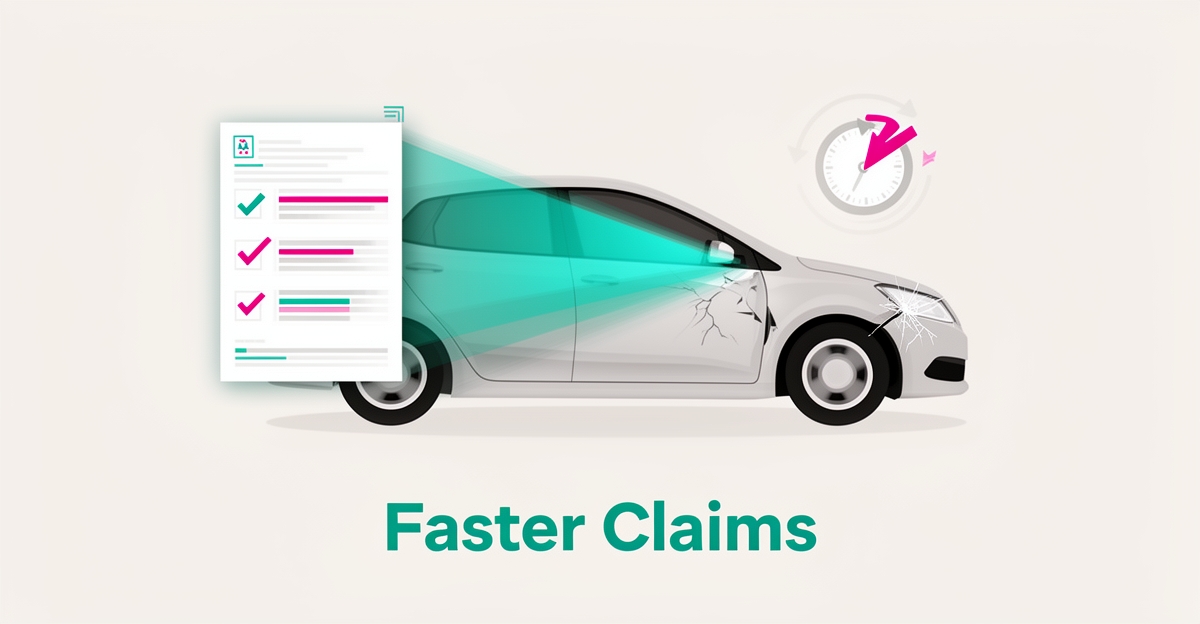
How AI Can Automate Damage Reports and Reduce Claims Processing Time
Key Facts
- Published insurer case studies report roughly 45% faster damage assessment after deploying AI-powered claims analysis
- The same implementations typically report 60% fewer on-site inspections through AI-driven damage analysis
- Customer satisfaction gains of around 30% are commonly reported when claims resolve faster and more consistently
- AI-supported image analysis, intelligent intake assistants, and advanced data tools are the core strategies for automating damage reports
- AI-driven systems classify and assess damage reports faster, delivering significant time savings
- Data privacy and legacy system integration rank among the top barriers to AI adoption in claims management
- AI should work in tandem with current safety and compliance protocols rather than replace them entirely
Hire a team member that works 24/7 — for less than a part-time wage.
AI receptionists, SDRs, dispatchers and 99+ roles. Trained on your business, fully managed.
Not sure where to start? Ask our AI planner
The Cost of Manual Damage Reporting
Traditional claims workflows are burdened by slow, error-prone manual processes that create costly delays and operational strain. From reviewing photos to writing reports, adjusters spend excessive time on repetitive tasks that could be automated, leading to bottlenecks that extend settlements by days and inflate expenses. These inefficiencies not only frustrate customers waiting for resolutions but also overwork teams stuck in administrative cycles instead of focusing on complex, judgment-based decisions.
Published case studies from insurers that deployed AI-powered damage assessment report a roughly 45% reduction in assessment time, showing how automation directly cuts processing delays. The same implementations typically achieved a 60% reduction in on-site inspections, minimizing the need for physical visits and freeing adjusters to handle higher-value cases. These improvements contributed to customer satisfaction gains of around 30%, showing that faster, more accurate reporting enhances the overall claims experience.
- Manual photo review requires adjusters to interpret images, estimate damage, and document findings without standardized support
- Report writing is often delayed due to inconsistent formatting and missing details from initial assessments
- Administrative overhead increases as teams chase down information or correct errors from handwritten or fragmented notes
- Customers face uncertainty and frustration when claims stall in review queues with no clear timeline for resolution
- Adjusters experience burnout from repetitive tasks that prevent them from focusing on complex claims requiring expertise
These pain points highlight why integrating AI with existing documentation tools is no longer optional—it's essential for modern claims operations. AIQ Labs helps businesses transform these workflows by building custom systems that scan damage photos, extract key details, and generate standardized reports—turning days-long processes into near-instant outcomes while reducing administrative burden and improving accuracy across the claims lifecycle. For teams that want to start with the single workflow that costs the most, a targeted AI Workflow Build is often the fastest entry point.
How AI Transforms Damage Assessment from Photos to Reports
AI-powered damage assessment transforms how insurers process claims by turning photos into actionable reports in minutes. These systems analyze images to identify damage type, severity, and repair requirements with minimal human input, extracting key details like dent depth, panel deformation, and part replacement needs. By automating visual analysis, insurers eliminate bottlenecks that once required adjusters to visit sites or manually review photos, accelerating the entire workflow from first notice of loss to settlement.
Case studies published through 2026 consistently show double-digit efficiency gains: assessment time reductions in the range of 45% and on-site inspection drops near 60% are typical reported outcomes, freeing adjusters to focus on complex cases while routine claims move swiftly through automated channels. These efficiency gains directly translate to faster payouts and lower operational overhead, especially when handling high-volume claims during peak seasons or after natural disasters.
Beyond speed, AI-enhanced assessment improves consistency and customer experience. The technology generates standardized, structured reports that follow regulatory formats and integrate seamlessly with claims management platforms, reducing errors from subjective evaluations. Faster resolutions and transparent communication are what drive the reported satisfaction improvements. AIQ Labs builds custom AI systems that integrate with existing documentation tools to deliver these outcomes, helping businesses automate damage reporting without disrupting current workflows. For organizations looking to streamline claims processing, starting with a targeted workflow fix can demonstrate measurable impact in weeks.
Integrating AI with Your Existing Claims and Documentation Tools
Integrating AI into your existing claims and documentation systems might seem daunting, but it doesn't have to be. Custom AI solutions can connect directly to your current documentation platforms, CRMs, and claims systems via API, eliminating data silos and reducing integration friction.
Industry research on damage report automation points to several key strategies: AI-supported image analysis, intelligent intake assistants that capture claim details conversationally, and advanced data analysis tools that standardize outputs. By leveraging these strategies, companies can streamline claims processing, reducing the time it takes to settle claims from days to minutes. Published insurer deployments report assessment time reductions of roughly 45% after implementing AI-powered damage assessment.
The benefits of integrating AI with existing systems are numerous. Not only can it improve efficiency and accuracy, but it can also enhance the customer experience. AI-driven systems can classify and assess damage reports faster, leading to significant time savings. Some of the key advantages of integrating AI with existing systems include:
- Elimination of manual data entry and reduction of errors
- Improved data consistency and accuracy across systems
- Enhanced customer experience through faster claims processing
- Increased efficiency and productivity for claims adjusters
At AIQ Labs, we specialize in building custom AI systems that integrate with existing documentation tools and reduce administrative burden. Our team can help you assess your current systems and identify areas where AI can be leveraged to improve efficiency and reduce costs. By integrating AI with your existing claims and documentation tools, you can reduce claims processing time and improve customer satisfaction. As safety management research consistently notes, AI should work in tandem with your current safety and compliance protocols rather than replace them entirely.
By taking a phased approach to AI integration, companies can minimize disruption to their existing operations and maximize the benefits of AI-driven automation. Whether you're looking to automate damage reports, streamline claims processing, or improve customer experience, custom AI solutions can help. With the right integration strategy, you can unlock the full potential of AI and take your claims management to the next level.
Overcoming Adoption Barriers: Privacy, Legacy Systems, and Team Resistance
Even the most advanced AI system fails if people refuse to use it or if it breaks existing workflows. Companies that successfully automate damage reports face three predictable hurdles: data privacy concerns, legacy system complexity, and employee resistance to change.
Research on AI adoption identifies data privacy and security as a top barrier, since AI systems rely heavily on collecting and analyzing sensitive information. Claims photos, customer details, and damage assessments contain personal data that requires careful handling under privacy regulations.
The solution starts with governance before deployment. Establish clear data handling policies, define who can access what information, and implement audit trails that track every AI decision. Human-in-the-loop controls ensure that sensitive claims or edge cases automatically route to human reviewers rather than being processed autonomously.
Legacy system integration presents a different challenge. Many companies run claims management on older platforms that weren't designed for AI connectivity. Industry analysis consistently confirms that complex integration with existing systems ranks among the top implementation obstacles businesses face.
Rather than replacing entire systems, successful implementations use API layers that connect AI capabilities to existing tools. Published insurer deployments achieved their reported assessment time reductions by integrating AI damage analysis with their current claims platform, not by rebuilding from scratch. This phased approach minimizes disruption while proving value incrementally.
Employee skepticism often stems from fear of job displacement or unfamiliarity with AI tools. Safety management research shows that resistance decreases significantly when teams understand AI augments their work rather than replaces it.
Practical strategies that build trust include:
- Start with a single workflow pilot that demonstrates time savings without threatening roles
- Involve claims adjusters in training and system refinement to incorporate their expertise
- Maintain transparent escalation paths so staff know when and how to override AI recommendations
- Track and share performance metrics that show how AI handles routine tasks while humans focus on complex cases
AIQ Labs addresses these barriers through structured change management that includes team training, governance framework setup, and phased rollouts. The goal is building confidence through transparency, not forcing adoption through mandate.
Companies that succeed treat AI implementation as an organizational change project, not just a technology upgrade. They invest as much in communication and training as they do in the technical infrastructure itself.
Measuring ROI and Scaling AI Across Claims Operations
Measuring the impact of AI-powered damage assessment starts with defining the right KPIs from day one. Teams that track processing time, cost per claim, adjuster workload, and customer satisfaction create a feedback loop that turns pilot data into a scaling roadmap. Published insurer case studies report assessment time reductions of roughly 45%, on-site inspection drops near 60%, and customer satisfaction gains around 30% after deploying AI damage assessment.
- Average claim cycle time from first notice to settlement
- Cost per claim including labor, inspections, and rework
- Adjuster hours spent on routine vs. complex cases
- First-contact resolution rate and NPS scores
- Straight-through processing percentage without human touch
These metrics reveal where automation delivers the highest leverage. When AI handles photo analysis, damage classification, and report generation, adjusters shift focus to exceptions and negotiations — the work that actually requires judgment. AI-supported analysis reduces manual data entry and standardizes outputs across regions, which directly lowers cost per claim and accelerates settlement speed.
Scaling from pilot to enterprise deployment requires phased rollout governed by performance thresholds. Start with high-volume, low-complexity claim types — windshield damage, minor collision, hail claims — where straight-through processing rates tend to be highest. Use those wins to fund expansion into total loss evaluation, liability determination, and subrogation workflows. Intelligent workflows that integrate with existing documentation tools and claims platforms eliminate duplicate entry and create a single source of truth.
AIQ Labs helps claims organizations design this measurement framework before writing a single line of code, ensuring every deployment ties to a business case the CFO can defend. Continuous monitoring turns each claim into a training signal, refining models and expanding automation coverage quarter over quarter. For teams ready to connect claims, intake, and reporting into one layer they own outright, an AI Operating System approach builds it in phases.
Still paying for 10+ subscriptions that don’t talk to each other?
We build custom AI systems you own outright. No vendor lock-in. Full control.
Not sure where to start? Ask our AI planner
Frequently Asked Questions
How much faster can AI make damage reports compared to manual processing?
Will AI reduce the need for adjusters to visit sites for inspections?
Does automating damage reports actually improve customer satisfaction?
Can AI integrate with our existing claims and documentation tools?
What are the biggest barriers to adopting AI for claims damage assessment?
How do I measure ROI when piloting AI for damage reports?
From Days to Minutes: Making AI Work for Your Claims Team
Automating damage assessments with AI isn't about replacing adjusters; it's about giving them back the time to do what they do best—exercise judgment. By scanning photos, extracting key details, and generating standardized reports automatically, insurers can cut assessment time by double digits while slashing on-site inspections and boosting customer satisfaction. The path forward starts small: identify one high-volume workflow, integrate with your existing documentation tools to avoid disruption, and measure the impact before scaling. AIQ Labs builds custom systems that fit your current infrastructure, not the other way around. If you're ready to move from pilot projects to production results, start with a quick Fit Check to map your biggest bottleneck, or book a free strategy call to explore what a tailored AI workflow could look like for your team.
Make AI your competitive advantage — not just another tool.
Strategy, implementation and ongoing optimization. One partner, end to end.
Not sure where to start? Ask our AI planner