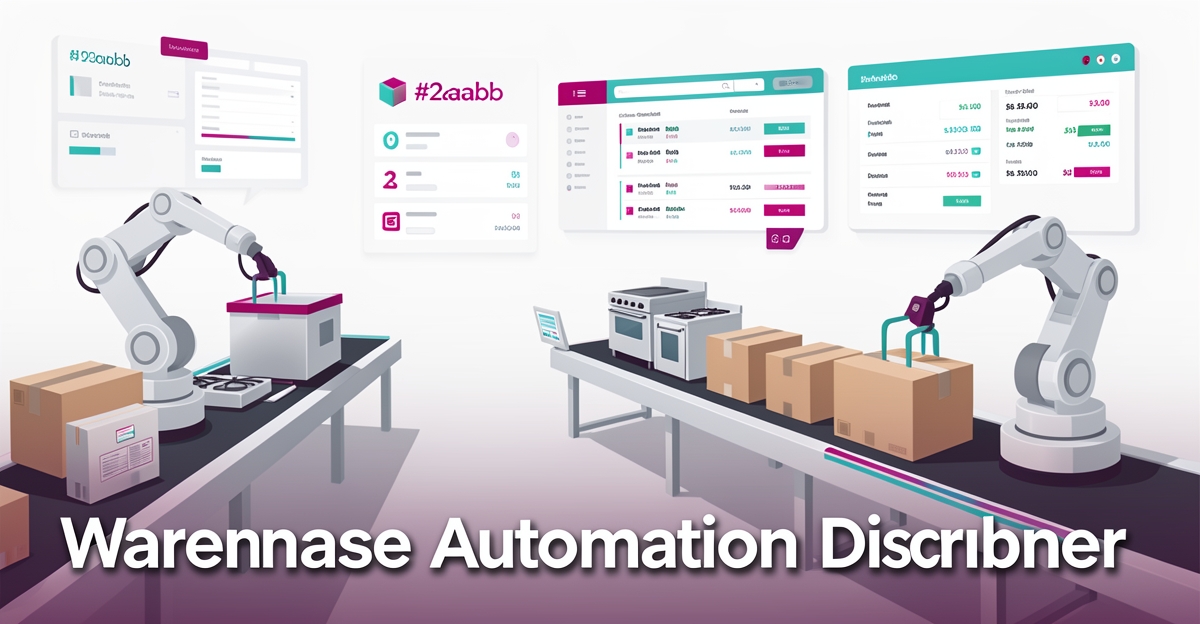
How AI Can Automate Equipment Order Fulfillment for Distributors
Key Facts
- Industry surveys suggest most e-commerce businesses use or consider outsourced or automated fulfillment solutions as of late 2026
- AI-powered warehouse management adoption is widespread among e-commerce and distribution businesses, per industry analyses
- AI-driven demand forecasting is commonly used to prevent stockouts and overstocking on high-value equipment
- AI logistics optimization tools are increasingly used to cut transportation costs and improve delivery times
- Distributors typically reclaim 20+ hours weekly of manual data entry after automating order workflows
- Automated fulfillment can reduce operational errors dramatically when data quality and integrations are in place
Hire a team member that works 24/7 — for less than a part-time wage.
AI receptionists, SDRs, dispatchers and 99+ roles. Trained on your business, fully managed.
Not sure where to start? Ask our AI planner
Introduction
Restaurant equipment distributors face mounting pressure to deliver orders faster and more accurately while managing complex inventory and logistics networks. Manual order processing creates bottlenecks that delay fulfillment and increase the risk of errors, impacting both operational efficiency and customer satisfaction. As distributors scale, these challenges intensify without intelligent automation to bridge gaps between sales, warehouse, and delivery teams.
AI-powered order fulfillment transforms how distributors handle equipment orders by automating critical workflows from confirmation to delivery. AI can shift inventory management from a reactive function into a strategic advantage that optimizes working capital and improves cash flow. Industry research as of late 2026 suggests that most e-commerce businesses use or consider outsourced or automated fulfillment solutions, and a majority have adopted AI-powered warehouse management systems to streamline operations. These tools enable real-time inventory visibility, automated status updates, and coordinated delivery scheduling—reducing manual intervention and ensuring timely communication across departments.
Distributors implementing AI fulfillment tools gain measurable improvements in accuracy and speed. Industry analyses indicate that a majority of e-commerce businesses now use AI-driven demand forecasting to prevent stockouts and overstocking, and roughly half leverage AI logistics optimization to cut transportation costs and enhance delivery times. By integrating these capabilities with existing ERP and inventory systems, distributors create a seamless flow where sales teams confirm availability instantly, logistics teams receive optimized routing instructions, and customers receive proactive delivery confirmations—all without manual data entry or follow-up calls. This end-to-end automation dramatically reduces errors and allows teams to focus on higher-value activities like customer relationship management and strategic planning.
Key Concepts
Restaurant equipment distributors face growing pressure to streamline order fulfillment while maintaining accuracy and customer satisfaction. AI workflow automation is transforming how these businesses handle everything from equipment availability checks to delivery coordination, turning manual processes into seamless, error-resistant operations. By integrating AI with existing ERP and inventory systems, distributors can typically reclaim 20+ hours weekly of manual data entry and sharply cut operational errors, freeing teams to focus on relationship-building and strategic growth.
Industry research as of late 2026 suggests that most e-commerce businesses use or consider outsourced fulfillment solutions, while a majority leverage AI-powered warehouse management systems to enhance order accuracy and speed. Additionally, a majority of e-commerce businesses rely on AI-powered demand forecasting tools to predict equipment needs more precisely, reducing the risk of stockouts or overstocking on high-value items like commercial ovens or refrigeration units. These trends underscore how AI is no longer optional but essential for distributors aiming to compete in a fast-paced market where delays or errors directly impact customer trust and revenue.
AI-powered order fulfillment tools automate critical touchpoints such as confirming equipment availability, generating pick lists, triggering warehouse workflows, and sending real-time status updates to customers and sales teams. This end-to-end visibility ensures that logistics, sales, and customer service operate from a single source of truth, eliminating miscommunication and redundant follow-ups. For distributors managing complex, high-cost equipment, this level of coordination prevents costly delays and improves on-time delivery rates—key factors in customer retention and referral business.
- Automated order validation against real-time inventory levels
- Intelligent routing of fulfillment tasks based on warehouse capacity and location
- Proactive status updates via email or SMS at each fulfillment stage
- Dynamic adjustment of delivery schedules using traffic and weather data
- Automated proof-of-delivery capture and invoicing triggers
Beyond efficiency gains, AI transforms inventory management from a reactive chore into a strategic advantage. AI enables businesses to optimize working capital, improve cash flow, and consistently deliver on promises by aligning inventory levels with predicted demand. For restaurant equipment distributors—where carrying excess stock ties up capital and stockouts lose sales—this predictive capability ensures the right equipment is available at the right time without over-investing in slow-moving items. AIQ Labs builds production-ready systems that integrate these capabilities directly with existing tools, creating owned assets that scale with business needs rather than relying on fragmented subscriptions. The result is a resilient, intelligent fulfillment process that supports both operational excellence and long-term competitiveness.
Best Practices
Restaurant equipment distributors looking to automate order fulfillment should start by implementing AI-powered order processing systems that handle confirmation, status updates, and delivery coordination. AI can transform inventory management from a reactive task into a strategic advantage, enabling businesses to optimize working capital, improve cash flow, and deliver on promises consistently. Distributors should also prioritize tools that integrate seamlessly with existing ERP and inventory platforms to avoid data silos and ensure real-time visibility across sales, logistics, and customer teams.
- Begin with a single critical workflow, such as order confirmation or delivery status updates, to prove value before scaling automation across departments.
- Ensure data quality by maintaining accurate, up-to-date inventory levels and customer information, as AI systems depend on reliable inputs for effective decision-making.
- Choose scalable solutions that can handle increasing order volumes and adapt to changing business needs without requiring constant reconfiguration.
- Implement human-in-the-loop controls for exceptions, allowing staff to intervene when AI encounters scenarios outside its defined authority.
- Monitor performance continuously and refine AI models based on real-world outcomes to improve accuracy and reduce manual overrides over time.
AIQ Labs supports distributors through [AI Workflow Builds](/workflow-builds) that connect order management, inventory tracking, and delivery routing into a unified system—rebuilt one workflow at a time at a fixed price. By using AI-powered demand forecasting tools, businesses can predict needs more accurately; industry analyses as of late 2026 indicate a majority of e-commerce businesses already use such tools to reduce stockouts and overstocking. Roughly half leverage AI-powered logistics optimization to cut transportation costs and improve delivery times. These capabilities, when integrated thoughtfully, create a resilient fulfillment process that scales with growth while minimizing manual effort and errors.
Implementation
Moving from plan to production means mapping the distributor workflow first, then layering AI where manual handoffs create delay and error.
Start with order intake and confirmation. An AI workflow can read incoming orders from sales, CRM or email, check real-time availability against ERP and inventory, and confirm or flag exceptions before a promise is made. This reduces manual errors and keeps sales, logistics and customers aligned on timing.
Inventory and demand must be visible in the same loop. AI-powered inventory management tools can transform inventory management from a reactive task into a strategic advantage, enabling businesses to optimize working capital, improve cash flow, and deliver on promises consistently. Integrating demand forecasting with live stock levels lets distributors reduce stockouts and overstocking while improving cash flow.
Implementation follows a practical sequence for restaurant equipment distributors:
- Connect order sources to ERP, inventory and logistics systems so AI has a single source of truth for availability and capacity.
- Deploy AI-powered order fulfillment to automate processing, status updates and delivery coordination across sales and logistics.
- Add AI-powered demand forecasting to predict equipment demand from historical sales, seasonality and market conditions.
- Enable AI-powered logistics optimization to route deliveries, balance warehouse capacity and reduce transportation costs.
Adoption is already common. Industry research as of late 2026 suggests most e-commerce businesses use or consider outsourced or automated fulfillment, signaling strong demand for automated fulfillment. Coverage of top AI fulfillment tools notes that a majority of e-commerce businesses use AI-powered warehouse management systems, while best-practice analyses find most now use AI-powered demand forecasting tools.
Data quality and integration are the critical enablers. AI-powered order fulfillment tools can help distributors streamline their operations, reduce manual errors, and improve customer satisfaction. That outcome depends on accurate, up-to-date inventory levels, order data and customer information flowing between systems.
For distributors, workflow automation is the fastest path to value. AIQ Labs builds production-ready AI systems that integrate with existing ERP and inventory tools, creating seamless operational workflows you own outright—no vendor lock-in. The result is automated confirmations, proactive status updates and coordinated deliveries with fewer manual touches.
When implemented as an integrated system, AI moves order fulfillment from reactive processing to a coordinated, customer-facing capability that scales with volume.
Conclusion
The path to automated equipment order fulfillment is clearer than ever for distributors ready to modernize their operations. By implementing AI-powered tools for order processing, inventory management, demand forecasting, and logistics optimization, businesses can transform fulfillment from a reactive, error-prone process into a strategic advantage that enhances customer satisfaction and operational efficiency. AI enables businesses to optimize working capital, improve cash flow, and consistently deliver on promises—turning inventory management into a proactive driver of success.
The data underscores the growing adoption of AI across the fulfillment ecosystem. Industry analyses as of late 2026 reveal that most e-commerce businesses use or consider outsourced fulfillment solutions, while a majority have adopted AI-powered warehouse management systems to streamline operations. Demand forecasting tools are now widely used to predict demand more accurately, and logistics optimization platforms are employed by roughly half of businesses to reduce transportation costs and improve delivery times. These trends reflect a clear industry shift toward intelligent, data-driven fulfillment.
For restaurant equipment distributors, the next step is to assess current workflows and identify where AI can eliminate manual bottlenecks—whether in confirming equipment availability, synchronizing sales and logistics teams, or automating delivery confirmations. AIQ Labs specializes in building custom AI systems that integrate seamlessly with existing ERP and inventory tools, ensuring that automation enhances rather than disrupts established processes. By focusing on high-impact areas like order status updates and delivery coordination, distributors can achieve measurable improvements in accuracy and timeliness.
- Audit current order fulfillment processes to pinpoint manual tasks prone to error or delay
- Prioritize AI implementation in areas with the highest volume and customer impact, such as order processing and status updates
- Ensure data quality and system integration readiness before deploying AI tools
- Start with a targeted workflow fix to prove value before scaling across departments
- Partner with an AI transformation expert to guide implementation, training, and ongoing optimization
Taking action now positions distributors to capitalize on AI's potential to reduce operational costs, minimize stockouts, and strengthen customer relationships. The technology is proven, the benefits are documented, and the pathway to implementation is clear. By embracing AI workflow automation, distributors don't just keep pace with industry evolution—they gain a competitive edge in reliability, efficiency, and service quality. The future of equipment order fulfillment is automated, intelligent, and within reach.
Still paying for 10+ subscriptions that don’t talk to each other?
We build custom AI systems you own outright. No vendor lock-in. Full control.
Not sure where to start? Ask our AI planner
Frequently Asked Questions
How can AI actually automate my equipment order fulfillment process?
What's the real ROI of implementing AI in order fulfillment?
Will AI work with my existing ERP and inventory systems?
How do I get started with AI without disrupting my current operations?
What if my team isn't technical—can they still use AI fulfillment tools?
How does AI improve delivery accuracy and customer satisfaction?
From Bottlenecks to Breakthrough: How AI Fulfillment Powers Distributor Growth
Restaurant equipment distributors are no longer choosing between speed and accuracy—they're achieving both through AI-powered order fulfillment. By automating critical workflows from order confirmation to delivery coordination, businesses eliminate manual errors, sharply reduce operational delays, and free teams to focus on customer relationships and strategic growth. With most e-commerce businesses already using or considering automated fulfillment solutions and a majority leveraging AI for demand forecasting as of late 2026, the shift toward intelligent automation is well underway. For distributors ready to modernize, the path forward is clear: assess current workflows, prioritize high-impact areas like inventory visibility and status updates, and partner with experts who build custom AI systems that integrate seamlessly with existing ERP and inventory tools. To explore how AI workflow automation can transform your fulfillment process, take the [2-minute Fit Check](/apply) and then book a free 30-minute strategy call to identify your highest-ROI opportunities—no obligation, just clarity on where AI can deliver real value for your business.
Make AI your competitive advantage — not just another tool.
Strategy, implementation and ongoing optimization. One partner, end to end.
Not sure where to start? Ask our AI planner