How AI Can Automate Incident Reporting and Reduce Response Time in Construction Safety
Key Facts
- Manual incident reporting creates missed safety opportunities due to delays, transcription errors, and fragmented records
- AI systems can forecast potential incidents by analyzing historical patterns and real-time data, enabling proactive measures
- AI-powered site monitoring enables continuous hazard detection and reporting without manual patrols
- Automated reporting eliminates transcription errors and produces consistent, searchable safety records
- AI-driven incident management typically delivers dramatically faster response times than manual processes
- Pattern recognition across past incidents helps identify root causes and reduce repeat incidents over time
- AIQ Labs has deployed 200+ multi-agent systems and runs 4 live SaaS products daily
Hire a team member that works 24/7 — for less than a part-time wage.
AI receptionists, SDRs, dispatchers and 99+ roles. Trained on your business, fully managed.
Not sure where to start? Ask our AI planner
The Hidden Cost of Manual Incident Reporting in Construction
Manual incident reporting on construction sites creates a dangerous gap between what happens and what gets acted on. Paper forms, delayed hand-offs, and fragmented site logs mean hazards linger while paperwork moves slowly through the chain of command.
Traditional incident management relies on manual data collection and analysis, which is time-consuming and prone to errors. The approach is proven and widely adopted, yet it slows response and invites mistakes.
Delays compound risk. A near-miss reported hours after it occurs loses critical context, and supervisors often respond to incomplete or illegible notes. Without real-time visibility, teams cannot prioritize containment, recovery, and post-incident activities consistently across crews.
Human error is built into the process. Field personnel juggling safety duties, weather, and schedule pressure make transcription mistakes, skip fields, or file reports after shift change. The result is missed safety opportunities that could have prevented escalation.
Data fragmentation makes pattern recognition nearly impossible. Incidents are scattered across notebooks, photos, and spreadsheets, so recurring hazards are not flagged until an injury occurs. AI-powered systems can analyze large amounts of data in real time, identify patterns, and predict potential incidents, allowing proactive measures to be taken.
The cost shows up in response time, compliance exposure, and worker trust. When reporting feels burdensome, underreporting rises. Construction consultants need a practical way to automatically detect incidents from site logs, generate reports, and trigger follow-up actions — cutting response times from hours to minutes.
A practical look at how AI can automate this workflow is part of AI Workflow Builds. AIQ Labs rebuilds the one workflow that costs you the most — at a fixed price, in phases — moving safety reporting from reactive paperwork to proactive protection.
Manual processes also limit site monitoring scale. AI-powered robots and sensor networks are increasingly used to monitor and assess construction sites, detect hazards, and prevent accidents, providing continuous coverage that manual patrols and paper logs cannot match.
The hidden costs of manual reporting include:
- Delayed response as reports queue for review and approval
- Inconsistent data quality leading to incorrect risk assessments
- Lost learning from near-misses that are never captured or analyzed
- Administrative burden that pulls supervisors away from active site safety
AI is transforming incident management in construction by predicting, identifying, and resolving issues before they escalate. AI-powered tools can forecast potential incidents by analyzing historical patterns and real-time data, so teams act proactively rather than reactively.
Without automation, construction teams remain stuck with a system that is slow, error-prone, and reactive. Automating detection, reporting, and follow-up closes the gap between incident and action, and protects both people and project timelines.
How AI Detects, Reports, and Triggers Action in Real Time
Imagine a construction site where every incident is detected, reported, and addressed in real time — no delays, no manual paperwork, no missed hazards. That is the practical promise of AI-driven incident reporting for construction safety. By automating the entire workflow, AI compresses response times from hours to minutes, changing how teams handle emergencies.
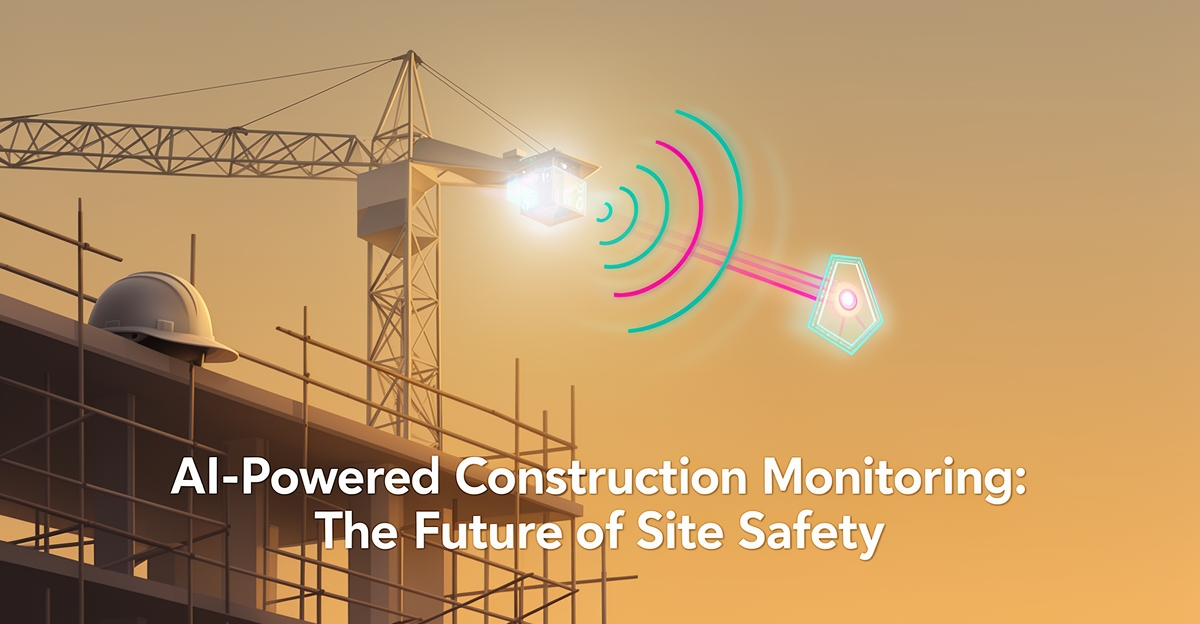
The process begins with AI-powered site monitoring, where cameras, sensors, and autonomous units continuously scan construction environments for hazards. When a hazard is detected — whether it's an unstable structure, a worker in distress, or an equipment malfunction — the system immediately flags it for review.
Next, the AI auto-generates incident reports by analyzing site logs, sensor data, and historical patterns. Unlike traditional methods, which rely on manual data entry and are prone to errors, AI cross-references real-time inputs with past incidents to classify severity and suggest immediate actions. For example, if a worker falls, the system doesn't just log the event — it triggers an alert to the nearest supervisor, dispatches first responders, and can notify emergency services if needed. This level of automation matters in high-stakes environments where every second counts.
The final step is triggering follow-up actions without waiting for a human handoff. AI systems can autonomously assign tasks to team members, schedule equipment inspections, or shut down machinery if a safety threshold is breached. AI-driven incident management typically delivers dramatically faster response times than manual processes. For construction firms, this means fewer delays, lower liability risk, and — most importantly — safer worksites.
At AIQ Labs, we've seen firsthand how integrating AI into safety workflows changes operations. Our systems don't just detect incidents — they help predict them, using historical data to flag potential hazards before they escalate. The result is a proactive safety culture where risks are addressed before they become emergencies. For construction consultants, this isn't just an upgrade — it's a necessity in an industry where delays and accidents cost time, money, and lives.
From Hours to Minutes: Measuring the Impact on Safety Response
In construction safety, the difference between a near miss and a recordable injury often comes down to minutes. When an incident is logged by hand, passed through email chains, and triaged by a supervisor hours later, the window for corrective action has already closed. AI-driven incident reporting compresses that cycle dramatically — detecting hazards, generating reports, and triggering follow-up actions while the situation is still unfolding.
The traditional approach simply can't keep pace. Manual data collection and analysis are time-consuming and prone to errors, which is precisely why the industry is shifting toward systems that analyze large volumes of data in real time, identify patterns, and predict potential incidents before they escalate. These tools forecast potential incidents by combining historical patterns with live data, allowing teams to act proactively rather than reactively.
Faster detection translates directly into faster intervention, and that's where the ROI lives:
- Hazards are flagged in real time, so corrective measures happen before problems escalate into injuries.
- Automatically generated reports eliminate transcription errors and give safety teams a consistent, searchable record.
- Pattern recognition across past incidents helps identify root causes, reducing repeat incidents over time.
- Supervisors spend their hours on prevention and response — not paperwork.
The contrast between the two approaches is stark. Traditional incident management has a proven track record and wide adoption, but it's slow and error-prone. AI-powered incident management delivers faster response times and improved accuracy, at the cost of upfront investment in technology and training. For construction consultants evaluating that trade-off, the math usually favors automation once you factor in avoided downtime, fewer repeat incidents, and lower administrative burden.
This is the workflow AIQ Labs builds for construction consultants: AI that detects incidents from site logs, drafts the report, routes it to the right person, and kicks off the follow-up — turning a multi-hour process into one measured in minutes. The result is a site where safety data moves as fast as the work itself.
Implementing AI Incident Automation with AIQ Labs’ Safety Solutions
Construction safety teams are losing critical minutes while paper logs move from site to office to report. AI-driven automation collapses that chain by reading site logs in real time, classifying events, and triggering the right follow-up without manual handoffs.
This is where a practical roadmap matters for consultants and firms. AIQ Labs approaches incident automation through three entry points — AI Employees, AI Workflow Builds, and AI Operating Systems — so you can start small, prove value, and scale to a connected safety layer you own outright.
Implementation starts with mapping the incident lifecycle. Classify incidents by type and severity, assign clear roles for response and documentation, and define protocols for containment, recovery, and post-incident review. Those protocols become the logic layer for automation.
Next, connect the data sources. Site logs, wearable alerts, equipment telematics, and monitoring feeds are ingested into a custom AI workflow. AI is transforming incident management by forecasting potential incidents from historical patterns and real-time data, allowing teams to act before escalation.
The automation engine then performs three continuous functions:
- Detect: AI models scan logs and sensor input to flag near-misses, hazards, and recordable events as they occur
- Document: Reports are auto-generated with timestamp, location, involved assets, and initial severity classification
- Act: Notifications route to supervisors, corrective actions create work orders, and dashboards update for leadership visibility
Site monitoring reinforces this loop. AI-powered monitoring units are increasingly used to assess construction sites, detect hazards, and prevent accidents, feeding reliable data collection into the reporting pipeline in real job-site conditions.
With AI Workflow Builds, AIQ Labs rebuilds the incident-reporting workflow that costs you the most — at a fixed price, delivered in phases, with no surprise invoices. True ownership means no vendor lock-in and full control over future enhancements.
AI Employees provide the managed workforce layer. A Safety Intake Specialist AI Employee can receive alerts, qualify the incident, draft the initial report, and book follow-up inspections around the clock — at roughly 80% less cost than a human hire. And when safety reporting needs to connect with scheduling, compliance, and project management, an AI Operating System ties it into one connected layer, built in phases and owned outright.
The result is faster response, fewer errors, and auditable safety records. Traditional manual processes are time-consuming and prone to errors, while AI-powered incident management delivers faster response times and improved accuracy.
Ready to map your highest-ROI safety automation opportunity? Take the 2-minute Fit Check at https://aiqlabs.ai/apply and book a free 30-minute strategy call with an AI engineer.
Still paying for 10+ subscriptions that don’t talk to each other?
We build custom AI systems you own outright. No vendor lock-in. Full control.
Not sure where to start? Ask our AI planner
Frequently Asked Questions
How much can AI reduce incident response times on construction sites?
Does automating incident reporting with AI require giving up control of our safety systems?
Can AI really predict safety incidents before they happen on construction sites?
What are the main drawbacks of relying on manual incident reporting in construction?
How does AIQ Labs help construction consultants implement AI incident automation?
From Paper Logs to Proactive Protection
Manual incident reporting leaves construction sites exposed — delayed hand-offs, fragmented logs, and transcription errors turn near-misses into injuries while supervisors stay tied to paperwork. AI closes that gap by detecting hazards with site monitoring, auto-generating reports from logs and sensor data, and triggering follow-up actions without waiting for a human handoff. The result is a shift from reactive paperwork to real-time protection, where hazards are flagged before escalation, reports are consistent and searchable, and teams focus on prevention instead of administration. For construction consultants, that means faster response, fewer repeat incidents, and auditable safety records that protect people and project timelines. AIQ Labs builds safety automation that moves reporting from hours to minutes — with 200+ multi-agent systems deployed and systems you own outright, built in phases to fit your budget. Start with the 2-minute Fit Check at https://aiqlabs.ai/apply and book a free 30-minute strategy call to map your highest-ROI safety automation opportunity. Questions? Reach the team at [email protected].
Make AI your competitive advantage — not just another tool.
Strategy, implementation and ongoing optimization. One partner, end to end.
Not sure where to start? Ask our AI planner