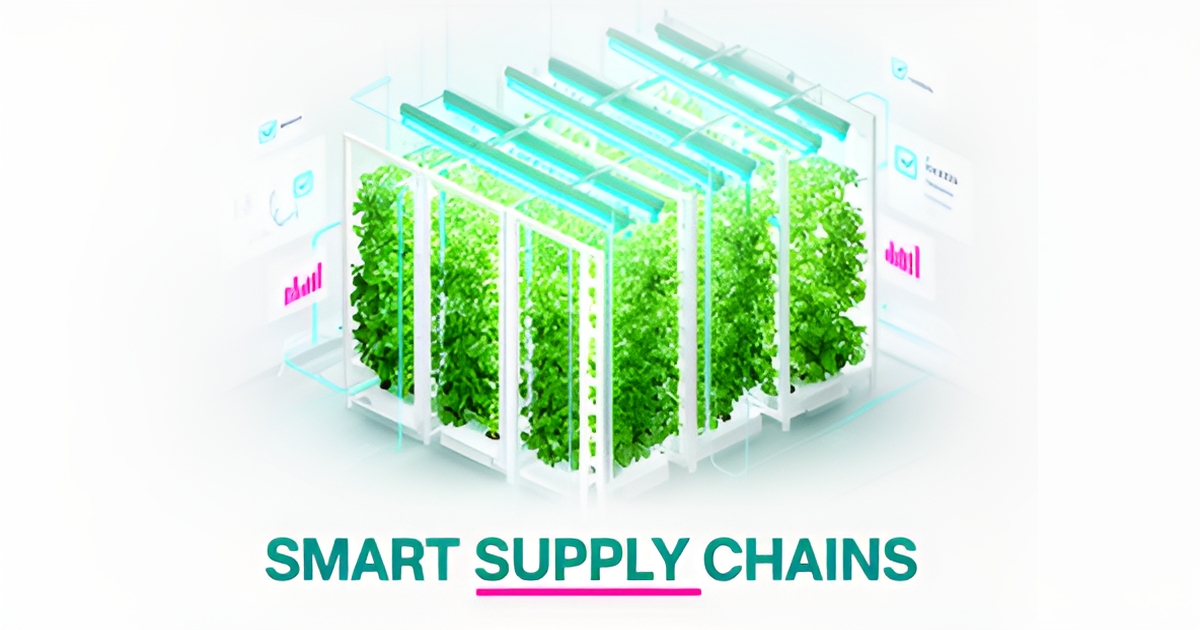
How AI Can Automate Inventory and Supply Chain Tracking in Hydroponic Farms
Key Facts
- Roughly a third of supply chain operations report using AI or machine learning as of recent industry surveys per MHI industry reporting
- A large share of respondents plan to adopt AI/ML within one to two years per MHI industry reporting
- Only a small minority of organizations have AI/ML deployed in broad production per MHI industry reporting
- Data quality and availability is consistently cited as the top AI adoption barrier per MHI industry reporting
- Most organizations already using AI in production plan to increase AI spending per MHI industry reporting
- Poor inventory visibility leads to stockouts, excess holding costs, and missed revenue per Microsoft Dynamics 365
- Agentic AI can automate routine procurement communications like purchase order follow-ups per Microsoft Dynamics 365
Hire a team member that works 24/7 — for less than a part-time wage.
AI receptionists, SDRs, dispatchers and 99+ roles. Trained on your business, fully managed.
Not sure where to start? Ask our AI planner
The Hidden Cost of Manual Inventory Tracking in Hydroponic Operations
Most hydroponic operators don't realize how much manual inventory tracking costs until a critical nutrient runs out mid-cycle or a seed order arrives too late. The problem isn't just inconvenience—it's a structural blind spot that compounds across every grow cycle.
Industry research confirms that poor inventory visibility leads directly to stockouts, excess holding costs, and missed revenue opportunities. In controlled-environment agriculture, where growing windows are tight and input costs are high, those gaps translate into wasted product and lost harvests.
- Seeds and substrates expire or degrade while sitting untracked in storage
- Nutrient solutions run dry because usage patterns weren't logged consistently
- Equipment maintenance slips through the cracks without automated alerts
- Restocking windows close before manual reorder processes complete
The data backs this up: roughly a third of supply chain operations report using AI or machine learning, yet a majority of organizations still cite data quality and availability as their top barrier to adoption. Most hydroponic farms sit in that gap—generating plenty of operational data but lacking the systems to turn it into action.
AIQ Labs works with growers to close that gap through AI Workflow Builds that rebuild the one inventory workflow costing you the most, at a fixed price and in phases. The shift moves tracking from reactive spreadsheets to predictive intelligence—automating updates, learning usage patterns, and flagging restock needs before they become emergencies.
Why AI Adoption in Supply Chains Is Accelerating (and Why Most Farms Are Behind)
Supply chain leaders are racing to automate before the window closes, while manual tracking still creates waste and stockouts on the farm. AI adoption is accelerating across the industry, but deployment remains uneven.
According to MHI industry reporting, roughly 35% of respondents reported using AI or machine learning in supply chain operations—a 10-point gain year-over-year—with an additional 43% planning to adopt within one to two years.
The intent is clear, but execution lags. Industry research shows only about 7% of respondents had AI/ML deployed in broad production. Most were stuck earlier: 38% in pilot or proof-of-concept and 41% in limited production.
That gap creates an opening for hydroponic farms. While larger operations pilot demand forecasting and procurement agents, many farms still track seed, nutrients, and equipment inventory manually. Early adopters can capture efficiency gains before competitors close the gap.
Investment pressure is rising. Supply chain benchmarks rank AI and machine learning near the top in investment priority, with 68% of users already in production planning to increase AI-related spending.
Barriers explain why adoption stalls. The same research cites data quality and availability as the top obstacle, named by 61% of respondents. Cost of implementation, lack of internal skills, and integration with existing systems follow close behind.
For farms, those barriers map directly to daily operations:
- Manual inventory logs create fragmented, low-quality data that limits forecasting accuracy
- Disconnected farm management tools make integration complex and error prone
- Limited in-house data science skills slow pilot to production timelines
- Reactive restocking leads to waste from over-ordering and lost revenue from stockouts
Agentic AI can shift inventory management from reactive to strategic. Microsoft Dynamics 365 analysis notes that poor inventory visibility leads to stockouts, excess holding costs, and missed revenue, while a well-orchestrated strategy drives efficiency and reduces waste.
Hydroponic farms that move now can automate updates, track usage patterns, and predict restocking needs with systems that integrate with existing farm management tools. AIQ Labs builds custom inventory and supply chain automation that replaces manual tracking with owned, production-ready workflows—paid for in milestones, never as an open-ended retainer.
With a large share of peers planning adoption soon, catching up is not enough. Farms that deploy now can establish operational resilience before the market saturates.
How AI Automates Inventory Updates, Usage Tracking, and Restocking Predictions
Manual seed, nutrient and equipment logs create lag, waste and stockouts in hydroponic operations. AI shifts inventory from reactive counting to continuous, automated control.
Real-time automated updates remove the delay between use and record. Agentic AI can automate routine procurement communications and follow-ups that are traditionally handled manually via email. Microsoft Dynamics 365 research shows agents transform inventory management from a reactive task into a strategic advantage across supply chain and operations.
Pattern recognition in nutrient and seed usage builds the intelligence layer. Modern AI-powered tools can leverage contextual data to improve forecasting accuracy by ingesting historical sales, promotional calendars, weather history and external event data. Supply chain planning guidance emphasizes evaluating data readiness before deployment, because model quality depends on completeness and availability.
Predictive restocking turns usage patterns into action. Agents analyzing demand signals, supply availability and stock imbalances can recommend rebalancing and acquisition actions before shortages occur. Agentic AI for inventory notes predictive analytics can optimize warehouse processes such as slotting, inventory consolidation and cycle counting.
Adoption is accelerating but uneven. MHI industry reporting recorded a 35% adoption rate of AI or machine learning in supply chain operations, a 10-point gain from the prior year, with an additional 43% of respondents planning to adopt AI/ML within one to two years.
Investment intent is strong where production use exists. Industry benchmarks found 68% of respondents already using AI in production planned to increase AI-related spending. Deployment maturity remains early, with 38% in pilot or proof-of-concept stages and 41% in limited production.
Data remains the limiting factor. MHI research cites data quality and availability as the top barrier, cited by 61% of respondents, followed by cost of implementation and integration with existing systems.
For hydroponic farms, the three capabilities work together:
- Real-time automated updates from sensors, dosing systems and harvest logs to a single source of truth
- Pattern recognition that links nutrient consumption, growth stage and yield to usage forecasts
- Predictive restocking that generates purchase orders and rebalancing recommendations proactively
This is AI inventory and supply chain management in practice, where tracking seed, nutrients and equipment moves from spreadsheets to automated workflows. AIQ Labs builds custom systems that integrate with existing farm management tools, so SMBs get owned, production-ready solutions rather than rented dashboards.
The 4-Step Path to AI-Powered Inventory (Without Replacing Your Current Tools)
Manual seed counts and nutrient logs create blind spots that cost hydroponic farms in waste and stockouts. AI can close those gaps without forcing a rip-and-replace of the farm management tools teams already trust.
The 4-step path distills proven supply chain planning guidance into a hydroponic-specific rollout that prioritizes integration over disruption.
Start by identifying high-impact workflows where automation delivers immediate value. For hydroponic operations this typically means demand forecasting for seedlings, automated nutrient usage tracking, and purchase order generation for consumables. Supply chain planning guidance recommends mapping areas like forecasting, purchase orders, and service levels across locations before selecting technology.
Data readiness determines whether a pilot succeeds or stalls. Industry research shows 61% of organizations cite data quality and availability as the top barrier to AI adoption, followed by integration with existing systems at 47%. For farms this means auditing historical sales, planting calendars, nutrient consumption logs, and environmental data for completeness and consistency. Modern AI tools can leverage contextual data to improve forecasting accuracy once the foundation is solid.
Pilot on one constrained process with clear success metrics. Nutrient tracking is an ideal first use case: usage patterns are repetitive, data is captured daily, and stockouts carry immediate crop risk. A pilot should measure reduction in manual entries, improvement in forecast accuracy, and fewer emergency orders. Implementation frameworks advise piloting, measuring results, and improving the process to build trust before wider rollout.
Scale by integrating, not replacing. Only about 7% of respondents report AI/ML deployed in broad production, with 38% in pilot or proof-of-concept and 41% in limited production according to MHI adoption benchmarks. That gap reflects the need for systems that connect to existing farm management platforms.
Key integration principles for hydroponic farms:
- Keep current farm management systems as the system of record and add AI as an automation layer
- Use two-way API connections for inventory, usage, and ordering data to maintain a single source of truth
- Design agents for routine tasks like vendor follow-ups and reorder recommendations so staff focus on crop decisions
- Establish explainability so growers understand why restock recommendations are made
With roughly a third of supply chain operations already using AI or machine learning and many more planning adoption, early structured pilots create competitive advantage. AIQ Labs builds custom systems that integrate with existing farm management tools to automate inventory updates, track usage patterns, and predict restocking needs without disrupting daily operations. Integration-first design preserves team workflows while adding predictive visibility.
When the pilot proves value, the same architecture scales to seeds, equipment, and consumables across multiple grow sites—eventually into a full AI Operating System that connects inventory with the rest of the operation, built in phases and owned outright.
From Spreadsheet Chaos to Self-Managing Inventory: What Custom AI Systems Deliver
Most hydroponic operations still run inventory on spreadsheets that update when someone remembers to open them. The result is a familiar cycle: nutrient stockouts that stall growth cycles, seed varieties expiring in forgotten corners, and equipment maintenance tracked on sticky notes.
Industry research shows roughly 35% of supply chain operations reported using AI or machine learning, yet only about 7% had reached broad production deployment. The gap isn't technology — it's integration. Generic inventory software forces farms to adapt their workflows to rigid dashboards. A custom AI system does the opposite: it ingests data from your existing climate controllers, nutrient dosers, and purchase orders, then builds a living model of actual consumption patterns.
What changes when the system owns the data flow:
- Real-time usage tracking replaces monthly manual counts
- Predictive restocking triggers orders before stockouts hit
- Waste reduction through expiration-aware rotation logic
- Supplier lead-time learning that adjusts reorder points automatically
Supply chain planning guides emphasize evaluating data readiness before choosing a platform. Hydroponic farms already generate the data — EC/pH logs, feed schedules, harvest weights — but it lives in disconnected tools. The agentic AI approach connects these streams so the system learns each crop's true input profile, then forecasts needs across growing cycles.
AIQ Labs builds these custom inventory agents as owned infrastructure, not rented dashboards. The system integrates with your current farm management tools, learns your specific consumption rhythms, and predicts restocking windows with enough lead time to negotiate bulk pricing. You own the code, the model, and the data — no vendor lock-in, no per-seat fees. With 200+ multi-agent systems deployed, the build process is proven: fixed price, phased delivery, milestone-based payment.
Ready to map your biggest inventory bottleneck? Start the two-minute Fit Check, then book a free 30-minute strategy call with an AI engineer to see exactly where custom automation delivers the fastest return.
Still paying for 10+ subscriptions that don’t talk to each other?
We build custom AI systems you own outright. No vendor lock-in. Full control.
Not sure where to start? Ask our AI planner
Frequently Asked Questions
How much does manual inventory tracking actually cost a hydroponic farm?
Do I need to replace my existing farm management software to use AI for inventory?
What specific inventory tasks can AI automate in a hydroponic operation?
Why do most AI inventory projects fail during implementation?
How accurate are AI predictions for nutrient and seed restocking?
Is AI inventory management worth it for small hydroponic farms?
Your Next Grow Cycle Shouldn't Run on Spreadsheets
Manual inventory tracking in hydroponic operations isn't just tedious — it's a structural liability. Stockouts stall growth cycles, expired inputs drain margins, and reactive reordering locks farms into premium pricing. The pattern is clear: roughly a third of supply chain operations now use AI, yet 61% still cite data quality as their top barrier. That gap is where hydroponic farms can move first. AIQ Labs builds custom AI inventory systems that connect to your existing farm management tools — sensors, dosers, purchase orders — and turn fragmented logs into predictive restocking, automated usage tracking, and expiration-aware rotation. No rip-and-replace. No vendor lock-in. You own the code, the model, and the data. The 4-step path starts with a single high-impact workflow like nutrient tracking, proves value in weeks, then scales across seeds, equipment, and sites. With many peers planning adoption within two years, waiting means competing on their timeline. Map your biggest bottleneck in two minutes with the Fit Check, then walk through the fix with an AI engineer on a free strategy call.
Make AI your competitive advantage — not just another tool.
Strategy, implementation and ongoing optimization. One partner, end to end.
Not sure where to start? Ask our AI planner