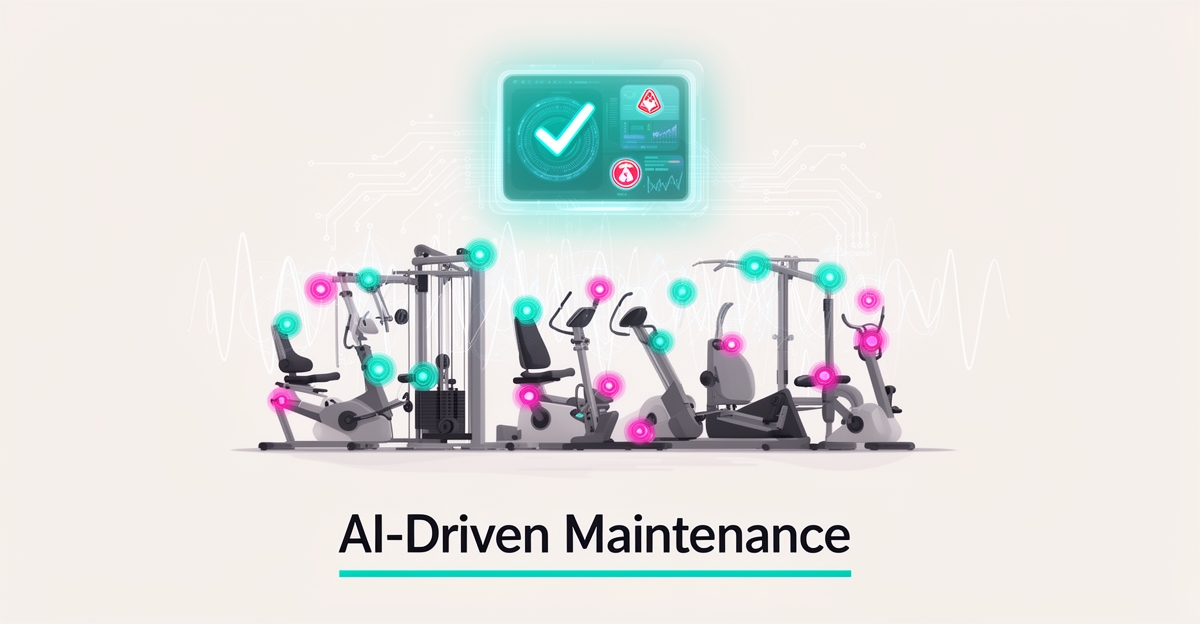
How AI Can Automate Maintenance Logs and Equipment Inspections in Training Programs
Key Facts
- Industry studies typically report that AI predictive maintenance cuts unplanned failures roughly in half and extends asset lifespans by 20–30% compared to reactive approaches
- AI-powered predictive maintenance is widely reported to deliver meaningful reductions in maintenance costs and downtime in equipment-intensive operations
- Real-time anomaly detection can catch developing infrastructure issues before they become failures, though results vary by asset type and data quality
- Connecting training logs with equipment health records enables predictive maintenance that prevents unexpected failures during critical sessions
- AI models trained on historical maintenance logs detect early degradation signs to forecast issues before breakdowns occur, using sensor and usage data
- Automated inspection reports generated from actual equipment usage reduce unnecessary checks while catching developing issues early
- Aligning maintenance actions with real-time equipment condition preserves both assets and learning outcomes in training programs
Hire a team member that works 24/7 — for less than a part-time wage.
AI receptionists, SDRs, dispatchers and 99+ roles. Trained on your business, fully managed.
Not sure where to start? Ask our AI planner
The Cost of Manual Maintenance Logs in Training Programs
Training programs run on tight schedules and tighter budgets, yet most still rely on paper logbooks or scattered spreadsheets to track equipment health. That fragmented approach creates blind spots where small issues compound unnoticed until a critical asset fails mid-session. Industry research consistently shows organizations using AI predictive maintenance experience significantly fewer unplanned failures and longer asset lifespans compared to reactive methods.
- Paper logs delay issue detection by days or weeks
- Siloed digital records prevent cross-referencing usage patterns
- No real-time alerts mean repairs happen after breakdowns
- Inconsistent data entry undermines trend analysis
The financial impact extends beyond emergency repair costs. Unplanned downtime disrupts training cohorts, damages learner confidence, and forces instructors to improvise with inadequate resources. Studies of predictive maintenance in equipment-intensive sectors such as transportation and logistics typically report meaningful reductions in maintenance costs and downtime—principles that transfer directly to training environments where equipment availability dictates program continuity.
AIQ Labs builds custom data pipelines that connect training logs with equipment health records, replacing reactive scrambling with proactive planning. This is the kind of focused rebuild we handle through AI Workflow Builds—one high-cost workflow, fixed price, delivered in phases. When sensor data, inspection notes, and usage history flow into a unified system, maintenance teams can schedule interventions during natural program breaks instead of canceling sessions. The shift from damage control to predictive intelligence preserves both assets and learning outcomes.
How AI Turns Usage Data Into Real-Time Inspection and Maintenance Actions
AI is transforming how training programs manage equipment by turning raw usage data into immediate, actionable insights. Instead of relying on fixed inspection schedules or waiting for breakdowns, AI systems continuously analyze operational patterns to predict wear and trigger maintenance before failures occur. This shift from reactive to predictive maintenance delivers measurable gains in reliability and cost efficiency.
With AI-powered predictive maintenance, organizations typically see meaningful reductions in maintenance costs and downtime by addressing issues before they escalate. These improvements stem from real-time monitoring of equipment usage during training sessions, where usage frequency, load patterns, and environmental factors are analyzed to forecast potential failures. By connecting training logs with equipment health records, AI enables maintenance teams to act on data-driven insights rather than guesswork.
AIQ Labs builds custom data pipelines that integrate training activity with equipment telemetry, allowing automated inspection reports to be generated based on actual use. These systems flag maintenance needs in real time, reducing the risk of unexpected failures during critical training operations. When AI predicts and prevents issues before they manifest, organizations commonly report fewer infrastructure failures and longer asset lifespans, along with improved safety.
The process begins with streaming sensor and usage data from training equipment into a centralized platform where AI models detect early signs of degradation. Historical maintenance logs are used to train models on what failure patterns look like, enabling accurate predictions. When anomalies are detected, the system automatically generates work orders, prioritizes tasks by risk level, and notifies technicians—ensuring maintenance is performed only when needed, not on arbitrary schedules.
This approach eliminates unnecessary inspections while increasing the likelihood of catching developing issues early. Training programs benefit from higher equipment availability, lower repair expenses, and improved safety outcomes. By aligning maintenance actions with actual usage and condition, AI ensures resources are focused where they deliver the greatest impact—keeping training operations running smoothly and efficiently.
From Sensor to Schedule: Building an AI Data Pipeline for Training Assets
Training assets rarely fail without warning. The signal is already there in vibration, temperature, pressure and usage logs, but it stays buried until a breakdown forces a reaction. Building a pipeline that turns that signal into scheduled work changes maintenance from damage control to proactive planning.
Start with business goals and critical assets, not models. Define clear KPIs like downtime reduction or part replacement optimization and align them with training program operations. Identify the machines and components with high failure risk or maintenance cost, then map where sensor data, SCADA feeds and maintenance records already exist.
The data layer connects the physical asset to the digital system. Install or connect sensors for temp, vibration, acoustic and pressure, then stream, store and clean at scale on cloud or edge platforms. Remove noise, handle missing values and align time-series data so models train on consistent signals. For training programs, this means linking equipment health records with training logs to see how usage patterns drive wear.
Labeling turns raw signals into learning. Tag historical logs, repairs and anomalies so models learn what failure looks like. Train smarter models, not just complex ones, using approaches like LSTM, Random Forest or Autoencoders to detect patterns and forecast issues. Validate in the real world with precision, recall and F1-score on unseen data before any operational use.
Deployment closes the loop. Connect the AI to your CMMS or asset platform to automate alerts, maintenance tickets and recommendations. Visualize predictions in real time so teams can act before failure, not after. Secure everything with encryption, API protection and access controls, and define retention and calibration protocols for compliance.
AIQ Labs builds custom data pipelines that connect training logs with equipment health records for proactive planning. The practical implementation path follows a proven sequence:
- Define goals and critical assets, then instrument sensors for real-time signals
- Stream, store and clean data, then label failure events from historical logs
- Train and validate models, then deploy into CMMS/asset platforms with automated alerts
- Monitor dashboards in real time and maintain security and compliance controls
The impact is measurable. Industry research typically shows AI predictive maintenance cutting unplanned failures roughly in half and extending asset lifespans by 20–30%. Analyses from equipment-intensive sectors commonly report meaningful reductions in maintenance costs and downtime, with some operations seeing failure rates drop substantially once predictive systems are live. Exact results depend on data quality, asset criticality, and how quickly teams act on alerts.
From sensor to schedule, the pipeline replaces reactive fixes with planned work. Teams see what is about to fail, when it will fail, and how to fit the fix into live training operations.
Implementation Roadmap for Training Operations Teams
Starting an AI-driven maintenance program begins with aligning technology to business outcomes. Define specific KPIs such as reducing unplanned downtime or cutting maintenance costs—goals that predictive maintenance deployments commonly achieve in operational settings. These metrics guide where to focus efforts and measure success, ensuring the initiative delivers tangible value rather than just technical capability.
Next, identify high-risk equipment critical to training operations, such as simulators, vehicles, or machinery with high failure impact or repair frequency. Prioritizing assets based on risk and maintenance history allows teams to target where AI predictions will yield the greatest return. Once identified, collect real-time sensor data (vibration, temperature, pressure) alongside historical maintenance logs to build a comprehensive data foundation for model training.
With data in place, develop and validate AI models in a controlled operational environment before full deployment. Test models against historical failure events using metrics like precision and recall to ensure they accurately predict issues without excessive false alarms. This step builds confidence in the system's reliability and helps teams trust AI-generated recommendations when they go live.
Finally, address security, compliance, and change management from the outset. Encrypt data streams, enforce access controls, and align retention policies with industry standards to meet regulatory requirements. Simultaneously, invest in training and clear communication to help staff understand how AI supports—not replaces—their expertise. As noted in research, adoption is as critical as the technology itself; successful implementation hinges on making AI insights fit seamlessly into existing workflows. AIQ Labs supports this journey by building owned systems that integrate with current tools—whether a single workflow rebuild or a full AI Operating System built in phases and owned outright—avoiding vendor lock-in while ensuring long-term control and adaptability.
Still paying for 10+ subscriptions that don’t talk to each other?
We build custom AI systems you own outright. No vendor lock-in. Full control.
Not sure where to start? Ask our AI planner
Frequently Asked Questions
How can AI actually reduce maintenance costs in training programs?
Will implementing AI for maintenance require replacing our existing equipment or systems?
How quickly can we expect to see results from AI-driven maintenance in our training operations?
Is our training program too small to benefit from AI maintenance systems?
What kind of data do we need to start using AI for equipment maintenance?
How does AI improve safety in training environments beyond just preventing equipment failure?
From Paper Logs to Predictive Operations
Training programs can't afford reactive maintenance. When logs are manual and siloed, small issues compound into mid-session failures that disrupt cohorts, erode learner confidence, and inflate repair costs. AI changes the equation by streaming sensor and usage data into a unified pipeline that turns raw signals into real-time inspection reports, automated work orders, and scheduled interventions during natural program breaks. The result is fewer surprises, higher equipment availability, and maintenance that aligns with actual condition instead of arbitrary calendars. Organizations using AI predictive maintenance typically see far fewer unplanned failures and meaningfully longer asset lifespans compared with reactive methods. Start by defining downtime and cost KPIs, instrumenting critical assets, and connecting training logs with health records. AIQ Labs builds custom data pipelines that make this shift practical for training operations. Ready to map your biggest bottleneck? Start the 2-minute Fit Check at https://aiqlabs.ai/apply, then book a free 30-minute strategy call at https://aiqlabs.ai/book to identify high-ROI automation opportunities.
Make AI your competitive advantage — not just another tool.
Strategy, implementation and ongoing optimization. One partner, end to end.
Not sure where to start? Ask our AI planner