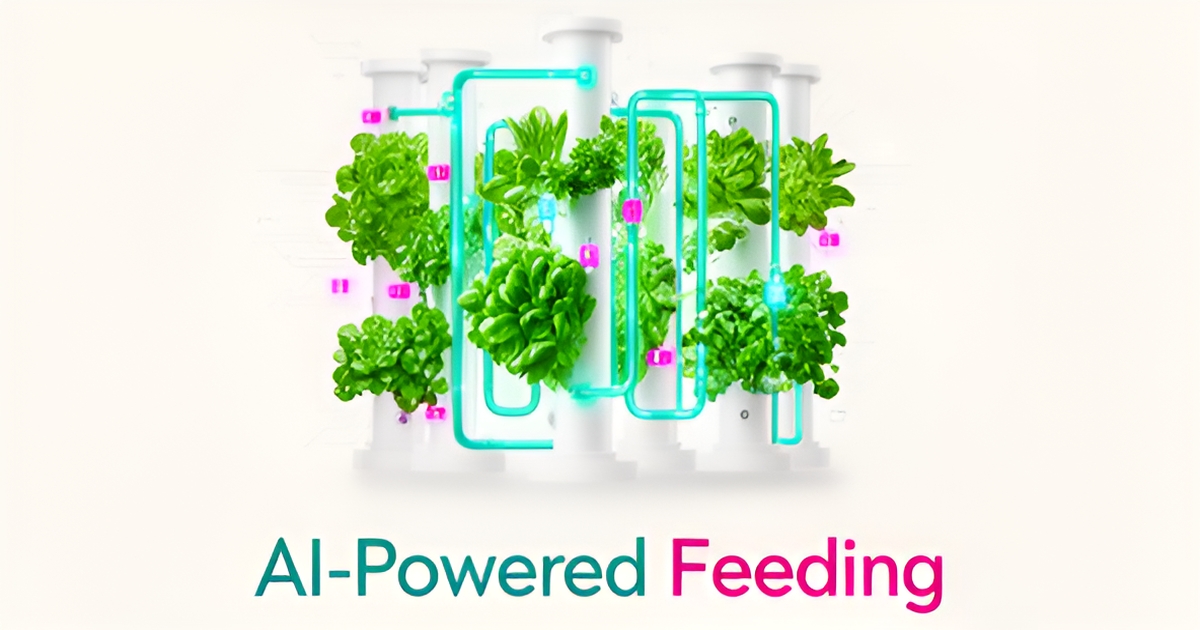
How AI Can Automate Nutrient Delivery in Hydroponic Systems
Key Facts
- Hydroponic systems typically use far less water than soil-based farming — commonly cited at up to 70% savings in recirculating setups.
- AI-driven environmental control is widely reported to deliver meaningful yield improvements — often in the 15–30% range in published agricultural AI studies — through optimized dosing and predictive growth models.
- AI systems analyze continuous sensor streams and adjust nutrient delivery faster than a human operator checking manually.
- Predictive growth models can estimate harvest windows with useful precision, helping farms reduce waste and meet customer demand more reliably.
- AI agents can automate hydroponic workflows beyond dosing — monitoring, alerts, task execution, and compliance logging run without manual checks.
- Integration works with existing hydroponic controllers: AI reads sensor inputs and sends dosing commands, so you keep the hardware you already trust.
Hire a team member that works 24/7 — for less than a part-time wage.
AI receptionists, SDRs, dispatchers and 99+ roles. Trained on your business, fully managed.
Not sure where to start? Ask our AI planner
The High Cost of Imprecise Nutrient Dosing
Hydroponic growing already delivers remarkable efficiency — typically using far less water than traditional farming — yet many operations still struggle with the delicate chemistry of nutrient delivery. The gap between hydroponics' inherent advantages and actual performance often comes down to one critical variable: precision.
Manual nutrient management creates a cascade of costly problems. Overfeeding burns plant roots and wastes expensive inputs, while underfeeding stunts growth and reduces yields. Even minor delays in adjusting nutrient concentrations can stress plants during critical growth phases, creating inconsistencies that ripple through entire harvest cycles. A human checking readings a few times a day simply cannot match a system that watches continuously and corrects in seconds.
The consequences of imprecise dosing extend beyond immediate plant health:
- Wasted nutrient solutions that drain profitability without delivering value
- Plant stress that increases susceptibility to disease and reduces quality
- Inconsistent crop yields that complicate planning and customer commitments
- Labor hours spent on repetitive testing and manual adjustments
These challenges become particularly acute as operations scale. What works for a small greenhouse becomes unmanageable across multiple growing zones or commercial facilities. The margin for error narrows precisely when consistency matters most.
Modern AI systems address this precision gap by integrating directly with existing hydroponic controllers to monitor conditions and adjust nutrient mixes in real time. Rather than relying on periodic manual testing, these systems process continuous streams of sensor data to maintain optimal chemical balance automatically. Published agricultural AI studies frequently report yield improvements in the 15–30% range from optimized environmental control — a useful signal of the value of replacing guesswork with algorithmic precision, though your results will depend on your crop, baseline practices, and setup.
This shift from reactive adjustment to proactive management is the core promise of AI workflow automation in agriculture. AIQ Labs builds these systems through AI Workflow Builds — a fixed-price, phased approach that rebuilds the one workflow costing you the most, in your case nutrient delivery. By eliminating the lag between detection and correction, growers can finally unlock the efficiency potential that hydroponic technology promises.
How AI Monitors Plant Health and Adjusts Nutrients in Real Time
Hydroponic growers live and die by the nutrient mix. A small imbalance can stall growth, trigger deficiencies, or waste expensive inputs. AI removes the guesswork by turning continuous sensor signals into real-time dosing decisions.
AI systems ingest data from pH probes, EC sensors, dissolved oxygen monitors, temperature, humidity, and imaging systems. They analyze those streams continuously and make adjustments faster than any human operator could by hand. That speed lets the system respond to plant stress before visible symptoms appear.
The result is precision nutrient dosing that matches demand to growth stage. Instead of fixed schedules, AI adjusts the nutrient mix in real time based on plant-health signals and environmental conditions. This reduces overfeeding, limits waste, and supports healthier root zones.
Agricultural AI research commonly reports yield improvements in the 15–30% range from optimized environmental control and predictive growth models. The same systems can estimate harvest windows with useful precision, helping farms reduce waste and meet customer demand. Hydroponics already cuts water use dramatically compared to soil farming, and AI protects that efficiency by preventing the overfeeding and waste that erode it.
In practice, AI monitors plant health and adjusts nutrients by:
- Reading live sensor streams and visual plant-health indicators every few seconds
- Comparing current readings to crop-specific growth models and historical performance
- Calculating precise dosing adjustments for N-P-K, micronutrients, and pH/EC balance
- Sending commands to existing hydroponic controllers for automatic actuation
Integration is key. AI can layer onto existing hydroponic controllers to optimize crop growth and reduce waste. By analyzing data from sensors and other sources, the system identifies where improvements can be made and recommends or executes adjustments. AIQ Labs builds these integrations as part of its Workflow Builds service, designed for reliable, long-term performance.
The workflow fits AI business process automation because it replaces manual checks and spreadsheet logging with closed-loop automation. Farmers gain visibility without constant intervention, and the system learns from each cycle.
Over time, predictive growth models improve dosing accuracy and reduce input costs. The combination of continuous monitoring, fast decision-making, and automated actuation creates a stable growing environment that supports consistent quality and throughput.
Integrating AI With Existing Hydroponic Controllers
Modern hydroponic setups often rely on established controllers and dosing equipment that growers trust and have invested in over time. Rather than replacing these systems, AI can layer on top to enhance decision-making without disrupting existing workflows. This approach lets growers fine-tune nutrient delivery using real-time plant health data while keeping the infrastructure they already know.
By connecting AI to sensor inputs and controller outputs, the system continuously analyzes pH, EC, temperature, and plant imagery to detect subtle shifts in nutrient uptake. Because it watches continuously, it can respond to deficiencies or excesses before they impact growth. This closed-loop feedback reduces the risk of overfeeding — a common issue that wastes nutrients and stresses plants.
AI agents can automate routine tasks such as logging sensor readings, triggering dosing pumps based on predictive models, and alerting growers only when intervention is truly needed. These agents learn from historical patterns and improve over time, making nutrient management more consistent and less labor-intensive. For growers working with AIQ Labs, this means a tailored integration that respects existing hardware while unlocking smarter automation.
The result is a more reliable system where nutrient delivery aligns with plant needs at every growth stage, directly addressing the inefficiencies of traditional timer-based schedules. Growers retain full control, with AI acting as a force multiplier that handles micro-adjustments humans might miss.
This integration path avoids costly rip-and-replace scenarios, focusing instead on augmenting what already works. Sensors feed data to the AI layer, which computes optimal nutrient ratios and sends adjusted commands to the existing controller — preserving investments while boosting precision. Over time, the system builds a knowledge base of crop-specific responses, further refining its recommendations.
For operations looking to scale, this method creates a foundation where AI handles repetitive monitoring, freeing staff to focus on crop strategy, pest management, or harvest planning. The technology doesn't remove the grower's expertise — it amplifies it by turning reactive feeding into proactive, data-informed care. As a result, hydroponic systems become more resilient, efficient, and aligned with sustainable resource use.
Using AI Agents to Automate Hydroponic Workflows Beyond Dosing
Nutrient dosing is only the start of what AI can automate in a hydroponic operation. Once controllers are connected, AI agents can take over the repetitive monitoring and follow-through work that keeps growers tied to dashboards.
These agents learn from experience and improve over time, making them increasingly valuable to growers. Integration with existing hydroponic controllers lets the AI analyze data from sensors and other sources to identify areas for improvement and recommend or execute adjustments — continuously, and faster than a human operator working from periodic manual tests.
Beyond dosing, agents handle the operational layer that supports precision growing. Hydroponics already cuts water use substantially compared to traditional farming, and automation protects that efficiency at scale. Hydroponic systems benefit most when monitoring, alerts and task execution run without manual checks.
A practical automation stack for hydroponic workflows typically includes:
- Continuous monitoring of pH, EC, temperature and dissolved oxygen with real-time anomaly alerts
- Automated task execution for nutrient top-ups, pump cycles and flush schedules based on plant growth stage
- Alert routing and escalation to growers via chat, SMS or email with context and suggested actions
- Logging and reporting for compliance, yield tracking and predictive harvest planning
This is where AI workflow and task automation moves from nutrient delivery to full operational follow-through. Predictive models can estimate harvest windows with useful precision, helping farms reduce waste and meet customer demand. Agricultural AI studies commonly report yield improvements in the 15–30% range from optimized environmental control and predictive growth models.
AIQ Labs has deployed 200+ multi-agent systems and runs four live SaaS products daily — the same operational discipline applied to hydroponic automation. The approach replaces repetitive checks with managed agents that work alongside human teams, so growers spend less time on routine work and more time on strategic decisions. For teams that want monitoring and alerting handled without adding headcount, AI Employees can staff those roles at a fraction of the cost of a human hire.
A Practical Roadmap for Deploying AI in Hydroponic Operations
Deploying AI in hydroponic operations begins with connecting intelligent systems to existing controllers for real-time nutrient adjustments. The AI layer analyzes sensor data continuously and makes adjustments faster than any human operator, ensuring plants receive what they need at each growth stage. This integration reduces overfeeding, improves plant health, and optimizes resource use without requiring a complete system overhaul.
AIQ Labs builds these systems to integrate with your current hydroponic infrastructure, enabling automated workflows that adapt to changing conditions. Operators can automate routine tasks such as sensor data logging, pH balancing, and nutrient dosing schedules. The agents learn from operational data over time, improving accuracy and reducing the need for manual intervention.
A practical rollout follows four key steps: first, assess sensor compatibility and data flow from existing controllers; second, deploy AI models trained on plant-specific nutrient response patterns; third, implement agents to handle workflow automation and alerting; and fourth, establish continuous monitoring to validate performance and refine models. This phased approach — the same milestone-based model AIQ Labs uses across its Workflow Builds — keeps risk low and lets you see value at each stage before going deeper.
Ongoing success depends on regular system validation and updates to AI models based on crop cycles and environmental shifts. With proper deployment, AI transforms nutrient delivery from a reactive task into a proactive, data-driven process that sustains consistent yields and reduces waste. And for operations that want to go beyond dosing — connecting inventory, scheduling, sales and growing into one layer — an AI Operating System built in phases and owned outright is the longer-term path.
Still paying for 10+ subscriptions that don’t talk to each other?
We build custom AI systems you own outright. No vendor lock-in. Full control.
Not sure where to start? Ask our AI planner
Frequently Asked Questions
Can AI really adjust nutrients faster than I can test them manually?
Will adding AI mean I have to replace my existing hydroponic controllers?
How much yield improvement is realistic with AI nutrient automation?
Does AI nutrient dosing help with water use too?
What does an AI agent actually do beyond dosing nutrients?
Can AI predict when my crops will be ready to harvest?
From Reactive Feeding to Predictive Growing
Hydroponics already delivers major water savings over traditional farming, but imprecise nutrient dosing erodes that advantage through wasted inputs, plant stress, and inconsistent yields. AI closes the gap by turning continuous sensor streams into real-time dosing decisions, shifting operations from reactive corrections to proactive, data-informed care. Integrating intelligence onto existing controllers preserves your current infrastructure while supporting meaningful yield gains through optimized environmental control and predictive growth models. AI agents then extend automation beyond dosing — handling monitoring, alerting, task execution, and compliance logging so growers can focus on strategy instead of spreadsheets. The path forward is practical: assess sensor compatibility, deploy crop-specific models, implement agents for workflow automation, and validate continuously. AIQ Labs builds these systems with a fixed-price, milestone-based approach — 200+ multi-agent systems deployed and four live SaaS products run daily — helping operations scale precision without replacing what already works. Ready to see where automation fits your operation? Start the two-minute Fit Check — followed by a free 30-minute strategy call to map your highest-ROI opportunities.
Make AI your competitive advantage — not just another tool.
Strategy, implementation and ongoing optimization. One partner, end to end.
Not sure where to start? Ask our AI planner