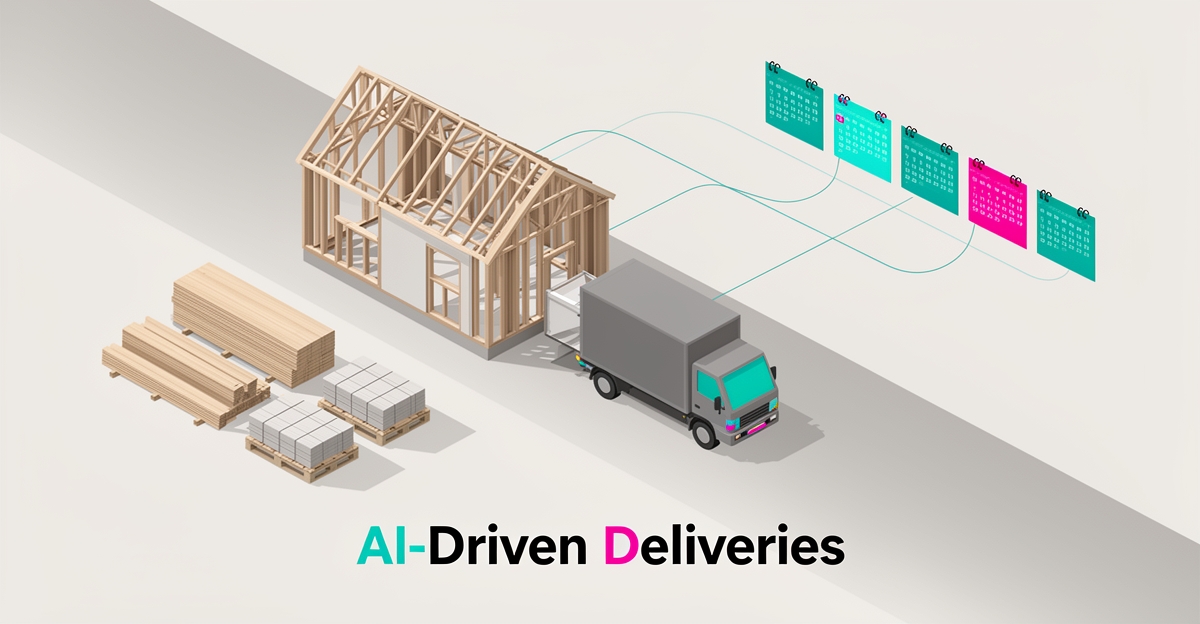
How AI Can Automate the Scheduling of Material Deliveries in Remodeling Projects
Key Facts
- AI delivery scheduling typically combines live project timelines, weather forecasts, traffic data, and supplier tracking into one adaptive plan
- Late or early deliveries create idle crews, overtime premiums, and extended equipment rentals that erode remodeling margins
- Automated alerts on delays and route deviations let superintendents reassign crews instead of losing the day
- Data readiness—consistent supplier and field inputs—is typically the biggest hurdle in AI adoption
- AIQ Labs has deployed 200+ multi-agent systems and runs 4 live SaaS products the company uses daily
Hire a team member that works 24/7 — for less than a part-time wage.
AI receptionists, SDRs, dispatchers and 99+ roles. Trained on your business, fully managed.
Not sure where to start? Ask our AI planner
The Hidden Cost of Poor Delivery Timing in Remodeling
Poor delivery timing silently erodes remodeling project profitability through cascading delays and wasted labor. When materials arrive late or early, crews sit idle waiting for supplies or scrambling to store unexpected shipments, directly inflating labor costs without advancing the project. Reactive planning—where schedules are adjusted only after disruptions occur—creates inefficiencies that compound over the course of a renovation. Traditional logistics planning typically fails to account for real-time variables, forcing teams into costly catch-up mode.
Weather, traffic, and supply chain volatility further destabilize manually scheduled deliveries, turning predictable timelines into moving targets. A sudden rainstorm can delay exterior work while interior materials pile up unused, or traffic congestion can cause a crew to miss critical just-in-time windows for drywall or flooring. These disruptions trigger labor reassignments, overtime premiums, and extended equipment rentals that quickly exceed contingency budgets. Industry analyses of AI-driven operations consistently point to meaningful productivity gains—often in the double digits—highlighting what's lost when scheduling remains static and reactive.
The hidden cost extends beyond immediate labor waste to include strained trade coordination and diminished morale. When deliveries consistently miss their mark, subcontractors begin padding their schedules with buffer time, reducing overall productivity and eroding trust in the project timeline. AIQ Labs observes that this reactive cycle often leads to rushed workmanship as teams scramble to recover lost time, increasing the risk of callbacks and rework. Without predictive coordination, each delivery becomes a potential point of failure that drains both schedule flexibility and profit margins.
How AI Predicts and Optimizes Delivery Windows
Remodeling schedules break when a delivery arrives too early, too late, or in bad weather. AI turns that uncertainty into a controllable window by continuously reading the project and the environment around it.
AI models ingest live project timelines, weather forecasts, material availability, and real-time logistics data to generate and adjust delivery windows dynamically. Algorithms process inputs such as weather, delivery schedules, and subcontractor performance to determine optimal task sequencing and avoid bottlenecks before they occur.
That predictive capability shifts planning from static documents to adaptive execution. Traditional Construction Logistics Plans were updated manually; AI enables dynamic planning by analyzing traffic flow, site access, and supply chains simultaneously. As of late 2026, this approach has become the practical standard for teams that coordinate multiple trades on tight sites—logistics moves from reactive planning to proactive management, turning uncertainty into efficiency and control.
Material availability is modeled alongside site constraints. AI tools integrate with supply chain data, GPS trackers, and delivery systems to optimize routes, reduce fuel use, and avoid congestion at gates or laydown areas. Automated alerts trigger when deliveries are delayed or vehicles deviate from planned routes, allowing superintendents to reassign crews and maintain productivity while waiting.
In remodeling, the benefit is tighter on-site coordination. AI predicts when a window, cabinet, or tile set will be needed and aligns it with crew availability and weather windows. This just-in-time approach minimizes staging congestion, reduces waste, and limits safety risks from materials sitting in tight access areas.
Systems that support this workflow typically:
- Sync scheduling software with procurement and GPS-enabled delivery tracking for real-time visibility
- Analyze local traffic, weather, and site access points to select efficient delivery paths
- Generate automated alerts for delays and suggest crew reallocation to preserve productivity
- Learn from past projects to identify patterns that commonly cause downtime
The result is dynamic delivery windows that move with the project rather than against it. AIQ Labs builds automated delivery coordination as part of its [AI Workflow Builds](/workflow-builds)—rebuilding the one workflow that costs you the most, at a fixed price, in phases—integrating with your existing supply chains and project software so remodeling teams keep multiple trades aligned without manual phone chasing.
By combining predictive analytics with live field data, AI reduces delays and improves on-site coordination while keeping human oversight in the loop for final decisions.
Integrating AI Delivery Coordination with Existing Workflows
The most capable AI scheduling system is only as effective as the connections it forms with your existing operations. Successful integration hinges on connecting AI tools with scheduling software, GPS-enabled equipment, and project dashboards to create real-time data synchronization across your entire operation.
Start by establishing a central data hub. Link your AI delivery coordination system directly to your project management platform—whether that's Procore, Buildertrend, or a construction-specific stack—or enhance established scheduling tools like Primavera P6 and Microsoft Project with AI layers that provide real-time tracking and intelligent recommendations. This connectivity allows the AI to access live project timelines, crew schedules, and material requirements simultaneously.
Next, synchronize your supply chain systems. Connect the AI to supplier databases and GPS tracking systems so it can monitor material availability, track shipment locations, and analyze traffic patterns and weather conditions automatically. This creates just-in-time delivery coordination that adjusts dynamically when conditions change, rather than relying on static schedules set weeks earlier.
Field operations require equal attention. Equip superintendents and foremen with mobile access to AI dashboards, ensuring they receive automated alerts when deliveries deviate from planned routes or weather threatens scheduled drops. However, integration complexity remains a genuine hurdle—contractors often juggle multiple platforms including BIM models, fleet trackers, and reporting systems that must communicate seamlessly. AIQ Labs addresses this through custom development and deep two-way API integrations, building connective tissue between your existing supply chain software and project management tools rather than forcing you to replace systems that already work. For teams ready to go further, an [AI Operating System](/ai-operating-systems) connects scheduling, procurement, and field coordination into one connected layer you own outright.
To ensure smooth adoption across your teams, follow these implementation priorities:
- Establish standardized data collection protocols across all suppliers and field crews to ensure AI receives consistent, high-quality inputs
- Deploy mobile dashboards that give field teams instant access to delivery updates and schedule changes
- Configure automated alerts for delivery delays, route deviations, and weather-related risks
- Train staff to interpret AI recommendations while maintaining human oversight for final decisions
Remember that data readiness represents the biggest hurdle in AI adoption—inconsistent information from suppliers or incomplete field reports will undermine even sophisticated algorithms. The goal is augmentation, not replacement; successful implementations empower people with real-time insights rather than removing human judgment from the equation. Start with one critical workflow—perhaps connecting your scheduling software to supplier tracking—then expand as your data quality and team confidence grow.
Still paying for 10+ subscriptions that don’t talk to each other?
We build custom AI systems you own outright. No vendor lock-in. Full control.
Not sure where to start? Ask our AI planner
Frequently Asked Questions
How does AI actually predict the best delivery windows for remodeling materials?
What happens if a delivery gets delayed or a truck takes the wrong route?
Do I have to replace my current project management software to use AI scheduling?
Is there real evidence that AI-driven scheduling improves construction productivity?
What's the biggest challenge when adopting AI for delivery coordination?
Will AI replace my superintendent or project manager's judgment?
From Reactive Chaos to Predictive Control: Your Next Step
Poor delivery timing quietly erodes remodeling profitability through idle crews, rushed work, and strained trade coordination. AI transforms this uncertainty into control by predicting optimal delivery windows using live project data, weather, traffic, and material availability—shifting planning from static schedules to dynamic, just-in-time coordination that reduces waste and keeps crews productive. The result is tighter alignment across trades, fewer delays, and protected margins without replacing your existing tools. To see how this applies to your specific workflow, start with a free, no-obligation strategy call where we'll map your biggest bottleneck and identify high-ROI automation opportunities—no pitch, just clarity. Take the 2-minute Fit Check at [aiqlabs.ai/apply](/apply) or book your free 30-minute call at [aiqlabs.ai/book](/book).
Make AI your competitive advantage — not just another tool.
Strategy, implementation and ongoing optimization. One partner, end to end.
Not sure where to start? Ask our AI planner