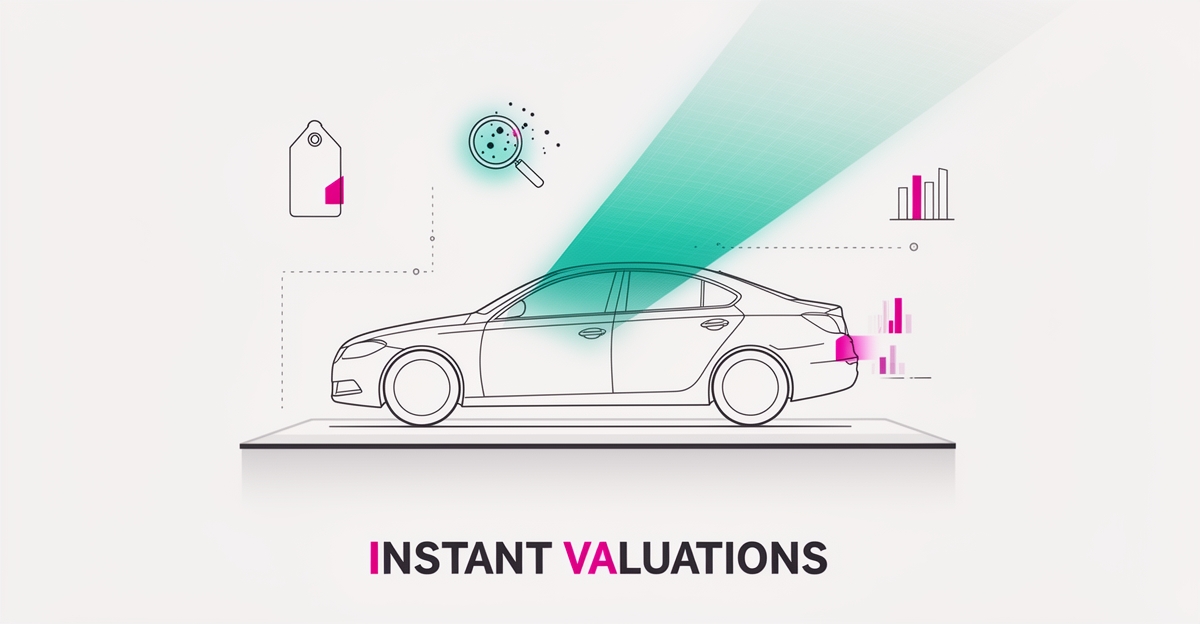
How AI Can Automate the Vehicle Valuation Process for Dealerships
Key Facts
- Dealerships using AI across the customer lifecycle have reported converting roughly 27% more internet leads, according to industry research.
- AI-powered valuation systems process thousands of data points in seconds, replacing hours of manual research.
- Dealers using AI report substantially fewer manually written staff emails, industry data shows.
- AI-driven dealerships have recovered a meaningful share of customers who had stopped servicing, per performance data.
- Vehicle repurchase rates have risen notably at dealerships running AI, according to industry analysis.
- OEM executives surveyed by IBM expect AI's share of revenue to grow substantially within three years, IBM research notes.
- Auto executives expect AI to meaningfully boost product and digital service value, per IBM's analysis.
Hire a team member that works 24/7 — for less than a part-time wage.
AI receptionists, SDRs, dispatchers and 99+ roles. Trained on your business, fully managed.
Not sure where to start? Ask our AI planner
The Cost of Manual Valuation: Why Dealerships Are Losing Time and Trust
Every hour a salesperson spends researching comparable vehicles and cross-referencing market data is an hour they're not closing deals. Yet this scenario plays out daily in dealerships still relying on manual valuation processes.
The traditional approach to vehicle valuation creates a cascade of inefficiencies. Sales teams spend hours researching comparable vehicles, analyzing market trends, and preparing valuation reports—time that could be spent on customer consultation and relationship building. According to industry research, dealerships using AI-powered systems report significantly fewer manually written staff emails, highlighting just how much administrative burden manual processes create.
The cost extends far beyond labor hours. Manual valuation processes introduce inconsistency and human error into pricing decisions, leading to several critical problems:
- Delayed customer responses that allow prospects to shop competitors
- Inconsistent pricing across different salespeople or departments
- Inability to process multiple data points simultaneously for accurate valuations
- Limited scalability when handling multiple trade-in inquiries
These bottlenecks directly impact conversion rates. When customers wait hours or days for a valuation, they lose confidence in the dealership's efficiency and often take their business elsewhere. Industry data suggests dealerships running AI across the customer lifecycle convert meaningfully more internet leads—a stark contrast to the losses manual processes create.
The financial impact compounds when considering the full operational picture. Manual valuation requires staff to juggle multiple systems—CRM, DMS, market data sources, and vehicle history databases—without real-time integration. This fragmented approach means critical information gets missed, valuations lack accuracy, and customers receive inconsistent experiences depending on which team member handles their inquiry.
The trust deficit created by slow, inconsistent valuations may be the most damaging cost of all. Today's buyers expect instant, transparent pricing backed by comprehensive data. When dealerships can't deliver this experience, they signal operational weakness that extends beyond the valuation itself. Research from IBM's automotive industry analysis shows OEM executives expect AI's contribution to revenue to grow substantially in the coming years—recognition that manual processes are becoming competitive liabilities.
Modern AI valuation systems address these challenges by processing thousands of data points simultaneously, including vehicle history, market conditions, financing scenarios, and VIN-level inventory data. What previously took hours now takes seconds, with greater accuracy and consistency than manual methods can achieve. For dealerships ready to eliminate these bottlenecks, AIQ Labs' AI Workflow Builds rebuild the one workflow that costs the most—often valuation—on a fixed price, in phases, so you see value before you scale.
How AI-Powered Valuation Works: Data, Accuracy, and Real-Time Pricing
AI-powered vehicle valuation systems deliver instant, accurate pricing by analyzing VIN-level data, market trends, vehicle condition, and ownership history simultaneously. These purpose-built platforms process thousands of data points in seconds—far beyond human capacity—to generate valuations that reflect real-time market conditions and vehicle-specific factors. According to industry research, this automation saves hours of manual work while increasing trust with buyers through transparent, data-driven pricing.
The technical approach centers on integrating multiple data sources: VIN-level inventory feeds, current market pricing trends, service and maintenance history, financing scenarios, and ownership records. AI models trained specifically on automotive data analyze these inputs to account for depreciation patterns, regional demand fluctuations, and vehicle-specific condition assessments. This integration enables dealerships to move beyond generic pricing guides to valuations that reflect actual market dynamics and individual vehicle history.
- Vehicle history records including accident reports and title status
- Real-time market data from regional and national sales trends
- Condition assessments via visual and diagnostic data analysis
- Financing scenarios and equity position calculations
- Service interval and maintenance history tracking
While off-the-shelf AI solutions struggle with automotive complexity, purpose-built systems trained on dealer-specific data deliver the accuracy needed for regulated transactions and OEM compliance. As noted in industry analysis, automotive retail's unique challenges—including multi-channel shopper behavior and scattered data across CRM and DMS platforms—require AI engineered specifically for this environment. This specialization ensures valuations consider not just current market value but also long-term ownership factors that influence trade-in decisions.
AIQ Labs integrates this valuation capability into custom AI workflows that support both sales and financing decisions, enabling dealerships to automate pricing while maintaining human oversight for complex cases. The result is a valuation process that combines algorithmic precision with contextual understanding—delivering instant, accurate prices that build customer confidence and streamline operations. By reducing manual valuation time from hours to seconds, dealerships can redirect staff toward value-added activities like customer consultation and relationship building, directly impacting conversion rates and retention.
From Valuation to Revenue: Cross-Departmental Impact and Measurable Gains
AI-powered vehicle valuation transforms more than just pricing accuracy—it creates ripple effects across the entire dealership ecosystem. When valuations become instant and data-driven, sales teams can respond faster to trade-in inquiries, service departments identify at-risk customers earlier, and marketing triggers timely equity-based offers. This cross-departmental coordination ensures no opportunity slips through the cracks, turning a single valuation event into a chain of revenue-generating actions. Dealerships using AI across the customer lifecycle report measurable gains: higher internet-lead conversion, recovered service customers, and increased vehicle repurchase rates, per industry performance data. These improvements stem from AI's ability to connect valuation insights with automated workflows in sales, service, and marketing—such as triggering service reminders based on equity positions or launching targeted campaigns when a customer's trade-in value reaches a threshold. For example, when a customer's vehicle equity improves, AI can automatically notify the service team to offer a maintenance package that enhances retention, while simultaneously alerting marketing to send a personalized upgrade offer. This level of integration turns valuation from a back-office function into a strategic lever for growth. AIQ Labs builds custom valuation systems that plug directly into existing CRM and DMS platforms, enabling this seamless flow of data and action across departments. By grounding valuations in real-time market data, vehicle history, and condition assessments, dealerships not only save hours of manual work but also create a foundation for sustained customer engagement and repeat business. The result is a tighter loop between valuation, customer satisfaction, and revenue—where every accurate appraisal fuels the next opportunity.
Implementing AI Valuation: Steps Dealerships Can Take Today
Implementing AI valuation doesn't require a full operational overhaul overnight—it requires a structured, phased approach that respects how dealership data and workflows actually function. The industry has moved past debating whether AI matters; the question now is which dealers execute it well. Following a disciplined implementation path is what separates dealerships that see measurable returns from those stuck running stalled pilots.
Step 1: Assess Your Current Infrastructure
Begin with a thorough audit of your CRM, DMS, and data management systems. Because automotive retail data is notoriously scattered across CRM and DMS platforms, understanding where vehicle history records, financing information, and service data currently live is essential before any AI system can be connected. This assessment determines your integration requirements and surfaces data quality gaps that would otherwise undermine valuation accuracy.
Step 2: Identify and Consolidate Data Sources
Compile the data feeds your valuations will depend on: vehicle history records, real-time market pricing data, service intervals, equity positions, and ownership history. AI systems process thousands of data points simultaneously, but only if that data is accessible and clean. Incomplete or inaccurate inputs directly translate to inaccurate valuations.
Step 3: Select a Purpose-Built Solution
This is where many dealerships go wrong. According to industry analysis, off-the-shelf AI can't handle automotive retail's unique complexity—multi-channel shopper behavior, regulated transactions, OEM compliance requirements, and sales cycles that stretch from a website visit to a trade-in seven years later. Purpose-built automotive AI can. The same principle applies to how the solution is built: custom systems your dealership owns outright, rather than rented point solutions, give you control over customization and eliminate vendor lock-in.
Step 4: Integrate Across Systems and Departments
Connect the valuation engine to your CRM, DMS, and communication platforms so a single trade-in inquiry triggers coordinated action. When a customer signal arrives, sales should receive VIN-specific equity estimates, service should see retention risk, and marketing should be able to act on equity mining opportunities. This cross-departmental coordination is what prevents customers from falling through the cracks.
Step 5: Train Models and Staff
Ensure the AI is trained on dealer-specific data—VIN-level inventory, financing scenarios, service intervals, and ownership history. Then invest equally in your people. Staff training and change management determine whether the tool actually gets used, and human input remains valuable for condition assessment nuances that digital analysis can't fully capture.
Step 6: Monitor, Optimize, and Scale
AI valuation is not a set-and-forget deployment. Market volatility can outpace model updates, so continuous monitoring and refinement are necessary to maintain accuracy. Dealerships that run AI across the customer lifecycle report converting meaningfully more internet leads and lifting vehicle repurchase rates, according to industry performance data—results that come from ongoing optimization, not one-time installation.
The payoff for getting implementation right is substantial. Auto executives expect AI to boost product and digital service value significantly in the coming years, per IBM research. AIQ Labs structures implementations in milestones—discovery and architecture, development and integration, deployment and training, then ongoing optimization—so dealerships can start with a single workflow, prove the value, and scale with confidence. For dealerships that want valuation connected to everything else—sales, service, marketing—an AI Operating System built in phases and owned outright is the longer-term path.
Still paying for 10+ subscriptions that don’t talk to each other?
We build custom AI systems you own outright. No vendor lock-in. Full control.
Not sure where to start? Ask our AI planner
Frequently Asked Questions
How much time can AI-powered vehicle valuation save compared to manual processes?
Will AI valuation replace my sales team's need to interact with customers?
How accurate are AI valuations compared to traditional methods like Kelley Blue Book?
What kind of ROI can dealerships expect from implementing AI valuation across departments?
Is off-the-shelf AI sufficient for dealership valuation needs, or do we need a custom solution?
How does AI valuation integrate with our existing CRM and DMS systems?
Turn Valuation into Your Dealership's Competitive Edge
Manual vehicle valuation isn't just slow—it's costing dealerships time, accuracy, and customer trust. As this article shows, AI-powered systems transform this bottleneck into a strategic advantage by processing thousands of data points in seconds, delivering consistent, real-time pricing that builds buyer confidence and frees staff to focus on relationship-building. The impact extends beyond pricing: dealerships using AI across the customer lifecycle report higher internet-lead conversion, recovered lapsed service customers, and increased repurchase rates. These gains come from integrating valuation insights into sales, service, and marketing workflows—turning a single appraisal into a chain of revenue-generating actions. For dealerships ready to move past manual guesswork, the path forward starts with assessing current infrastructure, identifying clean data sources, and selecting a purpose-built AI solution trained on dealer-specific data. AIQ Labs helps automotive businesses take this step with custom AI workflows that integrate valuation directly into CRM and DMS platforms, owned outright by the dealership. To see how this could work for your operation, start with the two-minute Fit Check and then a free 30-minute strategy call to map your biggest automation opportunity—no obligation, just clarity on where AI can drive real value.
Make AI your competitive advantage — not just another tool.
Strategy, implementation and ongoing optimization. One partner, end to end.
Not sure where to start? Ask our AI planner