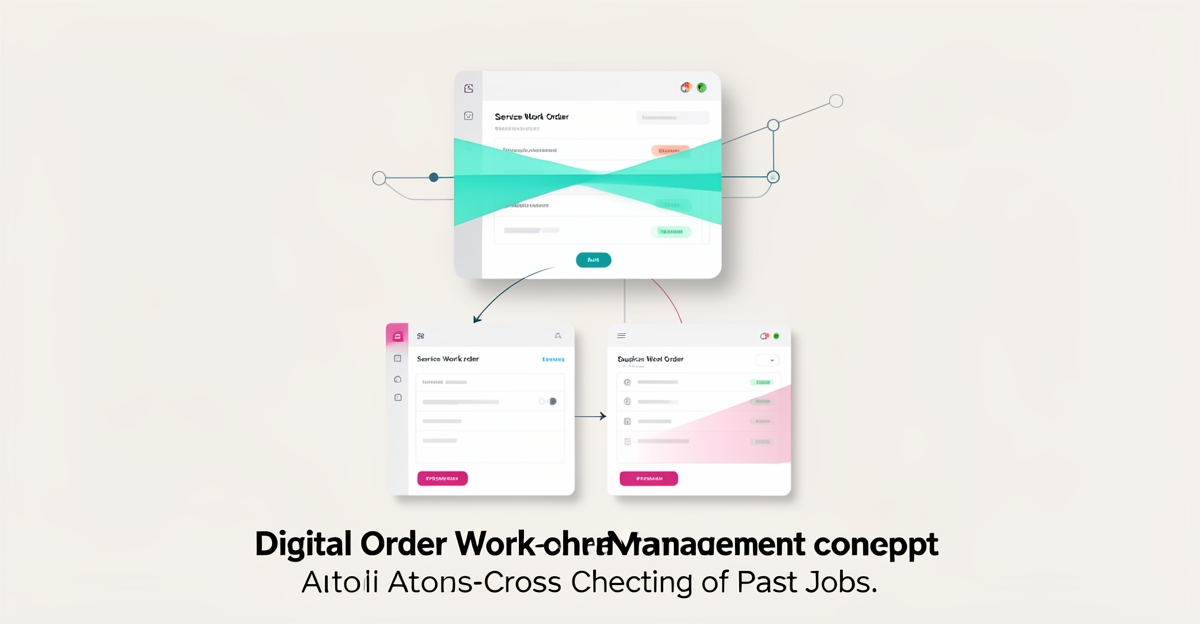
How AI Can Automate Work Order Logging and Prevent Service Duplicates
Key Facts
- A majority of organizations have automated processes in at least one business function according to recent workflow automation statistics
- AI-powered automation has been estimated to add trillions in annual economic value across global industries per McKinsey research
- Organizations that align AI with existing workflows have reported meaningfully faster implementation per IBM research
- Companies implementing AI without business process expertise risk wasting a large share of their investment per implementation insights
- Organizations that follow structured implementation strategies are more likely to see positive ROI within the first year per industry analysis
- Intelligent matching can auto-flag likely duplicate work orders before they become dispatches per duplicate detection research
- Field service leaders report fewer wasted dispatches and technicians arriving at sites where work actually needs doing based on workflow automation outcomes
Hire a team member that works 24/7 — for less than a part-time wage.
AI receptionists, SDRs, dispatchers and 99+ roles. Trained on your business, fully managed.
Not sure where to start? Ask our AI planner
The Hidden Cost of Duplicate Service Requests in Field Operations
Manual work order logging creates a cascade of hidden costs that silently drain field service operations. When technicians arrive on site only to discover the issue was already addressed in a previous visit, the waste extends far beyond fuel and mileage. Most organizations have automated at least one business function yet still grapple with process inefficiencies in field services, indicating that partial automation fails to solve root causes like duplicate requests. These redundancies inflate operational costs, erode technician morale, and delay responses to genuine service needs, turning preventable errors into systemic inefficiencies.
The financial impact compounds quickly when duplicate visits go undetected. Each unnecessary trip consumes labor hours that could be allocated to preventive maintenance or new installations, directly reducing workforce productivity. Beyond direct costs, repeated visits damage customer trust; clients perceive the organization as disorganized or indifferent when they receive multiple service calls for the same issue. This reputational harm often leads to churn, especially in competitive markets where reliability is a key differentiator. Field teams also suffer from alert fatigue, learning to ignore work order systems they perceive as noisy or inaccurate, which undermines the value of any digital tooling already in place.
AI-driven work order management breaks this cycle by introducing intelligent duplicate detection at the point of entry. Systems can scan incoming requests, cross-reference historical service data, and flag potential duplicates before a technician is dispatched, ensuring that every visit is both necessary and unique. This proactive approach transforms work order logging from a reactive clerical task into a strategic control point that prevents waste before it occurs. For field service providers seeking to eliminate redundant visits and reclaim operational efficiency, AIQ Labs offers AI Workflow Builds designed to rebuild the one workflow that costs the most, like service request intake, at a fixed price, in phases. By anchoring AI in existing workflows, organizations typically shorten implementation timelines while building systems that scale with their needs, turning a chronic cost center into a model of consistency and traceability.
How AI-Powered Document Processing Eliminates Work Order Duplicates
Duplicate work orders drain field service teams of time, revenue, and customer trust. Every unnecessary truck roll compounds scheduling conflicts and erodes margins that could be invested in growth.
Modern AI document processing tackles this at the source. When a service request arrives, whether by email, portal, or phone transcription, multi-agent workflows ingest the content, extract structured fields, and cross-reference historical jobs across your CRM, dispatch board, and invoicing system. AI agents can autonomously handle routine inquiries and execute multi-step reasoning without human intervention, making them ideal for the repetitive comparison logic that duplicate detection demands.
- Natural language parsing normalizes address variations, equipment IDs, and symptom descriptions
- Vector similarity search catches near-matches that keyword filters miss
- Confidence scoring routes clear duplicates to auto-close and edge cases to human review
- Audit trails log every decision for compliance and continuous model improvement
The impact compounds when implementation aligns with existing workflows. Organizations that align AI with current processes have reported meaningfully faster deployments, avoiding the rip-and-replace cycles that stall automation projects. AIQ Labs builds these document processing pipelines as owned assets, custom code, full IP transfer, no platform lock-in, so your duplicate prevention logic evolves with your business rules rather than a vendor's roadmap. You can build in milestones, pay as value lands, and own the result outright.
Field service leaders using this approach report fewer wasted dispatches, cleaner job costing, and technicians arriving at sites where work actually needs doing.
Implementing AI Work Order Automation: From Detection to Continuous Optimization
Work order duplicates quietly erode margins by triggering unnecessary truck rolls, double parts orders, and frustrated customers. An AI-first approach turns reactive logging into proactive prevention by scanning every new request against history before it reaches dispatch.
A phased rollout reduces risk while building durable value. Start with a targeted workflow build that isolates duplicate detection, then expand integration and governance as confidence grows. This mirrors how AIQ Labs structures AI Workflow Builds engagements, beginning with a single broken workflow at a fixed price and scaling toward a full AI Operating System when the business is ready.
Phase one focuses on detection and validation. AI scans service requests, extracts key attributes, and cross-checks past jobs for address, equipment, issue type, and recent activity. According to duplicate detection research, intelligent matching can auto-flag likely repeats before they become work orders. Early wins fund broader adoption.
Phase two connects the model to existing dispatch and CRM tools. Seamless workflow integration embeds AI technologies intuitively into existing processes to ensure non-disruptive adoption. Two-way API integration creates a single source of truth, so dispatchers see flags in real time without switching systems. Organizations that follow structured implementation strategies are more likely to see positive ROI within the first year, per industry implementation analysis.
Phase three establishes continuous optimization. Feedback loops from field technicians, customer service, and supervisors retrain models on edge cases. Governance covers audit trails, escalation rules, and human-in-the-loop controls for critical decisions.
A practical deployment plan typically includes:
- Discovery and architecture to map request intake, history sources, and dispatch rules
- Model build for entity extraction and similarity scoring with validation layers
- Integration with CRM, dispatch, and work order systems via deep two-way APIs
- Pilot with a single service line, measure duplicate reduction and avoided visits
- Scale across regions with role-based enablement and ongoing performance monitoring
The market context supports this approach. Workflow automation statistics show most organizations have already automated processes in at least one business function, with adoption climbing year over year. AI-powered automation has been estimated to add trillions in annual economic value across global industries, underscoring the upside of getting work order accuracy right.
Sustained results require process expertise alongside technology. Companies implementing AI without business process expertise risk wasting a large share of their investment, according to implementation insights. By aligning AI with existing workflows, firms reduce implementation time and protect service records that are accurate, consistent, and fully traceable.
Continuous evolution keeps the system relevant as request patterns shift. Measure adoption and performance with AI analytics, refine matching thresholds, and expand to predictive maintenance planning. Detection becomes prevention, and prevention becomes a measurable operating advantage.
Still paying for 10+ subscriptions that don’t talk to each other?
We build custom AI systems you own outright. No vendor lock-in. Full control.
Not sure where to start? Ask our AI planner
Frequently Asked Questions
How do duplicate work orders actually hurt my field service business?
Can AI really catch duplicates before a technician gets dispatched?
Will adding AI mean ripping out the systems we already use?
What ROI can we expect from automating work order intake?
Is this only for big companies with huge IT budgets?
What’s the biggest mistake to avoid when deploying AI for duplicate detection?
From Duplicate Detection to Operational Certainty
Duplicate work orders are more than a clerical annoyance, they're a silent margin killer that compounds across truck rolls, technician hours, and customer trust. AI-powered document processing changes the economics by catching duplicates at the point of entry, using multi-agent workflows that normalize messy inputs, cross-reference history across systems, and route clear matches for auto-closure while escalating edge cases for human review. The phased approach, starting with a single workflow build, integrating deeply with existing dispatch and CRM tools, then building feedback loops for continuous improvement, mirrors how organizations that align AI with current processes report faster implementation and a greater likelihood of positive ROI within the first year. AIQ Labs builds these pipelines as owned assets, custom code, full IP transfer, no platform lock-in, so duplicate prevention logic evolves with your business rules rather than a vendor's roadmap. The result is cleaner job costing, fewer wasted dispatches, and technicians arriving where work actually needs doing. Ready to see what a targeted workflow build could recover for your operation? Start the two-minute Fit Check at aiqlabs.ai/apply and book a free 30-minute strategy call to map your highest-impact automation opportunity.
Make AI your competitive advantage — not just another tool.
Strategy, implementation and ongoing optimization. One partner, end to end.
Not sure where to start? Ask our AI planner