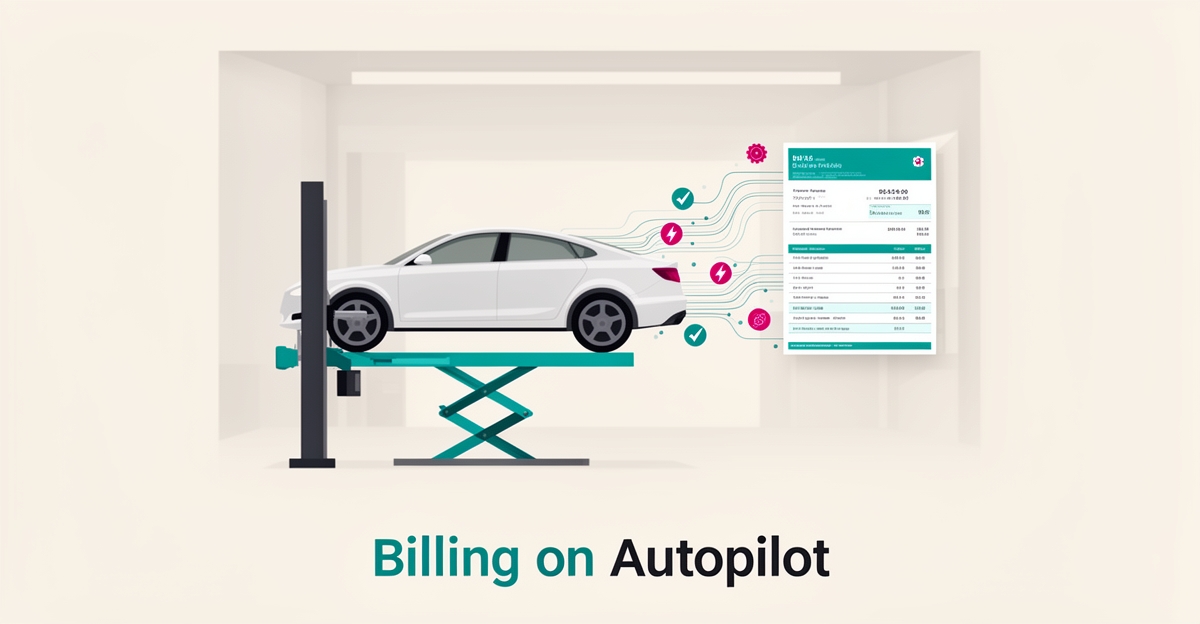
How AI Can Automate Your Oil Change Shop's Invoice and Billing Process
Key Facts
- Manually processing a single invoice typically costs several dollars in labor once data entry, validation and follow-up are counted — a hidden drain that multiplies quickly in high-volume shops.
- Industry analyses consistently find that most invoices still require some human touchpoint, which increases error risk and slows revenue recognition.
- AI-driven billing can cut per-invoice processing costs dramatically by eliminating rekeying and manual validation.
- Faster, more accurate invoicing typically reduces Days Sales Outstanding, getting cash into shop owners' hands sooner.
- AI-driven validation catches pricing and tax discrepancies before an invoice goes out, protecting revenue and customer relationships.
- Shops using integrated shop-management software commonly report large reductions in time spent on admin tasks.
Hire a team member that works 24/7 — for less than a part-time wage.
AI receptionists, SDRs, dispatchers and 99+ roles. Trained on your business, fully managed.
Not sure where to start? Ask our AI planner
The Hidden Cost of Manual Billing in High-Volume Oil Change Shops
The operational strain of manual invoicing in high-volume oil change shops extends far beyond simple paperwork—it directly erodes profitability and slows growth. For shops processing dozens of tickets daily, the cumulative cost of human-led billing creates a silent drain on resources that many owners overlook until cash flow tightens or disputes spike. Between labor, data entry, validation and follow-up, the true cost of processing a single invoice is typically several dollars once everything is counted—a figure that multiplies quickly in fast-paced service environments where every minute counts.
Beyond direct costs, manual billing introduces delays and inaccuracies that disrupt the entire service-to-payment cycle. In many operations, invoices sit in approval queues or wait on data synchronization between the shop's point-of-sale and its accounting software. Industry workflow analyses consistently find that only a minority of invoices clear without human intervention, meaning most require manual touchpoints that increase error risk and slow revenue recognition. These touchpoints are especially problematic in environments where speed and accuracy are critical to customer satisfaction and bay turnover.
Error rates in manual systems compound financial losses through disputes, rework, and delayed payments—issues that AI-driven automation directly mitigates. Shops relying on manual processes typically see a meaningful share of invoices disputed or corrected after the fact, which strains customer relationships and ties up staff in resolution efforts rather than value-added tasks. AI-driven validation reduces these disputes by improving data accuracy before an invoice is ever sent, directly protecting revenue integrity. For AIQ Labs, this underscores the value of integrating intelligent billing agents that operate within shop workflows to ensure every service is invoiced correctly and promptly—without manual intervention. By eliminating these hidden costs, shops reclaim time, reduce leakage, and accelerate cash flow in measurable ways.
How AI Transforms Invoice Generation from Reactive Task to Real-Time Automation
For an oil change shop, billing has traditionally been the last step — a manual handoff after the car leaves the bay. AI flips that sequence by generating the invoice the moment service completes.
AI-powered billing systems replace reactive data entry with real-time automation. Document understanding extracts customer name, services performed, parts used, prices and taxes from the service ticket regardless of format. Automated data entry pushes that structured data into billing software without human rekeying. Intelligent validation then scans the data against pricing lists and service packages to flag discrepancies before an invoice is sent.
This shift matters because finance and admin workloads keep rising while headcount stays flat or shrinks—a gap that widens every year as of late 2026. In that environment, real-time invoice generation at service completion protects cash flow and reduces errors.
The capabilities that make this possible include:
- Document understanding that extracts structured data from receipts, notes and service tickets
- Automated data entry that eliminates manual rekeying into billing software
- Invoice validation and verification against set rules to flag pricing or tax discrepancies
- Real-time data sync with CRM and accounting platforms for a holistic customer and transaction view
For high-volume shops, the impact is measurable. AI-driven billing typically lowers per-invoice processing cost substantially, and Days Sales Outstanding commonly falls by double-digit days—meaning more cash in hand sooner.
Agentic workflows tie these steps together end-to-end. After a VIN or plate scan pulls vehicle specs and service history, the system builds the ticket, closes the job, validates the total, and sends the invoice automatically. Shops using integrated shop-management software commonly report cutting admin time roughly in half.
AIQ Labs designs these workflows as owned, production-ready systems rather than subscription widgets. Through our AI Workflow Builds, we rebuild the one workflow that costs you the most—often billing—at a fixed price, in phases. For shops that want billing connected to scheduling, customer follow-up and reporting in one layer, an AI Operating System ties it together and is owned outright. The result is fewer disputes, faster payment cycles, and billing that supports revenue integrity instead of delaying it.
Implementing AI Billing in Your Shop: A Phased Approach for Minimal Disruption
Implementing AI billing in your oil change shop doesn't require a disruptive overhaul. Following a structured, phased approach minimizes risk while building confidence in the system's reliability. Start by mapping your current invoicing workflow—from service completion to payment receipt—to identify data touchpoints and manual handoffs. This discovery phase, typically taking one to two weeks, lays the foundation for selecting the right AI-enabled tools, such as your existing shop-management platform and accounting software, and ensures seamless integration later.
Next, deploy the solution in a controlled sandbox environment using historical data—ideally a test batch of at least 1,000 invoices—to evaluate how the AI handles your specific formats, pricing rules, and service variations. AI-driven tools can substantially lower per-invoice processing costs and processing time, but validation in a test setting confirms these gains apply to your shop's unique workflow. Use this phase to refine data extraction accuracy, especially for variable services like oil type or filter upgrades, before moving to live transactions.
Once the sandbox testing proves successful, launch a pilot program covering 30% of your daily transactions. Monitor key performance indicators like invoice accuracy, time to send, and payment speed using a simple dashboard. AI tools typically reduce Days Sales Outstanding and push error rates well under 1%, but real-world tracking ensures these improvements materialize in your operation. After confirming stability and accuracy, scale to 100% adoption, retire manual invoicing, and continue optimizing using the system's built-in analytics to capture ongoing efficiency gains. Start the Fit Check to see whether AI billing is a fit for your shop—it takes two minutes.
Still paying for 10+ subscriptions that don’t talk to each other?
We build custom AI systems you own outright. No vendor lock-in. Full control.
Not sure where to start? Ask our AI planner
Frequently Asked Questions
How much is manual billing actually costing my oil change shop per invoice?
Can AI create invoices the moment a car leaves the bay instead of later?
Will switching to AI billing reduce invoice errors and customer disputes?
How long does it take to implement AI billing without shutting down operations?
Is shop-specific software enough, or do I need AI on top of it?
What cash flow impact should I expect from AI billing?
Turn Every Bay Exit Into Faster Cash
Manual billing quietly erodes profitability in high-volume oil change shops through rekeying errors, delayed invoicing, and disputes that tie up staff instead of turning bays. AI flips billing from a reactive handoff to real-time automation at service completion — extracting data from tickets, validating pricing and taxes, syncing with your CRM and accounting tools, and sending the invoice before the car leaves. The result is fewer disputes, lower processing cost per invoice, and faster cash flow. A phased rollout — map the workflow, test in a sandbox with historical invoices, pilot on 30% of transactions, then scale — minimizes disruption while building confidence. AIQ Labs has deployed 200+ multi-agent systems and runs four live SaaS products daily, so we build billing workflows we rely on ourselves. Start the Fit Check at aiqlabs.ai/apply and book a free 30-minute strategy call to map your biggest billing bottleneck and see a clear, high-ROI path to automation.
Make AI your competitive advantage — not just another tool.
Strategy, implementation and ongoing optimization. One partner, end to end.
Not sure where to start? Ask our AI planner