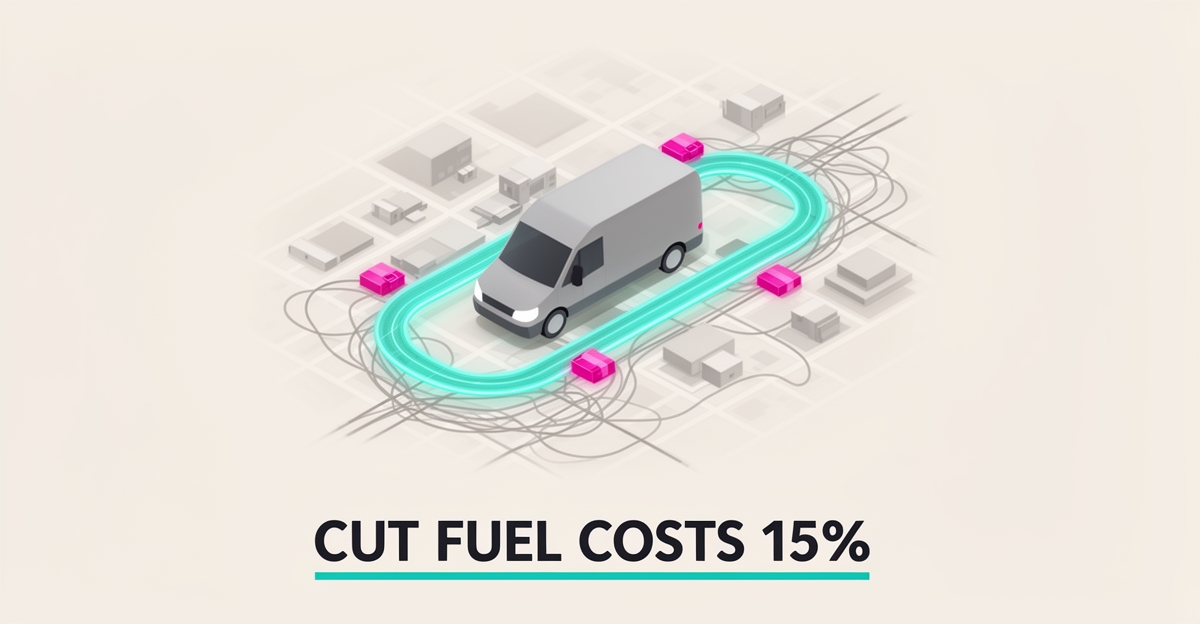
How AI Can Cut Fuel Costs by 15% in Last-Mile Delivery Fleets
Key Facts
- AI-powered route optimization is widely reported to reduce fuel consumption by up to 15% in last-mile delivery fleets according to industry research
- Fuel costs typically account for a large share of total fleet operating expenses—often cited at roughly one-third—amplifying the impact of AI-driven savings per fleet management studies
- AI route optimization can deliver much larger savings on predictable routes than on variable ones by analyzing real-time traffic and weather per mobility research
- Predictive maintenance powered by AI is reported to significantly reduce unexpected vehicle breakdowns, preventing fuel-wasting inefficiencies per Geotab findings
- AI-driven driver coaching can lower fuel consumption by correcting harsh acceleration and idling behaviors per fleet behavior studies
- Fleets using AI for fuel optimization report measurable savings while maintaining service levels and sustainability goals per AI fleet optimization research
- AIQ Labs builds owned systems that integrate telematics and fuel data to deliver continuous fuel savings without vendor lock-in per AIQ Labs service offering
Hire a team member that works 24/7 — for less than a part-time wage.
AI receptionists, SDRs, dispatchers and 99+ roles. Trained on your business, fully managed.
Not sure where to start? Ask our AI planner
The Fuel Cost Problem in Last-Mile Delivery
Fuel expenses represent a significant financial burden for last-mile delivery fleets, often consuming a substantial portion of operational budgets. Industry research commonly cites fuel costs at roughly one-third of total fleet operating expenses, making them a critical area for optimization. Traditional routing methods frequently fail to address real-world variables such as traffic congestion, unpredictable idle time, and tight delivery windows, leading to inefficient mileage and wasted fuel.
These inefficiencies compound over thousands of daily stops, creating avoidable costs that erode profitability. Factors like detours due to road closures, prolonged idling during deliveries, and suboptimal sequencing of stops all contribute to unnecessary fuel burn. Without dynamic adjustments, fleets operate on static plans that cannot respond to changing conditions throughout the day.
AI-powered route optimization directly tackles these challenges by analyzing real-time traffic, weather, and historical patterns to generate adaptive delivery sequences. Such systems are reported to reduce fuel consumption by up to 15% through smarter routing alone. By minimizing unnecessary mileage and reducing idle time, AI enables fleets to maintain service levels while cutting fuel use—a dual benefit that supports both cost reduction and sustainability goals. For businesses seeking to modernize their logistics operations, AIQ Labs builds owned systems tailored to specific fleet challenges—whether that starts with rebuilding the one workflow that costs you the most or a full AI Operating System—ensuring long-term control and continuous improvement without vendor lock-in.
How AI Reduces Fuel Consumption Through Route and Behavior Optimization
Last-mile delivery fleets face mounting pressure to control fuel costs, which typically represent a large share of total operating expenses. AI-powered optimization offers a practical path to cut consumption by up to 15% through smarter routing, maintenance, and driver coaching—directly impacting the bottom line.
AI route optimization analyzes real-time traffic, weather, and historical data to minimize mileage and idle time, with the largest gains typically showing up on predictable, repeatable routes. Predictive maintenance helps prevent inefficient vehicle operation by identifying issues before they cause breakdowns, avoiding fuel-wasting suboptimal performance. Driver behavior monitoring targets habits like speeding and harsh braking, with AI-driven coaching reported to lower fuel consumption by up to 15% through safer, more efficient driving.
- Dynamic rerouting based on live traffic conditions
- Predictive alerts for engine inefficiencies
- Real-time feedback on acceleration and braking patterns
- Idle time detection and reduction strategies
- Fuel-efficient routing adjusted for delivery windows
AIQ Labs builds systems that integrate these capabilities, transforming raw telematics data into actionable fuel-saving workflows. By owning the AI infrastructure, fleets gain continuous optimization without vendor lock-in, ensuring long-term efficiency gains scale with operations. This approach turns fuel management from a cost center into a measurable competitive advantage.
Implementing AI Fuel Efficiency with AIQ Labs’ Custom Systems
Last-mile delivery fleets face rising fuel costs that can erode profitability, but AI-driven systems offer a practical path to savings. By integrating telematics, fuel card data, and maintenance records into custom workflows, AIQ Labs builds production-ready systems that optimize routes, detect idle time, and coach drivers—delivering owned AI without vendor lock-in through Start Monthly, Build in Milestones, or Own It Outright payment models.
AI-powered route optimization analyzes real-time traffic, weather, and historical patterns to minimize mileage and fuel use, with industry research reporting up to a 15% reduction in fuel costs through such optimization. Industry research supports this potential, while predictive maintenance further reduces unexpected breakdowns, keeping vehicles running efficiently. Geotab’s findings highlight how AI-driven insights transform reactive fleets into proactive operations.
- Route optimization delivers the biggest gains on predictable, repeatable routes
- Driver behavior coaching reduces fuel use by up to 15% by correcting harsh acceleration and idling
- Fuel costs typically represent roughly one-third of total fleet operating expenses, amplifying savings impact
AIQ Labs’ systems unify these capabilities into a single owned platform, enabling SMB fleets to achieve measurable fuel savings while maintaining full control over their AI assets—no subscriptions, no lock-in, just production-ready automation built for real-world delivery challenges. For fleets ready to cut fuel costs, the first step is the 2-minute Fit Check, followed by a free 30-minute strategy call to map your specific opportunity.
Still paying for 10+ subscriptions that don’t talk to each other?
We build custom AI systems you own outright. No vendor lock-in. Full control.
Not sure where to start? Ask our AI planner
Frequently Asked Questions
How much can AI actually reduce fuel costs for my last-mile delivery fleet?
What specific AI capabilities deliver the biggest fuel savings for delivery fleets?
Will I need to replace my existing telematics or fleet management systems to use AI fuel optimization?
How does AI route optimization differ from the GPS routing we already use?
What's the implementation timeline and cost structure for a custom AI fuel optimization system?
How do I know if my fleet will actually see these fuel savings before committing?
Turning Fuel Savings into Strategic Advantage
AI-powered route optimization, predictive maintenance, and driver behavior coaching offer a practical path to cut fuel costs by up to 15%—directly impacting the bottom line for last-mile delivery fleets where fuel typically represents roughly one-third of operating expenses. By minimizing unnecessary mileage, reducing idle time, and preventing inefficient vehicle operation, these AI-driven solutions deliver measurable savings while supporting sustainability goals. The real opportunity lies in owning the technology: custom-built AI systems that integrate telematics, fuel data, and maintenance records into unified workflows give fleets continuous optimization without vendor lock-in. For businesses ready to transform fuel management from a cost center into a competitive advantage, the first step is the 2-minute Fit Check, followed by a free 30-minute strategy call to map your specific opportunity.
Make AI your competitive advantage — not just another tool.
Strategy, implementation and ongoing optimization. One partner, end to end.
Not sure where to start? Ask our AI planner