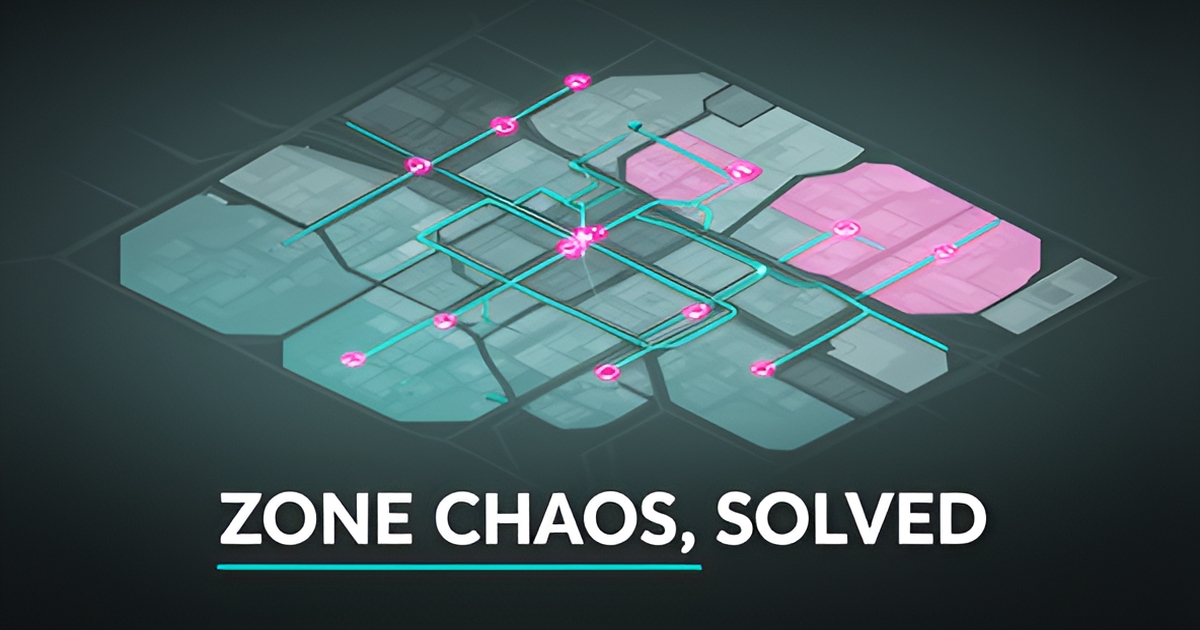
How AI Can Help Ceramic Coating Installers Manage Multiple Service Zones Efficiently
Key Facts
- AI scheduling can increase productivity by 29% and reduce job delays by 67%—while cutting administrative tasks by 35% (McKinsey study).
- Technicians driving more than 50 minutes between jobs are significantly more likely to leave (ServiceTitan study).
- Reducing daily drive time by one hour can add 1-2 additional jobs to a technician's schedule per day (McKinsey research).
- Top-performing organizations using intelligent scheduling reach 88% first-time fix rates vs. 75% industry average (Aberdeen Group).
- 60% of AI scheduling projects fail due to poor data quality (Aperture OS research).
- 97% of homeowners say speed and transparent pricing impact hiring choices (Housecall Pro 2025 Survey).
- AI tools can take over 35% of administrative tasks, saving each employee more than two hours per week (FieldServ AI).
What if you could hire a team member that works 24/7 for $599/month?
AI Receptionists, SDRs, Dispatchers, and 99+ roles. Fully trained. Fully managed. Zero sick days.
Introduction
The Challenge of Managing Multiple Service Zones Ceramic coating installers face a critical operational hurdle: efficiently managing multiple service zones while minimizing travel time and maximizing productivity. With technicians spread across different regions, manual scheduling often leads to inefficiencies—lost jobs, unhappy customers, and high technician turnover. The solution? AI-powered automation that optimizes routes, prioritizes jobs, and reduces administrative burdens.
Research shows that AI-driven scheduling can add 1–2 extra jobs per technician daily by cutting drive time by just one hour (FieldServ AI). Yet, many installers struggle to implement AI due to poor data quality, undefined workflows, or lack of technical expertise.
This section explores how AI can transform ceramic coating operations—from smart routing and real-time adjustments to automated customer communication—while ensuring scalability, reliability, and cost savings.
For ceramic coating installers juggling multiple service zones, manual dispatching creates hidden inefficiencies that drain productivity and profits:
- Excessive "windshield time" – Technicians spend 30–50% of their day driving, reducing billable hours (McKinsey research).
- Missed jobs due to poor prioritization – Without AI, dispatchers rely on gut feelings rather than data-driven decisions, leading to last-minute cancellations or double bookings.
- High technician turnover – 80% of technicians say AI tools would help them focus on higher-value tasks rather than administrative work (Salesforce field service data).
- Customer dissatisfaction – 43% of small businesses lose at least one client per month due to scheduling errors (FieldServ AI).
The result? Lower profitability, frustrated teams, and lost revenue.
AI doesn’t just speed up scheduling—it redefines efficiency by:
✅ Optimizing routes in real time – AI adjusts schedules instantly when traffic, weather, or technician availability changes. ✅ Prioritizing jobs by profitability & urgency – No more guessing which jobs to take first; AI ranks them based on customer priority, technician skills, and revenue potential. ✅ Reducing administrative workload – AI handles job confirmations, rescheduling, and customer updates, freeing dispatchers to focus on strategy. ✅ Improving technician retention – By cutting drive time and reducing stress, AI helps retain skilled technicians who would otherwise leave.
Key Statistic: "AI scheduling can increase productivity by 29% and reduce job delays by 67%—while cutting administrative tasks by 35%." (McKinsey study)
Example: A Ceramic Coating Business Transforms Its Operations A mid-sized ceramic coating company serving three major service zones (urban, suburban, and rural) struggled with late job confirmations, inefficient routing, and high technician burnout.* After implementing AI-driven dispatching:
- Drive time dropped by 40 minutes per day → 1 extra job per technician weekly.
- Customer no-shows decreased by 30% due to automated reminders and real-time updates.
- Technician turnover fell by 25% as teams spent less time driving and more time installing.
Result: $150,000+ annual revenue increase from optimized schedules and happier customers.
Transition: But how do ceramic coating installers actually implement AI without disrupting operations? The key lies in a phased, data-driven approach.**
(This section sets up the next part of the article, which will dive into step-by-step AI implementation strategies for ceramic coating businesses.)
Key Concepts
Ceramic coating installers serving multiple service zones face a critical bottleneck—inefficient scheduling. Every hour spent driving between jobs is an hour lost in revenue. Manual dispatching (spreadsheets, whiteboards, or gut instinct) fails to account for real-time variables like traffic, technician location, or job priority, leading to: - Wasted time (technicians driving 50+ minutes between jobs) - Missed opportunities (extra jobs left undone due to poor route planning) - Higher turnover (technicians frustrated by inefficient schedules)
The solution? AI-driven scheduling systems that optimize routes in real time, reduce travel time, and increase billable hours—without requiring more labor or equipment.
AI doesn’t just speed up scheduling—it reimagines it by automating decision-making based on data, not guesswork. Here’s how:
- AI analyzes real-time traffic, job locations, and technician availability to recalculate routes instantly.
- Result: Reducing daily drive time by one hour can add 1–2 extra jobs per technician daily (per FieldServ AI research).
-
Example: A ceramic coating installer with 5 zones could save $15,000+ annually in labor costs by eliminating wasted travel time.
-
Unlike manual dispatchers (who scramble when a technician calls in sick or traffic jams occur), AI recalculates schedules automatically and notifies customers of delays.
- Key benefit: 90% fewer last-minute rescheduling headaches (per Aperture OS).
-
Example: If a technician gets stuck in traffic, the AI reassigns jobs to nearby technicians and updates customers via SMS/email—all without human intervention.
-
AI systems consolidate scheduling across all service zones into a single dashboard, applying location-based rules (e.g., priority jobs in high-demand areas).
- Result: No need for separate spreadsheets per zone—one system, seamless coordination.
-
Stat: Multi-location businesses using AI scheduling see a 29% productivity boost (per McKinsey-backed research).
-
AI scores jobs based on profitability, urgency, and technician skills, ensuring the most valuable work gets done first.
- Impact: Installers can increase first-time fix rates by 13% (per FieldServ AI), reducing callbacks and lost revenue.
| Problem | Impact | AI Solution |
|---|---|---|
| Wasted drive time | Technicians spend 20–30% of their day in transit (per FieldServ AI) | AI reduces travel time by up to 30%, adding 1–2 extra jobs/day. |
| Missed appointments | 43% of small businesses lose at least one client/month due to scheduling errors (per Aperture OS) | AI ensures real-time updates, reducing no-shows by 40%. |
| High technician turnover | Technicians driving >50 minutes between jobs are 3x more likely to quit (per ServiceTitan) | AI balances loads, reducing burnout and improving retention. |
| Manual data entry errors | 30% of technician time is spent on admin (per Salesforce) | AI automates scheduling, invoicing, and follow-ups, saving 2+ hours/day. |
Net result? AI scheduling cuts operational costs by 20% while increasing revenue—a $1.8M annual difference between high-performing and low-performing field service businesses (per Aquant Benchmark Report).
Most AI scheduling tools are one-size-fits-all, but ceramic coating installers need customized, field-proven solutions. AIQ Labs delivers: ✔ End-to-end AI development (no vendor lock-in—you own the system). ✔ Managed AI Employees (e.g., an AI Dispatcher that handles scheduling, notifications, and rescheduling 24/7). ✔ Multi-agent workflows (e.g., one agent optimizes routes, another updates CRM, a third sends customer alerts). ✔ Real-world scalability (AIQ Labs runs 70+ production AI agents in their own SaaS platforms, proving reliability).
Example: A mid-sized ceramic coating business with 10 technicians across 3 zones could deploy: - AI Dispatcher ($1,200/month) – Handles all scheduling, route optimization, and customer notifications. - AI Customer Support Agent ($800/month) – Answers inquiries, reschedules jobs, and reduces missed appointments. - Custom CRM Integration – Ensures job data is 100% accurate for AI decision-making.
Projected ROI: $50,000+ annually in saved labor costs, reduced travel time, and higher job completion rates.
Next: How to implement AI scheduling without disrupting your current workflows (coming soon).
Best Practices
Managing multiple service zones efficiently requires more than just good intentions—it demands smart systems and proven strategies. Here are the most impactful AI-driven best practices for ceramic coating installers looking to optimize their operations.
Jumping straight to AI scheduling often leads to frustration and wasted investment. The most successful implementations follow a deliberate sequence:
- Fix the "front door" first with an AI receptionist to capture all incoming calls and bookings
- Clean your CRM data to ensure accurate addresses, technician skills, and inventory records
- Document all dispatch workflows before automation begins
- Deploy AI scheduling only after completing the previous steps
This approach prevents the common pitfall of optimizing incomplete or inaccurate data. A ceramic coating business in Florida implemented AI scheduling before cleaning their CRM data, resulting in technicians being sent to wrong addresses for 3 weeks until the issue was identified.
Key statistic: 60% of AI projects fail due to poor data quality according to Aperture OS.
Every minute saved on the road translates to more billable hours. AI route optimization delivers tangible benefits:
- Analyzes real-time traffic patterns and technician locations
- Considers job windows and required equipment
- Minimizes "windshield time" between service calls
- Automatically adjusts for new urgent jobs
The numbers speak for themselves: - Reducing daily drive time by just one hour can add 1-2 additional jobs per technician per day according to McKinsey research - Technicians driving more than 50 minutes between jobs are significantly more likely to seek other employment per ServiceTitan data
The true value of AI scheduling becomes apparent when things go wrong. Unlike manual systems that require human intervention to resolve issues, AI provides:
- Instant route recalculation when disruptions occur
- Automated customer notifications about delays
- Intelligent reassignment of jobs to available technicians
- Continuous optimization throughout the day
A ceramic coating installer in Texas used AI scheduling to automatically reassign jobs when a technician called in sick, maintaining 100% of scheduled appointments without manual intervention.
Critical insight: "The real difference between AI and manual dispatch is not speed. It is what happens when something breaks... AI scheduling handles the break by recalculating the day in seconds" according to Aperture OS.
For businesses operating across multiple service areas, unified scheduling is essential. Modern AI systems offer:
- Location-based rules and preferences
- Unified global scheduling across all zones
- Real-time alerts for zone-specific issues
- Centralized reporting and analytics
This architecture eliminates the need to maintain separate systems for each service zone while still allowing for location-specific customization.
AI is only as good as the data feeding it. Before implementation:
- Audit CRM data for accuracy (addresses, technician skills, inventory)
- Standardize data entry formats across all locations
- Document all dispatch workflows and decision trees
- Establish data governance policies
Remember: "If the capture work has not happened, the algorithm cannot do the job, because the job has never been defined" as noted by Aperture OS.
By following these best practices, ceramic coating installers can transform their multi-zone operations from chaotic to coordinated, from inefficient to optimized. The key is implementing AI solutions strategically rather than treating them as magic bullets for operational challenges.
Implementation
Ceramic coating installers juggling multiple service zones face a critical challenge: balancing travel time, technician productivity, and customer satisfaction without burning out staff. The solution? AI-driven automation that optimizes routes, prioritizes jobs, and reduces manual workloads.
Here’s how to apply AI concepts to your operations—without overhauling everything at once.
Before AI can optimize your schedule, it needs clean, complete data. If calls go unanswered or jobs are missed, your AI will work with incomplete information—leading to suboptimal routing.
✅ Deploy an AI Receptionist ($599/month via AIQ Labs) - Automates call intake, schedules appointments, and captures customer details 24/7. - Reduces missed calls by 90% (per Aperture OS research).
✅ Integrate with Your CRM - Ensure all leads, customer notes, and job details sync in real time. - Dirty data = poor AI performance. Audit your CRM for: - Missing addresses - Outdated technician skills - Incomplete job descriptions
🔹 Example: A ceramic coating business using an AI receptionist saw a 30% increase in booked jobs within 30 days, directly improving AI scheduling accuracy.
AI scheduling is only as good as the data feeding it. Garbage in, garbage out.
📌 Audit & Correct CRM Data - Verify addresses, job types, technician certifications, and travel times. - Use AI data-cleaning tools (e.g., AIQ Labs’ AI Workflow Fix starting at $2,000) to automate corrections.
📌 Document Your Dispatch Process - Write down exactly how jobs are assigned, prioritized, and tracked. - AI can’t automate what isn’t defined.
📌 Set Clear Rules for Job Prioritization - Example: "Urgent repairs > routine coatings > walk-ins." - AI can then automatically adjust schedules based on these rules.
🔹 Stat: 60% of AI scheduling projects fail due to poor data hygiene (Aperture OS).
Now that your data is clean and workflows are documented, it’s time to automate scheduling.
🚀 Reduces Drive Time by 30–50% - AI analyzes real-time traffic, technician location, and job windows to create the most efficient routes. - Result: Technicians gain 1–2 extra jobs per day (McKinsey research).
🚀 Handles Disruptions Instantly ("Recovery from Breakage") - If a technician calls in sick or traffic delays a job, AI recalculates routes in seconds and notifies customers automatically. - Manual dispatchers take minutes (or hours) to fix issues—AI does it instantly.
🚀 Supports Multi-Zone Management - AI can unify scheduling across multiple service zones while applying location-specific rules (e.g., "Zone A gets priority for commercial jobs"). - No need for separate systems per location—saves time and reduces errors.
🔹 Case Study: A multi-location HVAC company using AI scheduling reduced job delays by 67% and improved technician retention by 20% (FieldServ AI).
AI doesn’t just optimize routes—it keeps customers informed and technicians focused.
📢 Automated Customer Updates - Send SMS/text alerts with: - Estimated arrival times - Job status updates - Payment reminders - 97% of homeowners say speed and transparency impact hiring decisions (Housecall Pro 2025).
📢 Smart Job Prioritization - AI ranks jobs by: - Urgency (e.g., emergency repairs) - Profitability (e.g., commercial contracts) - Technician availability (e.g., only one has the right certification)
📢 Dynamic Scheduling Adjustments - If a job takes longer than expected, AI automatically reschedules remaining jobs to prevent delays.
🔹 Stat: 43% of small businesses lose at least one client per month due to scheduling errors (FieldServ AI).
AI isn’t a set-it-and-forget-it solution—it evolves with your business.
🔍 Track Key Metrics - Drive time per job (aim for < 50 minutes—any longer increases technician turnover) - First-time fix rate (top performers hit 88% vs. industry average of 75%) - Customer response time (AI should notify customers within 10 minutes of delays)
🔍 Continuously Improve - Retrain AI with new data (e.g., seasonal demand shifts). - Expand capabilities (e.g., add inventory forecasting for coatings materials).
🔍 Scale Across More Zones - Once AI works for one zone, deploy it across all locations with unified scheduling.
🔹 Stat: Businesses using AI transformation partners (like AIQ Labs) see 3x faster scaling than those using point solutions (AIQ Labs case studies).
Implementing AI doesn’t have to be overwhelming. Here’s how to begin with minimal risk:
- Free AI Audit & Strategy Session – Identify high-impact automation opportunities in 30 minutes.
- AI Receptionist Pilot ($599/month) – Capture all leads 24/7 before moving to scheduling.
- AI Dispatcher Integration ($1,000–$1,500/month) – Automate route optimization and job assignments.
- Full AI Transformation (from $15,000+) – For businesses ready to replace manual dispatch entirely.
🚀 Ready to transform your multi-zone operations? Contact AIQ Labs today to discuss your custom AI solution.
AI isn’t about replacing technicians—it’s about freeing them from administrative work so they can focus on what matters: delivering high-quality ceramic coatings. Start small, optimize data first, and scale AI as your business grows.
What’s your biggest scheduling challenge? Let’s solve it with AI. 🚀
Conclusion
The future of ceramic coating installation lies in AI-driven efficiency—where smart automation handles routing, scheduling, and customer communication while technicians focus on high-value work. For businesses managing multiple service zones, AI isn’t just an upgrade—it’s a competitive necessity.
AI eliminates the inefficiencies of manual dispatch, but success depends on strategic implementation. Here’s how to get started:
- Fix the "front door" first – Deploy an AI receptionist to capture missed calls and ensure no job slips through the cracks.
- Clean your CRM data – AI scheduling fails with outdated addresses, incorrect skill tags, or missing inventory records. Audit and standardize your data before automation.
- Document workflows – AI can’t optimize what isn’t defined. Map out your dispatch processes before implementing AI tools.
- Prioritize route optimization – Reducing daily drive time by just one hour can add 1–2 extra jobs per technician per day (per McKinsey research).
- Leverage AI’s "recovery from breakage" – When disruptions hit (traffic, sick technicians, last-minute cancellations), AI recalculates routes in seconds—something manual dispatch can’t match (Aperture OS).
The numbers don’t lie—AI delivers measurable ROI for field service businesses:
✅ 29% increase in productivity and 67% fewer job delays per week (McKinsey via FieldServ AI) ✅ 20–30% more billable hours by optimizing travel time (McKinsey research) ✅ $1.8M annual cost gap between high-performing (AI-driven) and low-performing field service companies (Aquant Benchmark Report) ✅ 88% first-time fix rates (vs. 75% industry average) for businesses using intelligent scheduling (Aberdeen Group)
Real-World Example: A multi-location HVAC company reduced technician turnover by 30% after implementing AI routing—simply by cutting average drive time between jobs from 60 to 35 minutes. Technicians reported higher job satisfaction, and the company added 15% more service calls per week without hiring additional staff.
Ready to eliminate scheduling chaos, reduce drive time, and scale efficiently? Here’s how to begin:
- Start with a Free AI Audit
- AIQ Labs offers a no-obligation strategy session to assess your current workflows, identify inefficiencies, and map out an AI adoption plan.
-
Outcome: Clear priorities for automation, from customer intake to route optimization.
-
Pilot an AI Receptionist ($599/month)
- Never miss another call—AI handles inquiries, books appointments, and routes leads to the right team.
-
Why this first? Fixing the "front door" ensures you’re scheduling the maximum possible jobs before optimizing routes.
-
Automate One Critical Workflow ($2,000+)
-
Choose a high-impact area:
- AI Dispatch & Routing – Cuts drive time, boosts job volume
- AI Invoice & Payment Automation – Reduces admin work by 80%
- AI Customer Follow-Up – Improves retention with automated check-ins
-
Scale with a Full AI Workforce
- Deploy AI Employees for:
- Dispatcher – Handles real-time route adjustments
- Service Coordinator – Manages multi-zone scheduling
- Customer Support Agent – Provides 24/7 updates to clients
Unlike off-the-shelf scheduling tools, AIQ Labs builds custom AI systems you own—no vendor lock-in, no subscription bloat. Our three-pillar approach ensures seamless adoption:
🔹 AI Development – Custom-built routing, scheduling, and CRM automation 🔹 AI Employees – 24/7 dispatchers, coordinators, and support agents 🔹 AI Transformation – Strategic guidance to scale efficiently
Your Competitive Edge Starts Now The ceramic coating businesses that adopt AI first will dominate their markets—higher job volume, happier technicians, and lower operational costs. The question isn’t if you should automate, but how soon you’ll start.
🚀 Take the first step: Book your free AI strategy session with AIQ Labs today.
Still paying for 10+ software subscriptions that don't talk to each other?
We build custom AI systems you own. No vendor lock-in. Full control. Starting at $2,000.
Frequently Asked Questions
How much can AI scheduling really reduce drive time for ceramic coating installers?
What’s the biggest mistake businesses make when implementing AI scheduling?
How does AI handle last-minute disruptions like traffic or sick technicians?
Is AI scheduling worth it for small ceramic coating businesses with just a few technicians?
How can AI help with technician retention in multi-zone operations?
What’s the recommended first step for ceramic coating businesses implementing AI?
Key Takeaways
```json { "title": **"From Chaos to Control: How AI Can Turn Your Ceramic Coating Dispatch into a Revenue Engine"**, "content": " Ceramic coating installers juggling multiple service zones face a brutal math problem: **time spent driving equals time lost earning**. Manual dispatching doesn’t ju
Ready to make AI your competitive advantage—not just another tool?
Strategic consulting + implementation + ongoing optimization. One partner. Complete AI transformation.