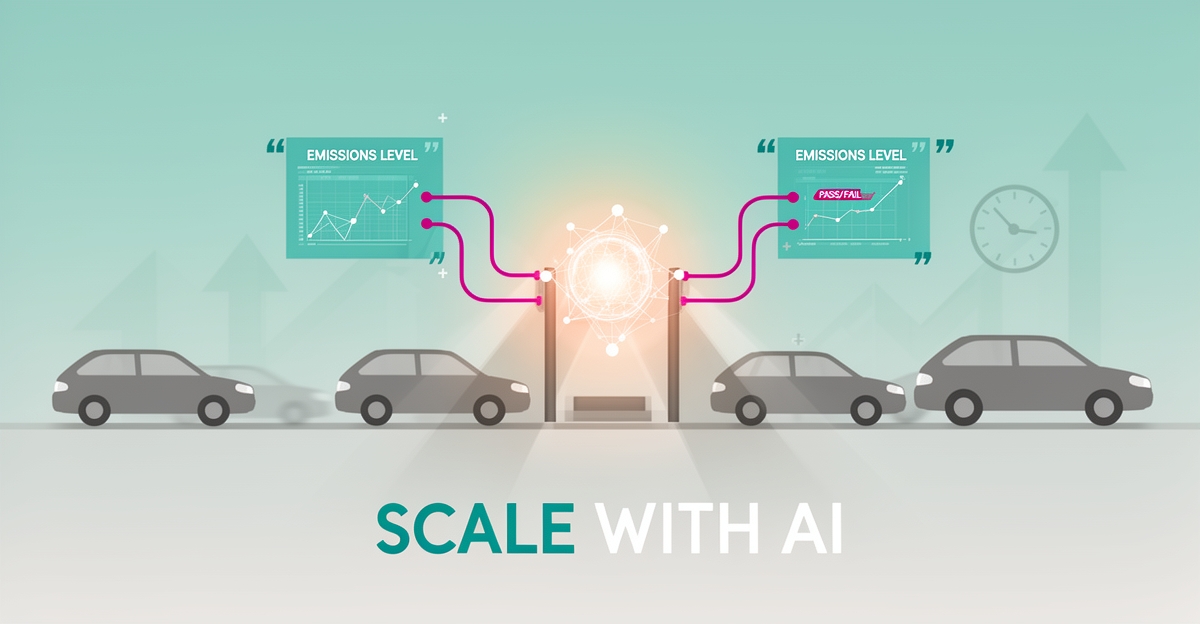
How AI Can Help Emissions Testing Stations Scale During Peak Seasons
Key Facts
- Proactive AI-based monitoring is reported to meaningfully reduce repair costs and fuel expenses for fleet operators based on continuous emissions data
- AI acts as a productivity multiplier, letting small teams operate like larger organisations according to industry experts
- AI-driven diagnostics reduce retests by detecting fuel mixture imbalances early improving first-pass rates
- Real-time sensors enable proactive identification of vehicles needing service before arrival through continuous monitoring
- AI integration makes tools least noticeable but indispensable to existing workflows as noted by business leaders
- Security audits are essential before deploying AI-generated components, as studies have found a substantial share of AI-generated code samples contain known flaws per recent security research
Hire a team member that works 24/7 — for less than a part-time wage.
AI receptionists, SDRs, dispatchers and 99+ roles. Trained on your business, fully managed.
Not sure where to start? Ask our AI planner
The Peak Season Bottleneck: Why Traditional Testing Can't Keep Up
Peak season turns emissions testing into a capacity crisis. Demand surges while bays, technicians, and time stay fixed, forcing stations to choose between long queues and costly temporary hires.
Traditional testing relies on manual readings and technician assessments. That approach is prone to human error and inconsistency, and it scales only with the number of available, trained technicians. When volume spikes, wait times stretch, retests pile up, and service quality slips.
AI acts as a productivity multiplier that removes friction from existing workflows. It does not make businesses less busy; it allows a small team to operate with the maturity, governance, and delivery capability of a much larger organisation. That shift is critical when demand spikes and staffing is constrained.
The bottleneck shows up in three compounding ways:
- Longer wait times as vehicles queue for manual plug-in devices and interpretation.
- Increased retests caused by missed irregularities and fuel mixture imbalances that could have been flagged earlier.
- Staffing strain from pressure to hire temporary staff who need training and still slow the line.
AI-driven diagnostics automatically analyze emissions data, compare it with manufacturer standards, and recommend maintenance steps. This delivers less guesswork and faster decisions, which directly translates to more vehicles tested per hour. By detecting issues like inefficient combustion early, AI helps vehicles pass on the first attempt, meaning fewer retests, less wasted time, and greater accuracy.
Real-time sensors and continuous monitoring add another layer of scalability. Sensors are smaller, faster, and more intelligent than ever before, and they feed data to central systems that can proactively identify vehicles likely to need service before they arrive. Every test generates detailed data that can be analyzed over time to track performance trends, understand seasonal impacts, and adjust maintenance schedules for maximum efficiency.
The business case is reinforced by retention patterns. Surveys of UK small and midsize businesses that adopted AI tools found that the large majority were still paying for them a year later. Businesses renew because the workflows they have built around these capabilities would have to be rebuilt without them. The most useful AI tools are often the least noticeable, becoming part of how work gets done without extensive retraining.
For emissions stations, the value is both operational and environmental. Proactive monitoring using AI-based emissions testing is reported to meaningfully reduce repair costs and fuel expenses for fleet operators. Environmental regulations are tightening every year, and AI-driven testing helps vehicles meet required emission standards with minimum downtime while maintaining green certifications.
AIQ Labs helps stations handle surges without hiring temporary staff—whether through AI Employees that take over scheduling and intake, or a targeted Workflow Build that rebuilds your single most expensive process. The result is consistent service, higher throughput, and a team that focuses on complex repairs and customer interaction instead of manual data entry.
How AI Transforms Testing Throughput and Accuracy
Emissions testing stations face intense pressure during peak seasons, when vehicle volumes surge and traditional workflows struggle to keep pace. This bottleneck often leads to longer wait times, increased retests, and strained staff—issues that AI is uniquely positioned to resolve by transforming testing throughput and accuracy at the core.
AI-powered diagnostics and smart sensors work together to slash test times by automating data analysis and comparing emissions readings against manufacturer standards in real time. As noted in industry research, this shift from manual interpretation to data-driven analysis enables "less guesswork and faster decisions," directly increasing the number of vehicles processed per hour. By catching issues like fuel mixture imbalances or inefficient combustion early, AI significantly reduces the likelihood of failed tests, meaning fewer retests and less wasted time during high-demand periods. Proactive monitoring using AI-based emissions testing is reported to reduce repair costs and fuel expenses for fleet operators—a benefit that translates to testing stations through higher first-pass rates and smoother bay turnover.
Beyond speed, AI enhances accuracy by continuously monitoring subtle changes in temperature, pressure, oxygen levels, and gas composition that might escape human detection. This level of precision ensures vehicles either pass confidently or receive targeted maintenance recommendations, reducing comebacks and building trust with customers. When integrated into existing diagnostic and scheduling systems, these capabilities become seamless parts of the workflow—so much so that, as one expert observes, "the most useful AI tools are often the least noticeable." For stations aiming to scale without hiring temporary staff, this integration means current teams can handle greater volume with consistent quality, turning seasonal peaks into opportunities for reliable, high-throughput service. AIQ Labs supports this transformation through AI Workflow Builds that embed these capabilities directly into testing station operations at a fixed price, ensuring scalability is achieved without compromising accuracy or compliance.
Integrating AI Without Disruption: From Pilot to Peak-Ready
Peak seasons turn emissions testing stations into high-pressure environments where demand can overwhelm even well-staffed facilities. The key to scaling without adding temporary hires lies in starting small, securing the foundation, and building toward reliability—exactly how AI systems transition from prototype to production-ready tools.
Begin by deploying AI for specific, high-friction tasks like diagnostic analysis or report generation, where outcomes are clear and oversight is straightforward. Industry research shows that among UK small and midsize businesses that adopted AI tools, the large majority were still paying for them a year later—a testament to how embedded, workflow-specific AI becomes indispensable once it removes manual bottlenecks. This approach lets stations test AI's impact on throughput and accuracy without disrupting core operations or requiring extensive retraining of existing technicians.
Security and stability must come before scaling. Before going live, audit every AI-generated component for logic flaws, exposed endpoints, or vulnerable dependencies—steps critical given that security research has found a substantial share of AI-generated code samples introduce known security flaws. Security best practices dictate moving all credentials to environment variables, validating session checks on API routes, and sanitizing user input server-side to close gaps before they become liabilities in a high-volume setting.
Finally, treat deployment as a phased rollout, not a flip-the-switch moment. Use staging environments to test edge cases like simultaneous user actions or API timeouts, gather real-user feedback early, and establish monitoring and backup routines. This deliberate progression—from prototype to reliable production use—ensures AI becomes a seamless, trusted part of the station's workflow, ready to handle peak-season surges with consistent performance and zero disruption to service quality. AIQ Labs supports this journey with milestone-based builds and outright ownership, so the system you deploy is yours—prioritizing security and operational continuity from day one.
Still paying for 10+ subscriptions that don’t talk to each other?
We build custom AI systems you own outright. No vendor lock-in. Full control.
Not sure where to start? Ask our AI planner
Frequently Asked Questions
Will AI actually help my emissions testing station handle peak season without hiring temps?
How does AI reduce retests and wait times during busy periods?
Is there proven cost savings from using AI for emissions testing?
Will my technicians need extensive retraining to use AI tools?
Are businesses actually sticking with AI tools after they buy them?
What security risks should I watch for when deploying AI in my station?
Turn Your Busiest Season Into Your Best Season
Peak season doesn't have to mean longer queues, more retests, and burned-out technicians. As we've seen, AI-driven diagnostics and smart sensors can dramatically increase throughput and first-pass accuracy, while a phased, security-first rollout ensures these capabilities embed into your existing workflow without disruption. Proactive AI-based emissions monitoring is reported to meaningfully reduce repair costs and fuel expenses for fleet operators, and once integrated, these systems become indispensable to daily operations. The next step is simple: identify your single biggest bottleneck—whether it's diagnostic analysis, report generation, or scheduling—and start there. AIQ Labs rebuilds that one workflow at a fixed price, or connects your whole operation with an AI Operating System built in phases and owned outright, so your current team can handle surges without temporary hires. If you're not sure where to begin, take the two-minute Fit Check at aiqlabs.ai/apply and book a free 30-minute strategy call. It's a no-obligation working session with an AI engineer to map your highest-ROI opportunity—and if there isn't a clear win, we'll tell you that too.
Make AI your competitive advantage — not just another tool.
Strategy, implementation and ongoing optimization. One partner, end to end.
Not sure where to start? Ask our AI planner