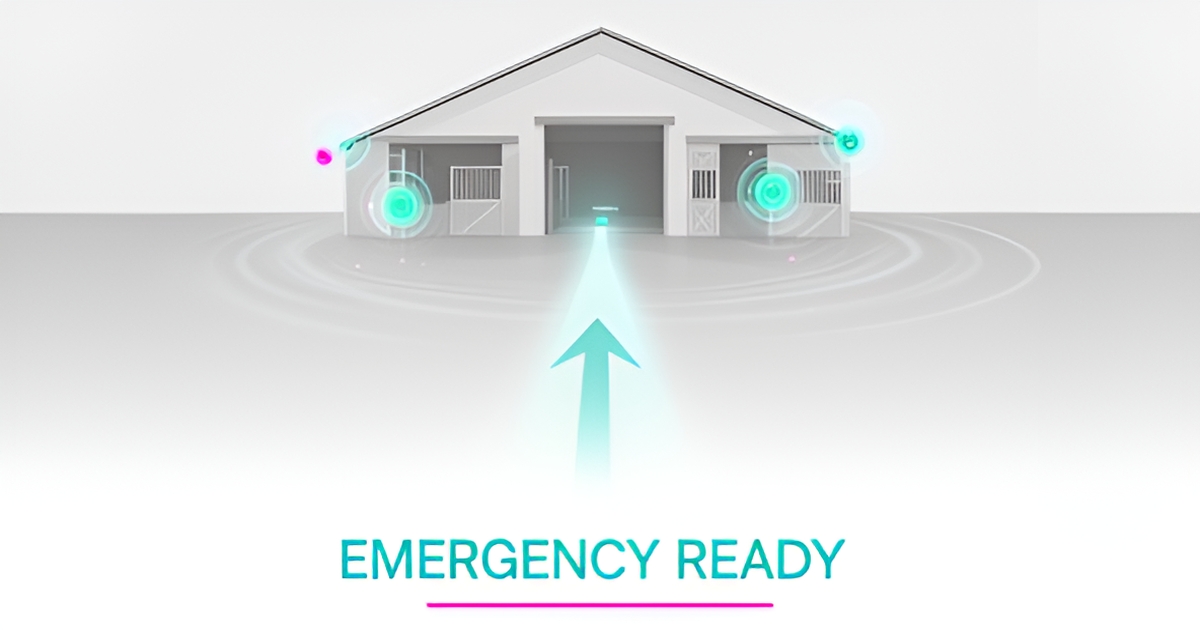
How AI Can Help Your Stable Prepare for Emergency Situations
Key Facts
- Traditional emergency alerts are slow and error-prone, but AI can generate critical messages in seconds rather than minutes.
- AI systems follow strict FCC limits: 90 or 360 characters for mobile alerts, up to 1,800 for broadcast.
- No international standards body has published safety guidelines for AI deployment in equine environments as of late 2026.
- Modern AI platforms detect smoke and fire from cameras to automatically trigger lockdowns and alert first responders instantly.
- AI automatically disseminates emergency alerts based on predetermined triggers, eliminating human delay from critical notifications.
- AI-powered simulations identify weaknesses in emergency plans by running multiple iterations before real crises strike.
- Integrated AI infrastructure enabled Harris County to pivot and recover rapidly after Hurricane Harvey using real-time flood and transport data.
Hire a team member that works 24/7 — for less than a part-time wage.
AI receptionists, SDRs, dispatchers and 99+ roles. Trained on your business, fully managed.
Not sure where to start? Ask our AI planner
Why Traditional Emergency Plans Fail Stables
When a barn fire ignites or a disease outbreak spreads through a stable, every minute of delay compounds the risk to horses and staff. Traditional emergency plans rely on manual phone trees, handwritten checklists, and reactive decision-making that simply cannot match the speed of modern crises.
Research confirms that traditional methods of crafting these messages can be slow, error-prone, and ineffective in transmitting critical information when the public—and stable personnel—need it most. Emergency managers face significant challenges creating alerts under stress with limited information and competing priorities, often leading to confusion and delayed protective action. The problem intensifies in equine environments where no international standards body has published guidelines governing the deployment of safety systems, leaving stables without a framework for automated response.
- Fragmented communication channels (text, radio, word-of-mouth) create information silos during crises
- Manual alert drafting consumes precious minutes when evacuation or containment decisions require seconds
- Lack of real-time situational awareness leaves staff reacting to outdated conditions
- Static paper plans cannot adapt to evolving threats like shifting fire lines or disease vectors
These gaps put horses, staff, and facilities at disproportionate risk during weather events, fires, or disease outbreaks. AI-driven technology can automatically disseminate alerts and notifications based on predetermined triggers, allowing for immediate action rather than deliberation. Modern emergency incident management software bridges these gaps with automation, real-time visibility, and seamless communication at every stage of crisis response. At AIQ Labs, our AI Workflow Builds rebuild the one workflow that costs you most—like emergency alerting—into something that triggers response protocols the moment conditions change, at a fixed price and in phases.
How AI Automates Detection, Alerting, and Response Protocols
When a barn fire ignites or a flash flood warning drops, the window for safe evacuation shrinks to minutes. Traditional phone trees and manual weather checks introduce delays that stables simply cannot afford. Research confirms that traditional methods of crafting these messages can be slow, error-prone, and ineffective in transmitting critical information when every second counts.
Modern AI systems close this gap by fusing real-time data streams into a single command layer. They ingest feeds from National Weather Service APIs, on-site environmental sensors monitoring temperature and air quality, and stable management platforms tracking herd locations. This integration allows the system to correlate a sudden barometric pressure drop with specific pasture zones, identifying exactly which horses are in the hazard path before a human even opens a weather app.
Once a threat threshold is breached, the AI executes pre-approved response workflows without waiting for human confirmation. It auto-generates alert messages compliant with Wireless Emergency Alert (WEA) character limits—90 and 360 characters—and Emergency Alert System (EAS) standards up to 1,800 characters, ensuring messages broadcast instantly via cell towers and radio. Simultaneously, it triggers a cascade of operational actions:
- Pushes evacuation routes to staff phones based on real-time fire or flood progression
- Dispatches the on-call veterinarian with the precise stall locations of at-risk animals
- Activates automated gate releases or trailer loading sequences
- Logs every timestamped action for post-incident compliance review
This level of orchestration mirrors what advanced platforms now achieve in enterprise security, where AI can detect threats like break-ins, smoke, fire, and firearms directly from surveillance cameras and automatically trigger lockdowns while alerting first responders. The same logic applies to equine facilities: sensors replace cameras, and evacuation routes replace lockdowns.
For stables, the value lies in removing human latency from the equation. AI-driven technology can automatically disseminate alerts based on predetermined triggers, allowing for the immediate dissemination of vital information while staff focus on physically moving animals rather than managing communication trees. AIQ Labs connects these disparate barn systems—weather APIs, sensor networks, and management software—into a unified response engine built in milestones, so you see it working at each phase before going further, and you own the final system outright.
Building an AI Emergency System That Fits Your Stable
Deploying a custom AI emergency layer transforms your stable from reactive chaos into proactive coordination. Research shows that traditional alert methods are often slow and error-prone, but AI-driven systems can generate critical messages in seconds rather than minutes.
Begin with a thorough audit of your current emergency protocols. Identify gaps in how you detect threats, notify staff, and coordinate evacuations. Document every manual step that could delay response when seconds matter.
Next, connect your data sources into a unified intelligence layer. Modern AI platforms integrate video surveillance, access control, and environmental sensors to detect smoke, fire, or unauthorized entry in real time. According to recent industry analysis, these integrated systems can trigger automated lockdowns and alert first responders immediately. Incorporate localized risk assessment data—such as FEMA’s National Risk Index—to train your system on region-specific threats like flooding or severe weather patterns.
Define clear escalation rules that dictate exactly when and how the AI acts. Establish triggers for different threat levels, from severe weather warnings to medical emergencies. Safety experts note that AI can automatically disseminate alerts based on predetermined conditions, ensuring no critical notification depends on human availability.
Your implementation checklist should include:
- Audit existing emergency workflows to identify automation opportunities
- Integrate cameras, sensors, and localized risk data into a central AI hub
- Configure character-limited alert templates (90–360 characters for mobile alerts)
- Establish clear escalation matrices for different emergency types
- Train staff using AI-augmented simulations and regular drills
Prioritize owned infrastructure over vendor-locked subscriptions. Custom-built systems give you complete control over your emergency protocols and data. AIQ Labs builds these tailored solutions so your stable owns the code outright—no recurring platform dependencies, no waiting on a vendor's roadmap. For larger operations, an AI Operating System connects emergency response with scheduling, billing, and herd management in one layer, built in phases.
Finally, conduct regular AI-augmented drills to validate your system. Simulation-based training reveals weaknesses in your emergency plans before real crises strike. By treating AI as a core operational asset rather than a rented tool, you build a resilient safety infrastructure that evolves with your stable’s specific needs.
From Reactive to Resilient: The Long-Term Advantage
A single emergency can expose every gap in a stable’s plan. When it’s over, the real work begins — turning what happened into a system that prevents the next one.
AI-driven post-incident analysis shifts safety from reactive to resilient. By analyzing live data streams and surfacing patterns in real-time, AI gives leaders a clearer lens on the present and a sharper view of the future. AI-enhanced business intelligence transforms static reporting into predictive, in-the-moment action.
After an incident, AI can automatically reconstruct timelines from alerts, sensor triggers, and staff notifications. This rapid review identifies where response protocols lagged and where communication broke down. AI in emergency management platforms process data faster to gain actionable insights on resource allocation, evacuation processes, and communication plans.
Simulation training compounds that learning. AI-driven models and virtual reality simulate crisis scenarios to identify weaknesses in emergency plans and recommend improvements. SafetyCulture research on emergency management notes simulations help refine response strategies by reviewing multiple iterations.
That continuous loop creates a compounding safety asset. Instead of one-time automation, each event improves alert drafting, staff notification, and protocol triggering based on real-time conditions like weather or illness.
Effective alerting remains the foundation. Training an LLM for emergency alerts requires strict adherence to system constraints, including character limits for Wireless Emergency Alerts and the Emergency Alert System. Guidehouse research on AI emergency alerts documents models trained to adhere to 90 characters for one type of WEA, 360 characters for another type of WEA, and up to 1,800 characters for EAS.
Modern incident management software reinforces this resilience. As of 2026, the best emergency incident management software helps teams respond faster with AI, automation, and real-time visibility. Coram’s analysis of emergency software highlights platforms designed for scalability to accommodate organizations of various sizes and help maintain compliance with safety standards like Alyssa’s Law.
For multi-barn operations, the advantage scales. AI can:
- Log and analyze post-incident data across facilities to spot recurring risk patterns
- Generate localized alert drafts that respect character limits and Warning Lexicon best practices
- Run automated drill scenarios and measure staff response times for continuous improvement
- Maintain audit trails for compliance and insurance documentation
Over time, this creates a culture of preparedness. Resilience compounds, not just in technology but in people. AIQ Labs builds custom systems that integrate with stable management tools to ensure faster, safer responses, turning each incident into training data for the next.
The result is fewer repeat failures, lower insurance exposure, and a documented preparedness posture that meets compliance requirements while protecting horses and staff.
Still paying for 10+ subscriptions that don’t talk to each other?
We build custom AI systems you own outright. No vendor lock-in. Full control.
Not sure where to start? Ask our AI planner
Frequently Asked Questions
How does AI actually reduce response time in stable emergencies compared to traditional methods?
What specific data sources does an AI emergency system for stables integrate to detect threats early?
Do I need to give up control of my stable's emergency protocols if I use an AI system from a vendor?
Can AI help with post-incident analysis to improve future emergency responses?
What character limits must AI-generated emergency alerts follow to be compliant with public warning systems?
Is there an international standard for deploying AI or robotic systems in equine environments that I should be aware of?
From Chaos to Control: Building a Stable That Learns
Traditional emergency plans fail because they rely on human speed in moments that demand machine precision. By integrating real-time sensor data, automated alerting compliant with WEA and EAS standards, and pre-approved response workflows, AI transforms a stable's reaction from fragmented phone trees into coordinated action — dispatching veterinarians, releasing gates, and logging every decision for compliance. The long-term advantage compounds: each incident becomes training data, each drill sharpens response times, and post-incident analysis turns static plans into living systems that adapt to shifting fire lines or disease vectors. For multi-barn operations, this means centralized risk visibility, standardized protocols, and audit trails that satisfy insurers and regulators alike. Research confirms that AI can generate compliant alert messages in seconds rather than minutes, directly addressing the communication gaps that endanger horses and staff during critical emergencies. AIQ Labs builds custom automation layers that connect your existing barn systems — weather APIs, sensors, management software — into a unified response engine you own outright, built in milestones so you verify value at every phase. Start with the 2-minute Fit Check, then book a free 30-minute strategy call to map your stable's specific vulnerabilities and identify the highest-ROI automation opportunities — no obligation, just clarity on where AI can protect what matters most.
Make AI your competitive advantage — not just another tool.
Strategy, implementation and ongoing optimization. One partner, end to end.
Not sure where to start? Ask our AI planner