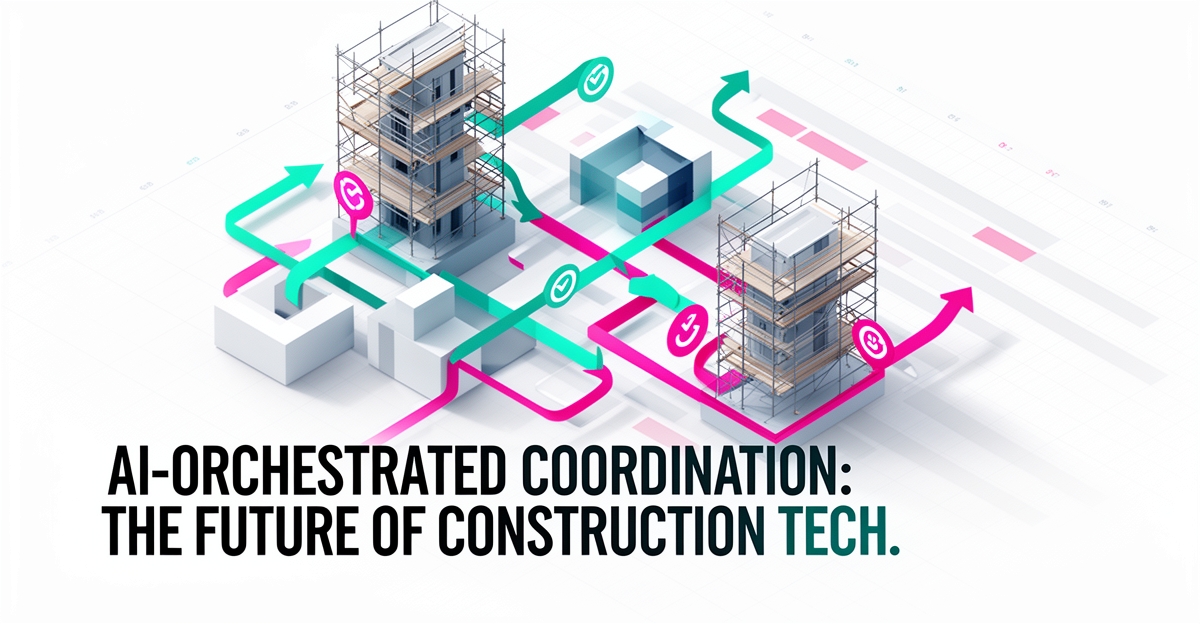
How AI Can Improve Communication Between Contractors and Subcontractors
Key Facts
- AI-driven autonomous scheduling has moved from early forecasts to deployed practice across manufacturing and construction-adjacent sectors as of late 2026
- Small, specialized language models are typically several times cheaper to run than large general-purpose models, making real-time coordination affordable for SMB contractors
- Use AI on the $10 task so you can focus on the $10K task—this captures the force multiplier principle behind AI coordination
- Most day-to-day coordination work (reminders, status updates, slot-finding) is automation-friendly, while judgment calls remain human work
- Smaller firms typically adopt AI coordination tools faster than enterprises, narrowing the technology gap for SMB contractors
- Teams that automate routine coordination commonly report reclaiming many hours per week previously lost to manual follow-ups
Hire a team member that works 24/7 — for less than a part-time wage.
AI receptionists, SDRs, dispatchers and 99+ roles. Trained on your business, fully managed.
Not sure where to start? Ask our AI planner
The Real Cost of Coordination Chaos: Why Schedules Slip and Rework Piles Up
Scheduling slips rarely start on site. They start in the inbox, the spreadsheet, and the last-minute call that reorders the whole week.
Manual coordination between contractors and subcontractors creates a reactive loop where schedules, materials, and deliverables are managed by whoever is loudest or most available. That friction produces the classic pattern of delays followed by expensive rework.
AI-driven task scheduling uses artificial intelligence to automatically organize, prioritize, and assign tasks—making complex planning much faster and less manual. Industry forecasts made in the mid-2020s predicted that a large share of manufacturers would have AI-driven autonomous scheduling in place by 2026, and that shift has largely played out. The bottleneck is no longer technology, it is the coordination layer between parties.
Prioritization by urgency instead of business impact is a core failure mode. AI can do something most teams struggle with manually. It will rank today's priorities by business impact. Not by who's loudest in the room. Not by what broke most recently. By the actions that move your numbers.
Reactive communication compounds the problem. Instead of waiting for user prompts, well-designed agents proactively execute tasks—scheduling meetings, managing follow-ups, and coordinating across calendars and email systems. This proactive stance is what moves coordination from firefighting to orchestration.
Coordination chaos typically shows up as:
- Schedule changes communicated late with no advance notice to dependent trades
- Materials arriving before or after access windows because handoffs were not tracked
- Accountability gaps where no one can confirm who approved the change or when
- Prioritization driven by noise, leading to conflicts over shared site time and equipment
Each point creates rework. Rework is not just labor; it is idle crews, remobilization, and missed downstream milestones.
The human role changes when coordination is automated. AI handles the $10 task so you can focus on the $10K task. If it's low-impact or repetitive, delegate it to AI. Free yourself up for meaningful work. This is the force multiplier principle for project managers.
In practice, this means automated scheduling systems sync workloads, send advance notices, and track deliverables in real time. AIQ Labs addresses scheduling bottlenecks between main contractors and subs through AI Workflow Builds—a fixed-price rebuild of the one workflow that costs you the most, delivered in phases.
Organizations will need to manage AI agents the way they manage people — with performance reviews, accountability, and the ability to retrain or retire underperformers. That governance is the difference between tools that log activity and systems that actually protect margins.
From Firefighting to Orchestration: How AI Becomes a Coordination Layer
Poor coordination between contractors and subcontractors creates a cascade of scheduling conflicts, rework, and accountability gaps. AI-driven scheduling systems solve this by acting as a coordination layer that automatically organizes, prioritizes, and assigns tasks based on business impact rather than urgency or who complains loudest.
The shift is fundamental. Instead of reactive firefighting, AI systems proactively manage workflows. These systems rank priorities by business impact, send advance notices about schedule changes, and re-plan in real time when conflicts emerge—capabilities that have become standard practice across scheduling-heavy industries as of 2026.
Proactive coordination replaces reactive prompts. Modern AI agents don't wait for instructions. They autonomously schedule meetings, manage follow-ups, and coordinate across calendars and email systems. For contractors juggling multiple subcontractors, this means the system detects a delay in one trade's deliverable and automatically reschedules dependent tasks, notifies affected parties, and adjusts resource allocation without human intervention.
The architecture matters. Effective systems use multiple specialized agents working in parallel rather than a single monolithic tool. One agent identifies scheduling conflicts, another pulls in relevant contacts, a third finds open time slots. Small, specialized language models typically power these agents at a fraction of the cost of large general-purpose models, making them fast enough for real-time coordination and affordable for small to mid-sized contractors.
Key capabilities of AI-driven scheduling systems:
- Automated prioritization based on business impact, not urgency or politics
- Advance notices sent proactively when schedules shift or conflicts emerge
- Real-time re-planning when delays or changes occur
- Autonomous coordination of calendars, follow-ups, and resource allocation
- Complete audit trails for accountability and performance tracking
Accountability becomes automatic. Every schedule change, deliverable update, and communication is logged. Daily coordination meetings transform from reviewing what broke to governing the decisions AI systems made. Project managers shift from tactical firefighting to strategic oversight, focusing on exceptions and relationship management while AI handles routine coordination.
This is the "force multiplier" effect. Use AI on the $10 task so you can focus on the $10,000 task. Routine scheduling, status updates, and documentation get delegated to AI. Contractors and subcontractors spend their time on complex problem-solving, quality control, and building the trust that keeps projects running smoothly.
AIQ Labs builds automated scheduling systems that sync workloads, send advance notices, and track deliverables in real time—200+ multi-agent systems deployed to date. The goal is not to replace human judgment but to eliminate the coordination bottlenecks that cause delays and rework. When AI handles logistics, contractors and subcontractors can focus on the work that actually requires their expertise.
Accountability by Design: Automated Tracking and the New Daily Meeting
Every schedule change, deliverable update, and subcontractor message leaves a digital trail that AI can capture in real time. That traceability replaces handshake agreements and end-of-day phone calls with a verifiable record both parties can audit.
AI logging turns coordination into accountability by design. When a main contractor shifts a pour date or a sub confirms crew availability, the system records who changed what, when, and why. Organizations increasingly manage AI agents the way they manage people — with performance reviews, accountability, and the ability to retrain or retire underperformers. The log becomes the performance review.
The daily production meeting changes because the data is already reconciled. Instead of asking what broke, teams review the decisions AI routines made in the last day. In mature deployments, the maintenance order is raised, the part is ordered, and the time is scheduled before the meeting starts. The conversation moves from firefighting to governance.
This accountability layer is built on proactive, not reactive, communication. AI agents proactively execute tasks — scheduling meetings, managing follow-ups, and coordinating across calendars and email systems. Advance notices about site access, material deliveries, or crew conflicts arrive before the problem materializes, giving subs time to adjust rather than absorb rework.
For contractor-subcontractor workflows, traceable accountability shows up as:
- Automated change logs for every schedule update, deliverable status, and approval
- Impact-ranked priorities that rank today's work by business impact, not by who's loudest in the room
- Anomaly flagging and reasoning reviews that surface sub-optimal decisions for human oversight
The approach aligns with how AIQ Labs builds automated scheduling systems that sync workloads, send advance notices, and track deliverables. It mirrors the force multiplier principle: use AI on the $10 task so you can focus on the $10K task. Routine coordination is delegated, freeing project managers for architectural reasoning and relationship management.
Scale is now practical. Small, specialized language models typically run at a fraction of the cost of large general-purpose models, making real-time agent workflows viable for SMB contractors without enterprise budgets.
Human judgment remains essential. AI handles logging and rescheduling; humans decide what to build, how systems should work, and where risks may appear. The meeting becomes a review of logic, data quality, and reasoning that drives action today, with clear ownership for every change recorded by the system.
The $10/$10,000 Rule: Freeing Project Managers for High-Value Work
Contractors and subcontractors lose countless hours to repetitive coordination—finding open time slots, sending reminders, updating status reports—when that same time could be spent solving complex trade-offs or strengthening trade relationships. AIQ Labs' automated scheduling systems act as a force multiplier by handling these $10/hour tasks so project managers can focus on $10,000/hour value-added work like exception handling and strategic oversight. The principle is simple: "Use AI on the $10 task so you can focus on the $10K task. If it's low-impact or repetitive, delegate it to AI. Free yourself up for meaningful work."
This approach aligns with the 80/20 principle—AI drafts 80% of the schedule by autonomously organizing tasks, prioritizing by business impact, and coordinating across calendars, while humans refine the final 20% that requires judgment. In construction, this means AI handles slot-finding, advance notices, and deliverable tracking, freeing humans to manage edge cases like unexpected site conditions or conflicting trade priorities. The balance holds across AI adoption: the routine work gets automated, but deciding what to build, how systems should work, where risks may appear, and what happens after deployment still requires human judgment.
- AI reduces scheduling conflicts by proactively identifying and resolving overlaps before they impact timelines.
- Automated status updates and reminders eliminate the manual follow-ups that consume many hours weekly on similar tasks.
- Specialized agents work in parallel—one finds open slots, another sends notices, a third tracks deliverables—mirroring how well-run construction projects operate.
By delegating low-value coordination to AI, project managers shift from logistical firefighting to higher-order work: designing workflows that prevent bottlenecks, building trust with subcontractors through consistent communication, and making complex trade-offs visible to all stakeholders. This isn't about replacing human expertise—it's about protecting it from erosion by repetitive tasks, ensuring skilled professionals spend their time where it creates the most value.
Implementing AI Scheduling Without Overhauling Your Operation
Implementing AI scheduling doesn't require a complete operational overhaul. The most effective approach begins with identifying one broken workflow—perhaps the coordination between your electrical and plumbing subcontractors—and fixing that specific bottleneck before expanding further. That is exactly the model behind AIQ Labs' Workflow Builds: one workflow, fixed price, delivered in phases.
Start by deploying specialized agents for distinct coordination tasks rather than attempting to automate everything simultaneously. Teams achieve better results using multiple specialized agents working in parallel—individual agents for identifying intent, pulling contacts, and finding time slots—rather than relying on a single monolithic system.
Cost concerns often deter smaller contractors from exploring AI scheduling. However, small, specialized language models typically run at a fraction of the cost of large general-purpose models. These systems can operate on your existing infrastructure, addressing privacy concerns while delivering the speed necessary for real-time scheduling adjustments.
Your implementation should follow these practical steps:
- Automate the most repetitive coordination task first, such as sending schedule change notifications
- Deploy specialized agents for specific functions like advance notices and deliverable tracking
- Use compact, efficient models that run on your own infrastructure to reduce costs and maintain data control
- Establish monitoring loops that flag anomalies automatically rather than requiring manual oversight
- Maintain human review for edge cases and unexpected site conditions
The human element remains essential throughout this process. AI requires supervision, not blind trust. Your project managers should review AI-generated schedules for feasibility and safety considerations, particularly when coordinating multiple trades in confined spaces or dealing with weather-dependent work.
AIQ Labs builds these systems as owned assets rather than subscription services. With the Own It Outright model, the scheduling system becomes your property, complete with advance notice automation and deliverable tracking that creates accountability across all subcontractor relationships. If you'd rather start lighter, AI Employees can handle discrete coordination roles—dispatchers, schedulers, follow-up coordinators—on a monthly basis, and a full AI Operating System can connect everything in phases later. This approach transforms daily coordination meetings from reactive problem-solving sessions into strategic reviews of AI-driven decisions.
The technology exists today to eliminate scheduling bottlenecks without disrupting your entire operation. By starting small, using cost-efficient compact models, and maintaining human oversight for complex decisions, contractors can achieve the coordination benefits that are already standard practice across scheduling-heavy industries.
Still paying for 10+ subscriptions that don’t talk to each other?
We build custom AI systems you own outright. No vendor lock-in. Full control.
Not sure where to start? Ask our AI planner
Frequently Asked Questions
How does AI improve communication between contractors and subcontractors on construction sites?
What specific problems does AI solve in contractor-subcontractor coordination that manual methods fail to address?
Can small contractors afford AI scheduling systems, or is this only for large enterprises?
How does AI change the role of project managers in construction coordination?
What accountability features do AI-driven scheduling systems provide for contractor-subcontractor relationships?
What's the best way to implement AI scheduling without disrupting current operations?
Your Next Schedule Doesn't Have to Break
The coordination chaos between contractors and subcontractors isn't a people problem—it's a systems problem. As we've seen, AI-driven scheduling fixes it by prioritizing tasks by business impact instead of who's loudest, sending advance notices before conflicts materialize, and logging every change so accountability becomes automatic rather than debated. The daily meeting shifts from firefighting to governing AI decisions, and the $10/$10,000 rule frees your project managers for the judgment calls that actually protect margins. With autonomous scheduling now standard practice across scheduling-heavy industries, the question is no longer whether this coordination layer becomes standard—it's whether you adopt it while it's still an edge. You don't need to overhaul your operation: start with one broken workflow, deploy specialized agents for it, and keep human oversight where it matters. AIQ Labs builds automated scheduling systems that businesses own outright—syncing workloads, sending advance notices, and tracking deliverables in real time, with 200+ multi-agent systems deployed to date. Take the two-minute Fit Check at aiqlabs.ai/apply, then book a free 30-minute strategy call to map your biggest scheduling bottleneck. If there isn't a clear win, we'll tell you that too.
Make AI your competitive advantage — not just another tool.
Strategy, implementation and ongoing optimization. One partner, end to end.
Not sure where to start? Ask our AI planner