How AI Can Improve Compliance Tracking in Emissions Testing Stations
Key Facts
- Industry estimates place the global Air Emissions Compliance AI market at roughly USD 1.42 billion in 2024, with strong projected growth through 2033.
- Cloud-based AI platforms have reportedly compressed emissions baselining timelines from 6–8 weeks down to about one week.
- Specialized AI agents can fuse Scope 1, 2, and 3 emissions data from IoT sensors, utility bills, and supplier documents in real time.
- AIQ Labs has deployed 200+ multi-agent systems and runs 4 live SaaS products daily — the same production discipline applies to compliance workloads.
- Consistent staff training is widely reported to raise AI adoption rates and reduce reporting errors.
Hire a team member that works 24/7 — for less than a part-time wage.
AI receptionists, SDRs, dispatchers and 99+ roles. Trained on your business, fully managed.
Not sure where to start? Ask our AI planner
The Compliance Pressure Facing Emissions Testing Stations
Emissions testing stations are no longer judged by how well they file paperwork after the fact — they are measured by whether they can prevent violations before they happen. Regulators are tightening thresholds, audit cycles are shortening, and the cost of a single missed deadline now extends far beyond a fine into legal exposure and reputational damage.
The market has already priced in this shift. Industry estimates put the global Air Emissions Compliance AI market at USD 1.42 billion in 2024, with projections of strong double-digit growth through 2033 as stations race to replace periodic checks with continuous oversight. Cloud-based platforms have reportedly compressed emission baselining from 6–8 weeks down to about one week, making real-time monitoring financially viable even for mid-sized operators.
Traditional workflows leave three critical gaps that manual processes cannot close:
- Periodic sampling misses short-duration spikes in NOx, SO2, or CO2 that trigger violations
- Manual report compilation introduces transcription errors that auditors flag as systemic risk
- Reactive response means corrective action only happens after a breach is recorded
AIQ Labs works with stations to close those gaps by deploying AI systems that ingest sensor streams, validate test records against current regulations, and generate audit-ready documentation automatically. The shift from reactive reporting to proactive monitoring is no longer a technology decision — it is a compliance survival strategy.
How AI Moves Compliance From Reactive to Real-Time
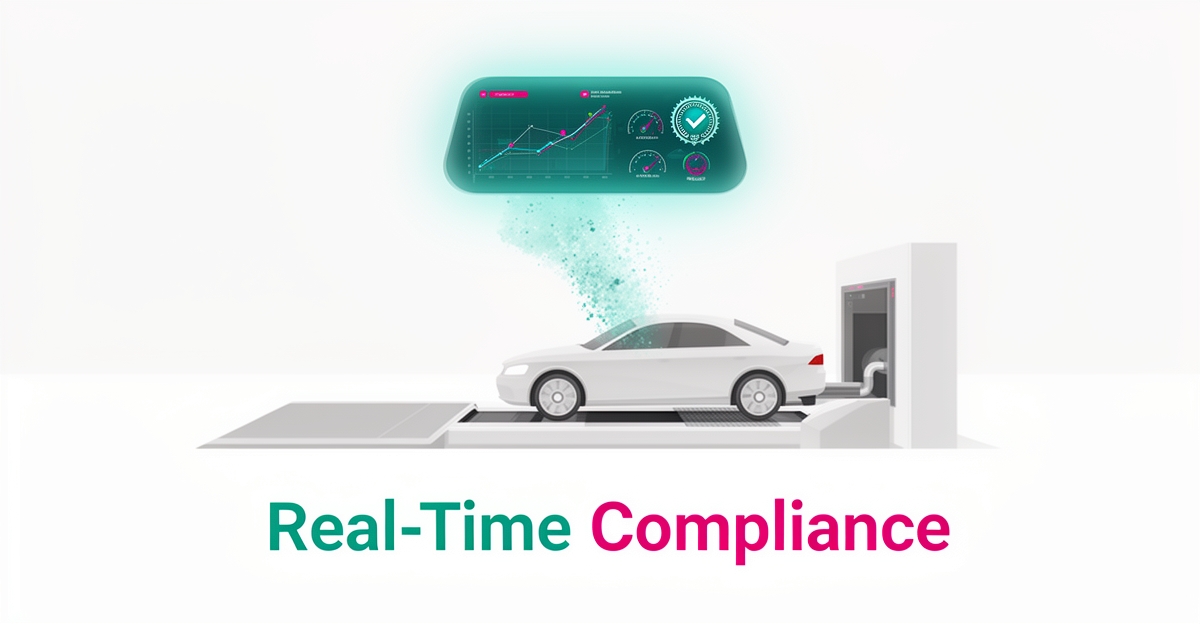
Emissions testing has long operated on a reactive cycle, where compliance gaps are discovered only after violations occur or audits reveal overdue checks. AI fundamentally changes this dynamic by enabling continuous, real-time oversight that turns compliance from a periodic burden into an ongoing operational advantage. With AI-powered IoT sensors deployed at testing stations, data on CO2, NOx, and SO2 levels is collected and analyzed instantaneously, allowing for immediate detection of anomalies that might signal equipment malfunction or procedural drift. This shift is amplified by predictive analytics, which use historical operational patterns to forecast emission trends and alert operators before permitted thresholds are breached—transforming compliance from damage control to prevention.
The impact of this real-time capability is measurable: cloud-based AI systems have reportedly reduced emissions baselining timelines from 6–8 weeks down to about one week, accelerating the deployment of monitoring capabilities and enabling faster responses to regulatory changes. Furthermore, AI agents specializing in Scope 1, 2, and 3 data fusion autonomously pull information from IoT sensors, utility bills, and supplier documents, cleaning inconsistencies and classifying emissions data in real time. This integrated approach ensures that even complex indirect emissions—often the hardest to track—are continuously monitored and reported with audit-ready precision, reducing reliance on manual data aggregation and minimizing human error.
AIQ Labs supports this transformation through AI Workflow Builds that integrate with existing emissions testing infrastructure, ensuring secure data handling and regulatory alignment. Automated reporting powered by natural language processing and machine learning compiles validated data into formats that meet specific environmental standards, eliminating the delays and inaccuracies of manual documentation. As a result, testing stations can generate audit-ready reports on demand, respond swiftly to regulatory inquiries, and maintain a verifiable trail of compliance—turning what was once a reactive scramble into a seamless, real-time safeguard against risk.
Building an Audit-Ready System With AI Agents and Automation
Emissions testing stations face mounting pressure to maintain audit-ready documentation amid tightening environmental regulations. AI-powered systems now enable continuous monitoring, automated validation, and tamper-proof record generation to meet these demands. By integrating real-time IoT sensor data with machine learning algorithms, facilities can detect compliance deviations instantly and generate reports that adhere to specific regulatory standards, eliminating the manual errors that often trigger penalties. Industry reporting suggests automated approaches can reduce emissions baselining from 6–8 weeks down to about one week, accelerating audit preparation significantly.
Specialized AI agents further enhance compliance tracking by autonomously managing Scope 1, 2, and 3 emissions data. Scope 1 agents monitor direct emissions from facility equipment and vehicles, while Scope 2 agents analyze utility bills to optimize purchased energy usage. Scope 3 agents tackle complex supply chain emissions by processing supplier invoices and shipping documents—historically challenging to track—ensuring comprehensive carbon footprint visibility. These agents perform real-time data fusion from ERPs, IoT sensors, and external portals, cleaning inconsistencies and standardizing formats for accurate classification under evolving regulatory rules. AIQ Labs' production-tested multi-agent architecture—200+ systems deployed—supports this specialization, enabling seamless coordination between agents for end-to-end emissions management.
To ensure documentation integrity, AI systems incorporate validation layers and audit trails that prevent tampering and provide verifiable records for regulators. Every data point is logged with timestamps and source attribution, creating an immutable trail that supports both internal reviews and external audits. This approach not only reduces administrative burdens but also builds regulatory trust through transparency. Cloud-based deployment models, which allow SMEs to access advanced tools without heavy infrastructure costs, have driven adoption among smaller operators. By automating reporting, validation, and scope-specific tracking, AI transforms emissions compliance from a reactive obligation into a proactive, audit-ready capability. For stations ready to explore this, the 2-minute Fit Check can clarify how AI agents and automation align with specific regulatory workflows.
Implementing AI Compliance Tracking in Your Station
Implementing AI compliance tracking in your emissions testing station starts with a clear, step-by-step approach that aligns with proven industry practices. Begin by identifying and integrating all relevant data sources, including facility meters, IoT sensors, utility bills, and supplier documents—this foundational step ensures accurate AI-driven analysis and is critical for tracking Scope 1, 2, and 3 emissions as outlined in industry frameworks. Next, deploy specialized AI algorithms and agents to autonomously monitor data streams, detect anomalies in real time, and predict future emission trends based on operational patterns, enabling proactive adjustments before thresholds are breached. Establish clear performance metrics to measure the system's effectiveness in reducing errors and improving response times, then engage stakeholders across operations, management, and regulatory teams to foster alignment and data sharing. Optimize reporting processes by leveraging AI to generate audit-ready documentation that adheres to evolving environmental standards, significantly reducing the manual burden and risk of non-compliance. Train your workforce regularly to interpret AI insights and use the new tools effectively—consistent training is widely reported to raise adoption rates and cut reporting errors. Finally, implement continuous monitoring and adjustment loops, using the AI's predictive capabilities to refine operations and maintain compliance over time.
AIQ Labs supports this journey through three entry points: AI Workflow Builds for rebuilding the one compliance workflow that costs you the most at a fixed price, AI Operating Systems for a connected operating layer built in phases and owned outright, and AI Employees for managed AI staff at roughly 80% less cost than a human hire. Payment models—Start Monthly, Build in Milestones, or Own It Outright—match your station's readiness and scale, with full details on the pricing page. This approach transforms compliance from a reactive task into a proactive, sustainable advantage.
Still paying for 10+ subscriptions that don’t talk to each other?
We build custom AI systems you own outright. No vendor lock-in. Full control.
Not sure where to start? Ask our AI planner
Frequently Asked Questions
How does AI improve compliance tracking in emissions testing stations?
What are the main benefits of using AI for emissions compliance compared to traditional methods?
Can AI help track Scope 3 emissions from supply chains in emissions testing stations?
Is AI-driven compliance tracking affordable for small and medium-sized emissions testing stations?
What growth is expected in the AI emissions compliance market, and why is it relevant to testing stations?
How does AI reduce errors in emissions reporting and improve audit readiness?
From Compliance Cost to Competitive Edge
Emissions testing stations face mounting pressure to shift from reactive paperwork to proactive oversight, and AI delivers exactly that—real-time monitoring, automated audit-ready reporting, and predictive insights that prevent violations before they happen. By closing gaps in periodic sampling, manual errors, and delayed responses, AI transforms compliance from a costly obligation into a streamlined, trust-building operational advantage. Stations that adopt this approach not only reduce regulatory risk but also gain the agility to adapt to evolving standards with confidence. The path forward starts with clarity: take the 2-minute Fit Check or book a free 30-minute strategy call to see how AI agents and automation align with your station's specific workflows and turn compliance into a measurable business strength.
Make AI your competitive advantage — not just another tool.
Strategy, implementation and ongoing optimization. One partner, end to end.
Not sure where to start? Ask our AI planner