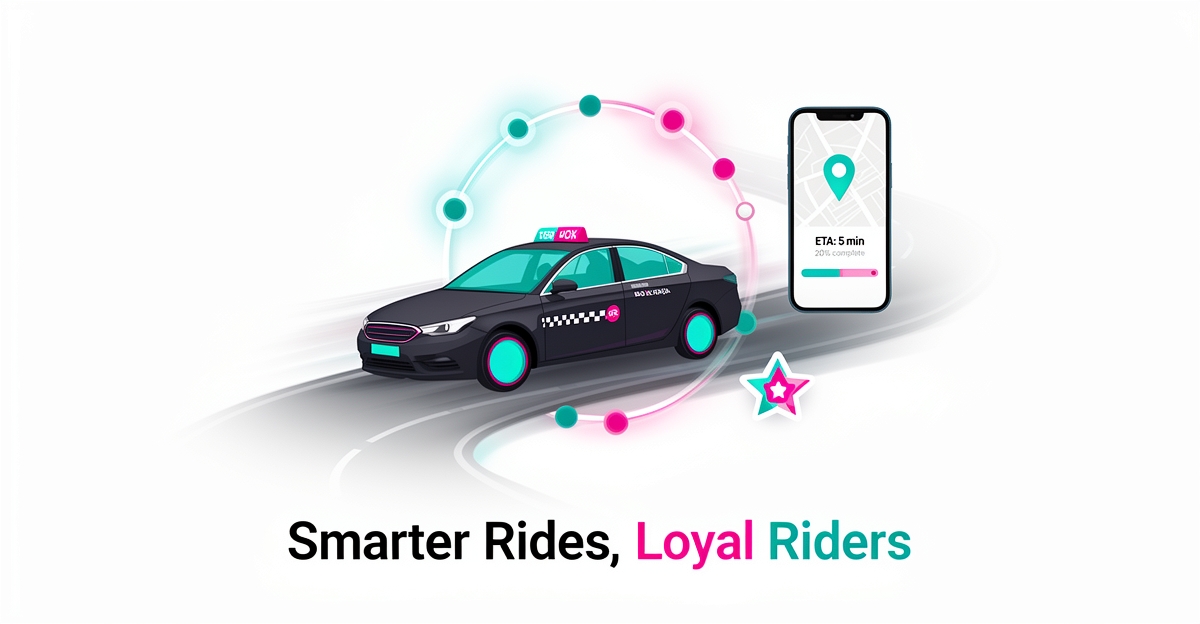
How AI Can Improve Customer Retention in the Taxi Industry
Key Facts
- 73% of ride-hailing users prefer AI-powered booking experiences according to industry research.
- AI implementation is reported to drive a 12–20% increase in repeat customers per OnGraph's analysis.
- Customer wait times can be cut by roughly 35%—from 8–12 minutes to 5–8 minutes—according to operational data.
- AI assistant booking is reported to achieve 84% completion rates versus 67% for traditional booking in implementation data.
- Customer satisfaction is reported to improve from 3.8/5 to 4.4/5 with AI-assisted support.
- Daily rides per driver are reported to rise about 27%—from 12–15 to 15–19 rides—with AI-powered systems.
Hire a team member that works 24/7 — for less than a part-time wage.
AI receptionists, SDRs, dispatchers and 99+ roles. Trained on your business, fully managed.
Not sure where to start? Ask our AI planner
The Retention Challenge in the Taxi Industry
The taxi industry's growth is accelerating, with the global ride-hailing market projected to reach $181.5 billion by 2033, yet securing a first ride is only the beginning of the customer journey. True success hinges on transforming one-time users into loyal patrons, a challenge magnified by the limitations of conventional taxi apps that offer static booking interfaces, minimal personalization, and unreliable wait times. These shortcomings fail to meet evolving user expectations in a market where 73% of ride-hailing users now prefer AI-powered booking experiences, turning basic functionality into a baseline requirement rather than a competitive edge.
Traditional platforms struggle to foster retention because they treat each ride as an isolated transaction, ignoring the wealth of behavioral data that could inform smarter, more engaging interactions. Without intelligent systems to analyze ride history, predict preferences, or dynamically adjust service, apps miss critical opportunities to reduce friction and build emotional connections with users. This gap is particularly costly given that AI implementation is reported to drive a 12–20% increase in repeat customers while simultaneously cutting wait times by roughly 35%—from 8–12 minutes down to 5–8 minutes—directly addressing two of the most common pain points that erode loyalty. For businesses aiming to thrive in this crowded landscape, moving beyond rudimentary dispatch logic toward intelligent, adaptive engagement is no longer optional; it is essential for sustaining growth and outperforming competitors who rely on one-size-fits-all approaches. AIQ Labs builds the intelligent customer engagement systems that turn these insights into action—analyzing user behavior to drive retention through personalized, automated interactions that keep riders coming back.
How AI Transforms Customer Retention
Taxi apps stop being simple booking tools when AI moves in — they become intelligent mobility ecosystems that learn rider habits and respond before a request is even made. That shift turns occasional users into regulars by removing friction, adding relevance, and building trust on every trip.
Personalization is the core retention driver. AI analyzes ride history and behavior to surface saved favorite destinations, preferred drivers, and contextual recommendations such as music or temperature settings. Codico research finds tailoring services based on customer preferences makes a significant difference in repeat usage, and Appscrip analysis shows AI-powered booking assistants can remember context and auto-schedule rides to arrive before a calendar appointment.
AI-powered loyalty becomes dynamic rather than static. Instead of generic points, systems offer occasional personalized discounts based on ride history and time-limited promotions triggered by usage patterns. OnGraph data reports AI implementation can lead to a 12–20% increase in repeat customers, while industry research notes 73% of ride-hailing users prefer AI-powered booking experiences.
Real-time feedback loops tighten the service loop between request and arrival. Smart ETAs built from live traffic, weather and historical trends are reported to be 40–60% more accurate, reducing complaints and building trust. Dynamic pricing balances demand and supply to keep drivers available during peaks, and AI chatbots deliver instant 24/7 support for tracking, changes, or issues.
Safety and trust are reinforced with AI too. Fraud detection helps prevent fake bookings and GPS spoofing, with systems reported to block up to 95% of account takeovers. SOS features, verified drivers, and real-time ride tracking are standard expectations that encourage regular choice.
The operational gains show up in measurable retention metrics:
- Customer wait times cut by roughly 35%, from 8–12 minutes to 5–8 minutes
- Daily rides per driver reported to rise about 27%, from 12–15 to 15–19 rides
- Customer satisfaction reported to improve from 3.8/5 to 4.4/5 with AI-assisted support
These improvements reflect how intelligent customer engagement systems collect and analyze user behavior to drive retention through targeted, automated interactions. AIQ Labs deploys similar engagement architectures—whether as a single rebuilt workflow via AI Workflow Builds or as a connected layer across the whole operation via AI Operating Systems—using behavior analysis to trigger personalized ride recommendations and loyalty rewards without manual intervention.
Retention is no longer about price alone. It is about predictability, relevance, and feeling safe. When AI delivers faster arrivals, smarter rewards, and proactive support, riders stay.
Implementing AI for Retention: Practical Steps
Moving from theory to practice is where most taxi businesses stall, but the path to AI-driven retention follows a clear sequence. Each step below builds on the one before it, and each ties directly to the repeat-ridership outcomes covered earlier in this article.
Start with an AI-powered booking assistant. Natural language booking removes friction at the very first touchpoint, and the data supports prioritizing it: implementation data shows AI assistant booking achieves 84% completion rates compared to 67% for traditional button-based booking. Deploy a chatbot or voice assistant that remembers customer context, recalls saved destinations, and can schedule rides around calendar appointments. For teams without the capacity to staff this in-house, managed options like AI Employees—AI receptionists, dispatchers, and support staff at a fraction of the cost of a human hire—make this step practical from day one.
Next, integrate dynamic pricing and predictive demand forecasting together. Industry analysis confirms that AI-driven pricing adjusts fares based on real-time demand, driver supply, and traffic conditions, while forecasting lets you position drivers before demand spikes rather than after. The retention benefit is indirect but powerful: customers who consistently find available cars at fair prices stop opening competitor apps.
From there, focus on the experience layer that turns occasional riders into regulars:
- Personalized ride recommendations based on trip history, saved destinations, and stated preferences like music or temperature
- A data-driven loyalty program offering targeted discounts and time-limited promotions tied to individual ride behavior
- Real-time feedback loops through AI chat support that resolves issues instantly, keeping satisfaction scores high
Safety features deserve equal weight in your rollout. Retention research consistently shows that passengers who feel safe choose a service repeatedly, so integrate SOS buttons, real-time ride tracking, and AI-powered fraud detection from day one rather than treating them as later additions.
The sequencing matters as much as the tools. Businesses that deploy booking, pricing, and personalization as one connected system see compounding returns, with reported outcomes including a 12–20% increase in repeat customers. Piecemeal adoption, by contrast, creates data silos that limit what each AI component can learn.
AIQ Labs builds these kinds of integrated customer engagement systems for service businesses, connecting behavioral data collection to automated, targeted interactions that drive loyalty. Whether a taxi operation needs a single retention workflow rebuilt at a fixed price or a full engagement platform it owns outright, the implementation follows the same disciplined path: assess the data infrastructure, deploy the highest-impact system first, and expand as results compound.
The Business Case for AI in Taxi Retention
The numbers tell a compelling story: taxi companies implementing AI are reporting measurable returns that go far beyond simple automation. According to industry analysis, businesses report a 12–20% increase in repeat customers after deploying AI-driven retention tools, while operational data shows customer wait times dropping by roughly 35%—from 8–12 minutes down to 5–8 minutes.
The ROI extends across every operational metric. Research from ride-hailing platforms indicates that AI implementation can deliver an average return of 211% within 18 months, driven by efficiency gains and revenue growth. Driver productivity is reported to climb by 18–25%, translating to 15–19 rides per day compared to the traditional 12–15, while customer satisfaction scores are reported to rise from 3.8/5 to 4.4/5.
These improvements stem from specific, measurable changes in how taxi businesses operate:
- Revenue per mile reported to increase from $2.50 to $3.10—a 24% jump—through dynamic pricing and optimized routing
- Fleet uptime reported to improve from 92% to 97% using predictive maintenance that cuts vehicle downtime by up to 30%
- Booking completion rates rise to 84% with AI assistants, compared to 67% for traditional button-based interfaces
- Fuel consumption reported to drop by up to 22% through intelligent route optimization
The financial case becomes even stronger when considering market dynamics. The global ride-hailing market is projected to reach $181.5 billion by 2033, growing at a reported 18.6% annually. With 73% of users already preferring AI-powered booking experiences, the question isn't whether to adopt AI—it's how quickly you can implement it before competitors capture your customer base.
However, the path isn't without obstacles. Initial development costs can be substantial, particularly when building custom features like predictive analytics engines or fraud detection systems. AI platforms also demand high-quality data—user behavior patterns, traffic histories, and transaction records—to function effectively. Companies lacking robust data infrastructure may need to invest in collection and cleaning systems before seeing returns.
Time-to-market presents another consideration. Building proprietary AI from scratch can delay deployment by months, though some platforms now enable launches in 4–6 weeks using pre-built frameworks. For taxi businesses evaluating options, the choice often comes down to build-versus-buy: custom development offers control but requires capital, while white-label solutions accelerate deployment at the cost of differentiation. AIQ Labs' milestone-based build model offers a middle path—phased delivery at a fixed price, with the finished system owned outright rather than rented.
AIQ Labs works with transportation companies to navigate these trade-offs, designing retention systems that align with existing data maturity and budget constraints. Whether implementing personalized loyalty programs or deploying real-time feedback loops, the goal remains consistent: transforming one-time riders into repeat customers who choose your service by default, not by chance.
The competitive landscape leaves little room for hesitation. With a majority of ride-hailing companies already integrating AI and machine learning, these capabilities have shifted from innovative advantages to baseline expectations. Businesses that delay risk not just slower growth, but active customer erosion as competitors deliver the personalized, efficient experiences riders now demand.
Still paying for 10+ subscriptions that don’t talk to each other?
We build custom AI systems you own outright. No vendor lock-in. Full control.
Not sure where to start? Ask our AI planner
Frequently Asked Questions
How much can AI actually improve customer retention in the taxi industry?
What specific wait time improvements can taxi companies expect from using AI?
Do riders actually prefer AI-powered taxi apps over traditional ones?
How does AI improve driver productivity and daily ride volume?
Can AI help reduce operational costs in taxi fleets, and if so, by how much?
What safety features does AI enable to build rider trust and retention?
Turning Rides into Relationships: The AI-Powered Path Forward
The taxi industry's shift from transactional apps to intelligent mobility ecosystems is no longer a futuristic idea—it's the present-day standard for keeping riders engaged. AI transforms retention by personalizing every interaction, from predicting preferred destinations to offering dynamic rewards and cutting wait times by as much as 35%. These aren't incremental tweaks; they're compounding advantages that turn occasional users into loyal patrons who choose your service by default. For taxi businesses ready to move beyond basic dispatch logic, the next step is clear: assess where AI can remove the most friction in your customer journey and build from there. AIQ Labs helps transportation companies implement integrated engagement systems that analyze behavior to drive repeat ridership through personalized, automated interactions—without the complexity of going it alone. Take the first step with a free strategy session to map your highest-impact opportunity: Start the 2-minute Fit Check.
Make AI your competitive advantage — not just another tool.
Strategy, implementation and ongoing optimization. One partner, end to end.
Not sure where to start? Ask our AI planner