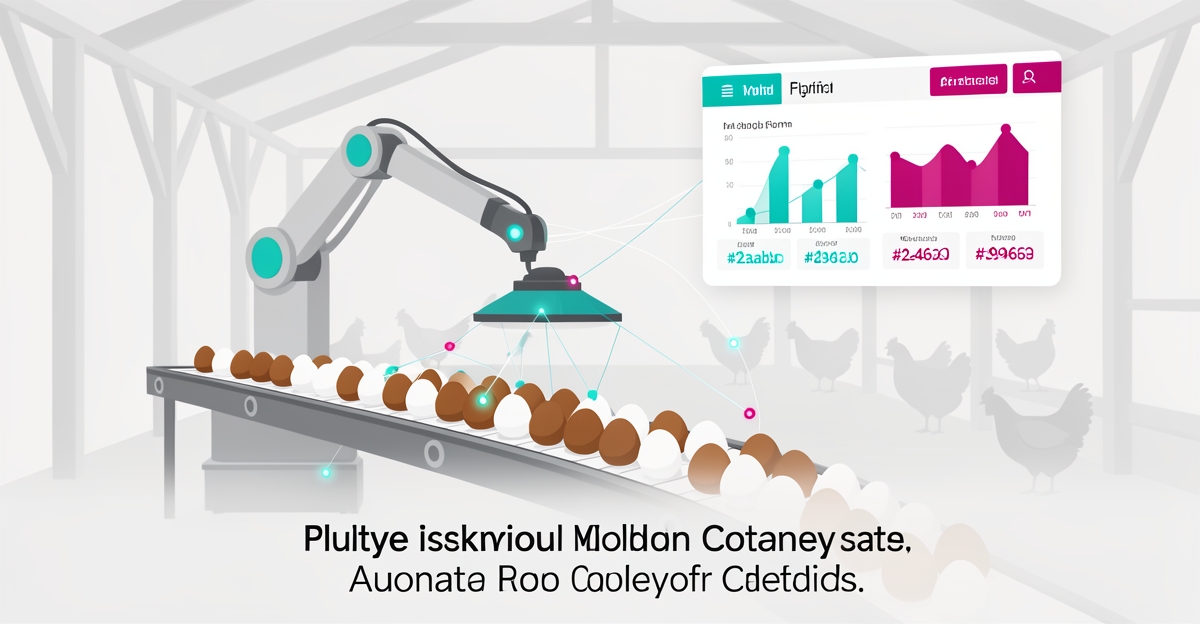
How AI Can Improve Egg Collection and Tracking in Poultry Farms
Key Facts
- Automated egg collection has been reported to reduce labor needs by up to 40% in a real-world case study.
- Egg breakage rates have been reported to fall from 8% to under 2% with automated systems according to poultry farm data.
- Case-study data indicates conveyor belt systems collect roughly 500 eggs per hour per station while roller systems average around 300.
- The SANOVO Farm Intelligence Unit is reported to process up to 72,000 eggs per hour with AI-powered vision.
- Each egg reportedly receives a 360° scan with 16 high-resolution images for precise defect detection.
- Farms in Thailand, Brazil and the Netherlands reported 15–20% egg quality improvement after installing automated collection.
Hire a team member that works 24/7 — for less than a part-time wage.
AI receptionists, SDRs, dispatchers and 99+ roles. Trained on your business, fully managed.
Not sure where to start? Ask our AI planner
The Hidden Costs of Manual Egg Collection and Logging
Manual egg collection and logging create significant hidden costs that directly impact a poultry farm's bottom line. Beyond the obvious labor hours, the process is prone to human error, leading to inconsistent records, missed production anomalies, and preventable egg loss. These inefficiencies compound daily, distorting inventory accuracy and disrupting planning for feed, labor, and market supply. Farms relying on manual methods often operate with blind spots that only become apparent after losses have already occurred.
Collection labor can consume a large share of a farm's workforce — case studies report reductions of up to 40% after automation — pulling skilled workers away from higher-value tasks like flock health monitoring or feed optimization. This bottleneck not only increases payroll expenses but also limits scalability, as expanding flock sizes requires proportional labor growth. In contrast, automated systems streamline collection routes and reduce the need for constant human intervention, freeing staff to focus on preventive care and operational improvements. The result is a leaner, more responsive workforce that supports growth without linear cost increases.
Inconsistent logging further undermines decision-making, as manual records are often delayed, incomplete, or subject to transcription errors. Without real-time data on daily output per flock or house, farmers struggle to detect early signs of production drops linked to disease, stress, or nutritional imbalances. By the time anomalies appear in weekly summaries, corrective actions may come too late to prevent significant losses. Automated tracking eliminates this lag, delivering instant visibility into laying patterns and enabling proactive management.
Perhaps the most tangible cost is egg breakage, which manual handling exacerbates through repeated touching, jostling, and temperature fluctuations during collection. Case-study data shows breakage rates can reach as high as 8% in manual systems — nearly one in twelve eggs lost before they even reach grading. Automated collection, by contrast, uses gentle, consistent mechanisms that have been reported to reduce breakage to under 2%, preserving more sellable product and improving overall yield. This reduction directly translates to higher revenue per hen and less waste in the supply chain.
- Labor needs reduced by up to 40% with automated collection systems, per case-study data
- Egg breakage rates reported to fall from 8% to under 2% through automation
- Real-time tracking enables early detection of production anomalies
- Consistent logging improves inventory accuracy and feed planning
- Reduced handling improves egg hygiene and quality consistency
By replacing guesswork with precise, continuous monitoring, AI-powered egg collection systems transform a reactive chore into a strategic advantage. Farms gain the data needed to optimize every stage of production — from hen health to market timing — while minimizing avoidable losses. For operations aiming to scale efficiently, addressing these hidden costs isn't just about saving money; it's about building a resilient, transparent foundation for long-term profitability. AIQ Labs supports this shift through AI Workflow Builds that rebuild the collection-and-logging workflow that costs you the most, with real-time dashboards that turn egg collection into a reliable source of operational insight.
AI-Powered Monitoring for Real-Time Production and Quality Control
Modern poultry operations are shifting from reactive spot-checks to continuous, data-driven oversight of every egg that leaves the hen house. AI algorithms paired with high-resolution vision sensors now count, weigh, and inspect eggs the moment they are laid, giving producers a live pulse on flock performance without slowing the line.
The SANOVO Farm Intelligence Unit demonstrates this shift at industrial scale, reported to process up to 72,000 eggs per hour while capturing 16 images per egg for a complete 360° scan. Deep-learning models analyze those images in real time to flag leakers, hairline cracks, dirt, and size deviations the instant they appear. Early removal of leakers alone cuts contamination risk downstream and reduces the cleaning burden on packing equipment.
- Automated counting replaces manual tallies, eliminating transcription errors and delivering accurate daily output records
- Real-time defect detection sorts eggs into accept, rework, or reject streams before they reach the packer
- Weight and appearance analytics feed flock-health dashboards so nutrition and environment adjustments happen days earlier
- Traceability logs follow each egg from point-of-lay through collection, satisfying food-safety audits with a click
Case-study data from automated collection deployments shows conveyor-based systems lifting collection speed to roughly 500 eggs per hour per station while driving breakage from 8% to under 2%. Layering AI vision on top of that mechanics adds the quality-intelligence layer: producers see not just how many eggs arrived, but which ones meet grade and why others didn't.
AIQ Labs helps farms close the loop between that sensor data and daily decision-making. Our workflow builds ingest the live feed from vision graders, reconcile it with house-level production targets, and surface anomalies — sudden drop-offs, spikes in cracks, weight drift — on real-time dashboards that managers actually use. The result is a closed feedback loop: better collection logs, cleaner packing lines, and a traceable record that satisfies retailers and regulators alike.
Automated Collection Systems That Optimize Routes and Reduce Losses
Modern poultry farms are adopting automated collection systems that optimize routes and minimize handling to preserve egg quality from nest to storage. Belt and roller systems, tailored to cage or cage-free housing, streamline the collection process while reducing labor demands and contamination risks. These mechanisms transport eggs directly to central points with consistent speed and care, cutting breakage and improving hygiene.
Case-study figures indicate roller systems collect eggs at roughly 300 eggs per hour per station, while conveyor belt systems reach up to 500 eggs per hour per station — a significant throughput gain over manual methods. This consistent flow ensures eggs spend less time in the hen house, maintaining freshness and reducing exposure to temperature fluctuations. Real-world implementations across farms in Thailand, Brazil, and the Netherlands have reported an average 15–20% improvement in egg quality, attributed to fewer handling incidents and better environmental control during transport.
By integrating these physical systems with AI-driven tracking, farms gain real-time visibility into collection patterns, enabling dynamic route optimization and anomaly detection. AIQ Labs' intelligent tracking builds complement automated hardware by logging daily output, flagging irregularities, and providing dashboards that support inventory planning and operational decisions. This synergy between mechanized collection and intelligent monitoring creates a responsive system that adapts to flock behavior and production shifts.
- Reduced labor needs by up to 40%, per case-study reports
- Lowered egg breakage from 8% to under 2%
- Achieved collection speeds of 300–500 eggs/hour per station
These improvements not only enhance product quality but also support biosecurity by minimizing human contact and streamlining sanitation protocols. As farms scale, automated collection becomes a foundational element for consistent, high-volume egg production that meets both market and regulatory standards. The result is a more resilient, efficient operation where technology handles repetitive tasks, allowing staff to focus on flock health and strategic management.
From Data to Decisions: AI Dashboards and Farm Integration
Collecting eggs is only half the battle; making sense of that data is where modern poultry operations gain a competitive edge. AI transforms raw collection numbers into a live operational view, turning daily counts into actionable intelligence for inventory, labor, and flock health decisions.
Automated sensors and vision systems now capture every egg at the point of lay, feeding centralized logs without manual entry. Industrial-scale systems are reported to process up to 72,000 eggs per hour while performing a 360° scan that captures 16 high-resolution images per egg for precise defect detection (SANOVO Farm Intelligence Unit). This granular data stream allows software to calculate hen-day production percentages automatically and flag deviations the moment they occur (SmartBird layer farm management software).
When collection patterns drift — whether from a missed belt run, a sudden drop in a specific house, or a spike in cracked eggs — the dashboard surfaces an anomaly alert instantly. Farms using automated collection have reported breakage rates falling from 8% to under 2%, a direct result of reduced handling and real-time route optimization (Livi Poultry case study). That same data feeds predictive models that forecast output weeks ahead, letting managers adjust feed orders, staffing, and cold-storage space proactively.
AIQ Labs builds the integration layer that connects these sensor streams, grading stations, and existing ERP or accounting tools into a single, owned dashboard — no vendor lock-in, no per-seat SaaS sprawl. For farms ready to go further, an AI Operating System connects collection, inventory, and flock-health data into one operating layer you own outright. The result is a practical workflow where collection logs write themselves, inventory reconciles in real time, and the farm team spends hours analyzing insights instead of transcribing clipboards.
- Real-time hen-day production tracking per flock with automatic anomaly flags
- Integrated quality metrics from in-line vision grading (cracks, dirt, leakers, size)
- Predictive output forecasts tied to feed, lighting, and labor schedules
- One-click export to QuickBooks, Xero, or custom ERP for seamless financial close
The technology is proven, the hardware is commoditized, and the integration path is shorter than most operators assume. If your daily egg report still lives on a whiteboard or a spreadsheet, the gap between collection and decision is costing you more than the upgrade.
Still paying for 10+ subscriptions that don’t talk to each other?
We build custom AI systems you own outright. No vendor lock-in. Full control.
Not sure where to start? Ask our AI planner
Frequently Asked Questions
How much labor can automated egg collection really save on a poultry farm?
Will automation actually reduce egg breakage, or is it just marketing?
How fast do automated collection systems work compared to manual picking?
Can AI really spot cracks and leakers before eggs get to packing?
What kind of quality improvement do farms see after installing automated collection?
Is AI egg monitoring expensive and how long does it take to implement?
Turn Egg Collection Into Your Farm's Quiet Profit Engine
Manual collection hides costs in labor, breakage, and delayed decisions. Case studies report automated systems cutting labor needs by up to 40%, lifting collection to 300–500 eggs per hour per station, and reducing breakage from 8% to under 2% in real-world deployments, while AI vision adds real-time counting, defect sorting, and hen-day production tracking that flags anomalies before losses compound. The result is cleaner data for feed planning, inventory accuracy, and market timing, with staff freed to focus on flock health instead of clipboards. If your daily egg report still lives on a whiteboard or spreadsheet, the gap between collection and decision is costing you. Start with the 2-minute Fit Check at aiqlabs.ai/apply, then book a free 30-minute strategy call to map your biggest bottleneck and identify high-ROI automation opportunities. You can reach the team anytime at [email protected].
Make AI your competitive advantage — not just another tool.
Strategy, implementation and ongoing optimization. One partner, end to end.
Not sure where to start? Ask our AI planner