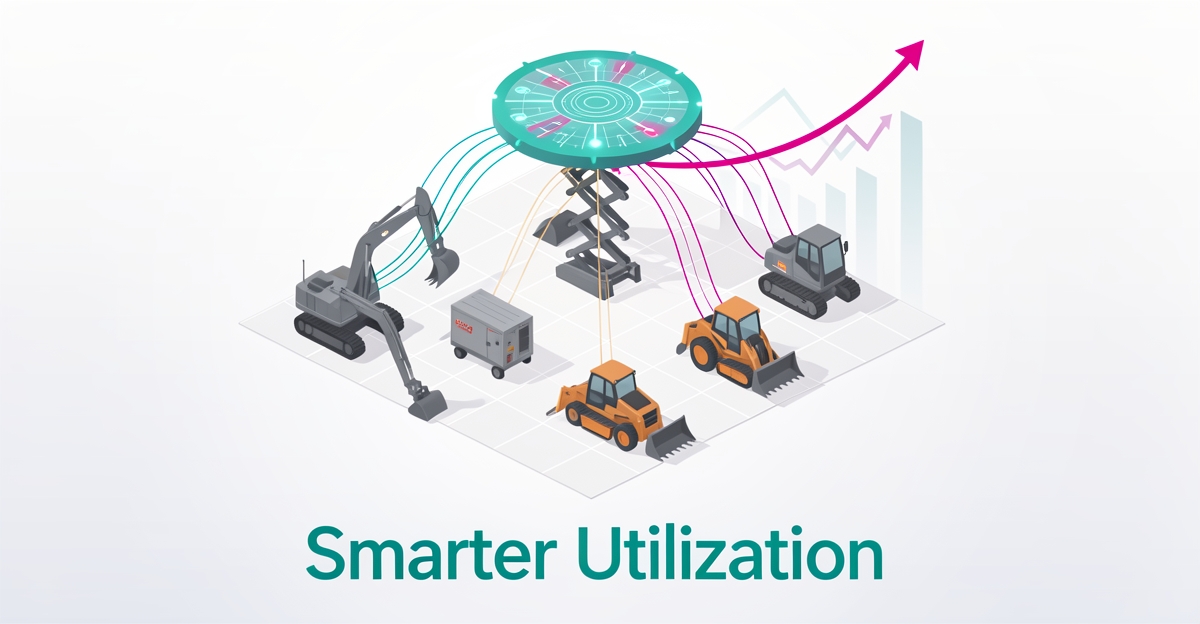
How AI Can Improve Equipment Utilization in High-Demand Rental Markets
Key Facts
- Demand-driven pricing increases equipment utilization by 22–25% in high-demand rental markets.
- Integrating maintenance schedules cuts scheduling errors and double bookings by up to 68.5%.
- AI assistants resolve 79.3% of catalog and availability inquiries, reducing manual labor significantly.
- A mere 5% improvement in renter retention can boost profits by 25–95% through repeat business.
- Automated workflows save rental staff 8–10 hours per week by eliminating repetitive communication tasks.
- Centralized data management across multiple depots is 33.1% more efficient than conventional solutions.
- Mobile-optimized interfaces enable 68.5% of renters to reach checkout significantly faster than standard forms.
What if you could hire a team member that works 24/7 for $599/month?
AI Receptionists, SDRs, Dispatchers, and 99+ roles. Fully trained. Fully managed. Zero sick days.
Introduction
Introduction: The High Cost of Idle Inventory
In high-demand rental markets, idle equipment represents lost revenue that static software simply cannot recover. Legacy rental systems rigidly lock calendars into fixed intervals and rely on static pricing, failing to account for the complex realities of modern operations. These outdated tools ignore critical variables like multi-location inventory, maintenance buffers, cleaning cycles, and dynamic job-site requirements.
According to industry analysis Anolla, this rigid approach no longer covers today’s rental-park needs, leading to significant operational inefficiencies and missed revenue opportunities. Businesses are forced to manage complex kit configurations and variable-length rentals with tools designed for a simpler era.
The AI Advantage: From Support to Core Engine
AI functions not merely as a support module but as a core operational engine that drives real-time adjustments. By leveraging context-aware data processing—including environmental factors, telematics, and real-time stock levels—AI systems unlock dynamic pricing and automated scheduling capabilities. This shift transforms rental operations from reactive administrative tasks into proactive, data-driven revenue generators.
Key benefits of this transition include:
- 22–25% higher equipment utilization through demand-driven, context-aware pricing models.
- 68.5% reduction in scheduling errors by integrating rental calendars with maintenance and return windows.
- 8–10 hours of staff time saved weekly by automating repetitive communication and scheduling tasks.
Why AIQ Labs is the Ideal Partner
AIQ Labs specializes in building the custom, production-ready AI systems that rental businesses need to capture this value. Unlike vendors offering generic SaaS subscriptions, we architect unified systems that businesses own outright, eliminating vendor lock-in and software subscription chaos. Our approach integrates seamlessly with existing infrastructure, turning disconnected tools into a central intelligence hub for your entire operation.
Our "AI Development Services" and "AI Employees" pillars directly address these market gaps. We build custom multi-agent systems that ingest real-time IoT data to optimize allocation, deploy managed AI staff to handle the 79.3% of routine inquiries that bog down human teams, and create dynamic pricing engines that continuously learn from usage patterns.
Let’s explore how we can transform your rental operations from static and inefficient into a dynamic, revenue-maximizing powerhouse in the sections that follow.
Key Concepts
Legacy rental software fails modern markets by relying on rigid time intervals and static pricing. According to industry analysis, effective AI integration must serve as a "data-driven rental flow engine" that powers real-time adjustments to calendars, pricing, and logistics. This shift moves AI from a reactive customer service tool to the core operational engine of the rental business.
High-value systems now utilize context-aware data processing to adapt decisions automatically. This includes:
- Analyzing environmental data like location and seasonality
- Matching bookings to real-time fleet availability
- Linking maintenance schedules with telematics and IoT data
- Optimizing delivery windows for complex kit configurations
As noted in recent market analysis, legacy approaches simply cannot handle multi-location inventory or cleaning buffers effectively.
Demand-driven, context-aware pricing transforms how rental businesses maximize revenue. Simulations indicate that implementing these AI models leads to a 22–25% higher utilization rate and significantly faster inventory turnover. Unlike flat price lists, dynamic engines continuously learn from equipment usage patterns to align price with real-time market conditions.
The financial impact of improved retention is equally compelling. A 5% improvement in renter retention can boost profits by 25–95% due to higher repeat rentals and lower acquisition costs. This data underscores why moving beyond static pricing is critical for high-demand markets.
Operational efficiency gains are immediate and measurable:
- Cutting rental-staff administrative time by 8–10 hours per week
- Reducing scheduling errors and double bookings by up to 68.5%
- Achieving 99.96% uptime through cloud-based real-time sync
These metrics demonstrate that AI is not just about automation, but about creating a unified, owned digital asset that eliminates the inefficiencies of subscription-based legacy tools.
AI Employees resolve the labor bottleneck in high-volume rental inquiries. Research shows that AI assistants handle up to 79.3% of catalog, availability, pricing, and return inquiries. This capability allows human staff to focus on complex dispatch and relationship management rather than routine questions.
Furthermore, these systems provide robust first-level technical support, handling 52.4% of initial technical queries. This reduces the load on specialized teams while maintaining high service levels.
The impact on customer experience is significant:
- 68.5% of renters reach checkout faster with mobile-optimized UIs
- Support in 25 languages facilitates international bookings
- Centralized data management proves 33.1% more efficient than conventional solutions
By deploying AI Employees for these roles, rental companies can achieve the cost savings associated with managed AI staff while improving response speed.
Successful AI implementation requires supporting hybrid rental models and mobile-first workflows. Modern rentals demand variable-length bookings, such as 3.5-hour increments, which legacy systems often restrict. AI systems enable this flexibility by dynamically adjusting calendars based on actual stock and operational rules.
Mobile usability is equally critical for yard checkouts and contactless signing. Poor mobile interfaces in warehouses lead to slow dispatch and increased errors.
To capture this value, businesses must prioritize:
- Touch-friendly, outdoor-optimized user interfaces
- Barcode and QR scanning integration for inventory
- Support for multi-component packages (e.g., excavator + hydraulics)
- Seamless integration of cleaning and return windows
This approach ensures that AI serves as the rental operation’s natural core, speeding the renter journey while keeping fleet utilization high.
Best Practices
To maximize ROI in high-demand rental markets, operators must move beyond static legacy software and embrace context-aware decision making that adapts to real-time variables.
Legacy systems often lock rentals into rigid time intervals and flat pricing, failing to account for complex operational needs like multi-location inventory and maintenance buffers.
By integrating dynamic pricing engines that learn from seasonality and return patterns, businesses can align prices with actual market demand.
Simulations demonstrate that this approach drives 22–25% higher equipment utilization and significantly faster inventory turnover.
Manual inquiry handling drains operational bandwidth, preventing staff from focusing on complex dispatch tasks.
Deploying managed AI Employees for reception and scheduling roles addresses this bottleneck effectively.
These agents resolve up to 79.3% of catalog and availability inquiries without human intervention.
This automation reduces repetitive workload, saving rental staff 8–10 hours per week.
Furthermore, AI assistants handle 52.4% of first-level technical support questions, ensuring faster response times.
Consider an electrical services firm that automated dispatch and lead capture: * Removed manual scheduling bottlenecks * Automated 10,000+ SEO-optimized pages * Achieved end-to-end workflow automation
This transition allows human teams to focus on high-value relationship building rather than routine data entry.
Reliable utilization requires knowing exactly when equipment is available, clean, and ready for deployment.
Integrating rental calendars with maintenance schedules and telematics data is critical for accuracy.
This integration reduces double bookings and scheduling errors by up to 68.5%.
AI systems can automatically block equipment for cleaning or charging based on real-time condition data.
Ensure all custom solutions include mobile-first interfaces for yard checkouts and QR scanning.
Key benefits of mobile optimization include: * 68.5% faster renter checkout times * Reduced errors in outdoor warehouse environments * Support for contactless signing and barcode scanning
Modern renters require flexibility that legacy software simply cannot provide.
Build systems that support variable-length rentals, such as hourly or 3.5-hour increments.
Legacy platforms often restrict these to fixed daily rates, limiting revenue potential in high-demand markets.
Your AI solution must also handle multi-component kit configurations, such as an excavator paired with auxiliary hydraulics.
Centralized data management across multiple depots proves to be 33.1% more efficient than conventional solutions.
This efficiency is powered by cloud access that ensures 99.96% uptime and real-time fleet sync.
To implement these best practices, AIQ Labs offers Department Automation packages tailored to rental operations.
Our custom development services build production-ready systems that integrate seamlessly with your existing CRM and IoT infrastructure.
By prioritizing these strategies, you transform operational inefficiencies into a scalable competitive advantage.
Implementation
Deploying AI in high-demand rental markets requires moving beyond static, legacy software that relies on rigid time intervals and fixed price lists. Effective AI integration must serve as a "data-driven rental flow engine" that powers real-time adjustments to calendars, pricing, and logistics based on actual stock and operational rules (https://anolla.com/en/best-equipment-rental-software).
Instead of acting as a reactive customer service add-on, AI becomes the core operational engine. By leveraging context-aware data processing—including environmental data, telematics, and real-time stock levels—businesses can drive dynamic pricing and automated scheduling to maximize asset utilization.
The first step is to architect a system that understands the complexity of modern rentals. Legacy tools often fail to account for maintenance buffers, cleaning times, or complex kit configurations. AIQ Labs leverages its Multi-Agent Architecture using LangGraph and ReAct frameworks to build custom systems that ingest real-time telematics and IoT data.
This approach allows for context-aware decision making that adapts automatically to variables like location, job-site info, and seasonality. For example, an AI agent can match bookings to fleet availability while simultaneously recommending specific power classes or optimizing delivery windows.
To build this foundation, AIQ Labs follows a structured discovery and development process:
- Business Process Analysis: Identify bottlenecks in current scheduling and dispatch workflows.
- Infrastructure Assessment: Evaluate existing CRM, accounting, and IoT integrations.
- Custom Agent Development: Build specialized agents for inventory, pricing, and dispatch.
- ROI Projection: Model expected gains from increased utilization and reduced labor.
This ensures the solution is not just a prototype, but a production-ready, scalable application designed for long-term growth and true client ownership.
Once the architecture is in place, the focus shifts to maximizing revenue through intelligent pricing and inventory management. Simulations demonstrate that demand-driven, context-aware pricing can increase equipment utilization by 22–25% and accelerate inventory turnover (https://anolla.com/en/best-equipment-rental-software).
AIQ Labs implements this by building custom dynamic pricing modules that continuously learn from equipment utilization, return patterns, and seasonal trends. Unlike flat rate lists, these systems adjust prices in real-time to align with market conditions, ensuring maximum revenue per asset.
Key benefits of this implementation include:
- 22–25% Higher Utilization: Driven by pricing that reflects real-time demand and availability.
- 33.1% Efficiency Gains: Centralized data management across multiple depots outperforms conventional solutions (https://anolla.com/en/best-equipment-rental-software).
- Reduced Double Bookings: Integrating rental calendars with maintenance schedules cuts scheduling errors by up to 68.5% (https://anolla.com/en/best-equipment-rental-software).
By treating pricing as a dynamic variable rather than a static setting, rental companies can capture more value from every hour an asset is in the field.
The final implementation phase involves deploying AI Employees to handle high-volume, repetitive tasks, freeing human staff for complex dispatch and customer relationships. AI assistants can resolve up to 79.3% of catalog, availability, and pricing inquiries (https://anolla.com/en/best-equipment-rental-software).
This reduction in manual labor translates to significant time savings, cutting rental-staff workload by 8–10 hours per week (https://anolla.com/en/best-equipment-rental-software). AIQ Labs’ AI Employees communicate naturally in 25 languages and handle first-level technical support for 52.4% of queries (https://anolla.com/en/best-equipment-rental-software).
Implementing AI Employees offers distinct advantages over traditional hiring:
- 24/7 Availability: AI staff work around the clock without breaks or sick days.
- Significant Cost Reduction: AI Employees cost 75–85% less than equivalent human hires.
- Faster Checkout Times: 68.5% of renters reach checkout faster using mobile-optimized, AI-driven interfaces (https://anolla.com/en/best-equipment-rental-software).
By combining custom AI development with managed AI staff, rental businesses can achieve enterprise-grade efficiency at an SMB-appropriate investment level. This holistic approach ensures that technology drives tangible, measurable outcomes in utilization and revenue growth.
Conclusion
In high-demand rental markets, static legacy software is no longer a viable strategy for growth. The industry is rapidly shifting toward context-aware AI operational engines that adapt to real-time variables like seasonality, job sites, and telematics rather than relying on rigid, fixed calendars.
For equipment rental businesses, this transition represents a critical competitive advantage. By moving beyond basic booking tools, companies can unlock significant revenue streams through intelligent, automated decision-making that maximizes fleet availability and minimizes costly downtime.
Traditional rental systems often fail because they treat inventory as a simple linear resource, ignoring complex logistical realities like maintenance buffers and multi-location logistics. AI transforms this by processing environmental and historical data to optimize every asset.
Research indicates that demand-driven, context-aware pricing can increase equipment utilization by 22–25%. This surge in efficiency comes from aligning price and availability with real-time market conditions, ensuring that high-demand assets are never left idle while lower-demand items sit unused.
Key benefits of dynamic allocation include:
- Faster Inventory Turnover: AI algorithms predict demand spikes, allowing businesses to pre-position equipment before peak seasons.
- Reduced Scheduling Errors: Integrating cleaning, return windows, and maintenance schedules cuts scheduling errors by up to 68.5%.
- Enhanced Profit Margins: A mere 5% improvement in renter retention can boost profits by 25–95% due to lower acquisition costs and higher repeat rentals.
As noted in industry analysis, effective AI integration must serve as a data-driven rental flow engine that powers real-time adjustments based on actual stock and operational rules.
Beyond allocation, AI significantly reduces the manual labor burden that often bottlenecks rental operations. Staff are frequently overwhelmed by repetitive inquiries about catalog availability, pricing, and delivery windows, which diverts attention from high-value tasks like complex dispatching.
AI employees and assistants can resolve nearly 80% of catalog and availability inquiries autonomously. This capability allows rental companies to scale their customer service without proportionally increasing headcount, a crucial advantage in tight labor markets.
Implementing AI-driven automation yields measurable operational gains:
- Labor Cost Reduction: AI assistants save rental staff an average of 8–10 hours per week on repetitive communication tasks.
- Multi-Location Efficiency: Centralized data management across multiple depots is 33.1% more efficient than conventional, siloed solutions.
- Technical Support Handling: AI systems manage up to 52.4% of first-level technical support questions, reducing friction for end-users.
According to Anolla's industry research, AI assistants communicate in 25 languages, facilitating international bookings and further expanding market reach without additional staffing.
The modern renter expects a seamless, mobile-first experience, particularly in outdoor environments like construction yards or job sites. Legacy systems with standard web forms often result in slow checkouts and increased errors, directly impacting customer satisfaction and conversion rates.
Optimizing for mobile usability is not just a convenience; it is a revenue driver. Data shows that 68.5% of renters reach checkout faster using touch-friendly, outdoor-optimized user interfaces compared to standard forms.
To capture this efficiency, rental operators must embrace hybrid models:
- Variable-Length Rentals: Supporting specific durations (e.g., 3.5 hours) rather than just daily rates.
- Complex Kit Configurations: Seamlessly bundling equipment like excavators with auxiliary hydraulics.
- Contactless Operations: Enabling yard checkouts and QR scanning for rapid dispatch and returns.
Cloud-based AI systems ensure 99.96% uptime with real-time sync of fleet availability, ensuring that these mobile workflows remain reliable even in remote or low-connectivity areas.
The evidence is clear: AI is no longer an experimental feature but a core operational necessity for rental businesses aiming to scale. By leveraging custom AI development and managed AI employees, companies can eliminate the inefficiencies of legacy software and unlock substantial revenue growth.
AIQ Labs is positioned to architect these custom systems, offering end-to-end partnerships that transform fragmented rental operations into unified, intelligent powerhouses.
To leverage these proven outcomes, businesses should begin by conducting a comprehensive Free AI Audit & Strategy Session with AIQ Labs. This initial assessment will identify high-ROI automation opportunities and map out a strategic implementation plan tailored to your specific fleet and market demands.
Contact AIQ Labs today to transform your rental operations and secure a sustainable competitive advantage.
Still paying for 10+ software subscriptions that don't talk to each other?
We build custom AI systems you own. No vendor lock-in. Full control. Starting at $2,000.
Frequently Asked Questions
How much can AI actually increase equipment utilization in high-demand markets?
Does AI really cut down on the manual scheduling work for rental staff?
Can AI handle customer inquiries about availability without human help?
What about complex rentals like kits or variable timeframes? Does AI support that?
How does AI prevent double bookings or scheduling errors?
Will AI help us retain more renters and boost profits?
Turn Idle Inventory Into Revenue: Partner With AIQ Labs
Legacy rental software locks your business into rigid calendars and static pricing, leaving significant revenue on the table through idle inventory. As demonstrated, AI transforms these outdated processes into a core operational engine, driving 22–25% higher equipment utilization, reducing scheduling errors by 68.5%, and freeing up 8–10 hours of staff time weekly. However, generic SaaS subscriptions cannot address the unique complexities of multi-location inventory, maintenance buffers, and dynamic job-site requirements. AIQ Labs delivers the custom, production-ready systems necessary to capture this value. Unlike vendors offering point solutions, we architect unified systems that your business owns outright, eliminating vendor lock-in and subscription dependency. We specialize in building AI that analyzes historical and real-time data to maximize rental revenue and reduce idle inventory, ensuring your operations remain proactive rather than reactive. Stop letting static tools dictate your growth. Schedule your Free AI Audit & Strategy Session today to identify high-ROI automation opportunities and discover how we can architect your competitive advantage.
Ready to make AI your competitive advantage—not just another tool?
Strategic consulting + implementation + ongoing optimization. One partner. Complete AI transformation.