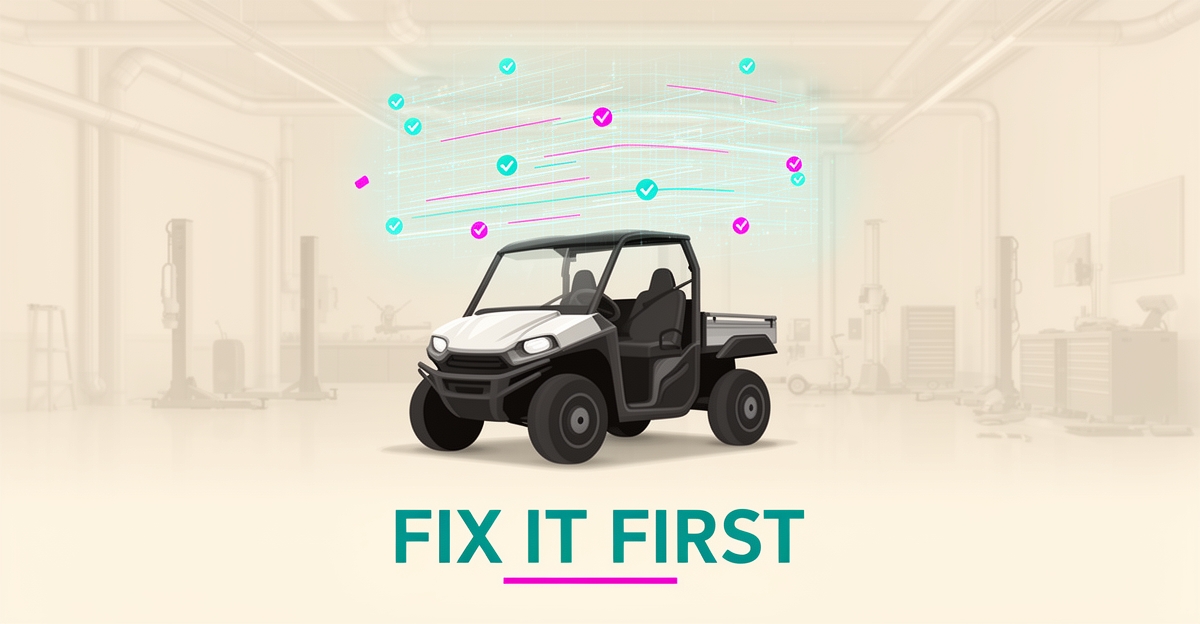
How AI Can Improve First-Time Repair Accuracy in Your UTV Shop
Key Facts
- Industry research suggests a majority of customers switch providers after two defective repairs according to service manual studies
- A large share of failed repairs—often cited around 40%—stem from unavailable parts per industry data
- AI-powered service manuals are reported to cut search time by up to 50% based on industry research
- Machine learning image analysis can identify damage with high accuracy in automotive applications per automotive AI research
- AI-enhanced SOPs have achieved very high accuracy rates in live workcells as shown in Tractian's research
- A majority of collision repair shops now use AI-powered diagnostic tools to improve accuracy per industry reporting
- AI-powered manuals are reported to reduce misidentification errors by roughly 25% according to service manual data
Hire a team member that works 24/7 — for less than a part-time wage.
AI receptionists, SDRs, dispatchers and 99+ roles. Trained on your business, fully managed.
Not sure where to start? Ask our AI planner
The High Cost of Repeat Repairs in UTV Shops
Poor first-time repair accuracy doesn't just frustrate technicians—it drives customers away and wastes resources. When repairs aren't fixed right the first time, shops face repeat visits, strained customer relationships, and operational inefficiencies that compound quickly.
Industry research suggests that a majority of customers—often cited at 65%—switch providers after two defective repairs, making first-time fix rate a critical factor in customer retention industry research. Additionally, a large share of failed repairs—frequently cited around 40%—stem from unavailable parts, highlighting how inventory gaps directly undermine repair accuracy and increase downtime industry data. These figures point to a clear link between low first-time fix rates and lost business, especially in UTV shops where equipment reliability is essential for work and recreation.
- Repeat repairs increase labor and parts costs without generating additional revenue
- Technicians experience frustration when rework stems from missing information or unavailable parts
- Operational workflows slow down as tie-ups in inventory and scheduling delay other jobs
- Brand reputation suffers as customers share negative experiences online and through word-of-mouth
- Service advisors spend extra time managing comebacks instead of building customer trust
AIQ Labs helps UTV shops address these challenges through AI Workflow Builds that rebuild the one workflow costing you the most—whether that's diagnostics, parts lookup, or repair documentation. By reducing errors tied to unavailable parts and unclear procedures, these systems support higher first-time fix rates, stronger customer retention, and more efficient shop operations.
How AI Diagnostics and Smart Manuals Boost Repair Accuracy
First-time repair accuracy in a UTV shop hinges on how fast technicians find the right information and how confidently they act on it. AI-powered service manuals and diagnostic systems replace static PDFs and tribal knowledge with real-time, contextual guidance that adapts to the vehicle in front of them.
AI service manuals enable natural language and voice queries, so a technician can ask “How do I troubleshoot a coolant leak on a 2025 Polaris?” and receive targeted answers with illustrations in seconds. Industry research indicates this approach can cut search time by up to 50%, freeing more time for actual repair work. Generative summaries and system-generated FAQs also help prevent errors, with service manual data suggesting misidentification errors can be reduced by roughly 25%.
Diagnostics move beyond code reading to pattern recognition across multiple data streams. Machine learning algorithms can identify damage with high accuracy in image analysis, according to automotive AI research. That level of precision supports faster triage, faster estimate generation, and fewer repeat visits that drive customers away.
AI can also analyze historical repair data to recommend the most accurate diagnostic steps and part combinations for a specific UTV make, model, and symptom set. This is where custom systems add value:
- Natural language queries that surface the correct procedure, torque specs, and safety gates instantly
- Real-time data analysis of OBD2 codes, sensor readings, and past repairs to identify root causes
- Feedback loops that track which steps are used, skipped, or flagged, continuously improving the manual
- Integration with inventory and scheduling to confirm parts availability before work begins
Technicians get real-time decision support instead of hunting through outdated manuals, reducing errors and increasing customer trust. AIQ Labs builds custom systems that assist technicians with this kind of real-time guidance, using historical repair data to surface the right diagnostic path and part set for each job.
The result is faster, more precise repairs with fewer comebacks. Shops adopting AI-powered diagnostics report faster workflow processing, and a majority of collision repair shops now use AI-powered diagnostic tools to improve accuracy. For UTV shops where downtime directly impacts a customer's work or recreation, that accuracy translates into loyalty and repeat business.
Implementing AI-Enhanced SOPs for Consistent, Audit-Ready Repairs
First-time repair accuracy breaks down when technicians hunt through conflicting PDFs, guess at torque specs, or work from outdated notes. AI-enhanced SOPs replace that ambiguity with a single, authoritative source of truth that adapts to the asset, the technician, and the failure context.
The system presents one SOP already scoped to the UTV model variant, subsystem, and likely failure, so technicians start from a single source of truth instead of browsing folders. Steps are role-aware, so the right person sees the right action at the right time. Each instruction includes practical guardrails such as torque and tolerance parameters, tool and part checks, and safety gates that must be met before moving forward.
Traceability is built in by design. Approvals, version history, and assignment rules ensure only current procedures are issued and used. Every action is recorded for a complete audit trail that supports compliance reviews and internal standards. This structure mirrors documented cases where AI-enabled quality inspection reduced quality non-conformance by 56 percent.
Closed-loop feedback keeps procedures improving. When a technician records a deviation, suggests a change, or confirms a better sequence, that feedback routes for review and incorporation into the approved procedure once validated. Updates are versioned, communicated, and effective from a defined date.
For UTV shops, this consistency directly lifts first-time fix performance. AI-enhanced process monitoring achieving very high accuracy rates in a live workcell demonstrates the precision possible when steps are standardized and enforced. Manufacturers implementing standardized work report a 45.9 percent reduction in finished-goods defect rates, a signal of the quality gains achievable with disciplined SOP execution.
AIQ Labs builds custom AI systems that assist technicians with real-time decision support by analyzing historical repair data to recommend the most accurate diagnostic steps and part combinations. The approach reduces errors and increases customer trust without adding subscription chaos.
Implementation focuses on four practical outcomes:
- Asset-specific procedures generated from service history and manufacturer data
- Role-aware steps with built-in guardrails for torque, tolerances, and safety
- Full traceability with versioned approvals and audit-ready logs
- Closed-loop feedback that turns technician input into validated SOP updates
The result is consistent, audit-ready repairs that protect margins and reputation. Technicians spend less time searching and more time fixing, while shops gain the documentation rigor customers expect from professional UTV service.
From Pilot to Profit: Deploying AI in Your UTV Shop with AIQ Labs
Starting small with a focused AI pilot lets UTV shops test value before scaling—aligning with AIQ Labs' Start Monthly and Build in Milestones payment models to minimize risk while targeting measurable gains in repair accuracy and customer trust.
By deploying a single AI-powered workflow fix—such as an intelligent service manual or diagnostic assistant—shops can begin reducing search time for repair information, directly cutting technician downtime and improving first-time fix rates from typical 60-70% levels toward 85% or higher. This targeted approach addresses one of the most common failure points: technicians spending excessive time navigating outdated or fragmented documentation, which contributes to the misidentification errors AI-enhanced systems can reduce.
For UTV shops facing frequent parts-related delays—where a large share of failed repairs stem from unavailable components—AI can integrate historical repair patterns with real-time inventory data to recommend not only the correct diagnostic steps but also verify part availability before work begins. This prevents costly rework caused by preventable stockouts, such as a $30 gasket delaying a $10,000 repair, while building customer confidence through transparent, first-time resolutions.
AIQ Labs supports this phased rollout through its Build in Milestones model, where shops approve and pay for each phase of a custom AI system as it ships—keeping all built components even if paused mid-process. Whether starting with an AI Employee to handle service intake and parts lookup, a Workflow Build that guides technicians through complex UTV repairs, or eventually a full AI Operating System connecting your whole shop, the focus remains on proven outcomes: higher first-time fix rates, reduced repeat visits, and stronger customer retention—critical given that most customers switch providers after two defective repairs.
Each pilot generates usable data to refine the system and justify next steps, turning initial experimentation into a scalable advantage without large upfront investment or long-term vendor lock-in. And when the system is core to how your shop runs, the Own It Outright model lets you take full ownership of what's been built.
Still paying for 10+ subscriptions that don’t talk to each other?
We build custom AI systems you own outright. No vendor lock-in. Full control.
Not sure where to start? Ask our AI planner
Frequently Asked Questions
How much can AI actually improve first-time fix rates in a UTV shop?
What causes repeat repairs in UTV shops the most?
Can AI help when parts are out of stock?
How fast can technicians find the right repair info with AI?
Are AI-enhanced SOPs audit-ready for UTV repairs?
Is AI diagnostics accurate enough for UTV damage assessment?
Fix It Right the First Time, Build Loyalty That Lasts
First-time repair accuracy is the difference between a UTV shop that thrives on repeat business and one that loses customers after every comeback. Repeat repairs drain labor and parts, frustrate technicians, and erode brand reputation—with industry research suggesting most customers switch providers after two defective repairs industry research. AI-powered service manuals, diagnostic pattern recognition, and AI-enhanced SOPs address the root causes by giving technicians real-time, contextual guidance, cutting search time, reducing misidentification errors, and ensuring parts are confirmed before work begins. The result is faster, more consistent, audit-ready repairs that protect margins and customer trust. AIQ Labs builds custom AI systems that analyze historical repair data to recommend accurate diagnostic steps and part combinations, supporting higher first-time fix rates without adding subscription chaos. Start with a focused pilot, measure the lift in first-time fixes and downtime reduction, then scale. Ready to map your biggest bottleneck? Take the 2-minute Fit Check at https://aiqlabs.ai/apply, then book a free 30-minute strategy call to identify high-ROI AI opportunities for your shop.
Make AI your competitive advantage — not just another tool.
Strategy, implementation and ongoing optimization. One partner, end to end.
Not sure where to start? Ask our AI planner