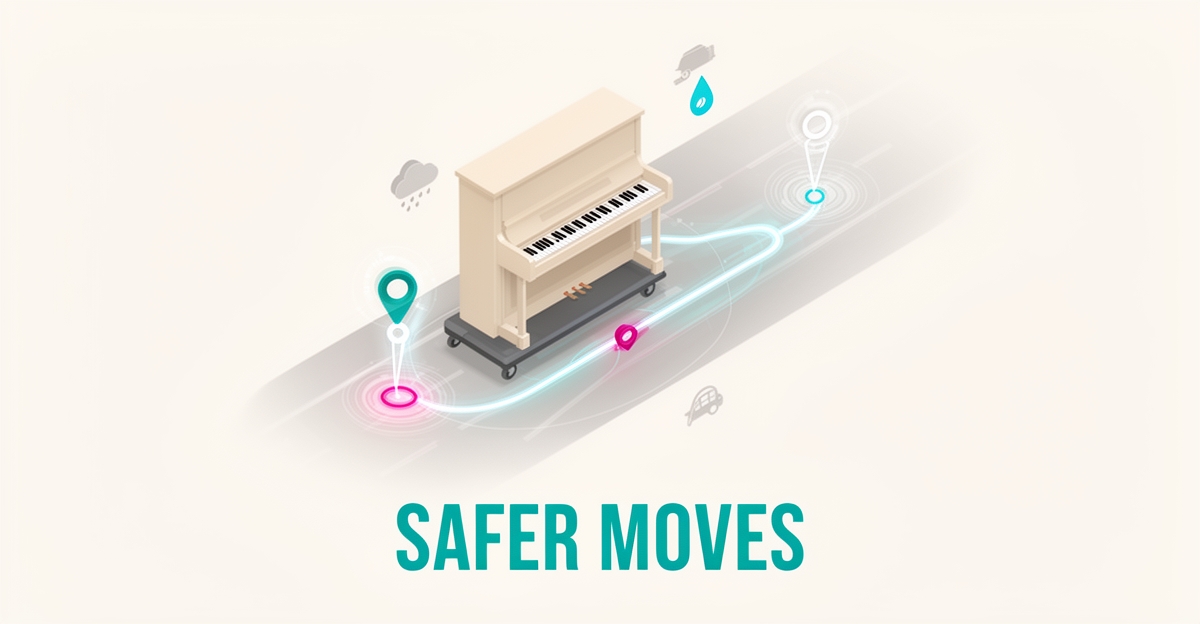
How AI Can Improve Piano Moving Safety Through Real-Time Trip Tracking
Key Facts
- Upright pianos typically weigh between 300 and 800 lbs according to moving industry guidance
- Grand pianos range from 500 to 1,400 lbs in weight per industry sources
- AI models can classify piano movements with 97.13% accuracy with human subjects per movement simulation research
- Bright Line Moving has completed over 5,000 piano moves showcasing professional expertise
- High-capacity dollies rated above 1,000 lbs are essential for safe piano moving per equipment guidelines
- AI predictive analytics can flag risks like narrow stairwells or slippery surfaces before crews arrive enabling proactive safety
- Stanford researchers use AI to replicate elite pianists' hand movements to identify injury risks advancing ergonomic design
Hire a team member that works 24/7 — for less than a part-time wage.
AI receptionists, SDRs, dispatchers and 99+ roles. Trained on your business, fully managed.
Not sure where to start? Ask our AI planner
Why Piano Moves Are High-Risk Operations
Few household objects combine the mass of a vending machine with the fragility of a fine musical instrument. A piano is both, which is why moving one ranks among the most dangerous tasks an amateur can attempt.
The numbers alone explain the danger. According to moving industry guidance, upright pianos typically weigh between 300 and 800 pounds, while grand pianos range from 500 to 1,400 pounds. That weight is concentrated in a large, irregular body with no good handholds, making every lift and turn a calculated risk.
Weight is only half the problem. The internal components, including the soundboard and action, are highly sensitive to vibrations and impacts. A single jolt during transport can shift the instrument's delicate mechanisms, turning an otherwise successful move into an expensive repair. Grand pianos add another layer of complexity: they require partial disassembly, with the legs and pedals removed, before being tilted onto their side for safe transport.
The awkward shape compounds everything. Pianos resist standard moving techniques because their mass is unevenly distributed and their finish scratches easily. Safe handling demands high-capacity dollies rated above 1,000 pounds, skid boards for grands, lifting jacks, heavy-duty straps, and generous protective padding. Even flooring needs consideration, which is why professionals rely on non-marking wheels and floor runners.
Then there is the human cost. As Ola Moving's Ethan Linehart puts it, moving a piano is "arguably the riskiest, most difficult task a homeowner or amateur mover will face." Lifting hundreds of pounds through doorways, down stairs, and across uneven surfaces exposes movers to back injuries, crushed fingers, and falls.
This is why professional handling consistently outperforms DIY attempts. Experienced movers bring specialized equipment such as hydraulic grand movers and stair-climber dollies, along with the trained technique the job demands. Firms like Bright Line Moving have completed more than 5,000 piano moves, a volume that reflects how much expertise these operations require.
Yet even professionals face risks that skill alone cannot eliminate. Route conditions, weather, and vehicle status all change during a move, and a crew focused on maneuvering a 1,400-pound grand piano cannot simultaneously monitor everything else. That gap is where real-time tracking and predictive analytics add value. By monitoring delivery routes, weather, and vehicle conditions, these systems can proactively alert staff to emerging risks before an incident occurs — an approach AIQ Labs builds into dispatch and workflow systems so moving teams get warnings while there is still time to act.
Understanding these physical challenges makes clear why piano moves deserve more than muscle and good intentions. They demand planning, protection, and increasingly, intelligent oversight from dispatch to doorstep.
How AI Predictive Analytics Reduces Move Risks
Piano moves carry outsized risk because the instruments are heavy, fragile, and awkward to handle. Upright pianos typically weigh between 300 and 800 lbs, while grand pianos can weigh 500 lbs to 1,400 lbs, with delicate internal components vulnerable to vibration and impact. That combination makes proactive risk modeling essential before a truck leaves the yard.
AI predictive analytics can translate movement intelligence into safer handling decisions. Research shows an AI model can classify correct versus incorrect piano movements with 97.13% accuracy with a human subject and 94.60% accuracy without a human subject, trained on 10 hours of music performed by 15 elite-level pianists. That level of movement simulation accuracy supports risk modeling for how crews lift, tilt, and secure instruments during loading and transit.
When applied to dispatch operations, the same pattern-recognition principles enable proactive alerts for hazard conditions. AIQ Labs integrates AI into dispatch systems to proactively alert staff to potential risks during moves, using real-time tracking and predictive analytics to monitor delivery routes, weather, and vehicle conditions. The approach mirrors how Stanford researchers use AI to replicate intricate hand movements and identify injury risks for pianists.
Predictive risk modeling helps teams anticipate failure points before they occur. Movement simulation accuracy informs handling protocols by flagging high-stress maneuvers tied to weight and shape.
Key signals AI systems can evaluate for piano moves include:
- Weight class and instrument type, with uprights at 300 to 800 lbs and grands up to 1,400 lbs
- Route and environmental exposure that increases vibration and impact risk
- Vehicle condition and securing setup to prevent shifting during transport
- Crew handling patterns compared to validated safe movement models
By correlating these inputs, dispatch can receive early warnings and adjust assignments, equipment, or timing. The result is fewer sudden stops, better load securing, and reduced strain on both instrument and movers. Professional piano movers like Bright Line Moving have completed over 5,000 moves, underscoring how experience and specialized equipment reduce risk.
The core safety principles remain unchanged: proper equipment selection, secure handling techniques, and understanding instrument vulnerabilities. AI adds a predictive layer that helps teams apply those principles consistently across every job.
From Dispatch Alerts to Safer On-Site Execution
AI-powered dispatch systems are transforming piano moving from a reactive process into a proactive safety operation by identifying risks before crews even arrive on site. By analyzing route data, weather forecasts, and equipment readiness in real time, AI can flag potential hazards such as narrow stairwells, slippery surfaces due to rain, or insufficient lifting capacity for a grand piano weighing up to 1,400 lbs. This level of foresight allows dispatchers to adjust plans, assign appropriate personnel, or recommend equipment upgrades—like stair-climbing dollies or additional padding—before a single mover steps onto the property.
These predictive alerts integrate into the established piano moving process, shifting focus from damage control to prevention at every stage. For example, during equipment preparation, AI can verify that the selected dolly meets the 1,200 lb+ minimum recommendation for upright pianos, which typically range from 300 to 800 lbs. During transit, continuous monitoring of vehicle conditions and route changes enables dynamic rerouting if sudden weather shifts threaten load stability. By the time the crew arrives, they're already informed about site-specific challenges—such as tight turns or uneven flooring—allowing them to secure the piano and protect it with moving blankets with greater precision and confidence.
AIQ Labs enhances this capability by embedding intelligent dispatch logic into AI Workflow Builds that connect directly with scheduling, inventory, and field service tools. Rather than relying on static checklists, movers receive dynamic, context-aware guidance that adapts to real-world variables. This approach doesn't just reduce the likelihood of damage or injury—it builds a culture of anticipation where safety is engineered into the process from the first alert to the final placement. As a result, what once depended heavily on individual judgment now benefits from consistent, data-driven oversight that protects both the instrument and the people moving it.
Implementing AI Safety Monitoring for Piano Moving Teams
The equipment baseline comes first, because no AI system can compensate for inadequate tools. Safe piano moving requires high-capacity dollies rated for 1,000 lbs or more, skid boards for grand pianos, lifting and tying straps, thick moving blankets, and floor runners with non-marking wheels to protect flooring. The stakes are real: upright pianos typically weigh between 300 and 800 pounds, while grand pianos can reach up to 1,400 pounds, according to piano moving equipment guidance from Ola Moving.
Once equipment standards are locked in, businesses can layer AI safety monitoring on top. The most practical starting point is real-time trip tracking that watches delivery routes, weather conditions, and vehicle status, then proactively alerts staff to potential risks during a move. This is where AIQ Labs focuses its integration work—connecting AI into existing dispatch systems so crews receive risk alerts through the tools they already use, rather than juggling a separate platform.
Integration follows a logical sequence for most moving teams.
- Baseline the physical equipment: dollies rated 1,000+ lbs, skid boards, heavy-duty straps, and protective padding.
- Connect AI tracking to existing dispatch and fleet tools so route, weather, and vehicle data flows into one system.
- Train crews on what AI alerts mean and the specific action each alert should trigger.
- Establish human-in-the-loop controls so dispatchers make final calls on critical decisions.
- Review alert data after each move to refine thresholds and improve future predictions.
Crew training deserves particular attention. An alert is only as valuable as the response it produces, so teams need clear protocols for handling weather warnings, route hazards, or vehicle condition flags before the first monitored move happens. Businesses can also deploy a managed AI dispatcher through AIQ Labs' AI Employees—an AI staff member that monitors trips around the clock and escalates situations that exceed defined authority, keeping humans in control of critical calls, typically at a fraction of the cost of an additional human hire.
The evidence for AI's role in movement safety is compelling. Stanford researchers have built AI models that replicate the intricate hand movements of elite pianists to identify injury risks and inform more ergonomic instrument design, according to Stanford Engineering. Related research achieved 97.13% accuracy in classifying correct versus incorrect piano movements, as reported by AI movement simulation research—demonstrating that AI can reliably distinguish safe handling patterns from dangerous ones.
Ownership matters as much as capability. Moving businesses that invest in custom-built monitoring systems they own outright—whether as a single workflow build or a fuller AI operating layer—avoid vendor lock-in and keep control of their safety data and future development. For teams ready to explore what owned AI safety monitoring looks like, the two-minute Fit Check at aiqlabs.ai/apply leads to a free 30-minute strategy call with an AI engineer—a working session to map the biggest bottleneck and identify high-ROI automation opportunities. If there isn't a clear win, they'll say so.
Still paying for 10+ subscriptions that don’t talk to each other?
We build custom AI systems you own outright. No vendor lock-in. Full control.
Not sure where to start? Ask our AI planner
Frequently Asked Questions
Why is moving a piano so much riskier than moving other furniture?
Can AI really tell if a piano move is being done safely?
What equipment do I actually need to move a piano without damage?
How does real-time trip tracking help during a piano move?
Is DIY piano moving ever a good idea?
What's the first step if I want AI safety monitoring for my moving team?
Where Safety Meets Intelligence: The Future of Piano Moving
Moving a piano is inherently high-risk due to its weight, fragility, and awkward shape—challenges that even experienced crews face when conditions change mid-move. As outlined, AI-powered real-time tracking and predictive analytics now help anticipate hazards like weather shifts, route obstacles, or equipment strain before they impact safety or instrument integrity. By monitoring delivery routes, vehicle status, and environmental factors, systems like those built by AIQ Labs enable dispatch teams to issue proactive alerts, adjust plans, and reinforce handling protocols in real time. This approach doesn't replace skilled movers—it equips them with foresight, reducing sudden stops, improving load security, and protecting both people and pianos. For moving businesses looking to strengthen safety without overhauling operations, the next step is identifying where AI monitoring can integrate smoothly with existing workflows. Start the Fit Check—a two-minute assessment at aiqlabs.ai/apply—to explore high-ROI automation opportunities with zero obligation, followed by a free 30-minute strategy call to map your biggest bottleneck and see if owned AI safety monitoring makes sense for your team.
Make AI your competitive advantage — not just another tool.
Strategy, implementation and ongoing optimization. One partner, end to end.
Not sure where to start? Ask our AI planner