How AI Can Improve Response Times for Emergency Vehicle Inspections
Key Facts
- AI reduces administrative burdens in emergency vehicle inspections by instantly verifying requests and managing overdue cases according to EPR Fireworks
- AIQ Labs deploys AI Employees to verify inspection requests, route vehicles, and follow up on overdue inspections—all within minutes
- Deloitte Insights reports the US public health workforce needs roughly 80% growth to match modern crisis scales, after losing tens of thousands of workers over the past decade per Deloitte Insights
- AI transforms everyday data into actionable insights to shift from 'responding faster' to 'operating smarter' in emergency response per EPR Fireworks
- AI enables real-time vehicle routing to the nearest available inspector using location data and availability as noted by EPR Fireworks
- Automated follow-up sequences for overdue inspections ensure compliance without manual tracking per EPR Fireworks
- AI Employees work 24/7/365, never missing a call, easing workforce pressure in emergency services per Deloitte Insights
Hire a team member that works 24/7 — for less than a part-time wage.
AI receptionists, SDRs, dispatchers and 99+ roles. Trained on your business, fully managed.
Not sure where to start? Ask our AI planner
The Hidden Cost of Manual Inspection Workflows
A vehicle that cannot be inspected is a vehicle that cannot respond. Yet the readiness of emergency fleets is often held hostage by paperwork, phone tag, and manual follow-ups that pile up while crews wait.
Administrative burdens create critical delays in emergency vehicle readiness. Manual request verification, inspector routing, and overdue follow-ups consume disproportionate staff time and bottleneck response capabilities despite advances in dispatch technology. According to EPR Fireworks, the conversation is shifting from simply responding faster to operating smarter by transforming everyday data into actionable insights.
Workforce pressure makes the problem worse. A Deloitte Insights analysis notes a projected need for roughly 80% growth in the US public health workforce to match the scale of modern crises, after the sector lost tens of thousands of workers over the past decade. With fewer hands to chase paperwork, inspection backlogs grow.
AI serves as an intelligent assistant that organizes incident narratives, improves report quality, and validates documentation before submission. In the context of inspections, AI can instantly verify requests and manage overdue cases, reducing manual workload on staff. This automation ensures critical data regarding vehicle readiness and inspection status is accurate and up-to-date, preventing delays caused by administrative backlogs.
The hidden cost shows up in three recurring friction points:
- Manual request verification that delays the start of an inspection window
- Inspector routing based on spreadsheets instead of real-time availability
- Overdue follow-ups that rely on memory and manual reminders
These tasks are not core emergency work, but they consume the time responders need for training and maintenance. Operational intelligence changes that equation by analyzing historical incident data, inspection records, and training logs to identify trends before they become failures.
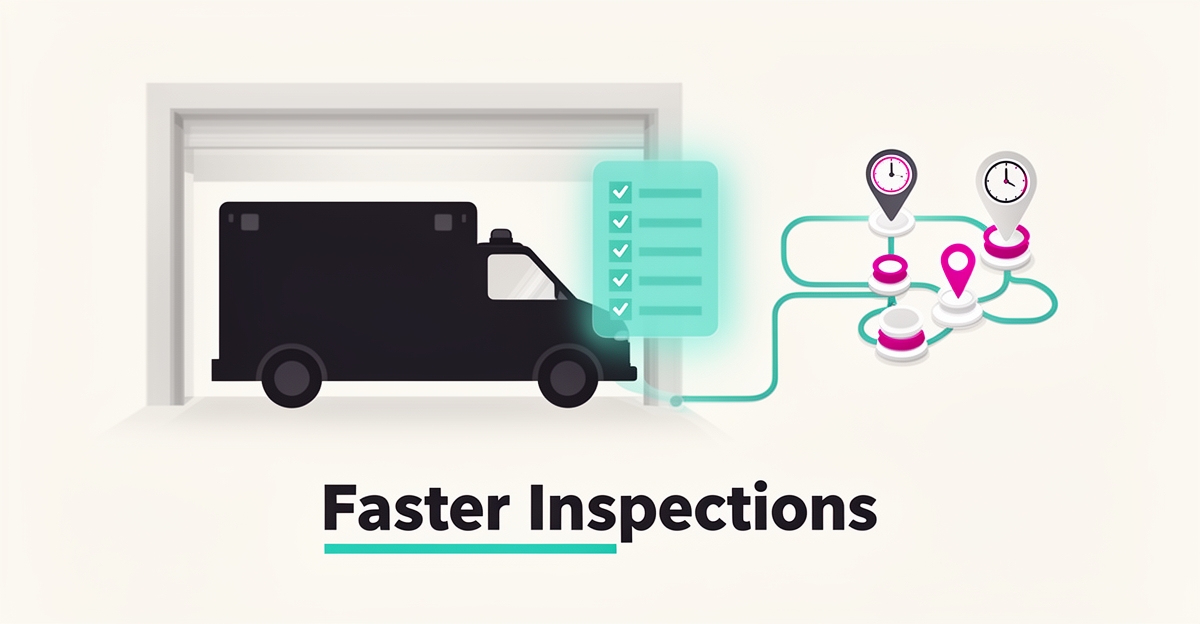
AIQ Labs deploys AI Employees to manage urgent cases like collections and follow-up calling. AI agents can instantly verify inspection requests, route vehicles to the nearest available inspector, and follow up on overdue inspections — all within minutes. The result is fewer administrative handoffs and faster readiness confirmation.
As SecureRedact emphasizes, in an emergency every second counts and smarter decision-making saves lives. By removing the manual choke points in inspection workflows, agencies free human teams to focus on critical tasks while maintaining a unified operational picture of fleet readiness.
AI as an Operational Intelligence Layer for Inspection Workflows
The true bottleneck in emergency vehicle inspections isn't the physical check itself—it's the administrative friction that delays verification, routing, and follow-up. AI eliminates these delays by functioning as an operational intelligence layer that transforms static inspection records into dynamic, actionable workflows.
Rather than simply digitizing paper forms, AI systems analyze historical incident data, inspection logs, and real-time availability to optimize every step of the inspection lifecycle. According to industry analysis, the shift from "simply responding faster to operating smarter" depends on transforming everyday data into insights that prevent bottlenecks before they occur. This intelligence layer handles three critical functions that traditionally consume hours of administrative time:
- Instant verification of inspection requests against vehicle histories and compliance records
- Dynamic routing that assigns vehicles to the nearest available certified inspector using real-time location data
- Automated follow-up sequences for overdue inspections, ensuring compliance without manual tracking
The impact of this automation extends beyond convenience. Deloitte research indicates that AI significantly reduces administrative burdens, allowing human responders to focus on critical tasks rather than paperwork. When AI handles the verification and routing logic, inspection teams spend less time coordinating schedules and more time ensuring vehicle readiness. This is particularly vital given sustained workforce losses across public health and emergency services alongside growing demand, according to recent analysis.
Modern implementations leverage this intelligence layer through specialized AI employees that manage urgent cases end-to-end. For example, AIQ Labs deploys AI agents specifically designed to handle these operational workflows, ensuring that inspection requests are verified instantly and vehicles are routed to the nearest available inspector without human dispatcher intervention. These systems don't just schedule appointments; they actively monitor inspection statuses and initiate follow-up procedures when deadlines approach, maintaining operational readiness across the entire fleet.
The effectiveness of this approach relies heavily on data quality. As emergency management experts note, the transition to standardized frameworks like the National Emergency Response Information System (NERIS) creates the high-quality data foundation necessary for AI to accurately predict demand and optimize resource allocation. With clean, standardized data, AI can predict inspection backlogs before they impact emergency response capabilities, shifting the paradigm from reactive compliance to proactive operational intelligence.
By automating the connective tissue between inspection requests and completed work, AI ensures that emergency vehicles spend less time waiting for paperwork and more time ready for the road.
Deploying AI Employees for Inspection Workflow Automation
Inspection delays rarely start in the field. They start with a request sitting unvalidated, an inspector assigned too late, or an overdue case with no follow-up. AI Employees remove that administrative drag so vehicles stay ready when seconds matter.
AIQ Labs configures AI Employees as Dispatchers or Service Coordinators that integrate with existing records management, dispatch, and inspection systems. The Start Monthly payment model delivers 24/7 operational support without replacing human staff, handling validation, routing, and tracking while human teams focus on critical decisions. This mirrors the broader shift from faster dispatch to smarter operations, where AI transforms everyday data into actionable insights rather than replacing responders.
According to industry research, AI’s primary value in emergency response is enabling smarter operational decisions by turning incident reports, inspection records, and training logs into actionable insights. That operational intelligence is what makes inspection workflows reliable under pressure.
An AI Dispatcher validates inspection requests instantly using natural language processing, checks vehicle readiness data, and routes the vehicle to the nearest available inspector. Follow-up on overdue inspections happens automatically, with voice, SMS, and email sequences that keep cases moving without manual chasing. The system also logs every action for audit trails and compliance.
This approach directly addresses administrative burden, which emergency management analysis identifies as a major time-consuming responsibility that hinders operational efficiency. By automating documentation validation and overdue case tracking, agencies prevent backlogs that delay operational readiness.
Workforce pressure makes automation essential. Deloitte Insights notes sustained workforce losses across the public health sector alongside projected growth needs to match modern crises. AI Employees ease that pressure by working 24/7/365 and never missing a call.
In practice, an AI Service Coordinator for inspections typically:
- Instantly verifies inspection requests and completeness before they enter the queue
- Routes vehicles to the nearest available inspector based on real-time availability and location
- Automates follow-up on overdue inspections via voice and multi-channel outreach
- Updates inspection status in connected systems and flags exceptions for human review
The result is faster operational readiness without adding headcount. Human dispatchers retain oversight and decision authority, while AI handles repetitive validation, routing, and follow-up at scale. Agencies gain a unified operational picture that improves public trust and keeps emergency vehicles inspection-ready when demand spikes.
Still paying for 10+ subscriptions that don’t talk to each other?
We build custom AI systems you own outright. No vendor lock-in. Full control.
Not sure where to start? Ask our AI planner
Frequently Asked Questions
How does AI actually speed up emergency vehicle inspections?
Is AI meant to replace dispatchers and inspectors?
What administrative tasks slow down inspections the most?
Will AI work with our existing records and dispatch systems?
How does workforce pressure make inspection delays worse?
What data foundation does AI need for inspections to be reliable?
Turning Administrative Friction into Fleet Readiness
Emergency vehicle inspections are too often held back not by mechanical checks, but by manual verification, inefficient routing, and missed follow-ups—administrative tasks that drain time from mission-critical work. AI transforms these bottlenecks into streamlined workflows: instantly validating requests, dynamically assigning the nearest available inspector, and automating overdue case tracking. This operational intelligence layer ensures vehicles spend less time waiting for paperwork and more time ready to respond. For agencies facing workforce strain, AI Employees offer a force multiplier that works 24/7 without adding headcount. By turning inspection data into actionable insights, teams gain a unified view of fleet readiness and can focus on training, maintenance, and response. To see how this applies to your operations, take the 2-minute Fit Check at aiqlabs.ai/apply, then book a free 30-minute strategy call to map your biggest bottleneck—no obligation, just clarity.
Make AI your competitive advantage — not just another tool.
Strategy, implementation and ongoing optimization. One partner, end to end.
Not sure where to start? Ask our AI planner