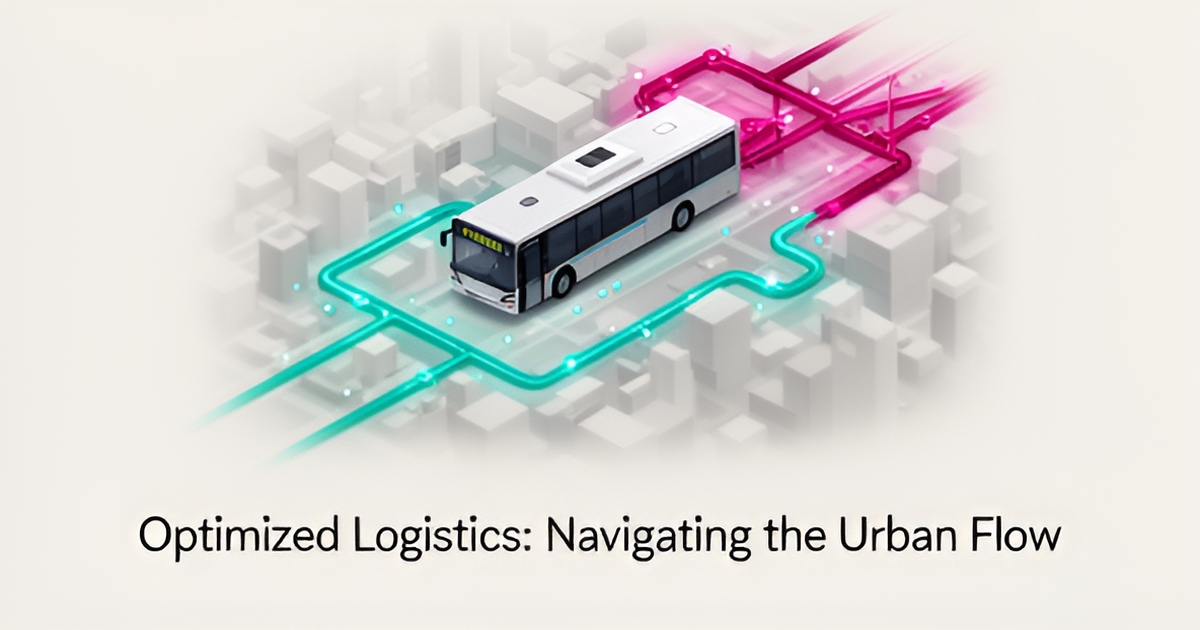
How AI Can Improve Route Planning for Charter Bus Companies in Dense Urban Areas
Key Facts
- Manual route planning can waste up to 25% of a fuel budget in dense urban operations, according to industry analysis.
- AI route optimization typically delivers 10-20% fuel savings and 25-30% trip-time improvements per fleet benchmarks.
- Daily planning time drops from 2-3 hours to minutes with AI in comparative studies.
- Route accuracy typically rises from 70-80% with manual planning to 95%+ with AI-powered systems in industry benchmarks.
- AI systems evaluate 100+ variables simultaneously versus roughly 5-10 for human planners in route optimization tests.
- A route with 25 stops has 15.5 septillion possible orderings—combinatorial math no human team can evaluate by hand according to route math analysis.
- ETA accuracy typically improves 23-40% versus traditional methods with dynamic traffic integration.
Hire a team member that works 24/7 — for less than a part-time wage.
AI receptionists, SDRs, dispatchers and 99+ roles. Trained on your business, fully managed.
Not sure where to start? Ask our AI planner
The Hidden Costs of Manual Route Planning in Dense Urban Environments
Manual route planning in dense urban environments creates hidden costs that erode profitability for charter bus companies. Traditional methods relying on driver experience and static maps cannot adapt to rapidly changing traffic patterns caused by construction, events, and congestion. This inflexibility leads to operational inefficiencies that compound over time, draining resources without obvious warning signs.
These inefficiencies typically show up as routes that are 20-40% less efficient than AI-generated alternatives, which translates directly to wasted fuel and extended trip durations. For charter operators where fuel is a major expense, that means burning budget unnecessarily on every journey. Manual planners simply cannot process the 100+ variables—real-time traffic, weather, road closures, and passenger demand—that AI systems evaluate simultaneously to find optimal paths.
The cognitive limits of human planning become especially problematic in complex urban settings. Dispatchers and drivers can realistically manage only 5-10 variables at once, making it mathematically impossible to calculate optimal sequencing for multi-stop routes. With just 25 stops offering 15.5 septillion possible combinations, reliance on experience and static maps guarantees suboptimal decisions that accumulate as hidden costs across daily operations.
- Manual route planning can waste up to 25% of the fuel budget, according to industry analysis
- AI route optimization typically delivers 10-20% fuel savings and 25-30% trip-time improvements
- Planning time drops from 2-3 hours daily to minutes with AI implementation
- Route accuracy typically increases from 70-80% with manual methods to 95%+ with AI-powered systems
These inefficiencies extend beyond fuel waste to create scheduling conflicts, missed ETAs, and increased vehicle wear from unnecessary idling and detours. In dense urban areas where time sensitivity is paramount, the compound effect of these hidden costs makes it harder for charter operators to maintain competitive service levels while protecting thin margins. AIQ Labs addresses these challenges through AI Workflow Builds that rebuild the routing workflow that costs you the most—fixed price, delivered in phases.
How AI Transforms Route Planning with Real-Time Data and Multi-Variable Optimization
Picture a dispatcher trying to juggle live traffic, weather forecasts, vehicle capacities, driver hours, and a dozen pickup windows—all before the first bus leaves the depot. Human planners can realistically process only 5-10 variables at once, while AI route optimization systems handle 100+ simultaneously. That gap is exactly why dense urban charter operations are turning to AI.
The math alone makes the case. For a route with just 25 stops, there are 15.5 septillion possible combinations—AI evaluates them in seconds, while no human planner can. The result is a leap in quality: traditional manual planning typically achieves 70-80% route accuracy, whereas AI-driven systems reach 95% or higher, according to industry benchmarks on AI route optimization.
Speed matters just as much as accuracy. Manual planning consumes 2-3 hours of a dispatcher's day; AI compresses that to minutes or seconds—an 85% reduction in planning time that frees staff for customer service and exception handling. For operators managing corporate shuttles, school trips, and tourism charters, those reclaimed hours compound across an entire fleet.
What truly separates AI from static maps is real-time adaptation. When an accident blocks a primary artery, an AI system calculates and assigns an alternative route within seconds—a task that takes a human dispatcher 10-20 minutes. The best systems also factor in constraints that generic navigation tools ignore:
- Live traffic congestion, road closures, and weather forecasts
- Vehicle capacity and passenger demand matching
- DOT hours-of-service limits, break requirements, and driver scheduling
- Customer time windows and multi-stop sequencing
That compliance layer is especially valuable in the charter bus industry, where DOT violations can trigger fines exceeding $1,000 per incident. Automating driver scheduling around hours-of-service rules can cut scheduling conflicts by roughly 50%, per research on AI in the charter bus industry.
AI systems also learn continuously. By analyzing historical fleet data, they recognize recurring congestion patterns and seasonal variations, proactively adjusting routes before delays occur rather than reacting afterward. This learning loop typically improves ETA accuracy by 23-40% compared to traditional methods, which directly boosts passenger satisfaction and on-time performance—rates commonly climb from 70-80% with manual planning to 95%+ with AI.
The financial upside is measurable. Optimized routing typically delivers 10-20% fuel savings and 25-30% improvements in trip times, while manual methods can waste up to 25% of a fuel budget. Large-scale logistics operations have demonstrated for years that algorithmic routing pays for itself—the same principles now apply to charter fleets.
This is the approach behind AIQ Labs' real-world deployments for city-based operators: dynamic routing systems that monitor live performance metrics and adapt instantly as conditions change. In dense urban environments where every minute and every gallon counts, that combination of speed, accuracy, and continuous optimization isn't a luxury—it's becoming the baseline for staying competitive.
Proven Financial and Operational Gains from AI-Driven Route Optimization
AI-driven route optimization delivers measurable financial and operational improvements for charter bus companies navigating dense urban environments. By processing over 100 variables simultaneously—including real-time traffic, weather, and DOT compliance—AI systems generate routes that are significantly more efficient than manual planning. This capability translates directly to reduced fuel consumption, with operators typically seeing 10-20% savings. For a mid-sized fleet, that can amount to tens of thousands of dollars annually in direct cost reductions. These gains stem from minimized idle time, optimized stop sequencing, and reduced empty miles, all while maintaining service reliability.
Beyond fuel savings, AI enhances fleet reliability through predictive maintenance, which can cut unexpected breakdowns by 40-60% in typical deployments. Given that a single roadside incident can run $3,000-$8,000 in costs, this reduction prevents substantial unplanned expenses and service disruptions. Additionally, AI automates driver scheduling to align with hours-of-service regulations, reducing DOT compliance conflicts by roughly 50% and reducing exposure to fines that can exceed $1,000 per violation. Together, these improvements lower operational risk and increase vehicle uptime, which is critical for maintaining on-time performance across complex urban routes.
Customer satisfaction also rises as AI improves ETA accuracy by 23-40% through dynamic traffic integration and historical pattern analysis. More accurate arrivals lead to fewer passenger complaints and stronger trust in service reliability, directly supporting retention and referrals. For charter operators seeking to optimize without overhauling existing systems, AIQ Labs builds route optimization that integrates with current dispatch and telematics platforms—whether as a single workflow rebuild or as part of a broader AI Operating System that connects routing, dispatch, and compliance in one layer you own outright. This approach ensures sustained efficiency gains long after initial deployment.
Implementing AI Route Optimization: A Practical Guide for Charter Bus Operators
Urban routing is complex and time-sensitive. AI analyzes traffic, demand patterns, and passenger flow to create dynamic, efficient routes—and it works best when you implement it deliberately, in phases.
Implementation begins with a systematic workflow audit to identify high-impact opportunities such as manual scheduling, fuel inefficiencies, or compliance risks. This step ensures operators target the right pain points before investing in technology. Industry research shows manual methods often produce routes that are 20-40% less efficient than AI-generated alternatives, making this audit critical for uncovering savings potential.
Next, operators should select an AI solution with robust API integration capabilities that can handle specific constraints like vehicle capacity, time windows, and DOT compliance requirements. Prioritizing transparency and customization ensures the system adapts to unique urban charter operations rather than forcing rigid, one-size-fits-all routing. Solution evaluation guides emphasize that seamless integration with existing transportation management systems is key to avoiding data silos and enabling real-time adjustments.
Once selected, the operator uploads historical fleet data—including past route performance, trip times, delivery points, driver logs, and maintenance records—to train the AI model on their specific operational realities. This data foundation allows the system to learn local traffic patterns, driver behaviors, and recurring congestion hotspots, significantly improving route accuracy from the 70-80% baseline of manual planning to 95%+ with AI optimization. Technical implementation resources confirm that model fine-tuning using proprietary fleet data is essential for adapting algorithms to dense urban environments where static maps fail.
Deployment begins with a pilot phase on specific routes or a subset of the fleet, allowing operators to validate performance using real-time dashboards that monitor fuel efficiency, maintenance costs, and on-time performance. Starting small reduces risk while building confidence in the system's ability to process 100+ variables simultaneously—far beyond the 5-10 factors humans can manage effectively. Comparative analyses show AI reduces planning time by 75-85%, freeing dispatchers for exception handling and customer service.
Finally, the system enters a continuous optimization loop, learning from real-world trip outcomes to refine routes dynamically as conditions change. This ongoing adaptation ensures the AI improves over time, adjusting for accidents, construction, or seasonal traffic variations without manual intervention. Implementation best practices highlight that this self-improving capability is what transforms AI from a tool into a long-term operational advantage—directly supporting the milestone-based, owned-outright systems AIQ Labs builds for transportation clients.
Still paying for 10+ subscriptions that don’t talk to each other?
We build custom AI systems you own outright. No vendor lock-in. Full control.
Not sure where to start? Ask our AI planner
Frequently Asked Questions
How much can AI route planning actually save my charter bus company?
Why can't my experienced dispatchers plan routes as well as AI?
How does AI handle unexpected traffic or road closures in real-time?
Will AI route planning help with DOT compliance and driver scheduling?
How long does it take to implement AI route optimization?
What data does AI need to optimize routes for my charter operation?
Turn Route Chaos into Competitive Clarity
The evidence is clear: manual route planning in dense urban areas is costing charter bus companies fuel, time, and customer trust—often without them realizing it. AI-powered optimization doesn't just improve efficiency; it turns hidden waste into measurable gains, from 10-20% fuel savings to 95%+ route accuracy and faster dispatching that frees staff for higher-value work. For operators ready to move beyond guesswork, start with a 2-minute Fit Check, then book a free 30-minute strategy call to see how AIQ Labs can help you build a route optimization system you own outright—no vendor lock-in, just technology that works for your fleet.
Make AI your competitive advantage — not just another tool.
Strategy, implementation and ongoing optimization. One partner, end to end.
Not sure where to start? Ask our AI planner