How AI Can Improve Supply Chain Visibility for Hardware Distributors
Key Facts
- 87% of business leaders admit they lack a clear view of their top suppliers' performance, according to industry research
- AI can improve demand forecasting accuracy by up to 30%, per supply chain trend analysis
- AI combined with RFID technology can achieve inventory accuracy rates of up to 99%, according to supply chain intelligence research
- Organizations using AI in supply chain management typically report a 15-20% reduction in operational costs, per enterprise technology analysis
- Custom AI models have been credited with reducing stockouts by as much as 70% and decreasing excess inventory by 40% in real-world applications, though results vary by operation
- AI-powered analytics can surface early warning signals of supply chain disruptions days or weeks in advance, according to supply chain risk management research
- AI can help reduce inventory costs by up to 20% through optimized ordering and forecasting, per supply chain research
Hire a team member that works 24/7 — for less than a part-time wage.
AI receptionists, SDRs, dispatchers and 99+ roles. Trained on your business, fully managed.
Not sure where to start? Ask our AI planner
The Visibility Gap in Hardware Distribution Supply Chains
Hardware distributors operate in a landscape where supply chain visibility is often fragmented and delayed. Without real-time insight into supplier networks, inventory levels, and delivery timelines, even minor disruptions can cascade into costly operational failures. This lack of transparency is not just an inconvenience—it's a systemic vulnerability affecting decision-making at every level.
According to industry research, 87% of business leaders admit they lack a clear view of their top suppliers' performance, leaving them unable to assess reliability or anticipate delays. This blind spot extends to inventory accuracy, where distributors frequently rely on outdated or siloed data, increasing the risk of both stockouts and excess carrying costs. When visibility gaps persist, reactive firefighting replaces strategic planning, eroding margins and customer trust.
Common pain points stem from disconnected systems across procurement, warehousing, and logistics. Inventory counts may not update in real time, delivery statuses remain untracked until exceptions occur, and early warning signs of supplier risk go unnoticed until production halts. These blind spots directly contribute to inflated working capital, missed delivery commitments, and strained supplier relationships—issues that compound quickly in hardware distribution, where lead times are long and component specificity is high.
- Delayed inventory updates leading to overstocking or stockouts
- Inability to track shipment status in real time across multiple carriers
- Late detection of supplier performance issues or geopolitical risks
- Manual reconciliation of data from ERP, WMS, and supplier portals
- Increased expediting costs due to last-minute disruptions
AIQ Labs addresses this visibility gap through AI Workflow Builds that connect ERP, warehouse management, and supplier systems with AI-driven data synchronization. By connecting disparate platforms in real time, distributors gain a unified, actionable view of their supply chain—turning reactive operations into proactive, insight-led management. This foundation supports smarter inventory decisions, timely interventions, and stronger resilience across complex hardware distribution networks.
How AI Creates Real-Time, End-to-End Supply Chain Intelligence
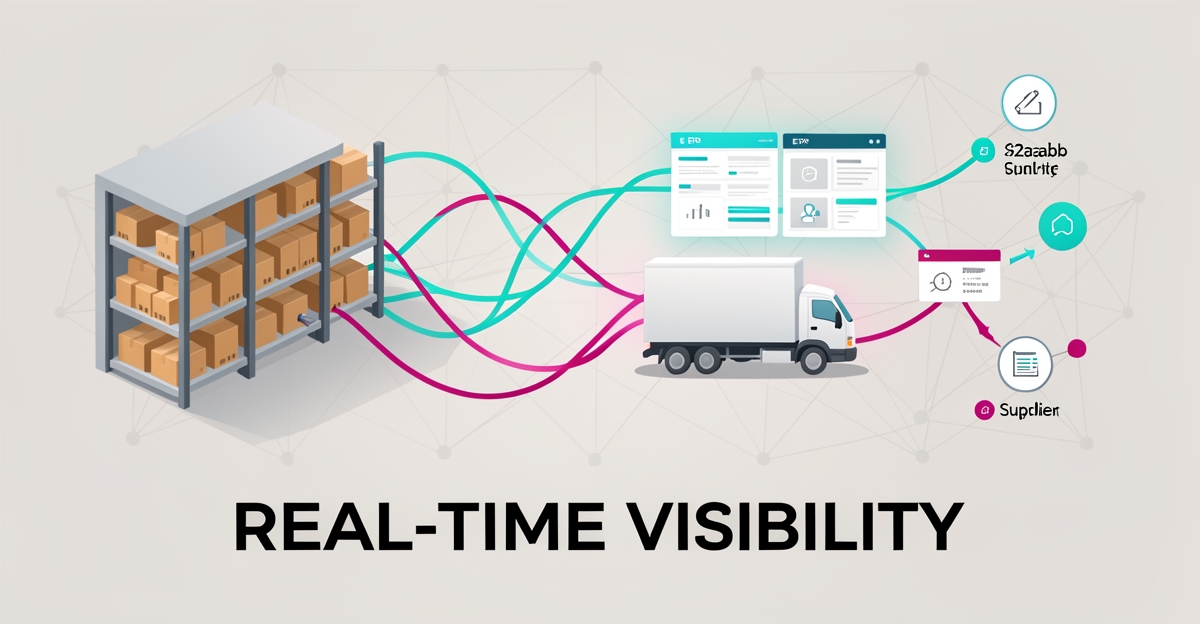
AI creates real-time, end-to-end supply chain intelligence by acting as the connective tissue between ERP, warehouse, and supplier systems—unifying data streams that were once siloed and reactive. This integration enables hardware distributors to move beyond periodic reporting and instead monitor inventory levels, shipment statuses, and demand signals as they happen. With AI-powered analytics processing inputs from multiple sources in real time, organizations gain a single, accurate view of their entire supply chain, turning raw data into actionable insights.
According to industry research, AI can improve demand forecasting accuracy by up to 30%, allowing distributors to align procurement and production with actual market needs rather than outdated projections. When combined with RFID technology, AI-driven systems can achieve inventory accuracy rates of up to 99%, drastically reducing discrepancies between recorded and physical stock. These capabilities are especially valuable for hardware distributors managing high-SKU, low-turnover items where even small inaccuracies can lead to costly stockouts or overstock situations.
Beyond forecasting and tracking, AI excels at identifying early warning signs of disruption before they impact operations. By continuously analyzing supplier performance, logistics delays, geopolitical events, and weather patterns, AI-powered analytics can surface potential risks days or weeks in advance—giving teams time to reroute shipments, adjust safety stock, or engage alternate suppliers. As noted by Dassault Systèmes, this proactive risk assessment transforms supply chain management from a reactive function into a strategic advantage.
For businesses seeking to implement this level of visibility, AIQ Labs provides the integration expertise needed to connect disparate systems into a cohesive, intelligent network—ensuring data flows seamlessly across platforms while maintaining accuracy and security. For distributors ready to go further, an AI Operating System builds one connected operating layer across the whole business, delivered in phases and owned outright. This unified approach doesn’t just improve visibility; it enables faster, more confident decision-making at every stage of the supply chain.
From Insight to Action: Implementing AI for Measurable Supply Chain Gains
Starting with high-impact use cases allows hardware distributors to realize value quickly while building a foundation for broader transformation. AIQ Labs’ phased approach—Start Monthly, Build in Milestones, or Own It Outright—lets SMBs integrate AI agents across ERP, warehouse, and supplier systems without disrupting ongoing operations. By focusing first on inventory forecasting and delay prediction, businesses can target the pain points that directly affect cash flow and customer satisfaction.
AI-powered demand forecasting can improve accuracy by up to 30%, reducing the guesswork that leads to costly overstocking or dangerous stockouts according to industry research. This precision enables distributors to optimize reorder points and safety stock levels. Real-world applications have reported stockout reductions as high as 70% and excess inventory decreases of 40% with custom AI models though results vary by operation. Simultaneously, AI-driven delay prediction analyzes historical shipment data, carrier performance, and external risk factors to surface early warning signals of disruptions, allowing proactive rerouting or supplier communication before delays cascade through the network.
These capabilities translate into measurable financial gains: organizations using AI in supply chain management typically report a 15-20% reduction in operational costs through optimized logistics, automated workflows, and improved resource allocation per enterprise technology analyses. For hardware distributors managing complex supplier networks, this means lower carrying costs, fewer expedited shipping fees, and reduced labor spent on manual exception handling.
To begin without disruption, SMBs should follow a structured rollout: first, audit data quality across inventory, procurement, and logistics systems to ensure AI models receive accurate inputs; second, pilot AI forecasting in one product line or warehouse to validate accuracy and refine integration points; third, expand to delay prediction using real-time carrier and weather data feeds; fourth, connect AI agents to ERP and WMS via API for automated reorder triggers and exception alerts. Throughout this process, AIQ Labs supports clients through its Build in Milestones model—delivering functional workflows phase by phase, with payment tied to shipped capabilities and full ownership retained at each step.
This methodical progression turns visibility into action, transforming reactive supply chain management into a proactive, resilient operation. By anchoring each phase in proven use cases and measurable outcomes, hardware distributors gain confidence to scale AI adoption while maintaining control over their systems and data. The result is not just improved efficiency, but a supply chain that anticipates change and adapts in real time.
Still paying for 10+ subscriptions that don’t talk to each other?
We build custom AI systems you own outright. No vendor lock-in. Full control.
Not sure where to start? Ask our AI planner
Frequently Asked Questions
Why is supply chain visibility so poor for hardware distributors right now?
Can AI actually make demand forecasting more accurate?
How much can AI improve inventory accuracy?
Will AI help us spot supplier or logistics risks earlier?
What kind of cost savings do hardware distributors see with AI?
Is implementing AI disruptive for a small or mid-sized distributor?
Turn Supply Chain Visibility Into Competitive Advantage
Hardware distribution lives or dies on visibility — real-time insight into suppliers, inventory, and shipments that turns fragmented data into proactive decisions. AI bridges ERP, warehouse management, and supplier systems to create end-to-end intelligence, improving demand forecasting accuracy by up to 30% and surfacing disruption risks days or weeks early. That visibility becomes measurable gains when translated into action: optimized reorder points, fewer stockouts, reduced excess inventory, and lower expediting costs, with organizations using AI in supply chain management typically reporting a 15-20% reduction in operational costs per enterprise technology analyses. Start with a high-impact pilot, audit data quality first, then expand forecasting and delay prediction in milestones. AIQ Labs supports this phased approach with seamless system integration and AI workflows you own outright, keeping data flowing securely across platforms. Ready to map your biggest bottleneck? Take the 2-minute Fit Check at aiqlabs.ai/apply, then book a free 30-minute strategy call to identify high-ROI automation opportunities. You can also reach the team directly at [email protected].
Make AI your competitive advantage — not just another tool.
Strategy, implementation and ongoing optimization. One partner, end to end.
Not sure where to start? Ask our AI planner