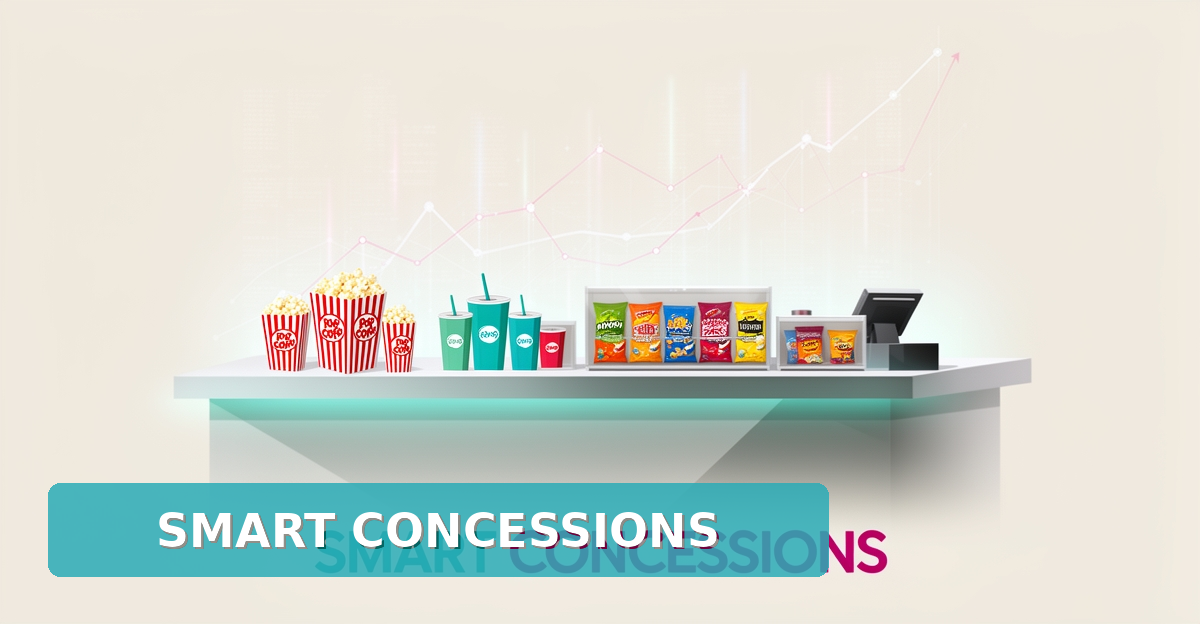
How AI Can Optimize Concession Sales and Menu Recommendations in Movie Theaters
Key Facts
- AI-driven menu optimization has been reported to increase concession revenue by roughly 10–15%, according to industry research.
- More accurate AI demand prediction is reported to reduce food waste by 20–30%, industry analyses suggest.
- Simone's Bistro reported a 12% profit increase in three months using AI menu engineering, per a published case study.
- Luigi's Pizzeria reported a 10% profit increase in three months after implementing AI menu optimization, per the same case study analysis.
- AI analyzes sales data, customer feedback, kitchen operations, and external factors to optimize menus, data analytics research shows.
- AI identifies which items sell best and analyzes customer feedback from reviews and social media, according to case studies.
- AI-driven menu optimization is now a present-day strategy for competitive advantage, current industry analysis notes.
Hire a team member that works 24/7 — for less than a part-time wage.
AI receptionists, SDRs, dispatchers and 99+ roles. Trained on your business, fully managed.
Not sure where to start? Ask our AI planner
The Concession Revenue Challenge Movie Theaters Face Today
Movie theaters live and die by concession sales, yet most still run menus that were designed for a different era of moviegoing. Static boards, one-size-fits-all combos, and gut-feel pricing leave real money on the table every showtime.
Traditional concession strategies rely on intuition and past experience rather than extensive data analysis. That means decisions are slower, more iterative, and limited to manual analysis. The result is missed upsell opportunities and menus that cannot adapt to real-time customer behavior.
Industry research points to measurable gains where data is put to work. Reports on AI menu optimization in food service typically cite a 10–15% revenue increase, and food waste often falls by 20–30% when demand is predicted more accurately. Treat these as directional benchmarks rather than guarantees—your results depend on your data quality and how well the system is integrated.
Real-world cases reinforce the impact of data-backed engineering. A published case study analysis documents a 12% profit increase in three months for Simone's Bistro and a 10% profit increase in three months for Luigi's Pizzeria after AI menu engineering. Those gains came from identifying which dishes sell best and which ones don't, and from analyzing customer feedback from reviews and social media.
The core problem for theaters mirrors the restaurant challenge. Concession stands operate with:
- Static menus that do not reflect time of day, film genre, or crowd demographics
- No real-time linkage between POS data, purchase history, and what is promoted at the counter
- Pricing set by cost alone, without insight into customer willingness to pay
- Missed timing for upsells, such as combo pushes before peak entry lines
Without integration, theaters cannot see the patterns AI can surface. Data analytics research shows AI analyzes sales data, customer feedback, kitchen operations data, and external factors like seasonal trends and local events to inform adjustments. That same multi-source view is missing at most concession stands.
AI can also increase revenue by strategically placing profitable items on the menu and setting prices based on cost and customer willingness to pay. In a theater context, that translates to promoting high-margin items during specific films or times, not just putting the same combo board up every night.
The gap is operational, not just creative. Current industry analysis notes AI-driven menu optimization is no longer a futuristic concept but a present-day strategy for businesses seeking competitive edge. For theaters, the next step is moving from static menus to systems that analyze customer demographics, purchase history, and time of day to recommend and automate concession options in real time.
AIQ Labs builds custom AI systems that integrate with POS and point-of-sale tools to increase average ticket spend. If concession revenue is the workflow costing you the most, a Workflow Build rebuilds it at a fixed price, in phases—closing the revenue gap left by traditional concession operations.
How AI Analyzes Theater Data to Optimize Concessions in Real Time
Movie theaters generate vast amounts of data from every concession transaction, and AI turns this information into real-time action. By analyzing point-of-sale data alongside customer demographics, purchase history, and time-of-day patterns, AI identifies which high-margin items are most likely to sell at any given moment. This enables dynamic recommendations that guide customers toward profitable combos—like pairing a premium drink with a popular snack during peak evening shows—without relying on static menus or staff intuition. Industry reports suggest AI-driven menu optimization can lift concession revenue by roughly 10–15% by strategically promoting items with the best profit margins.
Beyond recommendations, AI continuously adjusts pricing and inventory based on real-time demand signals. For example, if data shows a surge in family ticket sales before a matinee, the system might prioritize and slightly discount kid-friendly bundles while reducing popcorn prep to minimize waste. Conversely, during late-night screenings, it could highlight indulgent treats and adjust prices to match willingness to pay. These micro-adjustments happen automatically, ensuring theaters capitalize on fleeting opportunities. Industry analyses point to food waste reductions of 20–30% through more accurate demand forecasting, directly lowering costs associated with over-prepared perishables like hot dogs or baked goods.
AIQ Labs builds custom systems that integrate with theater POS platforms to enable this level of automation. Our workflow automation work processes live transaction streams, customer profiles, and contextual triggers—such as movie genre or showtime—to deliver personalized concession suggestions via kiosks, mobile apps, or staff terminals. By connecting data sources and applying predictive models, theaters transform concession stands from reactive counters into proactive revenue engines. The result is a self-optimizing system that learns from every sale, continuously refining recommendations and pricing to maximize both customer satisfaction and profitability.
Implementing AI Concession Systems: From Integration to Ongoing Optimization
Deploying AI in your concession stand doesn't require a complete operational overhaul—it demands a structured approach that respects the complexity of live theater environments. Successful implementations follow a phased methodology that prioritizes system stability and staff confidence before scaling to full automation.
The foundation begins with integrating your point-of-sale systems and customer data streams. AI algorithms require access to historical sales figures, real-time transaction data, and inventory levels to generate accurate recommendations. Without clean data pipelines connecting your POS, kitchen operations, and customer feedback channels, even sophisticated AI cannot identify which items drive profitability or predict demand fluctuations. This integration phase typically involves connecting APIs to ensure seamless data flow between ticketing systems and concession registers.
Once connected, launch a controlled pilot program focusing on specific high-impact areas. Rather than automating the entire menu immediately, select a single theater location or specific showtimes to test AI-driven recommendations. During this phase, the system analyzes which items sell best and which underperform, allowing you to validate suggestions against actual customer behavior. A focused pilot reduces risk while generating the performance data needed to refine algorithms before wider deployment.
Staff training determines whether AI enhances operations or creates friction. Your team needs to understand not just how to use new interfaces, but how AI recommendations adapt to real-time variables like time of day and seasonal trends. When concession staff trust the system's suggestions—such as promoting specific combos during family matinees versus late-night horror screenings—they become active participants in optimization rather than obstacles to adoption.
The implementation journey follows these critical phases:
- Audit current sales data to establish baseline performance metrics
- Integrate POS and inventory systems for real-time data synchronization
- Deploy pilot recommendations in controlled environments
- Train staff on interpreting and acting on AI insights
- Establish feedback loops for continuous algorithm refinement
Continuous learning loops transform static menu boards into dynamic revenue engines. As the AI processes transaction patterns, it identifies opportunities to reduce food waste—industry reports commonly cite 20–30% reductions through accurate demand prediction—while simultaneously increasing average ticket spend through personalized suggestions. The system evolves with your audience, recognizing that Tuesday senior matinees require different recommendations than Friday blockbuster premieres.
AIQ Labs structures these deployments in phases, so each theater's unique constraints inform the system architecture. You can start monthly, build in milestones, or own the system outright—whatever fits how you want to invest. For chains that want concession intelligence connected to ticketing, staffing, and marketing in one layer, an AI Operating System is the natural end state, built in phases and owned outright by you.
The theaters seeing the strongest results treat AI implementation as an operational partnership, not a one-time installation. They monitor key metrics closely, adjust parameters based on seasonal attendance shifts, and maintain the human oversight necessary to handle unexpected variables. This disciplined approach turns concession stands from cost centers into intelligent profit drivers that improve with every transaction.
Still paying for 10+ subscriptions that don’t talk to each other?
We build custom AI systems you own outright. No vendor lock-in. Full control.
Not sure where to start? Ask our AI planner
Frequently Asked Questions
How much can AI-driven menu optimization increase concession revenue in movie theaters?
Can AI help reduce food waste at theater concession stands?
What kind of data does AI use to make real-time concession recommendations in theaters?
Is implementing AI in theater concessions a disruptive overhaul of existing operations?
Do theaters need to replace their current POS systems to use AI for concession optimization?
How does AIQ Labs support theaters in adopting AI for concession sales?
Turn Your Concession Stand Into a Smart Revenue Engine
AI transforms theater concession operations from static guesswork into a dynamic, data-driven profit center. By analyzing POS data, customer demographics, purchase history, and showtime patterns, AI recommends high-margin combos, adjusts pricing in real time, and reduces food waste through accurate demand forecasting—industry reports commonly point to revenue gains in the 10–15% range and waste reductions of 20–30%. The result is higher average ticket spend, smoother operations, and a system that learns and improves with every transaction. To begin, audit your current sales data to establish a baseline, then take the 2-minute Fit Check to see whether a Workflow Build or a full AI Operating System is the right fit. From there, book a free 30-minute strategy call to map your biggest opportunity—no obligation, just clarity on your path to increased profitability.
Make AI your competitive advantage — not just another tool.
Strategy, implementation and ongoing optimization. One partner, end to end.
Not sure where to start? Ask our AI planner