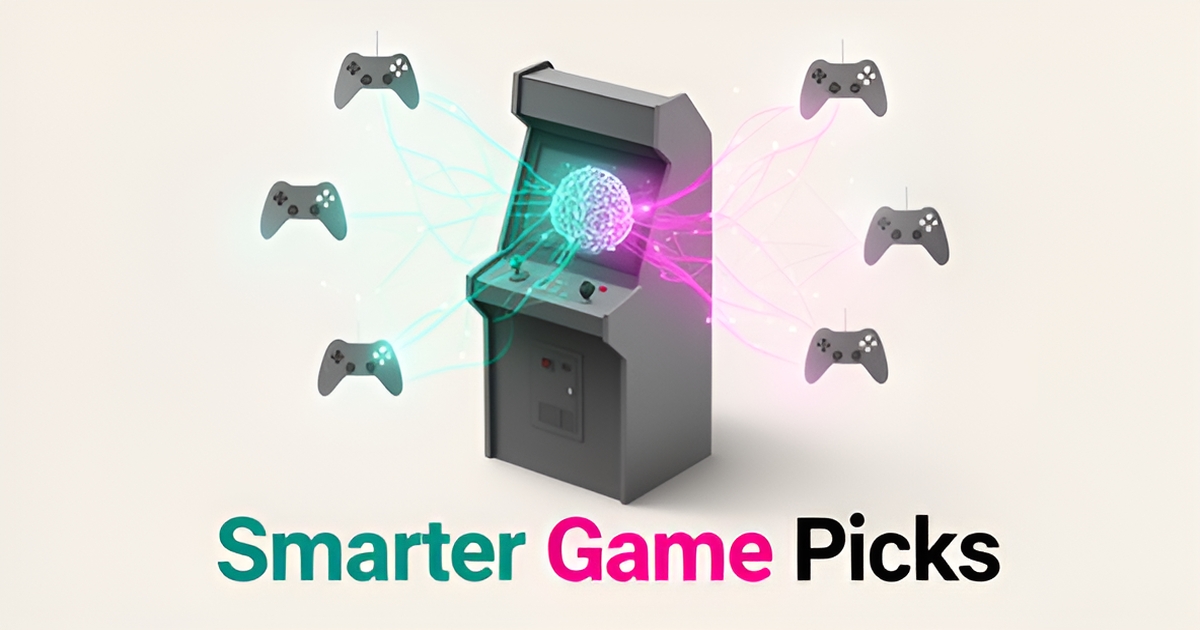
How AI Can Personalize Game Recommendations for Players
Key Facts
- Real-time recommendation engines update suggestions with every new click or view to reflect changing player preferences, as recommendation platforms like Recombee have documented
- Industry reporting on AI product recommenders suggests personalized suggestions can meaningfully lift click-through and add-to-cart rates — often by double-digit percentages in e-commerce testing
- Adaptive AI adjusts game difficulty dynamically to maintain optimal flow state for both veteran and new players
- Kubernetes-based tooling such as Agones and Open Match enables scalable skill-based matchmaking for multiplayer gaming at any scale
- AIQ Labs has deployed 200+ multi-agent systems and runs 4 live SaaS products daily — the same engineering discipline applies to arcade personalization builds
Hire a team member that works 24/7 — for less than a part-time wage.
AI receptionists, SDRs, dispatchers and 99+ roles. Trained on your business, fully managed.
Not sure where to start? Ask our AI planner
The Engagement Challenge: Why Generic Recommendations Fail Arcades
Picture a player stepping into your arcade, drawn by flashing lights and endless possibilities, only to wander aimlessly because the game suggestions feel like a shot in the dark. This scenario plays out daily in arcades everywhere, where generic recommendations fail to connect, leading to short visits and lost loyalty.
The core issue lies in one-size-fits-all approaches that ignore individual player preferences. Without personalization, suggestions rely on broad categories like "popular games" or "new releases," which often miss the mark. Recommendation platforms that analyze user behavior with large ensembles of machine learning models — Recombee, for example, reports using over 100 — consistently outperform static lists, which is a strong signal that irrelevant suggestions drive disengagement.
This disengagement translates directly to shorter dwell times and fewer repeat visits. Players who encounter mismatched games quickly lose interest, wandering out without exploring further. In e-commerce testing, AI recommender vendors such as UI42 have reported double-digit lifts in click-through and order value from personalized suggestions — a pattern arcades forfeit when they stick to generic tactics.
Here are key ways generic recommendations hurt arcade performance:
- They overlook real-time player behavior, such as lingering patterns or past interactions, leading to suggestions that feel random and unappealing.
- They miss chances for combo deals, like pairing a racing game with a shooting challenge, which could extend play sessions.
- They contribute to missed revenue opportunities, as players leave without trying upsells or returning for more.
Arcades often see players disengage when recommendations fail to adapt, much like static game designs that ignore skill levels. Adaptive AI in games adjusts challenges to maintain flow — without it, players face frustration or boredom, cutting visits short.
The result is a cycle of low retention: one-time visitors who don't return because nothing felt tailored to them. AIQ Labs addresses this by building AI systems that learn from every interaction to deliver smarter suggestions, helping arcades foster longer dwell times and loyalty.
Ultimately, generic approaches leave money on the table, with players slipping away to competitors who offer more relevant experiences. Scalable AI infrastructure enables dynamic personalization at any venue size, preventing the disengagement that plagues traditional setups.
How AI Powers Real-Time, Behavior-Based Game Personalization
The difference between a good arcade and a great one often comes down to whether players feel like the experience was designed specifically for them. Modern AI makes that level of personalization achievable at scale by analyzing every interaction as it happens and adjusting recommendations in real time.
At the core of this approach are machine learning algorithms that process player behavior continuously rather than relying on static profiles. Recommendation platforms like Recombee deploy large ensembles of machine learning algorithms — over 100 in their case — to analyze both content attributes and user behavior, delivering tailored recommendations that update with each new interaction. This isn't batch processing that happens overnight — it's instantaneous adaptation.
The personalization journey begins the moment a player engages with your system. For returning visitors, the AI might surface trending games or new releases based on aggregate popularity. But once that first interaction occurs — a click on a racing game, for example — the system immediately recalibrates. As Recombee describes it, with every new click or view, the recommendations are seamlessly updated to reflect changes in user preferences as they browse. This creates a feedback loop where each action refines the next suggestion.
The business impact of this real-time responsiveness is substantial. Vendors in the space have reported click-through rate lifts of 40% or more from AI-powered personalization, transforming passive browsers into active participants. UI42's AI recommender, similarly, has reported average CTR gains of around 35% on recommended products in early A/B testing.
For arcades specifically, this translates into intelligent combo recommendations that feel intuitive rather than pushy. The AI tracks which games a player gravitates toward, how long they engage with different game types, and which combinations they naturally explore. Based on these patterns, it can suggest personalized game bundles or timed combo deals that align with demonstrated preferences — turning a casual visit into an extended session.
The technical infrastructure supporting this level of personalization operates across several layers:
- Behavioral tracking systems that capture every click, game selection, and session duration
- Real-time processing engines that analyze interactions and update recommendations without latency
- Collaborative filtering algorithms that identify patterns across similar player profiles
- Content-based filtering that matches game attributes to individual preferences
- Continuous learning loops that refine accuracy as more data accumulates
What makes this approach particularly powerful for arcade environments is its ability to balance individual personalization with discovery. The AI doesn't just reinforce existing preferences — it strategically introduces adjacent experiences that expand a player's repertoire. Someone who consistently plays racing games might receive a recommendation for a combat simulator that shares similar control mechanics or competitive elements, gently expanding their comfort zone.
AIQ Labs builds these recommendation engines as custom systems that learn from every interaction specific to your venue. Rather than applying generic gaming industry templates, the AI develops models based on your actual player base, your game inventory, and the unique flow of traffic through your space. This specificity matters because player behavior in a family entertainment center differs fundamentally from a competitive gaming lounge. These builds typically start as a fixed-price workflow rebuild focused on the one recommendation loop that costs you the most, and can grow into a full AI operating system for the whole venue.
The adaptive nature of modern AI also extends beyond simple recommendations into the gameplay experience itself. Today's most engaging games use AI to create experiences that respond to individual playing styles — adjusting difficulty dynamically, personalizing challenges, and creating games that are "smart" rather than simply hard or easy.
This real-time, behavior-based approach represents a fundamental shift from traditional loyalty programs or static promotional displays. Instead of offering the same combo deal to every visitor, AI enables you to present the right combination to the right player at the right moment — dramatically increasing the likelihood they'll engage, stay longer, and return sooner.
From Data to Dollars: Implementing AI Recommendations in Your Arcade
Turning player data into revenue starts with the right infrastructure and a willingness to act on what the numbers reveal. Arcades that track gameplay patterns — session length, repeat plays, cabinet dwell time — can feed those signals into an AI engine that learns which titles naturally pair together. Recommendation platforms demonstrate this at scale, updating suggestions in real time and reporting click-through lifts of 40% or more across gaming and media properties. When those suggestions translate to combo deals or "next game" prompts on a cabinet screen, the result is longer visits and more frequent returns.
- Log every interaction — game starts, completions, early exits, and idle time — at the cabinet level
- Deploy a Kubernetes-based game server layer such as Agones on GKE so the recommendation engine scales from a single location to a regional chain
- Use a matchmaking framework like Open Match to group players by skill and preference for multiplayer cabinets
- Surface personalized "You might like" combos on the attract screen and at the payment terminal
- Run continuous A/B tests on suggestion placement, wording, and bundle pricing
The payoff is measurable. E-commerce recommender vendors such as UI42 have reported add-to-cart lifts of roughly 35% and average order value gains of up to 30% — metrics that map directly to token spend and combo uptake in an arcade. AIQ Labs builds custom AI systems that ingest this telemetry, train on each venue's unique traffic patterns, and serve recommendations through infrastructure you own outright — no vendor lock-in, no per-seat SaaS fees. You can start monthly, build in milestones, or own the system outright, whichever fits how you like to pay. Our track record — 200+ multi-agent systems deployed and 4 live SaaS products we run daily — means the stack is proven at real-time personalization scale. Ready to see which cabinet pairings drive the longest dwell time at your location? Start the Fit Check and we'll map the highest-ROI workflow in a free 30-minute strategy call.
Still paying for 10+ subscriptions that don’t talk to each other?
We build custom AI systems you own outright. No vendor lock-in. Full control.
Not sure where to start? Ask our AI planner
Frequently Asked Questions
How does AI personalization in arcades actually improve player engagement and dwell time?
What specific technologies enable real-time game recommendations in arcades?
Can AI recommendations really increase revenue in arcades?
Is AI personalization only for big arcade chains, or can small independent venues benefit too?
How does AI avoid just pushing the same popular games and actually help players discover new experiences?
What infrastructure do arcades need to implement AI-powered recommendations without vendor lock-in?
Your Next Move: Turn Browsers Into Regulars
The evidence is clear: when arcades swap generic suggestions for AI-driven personalization, engagement transforms. Real-time analysis of player behavior — tracking everything from initial clicks to lingering patterns — enables systems to adapt instantly, delivering tailored experiences that vendors report can lift click-through rates by 40% or more. By moving beyond static "popular games" lists to intelligent combo recommendations and dynamic pairings, you create an environment where every visit feels personally curated, directly boosting dwell time and repeat business. The technology to implement this exists today, from behavioral tracking to real-time processing engines. AIQ Labs builds custom AI systems that learn from every interaction to deliver these smarter recommendations — 200+ multi-agent systems deployed and counting. Ready to see which game combinations resonate most with your visitors? Start the Fit Check and map your highest-ROI personalization strategy in a free 30-minute strategy call.
Make AI your competitive advantage — not just another tool.
Strategy, implementation and ongoing optimization. One partner, end to end.
Not sure where to start? Ask our AI planner