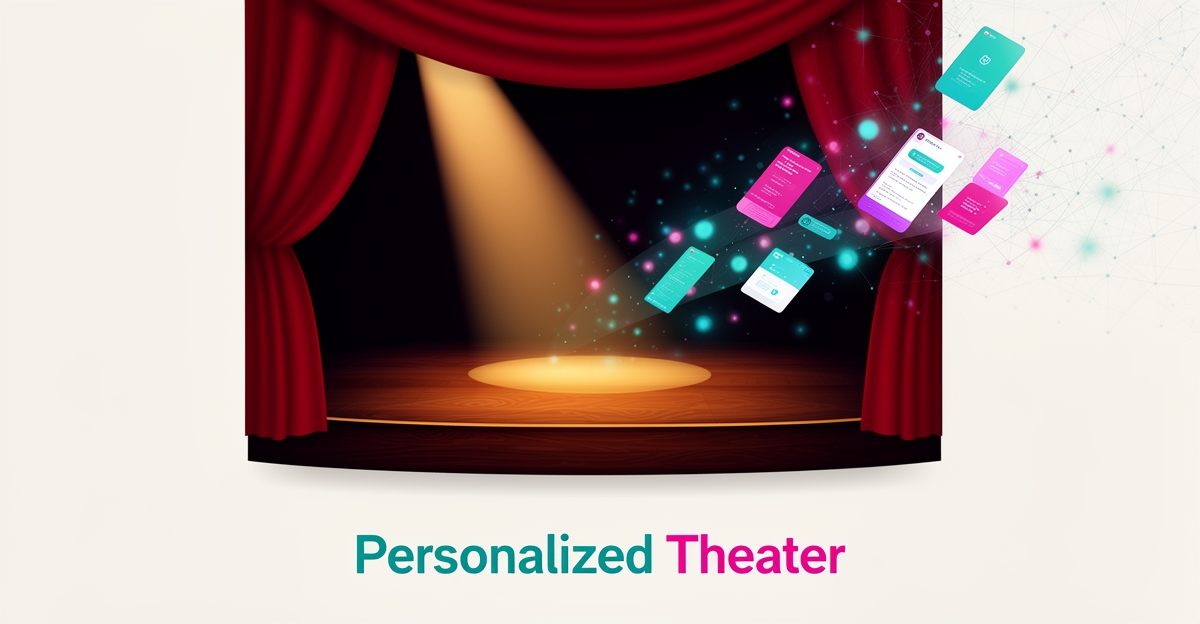
How AI Can Personalize the Audience Experience in Live Theater
Key Facts
- A large majority of customers—typically cited around 80%—prefer brands that personalize the experience.
- Repeating themselves ranks among customers' top service frustrations, per industry analysis.
- Segmented email campaigns typically see meaningfully higher open and click-through rates than unsegmented sends, per Mailchimp.
- Mailchimp's Predictive Segments can drive up to 2x more revenue for targeted campaigns.
- AI predictive analytics forecasts which patrons will return, letting theaters recommend shows based on past behavior.
- AI can analyze thousands of reviews and social posts to surface unmet audience needs at scale.
- "The human brain no longer perceives AI as a 'chatbot.' It perceives a relationship," notes Hande Cilingir.
Hire a team member that works 24/7 — for less than a part-time wage.
AI receptionists, SDRs, dispatchers and 99+ roles. Trained on your business, fully managed.
Not sure where to start? Ask our AI planner
Why Generic Theater Marketing Fails Today
Generic marketing treats every theater patron the same, ignoring the unique preferences that drive their experience—whether they favor avant-garde dramas, family-friendly musicals, or specific seating preferences. This one-size-fits-all approach creates frustration, as most customers prefer brands that personalize the experience, and repeating themselves consistently ranks as a top service frustration. When theaters fail to recognize past attendance or stated interests, they miss opportunities to build meaningful connections, turning what could be a personalized dialogue into a transactional exchange.
Research confirms that segmentation transforms engagement: segmented email campaigns typically achieve higher open and click-through rates compared to unsegmented sends, proving that tailored communication resonates far more deeply. By leveraging data on demographics, behavior, and past interactions—such as frequency of musical theater attendance or preferred showtimes—theaters can move beyond generic season brochures to deliver recommendations that feel individually relevant. AI-powered tools enable this shift at scale, analyzing patron data in real time to predict future interests and automate personalized outreach, ensuring each communication reflects the audience member's unique history and preferences. This level of recognition fosters the emotional connection that turns occasional attendees into loyal patrons, addressing the core desire to be understood rather than processed. For theaters seeking to implement such strategies, AIQ Labs' AI Workflow Builds rebuild the one workflow that costs the most—fixed price, phased—creating systems that learn from every interaction across digital and physical touchpoints.
How AI Learns and Recommends Like a Human Usher
An usher remembers faces, favorite seats, and the shows a patron loves. AI learns that memory at scale, turning every ticket purchase, email click, and box office call into a continuous profile that informs the next recommendation.
AI analyzes past attendance and preferences in real time, enabling personalized experiences automatically. According to industry research, these tools track behavior, preferences, and interactions to target the right customers with the right message. The result is a recommendation engine that feels human, not generic.
Predictive analytics moves the system from reactive to anticipatory. With AI-powered predictive analytics, businesses now predict future customer behavior by analyzing past data to forecast which leads are likely to convert. Mailchimp's platform demonstrates this impact, with up to 2x more revenue with Predictive Segments. For theater, that means identifying patrons likely to return for a new drama based on musical history.
Segmentation provides the structure for those predictions. Audience segmentation is the practice of dividing contacts into subgroups based on shared characteristics such as demographic, geographic, psychographic, behavioral, and needs-based. Audience segmentation tools show segmented email campaigns typically outperform unsegmented sends on open and click-through rates. That lift translates directly to show recommendations that get opened and acted on.
The personalization loop also reduces friction. Customer experience analysis finds that repeating themselves is customers' #1 frustration in customer service, while a large majority prefer brands that personalize the experience. An AI system that remembers past interactions can prompt a human agent to pick up right where the patron left off.
In practice, an AI usher learns like this:
- It reviews attendance history to surface genre affinity and preferred performance times.
- It applies predictive segments to forecast interest in upcoming shows, seating preferences, or special events.
- It delivers tailored communications across online and physical touchpoints for an omnichannel customer experience.
- It continuously updates profiles from each interaction, so recommendations improve over time.
This is where AI Customer Relationship Management supports live theater. AIQ Labs builds managed AI Employees—receptionists, SDRs, and 99+ other roles—that learn from every interaction, typically at around 80% less cost than a human hire, enabling theaters to deliver a tailored experience across online and physical touchpoints. The combination of predictive analytics and real-time data processing creates the continuity patrons expect from a human usher, at a scale no single staff member could match.
Turning Reviews and Chatter into Better Shows
Your audience is already speaking—through reviews, social media, and post-show surveys—offering raw, unfiltered insights into what they truly value in a theater experience. AI transforms this unstructured chatter into actionable intelligence by analyzing feedback at scale to uncover unmet needs, such as demand for shorter run-times or more immersive storytelling. The CXL framework guides this process: AI tools transcribe and analyze interviews and online reviews, while smart prompts quantify pain points and apply frameworks like Jobs-to-be-Done to decode audience language quickly and reliably. This shifts theaters from guessing what patrons want to building programming and marketing strategies grounded in real-time, data-driven insights. By identifying patterns—like repeated mentions of uncomfortable seating or a desire for interactive elements—AI helps prioritize changes that directly enhance satisfaction and loyalty. AIQ Labs supports this workflow by developing custom systems that integrate feedback analysis with audience data, enabling theaters to close the loop between insight and action. The result is a more responsive, audience-centered operation where every show reflects what patrons have actually said they want.
- Analyze thousands of reviews and social posts to surface recurring themes in audience feedback
- Use AI prompts to quantify pain points like long run-times or lack of accessibility
- Apply Jobs-to-be-Done framework to understand the underlying motivations behind patron choices
- Verify insights through cross-checking to ensure accuracy before informing programming decisions
Building Loyalty Through Remembered Experiences
Imagine a box office agent who already knows your parking frustration from last month's musical and offers a solution before you even mention it. That level of remembered experience transforms a routine transaction into a moment of genuine recognition. AI makes this possible by capturing and recalling past interactions—like complaints, preferences, or attendance patterns—to empower human staff with context that builds trust and loyalty. Industry research consistently finds that repeating themselves is customers' #1 frustration in customer service, and AI eliminates this friction by ensuring history travels with the patron across touchpoints.
When a theater's AI system remembers that a patron consistently chooses aisle seats for Friday night dramas, it doesn't just store data—it enables proactive, personalized service. The next time that patron calls to book, the AI can alert the agent to suggest similar shows with preferred seating, turning a simple inquiry into a tailored recommendation. This capability stems from AI's ability to analyze customer data in real time, enabling us to deliver personalized experiences automatically, as noted by industry experts. The result is a continuum of care where each interaction feels like a natural extension of the last.
This emotional continuity is especially powerful when AI equips human agents to act on insights they might otherwise miss. For example, if a patron left a review mentioning difficulty finding accessible seating, the AI can flag this for the box office team ahead of their next call, prompting an agent to offer specific accommodations or share detailed venue maps. Segmented email campaigns typically see higher open and click-through rates than unsegmented sends—proof that relevance drives engagement. In the theater lobby or over the phone, that same principle applies: remembered details make patrons feel seen, not sold to.
AIQ Labs designs systems where this intelligence flows seamlessly into human workflows, ensuring technology supports—not replaces—the empathetic judgment of theater staff. For theaters ready to connect ticketing, marketing, and front-of-house into one connected layer, AI Operating Systems are built in phases and owned outright. By turning data into contextual awareness, AI helps create the kind of personalized, relationship-driven experience that doesn't just fill seats—it builds lifelong patrons who return because they feel genuinely known.
Still paying for 10+ subscriptions that don’t talk to each other?
We build custom AI systems you own outright. No vendor lock-in. Full control.
Not sure where to start? Ask our AI planner
Frequently Asked Questions
How can a theater use AI to recommend shows to patrons?
Does audience segmentation actually improve engagement?
Will AI replace theater staff like box office agents and ushers?
What's the biggest customer service mistake theaters make with patrons?
Can AI help theaters understand what audiences actually want from shows?
How does a theater get started with AI personalization without a huge budget?
The Curtain Rises on a New Era of Audience Connection
Live theater has always been personal—a shared, human experience between stage and seat. The opportunity now is to make every touchpoint around that experience feel just as personal. As we've seen, AI can remember what a favorite usher never forgets: which genres move a patron, which seats they prefer, and what they said after the last show. It can segment audiences for campaigns that consistently outperform generic sends, predict who's ready for their next show, and turn scattered reviews into a programming roadmap—all while empowering your human staff to deliver warmer, more informed service. The result isn't just filled seats; it's lifelong patrons who feel genuinely known. That's exactly the kind of system AIQ Labs builds: AI that learns from every interaction and connects your online and in-person touchpoints into one seamless experience. If you're ready to explore what that could look like for your theater, take the two-minute Fit Check at aiqlabs.ai/apply and book a free 30-minute strategy call—a real working session with an AI engineer to map your biggest opportunity. No pitch, just clarity. If there isn't a clear win, we'll tell you that too.
Make AI your competitive advantage — not just another tool.
Strategy, implementation and ongoing optimization. One partner, end to end.
Not sure where to start? Ask our AI planner