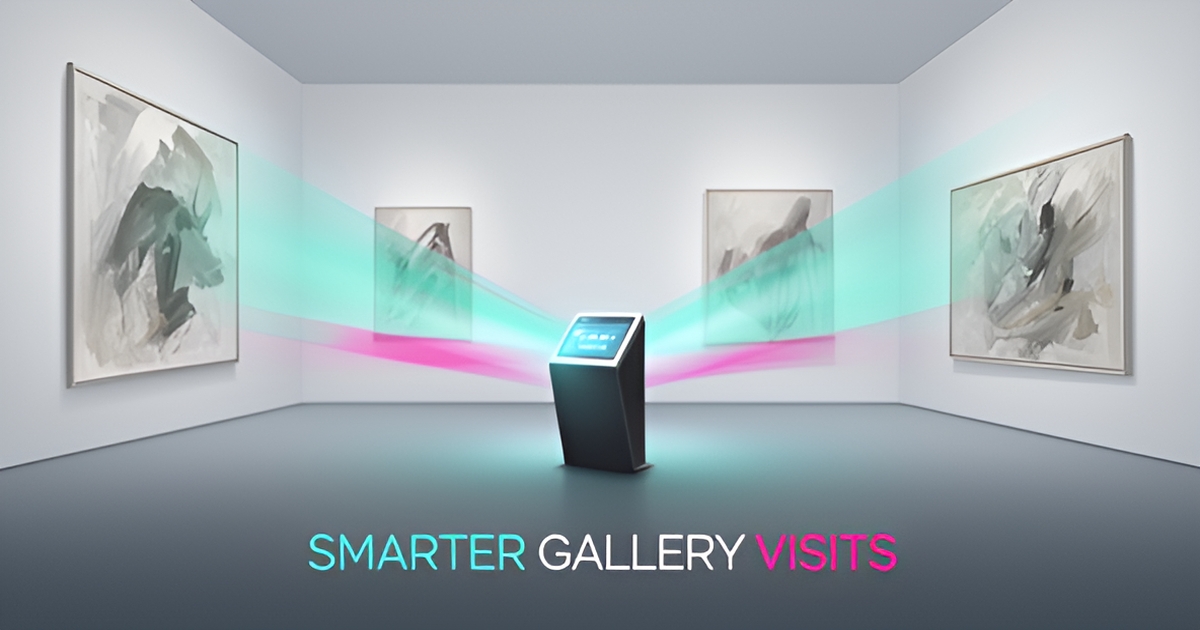
How AI Can Personalize the Visitor Experience at Your Art Gallery
Key Facts
- Industry analyses project the Museum Experience AI market growing at roughly 20%+ annually through the early 2030s, driven by demand for personalization.
- Early adopters like the Smithsonian have reported tens of thousands of AI guide users within months of launch, with a majority under age 40, according to industry analysis.
- AI-powered museum guides typically support 20+ languages, while human guides are limited to their own language skills, according to industry analysis.
- AI enables inclusive design through sign language, braille, and audio descriptions, making art accessible to all visitors.
- AI guides offer unlimited simultaneous users with higher upfront costs but low ongoing expenses, unlike human guides, according to cost analysis.
- Younger audiences consistently show the strongest uptake of digital-first gallery experiences, signaling a durable shift in visitor expectations.
Hire a team member that works 24/7 — for less than a part-time wage.
AI receptionists, SDRs, dispatchers and 99+ roles. Trained on your business, fully managed.
Not sure where to start? Ask our AI planner
The Visitor Engagement Gap in Modern Galleries
Most galleries still rely on static wall labels and a single docent script to serve every visitor who walks through the door. That one-size-fits-all approach leaves international guests struggling with language barriers, visitors with disabilities navigating inaccessible formats, and curious minds following a path that doesn't match their interests.
The market is signaling a shift. Industry analysts project sustained 20%+ annual growth in museum-experience AI through the early 2030s, and early adopters like the Smithsonian have drawn tens of thousands of AI guide users within months of launch, with a majority under age 40 — a clear sign that younger audiences expect digital-first engagement.
- Fixed audio guides offer one narrative in a handful of languages
- Wall text assumes a single reading level and cultural context
- Docent tours run on rigid schedules, not visitor curiosity
- Accessibility features are often retrofitted, not integrated
These gaps aren't just inconvenient — they determine whether a visitor stays for twenty minutes or two hours, whether they return, and whether they recommend the experience. AI can help create more inclusive and accessible designs through features like sign language, braille, and audio descriptions, but most institutions haven't moved past pilot programs. AIQ Labs works with cultural organizations to close this gap through personalization engines that adapt content in real time — delivering the right story, in the right language, at the right moment.
AI-Powered Personalization for Museums and Galleries
Imagine walking into a gallery where the exhibits adapt to your interests, the signage speaks your language, and accessibility features ensure everyone can engage fully. This isn't science fiction — it's the reality AI is creating in museums and galleries today.
Analysts tracking the sector report sustained 20%+ annual growth in museum-experience AI as of late 2026, reflecting rising demand for personalized, inclusive visitor experiences across institutions of every size.
AI-powered systems deliver tailored tours that adapt to individual preferences, whether through interactive guides or dynamic content recommendations. Early adopters like the Smithsonian have engaged tens of thousands of users within months of launching an AI guide, with a majority under the age of 40, demonstrating strong appeal to younger, tech-savvy audiences.
Beyond personalization, AI enhances accessibility with features like audio descriptions, sign language, and braille, making art more inclusive for diverse audiences. Multilingual support ensures visitors from around the world can engage fully, breaking down language barriers.
However, implementing AI in galleries isn't without challenges. Upfront costs and the need for scalable solutions can be barriers, particularly for smaller institutions. Additionally, while AI excels at data-driven personalization, it may lack the human warmth and nuanced understanding of a live guide.
At AIQ Labs, we build custom AI systems that help galleries deliver these advanced experiences. From personalized tours to dynamic signage, our solutions are designed to adapt to visitor behavior, creating memorable and engaging interactions. Explore how a single AI Employee can start delivering value before you scale further.
- Personalized tours tailored to visitor preferences
- Multilingual support for global audiences
- Accessibility features like audio descriptions and sign language
- Dynamic content recommendations based on visitor history
By leveraging AI, galleries can transform the visitor experience, making art more accessible, engaging, and inclusive for everyone.
From Human Guides to Hybrid AI Experiences
Human guides bring warmth and spontaneous storytelling that visitors remember. AI-powered guides bring data-driven personalization at scale that humans cannot replicate alone. The visitor experience at art galleries is shifting toward hybrid models that keep the best of both.
AI guides personalize in real time using visitor history and behavior. They can offer personalized tours, multilingual support, and accessibility features, making museums more inclusive for diverse audiences. A museum industry analysis shows AI-powered guides typically support 20+ languages while human guides are limited to the guide's language skills.
Scalability and cost structures diverge sharply. AI systems allow unlimited simultaneous users with higher initial cost and low ongoing expenses. Human guides have lower upfront cost but higher labor costs and are limited by the number of guides on site. This contrast is a key driver of the sector's sustained growth as of late 2026.
Accessibility is another clear differentiator. AI can include audio descriptions and sign language as built-in features. Human accessibility depends on individual guide training. The Smithsonian's early AI guide results — tens of thousands of users within months, most under the age of 40 — illustrate demand for on-demand, self-guided experiences.
Challenges remain. AI systems can lack human warmth and emotional connection, and may not fully understand the context and nuances of human behavior. Implementation also requires upfront investment and may not be scalable for smaller institutions.
Hybrid models resolve the tension by pairing strengths instead of choosing sides. Galleries keep human docents for opening talks, school groups, and nuanced interpretation. AI handles wayfinding, multilingual audio, personalized exhibit suggestions, and 24/7 access to collection information.
A practical hybrid setup can include:
- Human-led tours for depth, storytelling, and emotional connection
- AI-powered personalization engines that tailor content, suggest exhibits based on visitor history, or deliver dynamic signage
- Multilingual and accessibility layers such as audio descriptions, sign language, and braille support
- Shared analytics where AI captures engagement data to help human guides refine their programs
This approach preserves human warmth while adding scalable personalization. AIQ Labs builds personalized AI systems that adapt to visitor behavior, helping galleries deliver more relevant and memorable experiences without replacing the curatorial voice visitors value.
Building a Personalized Gallery Experience with AIQ Labs
Most institutions still rely on static labels and one-size-fits-all audio guides that cannot adapt to a visitor's pace, language, or curiosity. AIQ Labs bridges that gap by deploying personalization engines and multi-agent systems that turn every interaction into a dynamic, data-informed conversation — with 200+ multi-agent systems deployed to date and four live SaaS products we run daily as proof the architecture works in production.
That same orchestration — conversational intake, real-time research, individualized output — powers gallery applications like dynamic signage that rewrites wall text based on dwell time, exhibit recommendation engines that learn from visit history, and adaptive audio guides that shift depth and tone mid-tour.
- Dynamic signage that updates exhibit context in real time based on visitor proximity and profile
- Recommendation engines suggesting works aligned with past interests and current path
- Multilingual, accessibility-first audio guides that adjust complexity on demand
- Post-visit digital companions that extend engagement through personalized follow-up content
These systems connect with your existing stack — CRM, ticketing, and CMS integrations — without vendor lock-in, so the gallery keeps full control of its digital experience.
Engagement models match institutional rhythm. Start Monthly deploys a single AI Employee — perhaps a multilingual front-desk agent or exhibit guide — at roughly 80% less cost than a human hire, including build, training, integrations, and ongoing optimization. Build in Milestones rebuilds the one workflow that costs you the most — a recommendation engine, dynamic signage, or adaptive content layer — at a fixed price, in phases with approval at each step. Own It Outright delivers a full AI operating system — code, agents, data — built in phases and owned outright, so the gallery retains total control of its digital experience stack. See all options at /pricing.
Early adopters like the Smithsonian have shown that personalized digital companions drive younger engagement. Galleries ready to replicate that traction can start with the 2-minute Fit Check, then book a free 30-minute strategy call to map the highest-ROI workflow. Questions in the meantime? Reach us at [email protected].
Still paying for 10+ subscriptions that don’t talk to each other?
We build custom AI systems you own outright. No vendor lock-in. Full control.
Not sure where to start? Ask our AI planner
Frequently Asked Questions
Will AI make human gallery guides obsolete?
How much demand is there for AI in museums and galleries?
Can AI actually help with accessibility and language barriers?
Do younger visitors really use AI guides?
What are the main downsides of using AI in a gallery?
Is AI more expensive than hiring human guides?
Where Art Meets Intelligence: The Future of Gallery Engagement
AI-powered personalization is reshaping how visitors connect with art — breaking down language barriers, enhancing accessibility, and delivering tailored experiences that keep guests engaged longer and more deeply. From dynamic signage that adapts to visitor behavior to multilingual audio guides and recommendation engines that learn from individual preferences, galleries now have the tools to serve diverse audiences with relevance and care. For galleries ready to move beyond static labels and one-size-fits-all approaches, the path forward starts with understanding where AI can deliver the highest impact. Take the first step with the 2-minute Fit Check and a free 30-minute strategy call to explore how personalization engines can transform your visitor experience — no obligation, just clarity on your opportunity to create more meaningful connections with every guest.
Make AI your competitive advantage — not just another tool.
Strategy, implementation and ongoing optimization. One partner, end to end.
Not sure where to start? Ask our AI planner