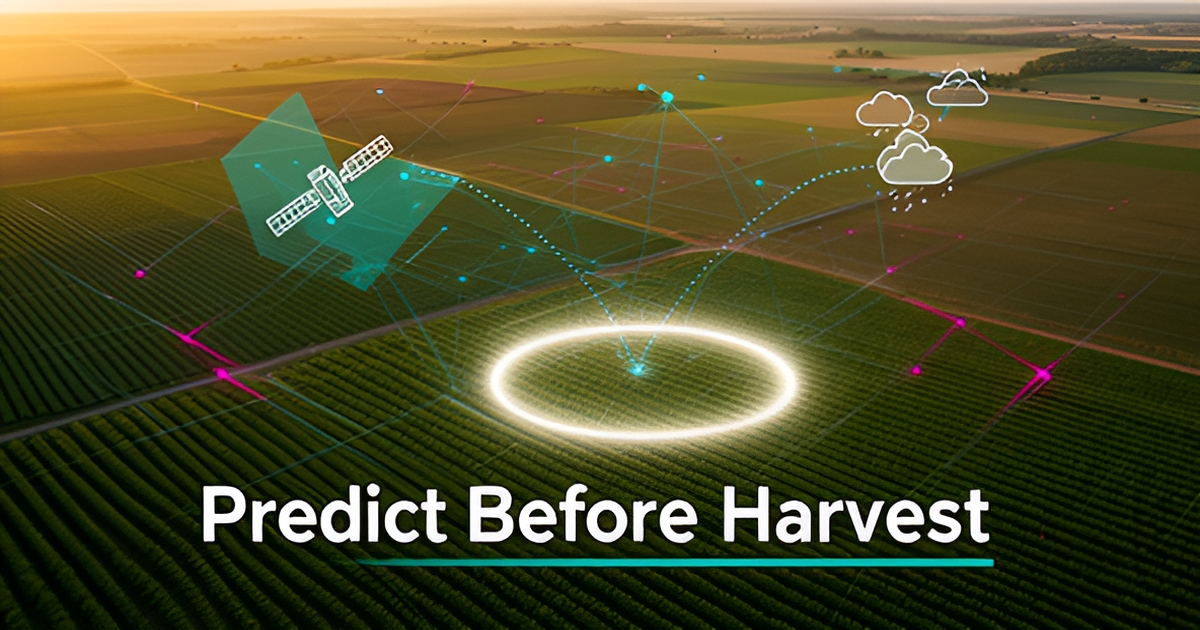
How AI Can Predict Crop Conditions Before Harvesting Begins
Key Facts
- AI crop yield prediction typically reduces harvest forecast error by 15-25% compared to traditional methods according to agtech research
- Multi-data models combining satellite, weather, soil, and yield data tend to outperform single-source approaches by 20-30% per industry analysis
- Extreme weather disasters cost global agriculture an estimated $123 billion annually, roughly 5% of agricultural GDP based on industry research
- Yield forecasts delivered eight weeks pre-harvest enable meaningful supply chain adjustments, unlike two-week forecasts when decisions are locked per recent study
- Each season's actual yield data improves model accuracy for future predictions, creating a compounding advantage over time as noted in multi-season modeling research
- AI-driven predictive analytics can optimize resource use and reduce environmental impacts through data-driven decisions per academic research review
- Custom AI models trained on local agricultural data deliver field-level precision that broad regional averages cannot match per industry best practices
Hire a team member that works 24/7 — for less than a part-time wage.
AI receptionists, SDRs, dispatchers and 99+ roles. Trained on your business, fully managed.
Not sure where to start? Ask our AI planner
The Cost of Reactive Farming: Why Traditional Forecasting Fails
Relying on gut instinct and outdated forecasting methods leaves farms dangerously exposed to preventable losses. When extreme weather strikes unexpectedly, entire seasons of work and investment can vanish overnight. This reactive approach isn't just risky—it's financially devastating for agricultural operations worldwide.
According to industry research, extreme weather disasters cost the global agriculture sector an estimated $123 billion annually, representing roughly 5% of global agricultural GDP. These losses aren't acts of unavoidable fate—they're often the direct result of delayed responses to changing conditions that could have been anticipated with better forecasting.
Traditional methods fail because they lack the precision and timeliness needed for effective intervention. A recent study found that yield forecasts made just two weeks before harvest offer limited value, as most critical decisions regarding labor, logistics, and market commitments are already locked in. By contrast, forecasts delivered eight weeks pre-harvest enable meaningful supply chain adjustments and proactive resource planning.
- AI-driven forecasting typically reduces harvest forecast error by 15-25% compared to traditional estimation methods
- Multi-data models combining satellite, weather, soil, and yield data tend to outperform single-source approaches by 20-30%
- Each season's actual yield data improves model accuracy for future predictions, creating a compounding advantage
The consequences of delayed action extend beyond immediate crop losses. Farmers who wait until problems become visible often face contractual shortfalls, inefficient labor allocation, and missed opportunities to optimize input costs. AIQ Labs addresses this gap by building custom AI models trained on local agricultural data, transforming reactive guesswork into proactive, data-driven decision-making that protects yields and profits before conditions deteriorate. For operations that want a single connected system rather than a one-off model, our [AI Operating Systems](/ai-operating-systems) approach builds that layer in phases—owned outright.
How AI Transforms Crop Prediction with Multi-Data Modeling
Modern crop forecasting has moved beyond intuition and almanacs into an era of data-driven precision. AI systems now analyze both historical and real-time data to predict crop health and readiness, allowing harvesting teams to act before conditions deteriorate rather than reacting after problems emerge.
The accuracy gains are substantial. According to recent agtech research, AI crop yield prediction typically reduces harvest forecast error by 15-25% compared to traditional estimation methods. This improvement stems from the technology's ability to process multiple data streams simultaneously, identifying patterns that single-source analysis misses.
Multi-data models tend to outperform single-source approaches by 20-30%, delivering the precision necessary for high-stakes agricultural decisions. These systems integrate diverse information streams to build comprehensive field intelligence:
- Satellite NDVI data measuring vegetation health and vigor
- Local weather patterns including temperature, rainfall, and frost events
- Soil health metrics such as texture, organic matter, and water-holding capacity
- Historical yield records spanning multiple seasons
- Crop management data including planting dates and input applications
Timing transforms forecast value into commercial advantage. Research indicates that predictions delivered eight weeks before harvest enable supply chain adjustments and labor planning, whereas two-week forecasts arrive after most decisions are locked. This extended runway allows farms to practice selective harvesting, optimize resource allocation, and strengthen buyer relationships through early information sharing.
The financial imperative is clear. Industry analysis estimates that extreme weather disasters cost global agriculture $123 billion annually—roughly 5% of agricultural GDP. Proactive intervention powered by multi-data modeling helps mitigate these losses by flagging risks while there is still time to act.
Generic prediction models often fail to capture local nuances. AIQ Labs builds custom AI models trained specifically on regional agricultural data, ensuring that predictions reflect actual field conditions rather than broad regional averages. As noted in an IntechOpen research review, these AI-driven predictive analytics enable data-driven decisions that optimize resource use and reduce environmental impacts. By grounding forecasts in local soil composition, microclimates, and historical performance, these tailored systems deliver the field-level precision that modern harvesting operations require.
From Prediction to Action: Implementing AI for Harvest Optimization
Predictive accuracy means little if the forecast arrives too late to act on. The real value of AI in agriculture lies in converting early signals into operational decisions—adjusting harvest schedules, allocating labor, and securing buyers weeks before the first crop is picked.
Accurate implementation begins with field-level specificity. Rather than relying on farm-wide averages, AIQ Labs builds custom models trained on local agricultural data that estimate conditions per field. This granularity enables selective harvesting and priority scheduling, allowing teams to allocate machinery and crews precisely where they are needed most.
Timing transforms prediction into profit. According to recent industry analysis, a yield forecast delivered eight weeks before harvest allows for critical supply chain adjustments and labor planning, whereas the same information at two weeks arrives when most decisions are already locked. Farms that share these AI-driven forecasts with buyers six to eight weeks pre-harvest tend to build stronger commercial relationships and better pricing positions.
Building this capability requires integrating diverse data streams into a unified system. Effective models combine:
- Historical yield records (minimum three years per field, with five or more preferred)
- Satellite NDVI data tracking vegetation health
- Local weather patterns including temperature, rainfall, and frost events
- Soil health metrics such as texture, organic matter, and water-holding capacity
- Crop management records covering planting dates and input applications
Models that synthesize these inputs tend to outperform single-source approaches by 20 to 30 percent, according to the same research. This multi-dimensional analysis supports the kind of precise interventions that academic research identifies as essential for optimizing resource use and minimizing labor costs.
Perhaps most critically, these systems improve through continuous feedback loops. Each harvest's actual yield data refines the model's accuracy for subsequent seasons, turning data collection into a required operational step rather than an optional task. This iterative approach aligns with modern agricultural practices that replace gut instinct with data-driven precision, ensuring that harvesting teams can act before conditions change rather than reacting after revenue is lost.
Still paying for 10+ subscriptions that don’t talk to each other?
We build custom AI systems you own outright. No vendor lock-in. Full control.
Not sure where to start? Ask our AI planner
Frequently Asked Questions
How accurate is AI crop yield prediction compared to traditional forecasting methods?
When should I get a crop yield forecast for it to actually be useful?
What data does an AI crop prediction system need to work effectively?
How much money can AI crop forecasting actually save my farm?
Does AI crop prediction get better over time, or is it a one-time setup?
Can AI really predict conditions at the individual field level, or is it just regional averages?
From Forecast to Forward Momentum: Turning Crop Intelligence into Competitive Advantage
AI-powered crop prediction transforms farming from a reactive gamble into a data-driven strategy, typically reducing forecast errors by 15-25% and enabling decisions weeks earlier than traditional methods allow. By integrating satellite imagery, weather patterns, soil health, and historical yields, multi-data models deliver the precision needed to optimize labor, logistics, and market positioning—turning early warnings into profitable action. For farms ready to move beyond guesswork, the path forward begins with understanding where AI can deliver the highest impact. Start the [Fit Check](/apply) — a free, no-obligation session to map your biggest operational bottleneck and identify high-ROI automation opportunities tailored to your fields and workflows. If there isn't a clear win, we'll say so. This is how AI becomes not just a tool, but a measurable advantage in your operation.
Make AI your competitive advantage — not just another tool.
Strategy, implementation and ongoing optimization. One partner, end to end.
Not sure where to start? Ask our AI planner