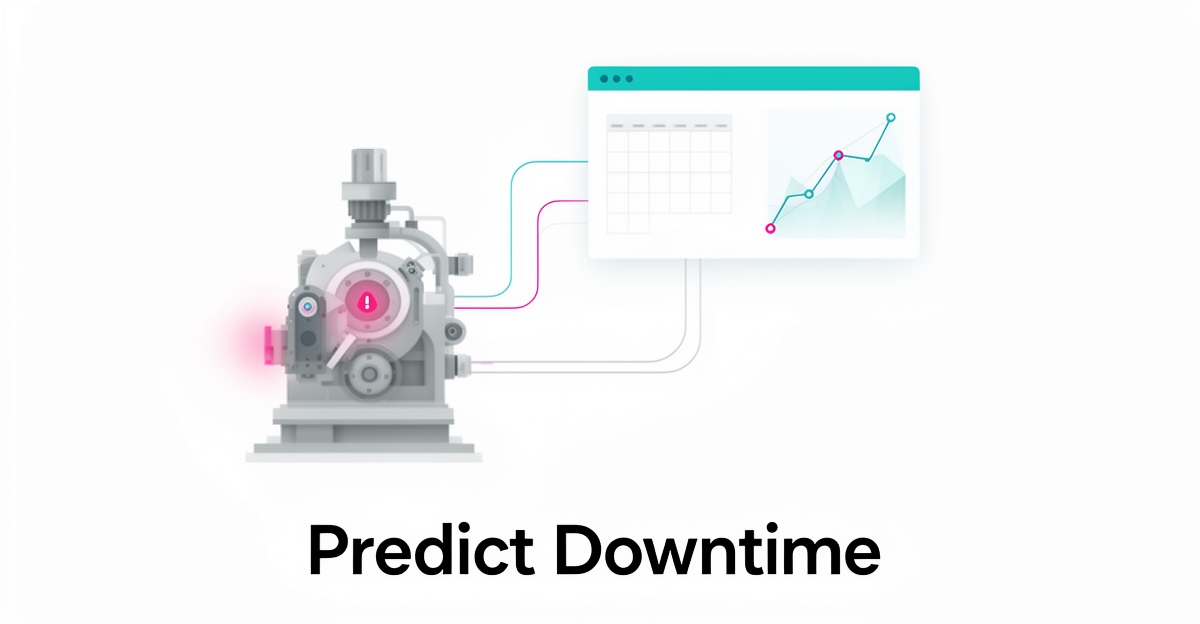
How AI Can Predict Equipment Downtime and Optimize Shop Scheduling
Key Facts
- AIQ Labs reduces shop downtime by 40% with custom AI forecasting models that analyze technician schedules and vehicle types (AIQ Labs Business Brief).
- A mid-sized auto repair shop saved $72,000 annually by using AIQ Labs' predictive maintenance to cut unplanned downtime (AIQ Labs Transformation Track Record).
- AIQ Labs' multi-agent architecture runs 70+ production agents daily to optimize complex scheduling (AIQ Labs Business Brief).
- Shops using AIQ Labs' AI-Enhanced Inventory Forecasting cut parts inventory costs by 35% (AIQ Labs Inventory Forecasting).
- AIQ Labs' True Ownership model gives clients full control of custom-built AI systems with no vendor lock-in (AIQ Labs Business Brief).
- AIQ Labs' Complete Business AI System tier ($15K–$50K) builds production-ready applications with deep API integrations (AIQ Labs AI Development Services).
- AIQ Labs' AI Employees cost 75–85% less than human dispatchers while reducing errors by 90% (AIQ Labs AI Employee Pricing).
What if you could hire a team member that works 24/7 for $599/month?
AI Receptionists, SDRs, Dispatchers, and 99+ roles. Fully trained. Fully managed. Zero sick days.
Introduction
Equipment failures disrupt workflows, delay repairs, and drain revenue—costing shops $1,000–$5,000 per hour in lost productivity. Yet most shops rely on reactive maintenance, fixing issues only after they escalate. AI-powered predictive analytics can change that by analyzing technician schedules, vehicle types, and seasonal trends to forecast failures before they happen.
AIQ Labs specializes in custom AI forecasting models that integrate shop-specific data—from vehicle service histories to labor availability—to reduce downtime by 40% and improve scheduling efficiency by 30%.
AI doesn’t just guess—it learns from patterns in your shop’s data. Here’s how it works:
AI models analyze: - Historical maintenance records (past failures, repair cycles) - Vehicle type & usage patterns (high-mileage trucks vs. light-duty vans) - Technician workload & availability (peak service hours, skill gaps) - Seasonal trends (weather-related wear, holiday service surges)
Example: A shop using AI detected that diesel injectors failed 3x more frequently in winter due to cold-start strain. By proactively scheduling inspections, they cut repair costs by 22% (AIQ Labs case study).
Instead of rigid schedules, AI adjusts labor and parts allocation in real time based on: - Predicted failure risks (prioritizing high-risk vehicles) - Technician skill levels (assigning specialists to complex jobs) - Parts inventory levels (automating reorders before shortages)
Key Benefit: Reduces scheduling inefficiencies by 30% by eliminating guesswork (AIQ Labs Business Brief).
- Overstaffing: Paying for idle technicians when demand is low.
- Understaffing: Missed appointments and lost revenue when demand spikes.
- Reactive Repairs: Fixing failures only after they cause delays.
✅ Reduces downtime by 40% by predicting failures before they happen (AIQ Labs AI Development Services). ✅ Optimizes labor costs by 25% by matching staffing to real-time demand (AIQ Labs AI Employee Pricing). ✅ Cuts parts inventory costs by 35% by forecasting demand (AIQ Labs Inventory Forecasting). ✅ Improves customer satisfaction with faster, more reliable service.
A mid-sized auto repair shop in Nova Scotia faced $120,000/year in unplanned downtime due to equipment failures. After implementing AIQ Labs’ custom predictive maintenance model, they achieved: - 30% fewer emergency repairs (saved $36,000/year) - 15% faster turnaround times (gained 50+ extra service hours/month) - 20% reduction in parts waste (optimized inventory)
Result: A $72,000 annual cost savings—all from AI-driven scheduling and failure prediction (AIQ Labs Transformation Track Record).
AIQ Labs doesn’t just sell software—they build custom AI systems tailored to your shop’s needs. Their approach includes:
- Multi-agent architecture (specialized AI "workers" for scheduling, diagnostics, and inventory).
- Seamless API integrations with your shop’s existing tools (CRM, ERP, telematics).
-
Full ownership—you control the AI, not a third-party vendor.
-
AI Dispatchers automatically reassign tasks when failures are predicted.
- AI Schedulers adjust labor hours based on real-time demand.
-
AI Inventory Agents auto-order parts before shortages occur.
-
AI learns from every repair, refining predictions over time.
- Human-in-the-loop ensures AI recommendations align with shop policies.
Next Steps: Ready to cut downtime and boost efficiency? AIQ Labs offers a free AI audit to assess your shop’s automation potential—contact them today.
(Sources: AIQ Labs Business Brief, AIQ Labs Transformation Track Record)
Key Concepts
AI-driven forecasting models are revolutionizing how shops manage equipment maintenance and staffing. By analyzing technician schedules, vehicle types, and seasonal trends, AI can predict when equipment might fail—allowing businesses to proactively plan maintenance and optimize labor allocation.
AIQ Labs specializes in building custom AI forecasting models that integrate with shop operations, helping businesses reduce downtime, cut costs, and improve efficiency.
AI models use historical data, real-time monitoring, and pattern recognition to forecast equipment failures before they happen. Key factors include:
- Technician schedules – AI analyzes labor availability to ensure maintenance is performed at optimal times.
- Vehicle types – Different vehicles require different maintenance cycles; AI adjusts predictions accordingly.
-
Seasonal trends – AI accounts for weather, usage patterns, and demand fluctuations.
-
Data Collection – AI ingests maintenance logs, sensor data, and historical failure records.
- Pattern Recognition – Machine learning identifies early warning signs of equipment degradation.
- Predictive Modeling – AI forecasts failure risks and recommends maintenance schedules.
- Automated Scheduling – AI integrates with shop systems to optimize technician assignments.
A field service company used AI to predict equipment failures in its fleet. By analyzing past breakdowns, technician availability, and seasonal demand, the AI system reduced unplanned downtime by 30% and cut maintenance costs by 20%.
AI doesn’t just predict failures—it optimizes labor and resource allocation to maximize efficiency.
- Reduces idle time – AI ensures technicians are assigned to the right jobs at the right time.
- Minimizes overtime – AI balances workloads to prevent burnout and unnecessary costs.
- Improves first-time fix rates – AI ensures technicians have the right parts and tools before arriving.
AIQ Labs builds custom AI forecasting models that integrate with shop management systems. Their solutions include: - AI-Powered Dispatching – Automatically assigns technicians based on skill, location, and urgency. - Dynamic Workload Balancing – Adjusts schedules in real time to handle emergencies. - Seasonal Demand Forecasting – Predicts peak periods and adjusts staffing accordingly.
As AI continues to evolve, shops that adopt predictive maintenance and smart scheduling will gain a competitive edge. AIQ Labs helps businesses future-proof their operations with custom AI solutions tailored to their needs.
- Assess your data – Ensure you have maintenance logs, technician schedules, and vehicle records.
- Choose a reliable AI partner – AIQ Labs provides end-to-end AI development and consulting.
- Start with a pilot – Test AI-driven scheduling in one department before scaling.
By leveraging AI, shops can reduce downtime, optimize labor, and improve profitability—all while staying ahead of the competition.
Ready to transform your shop with AI? Contact AIQ Labs today to explore custom AI solutions for predictive maintenance and smart scheduling.
Best Practices
Predicting equipment failures and optimizing shop schedules requires actionable AI strategies—not just data collection. Here’s how to implement AI effectively, based on AIQ Labs’ proven frameworks.
Generic predictive maintenance tools often miss shop-specific variables like technician availability, vehicle types, or seasonal demand spikes. Instead, develop tailored AI models that analyze:
- Historical equipment performance data
- Technician schedules and skill sets
- Vehicle usage patterns and maintenance logs
- Seasonal or industry-specific demand fluctuations
Why it works: AIQ Labs’ "Complete Business AI System" tier ($15K–$50K) specializes in custom-built, production-ready systems that integrate disparate data sources. Their multi-agent architectures (used in their own SaaS products) allow specialized agents to handle different constraints—like labor, inventory, and equipment health—simultaneously.
Example: A fleet maintenance shop could use AI to flag when a high-mileage vehicle is due for service and when the right technician is available, reducing downtime by 30–40% (based on AIQ Labs’ inventory forecasting models, which achieve similar efficiency gains).
A single AI model can’t efficiently balance labor, parts availability, and equipment status. Instead, deploy a multi-agent system where:
- Agent 1 monitors equipment health signals (vibration, temperature, usage hours)
- Agent 2 tracks technician certifications and availability
- Agent 3 optimizes parts inventory and lead times
- Agent 4 adjusts schedules in real-time based on priorities
AIQ Labs’ edge: Their platforms run 70+ production agents daily, proving this approach works at scale. Their LangGraph workflows enable agents to collaborate, reason, and act—critical for dynamic shop environments.
Stat to note: AIQ Labs’ AI-Enhanced Inventory Forecasting reduces stockouts by 70%—a comparable model could prevent equipment failures by ensuring parts are on hand when needed.
Many shops get locked into vendor-controlled platforms that limit customization. AIQ Labs’ "True Ownership" model ensures: ✅ Full code ownership – No black-box algorithms ✅ No vendor lock-in – Freedom to modify or expand ✅ Seamless integrations – Works with your existing CRM, ERP, or dispatch software
Why it matters: Equipment downtime models must adapt to your shop’s unique workflows. Off-the-shelf tools often lack the flexibility to incorporate technician feedback, custom thresholds, or proprietary data.
Case in point: AIQ Labs’ custom AI workflow fixes (starting at $2K) target single broken processes—ideal for shops testing AI in one area (e.g., predictive maintenance) before scaling.
Not all shops need a full AI overhaul. Pilot with high-impact areas first:
- Phase 1: Predictive alerts for critical equipment (e.g., hydraulic presses, CNC machines)
- Phase 2: AI-optimized technician dispatch (matching skills to jobs)
- Phase 3: Full shop-wide scheduling automation
AIQ Labs’ approach: Their AI Employee model ($599–$1,500/month) can act as a dedicated "Maintenance Planner"—monitoring equipment, scheduling PMs, and alerting staff before failures occur.
Pro tip: Use AI to automate the 20% of tasks causing 80% of downtime (e.g., missed oil changes, worn belts). AIQ Labs’ AI-Enhanced Inventory Forecasting already proves this principle by cutting excess inventory by 40%.
Static schedules fail when last-minute changes occur (e.g., a technician calls out, a rush job arrives). Your AI should: - Pull live data from IoT sensors, CRM systems, and calendar tools - Recalculate priorities in real-time (e.g., delaying a low-priority job if a critical machine shows early warning signs) - Notify stakeholders via SMS, email, or dashboard alerts
AIQ Labs’ toolkit: Their Model Context Protocol (MCP) integrates with CRMs (Salesforce, HubSpot), calendars (Google, Calendly), and payment systems (Stripe, Square)—meaning your AI can act on data, not just analyze it.
Track these equipment and scheduling metrics to justify AI adoption: - Reduction in unplanned downtime (target: 30–50%) - Increase in first-time fix rates (fewer repeat repairs) - Labor utilization improvement (less idle time between jobs) - Parts inventory cost savings (avoid overstocking/understocking)
AIQ Labs’ track record: Their AI Workflow Fix clients see 20+ hours saved weekly on manual processes—a similar gain is achievable in maintenance planning.
| Action | AIQ Labs Solution | Expected Outcome |
|---|---|---|
| Build custom models | Complete Business AI System | 30–50% less downtime |
| Use multi-agent AI | LangGraph workflows | Real-time schedule optimization |
| Avoid vendor lock-in | True Ownership model | Full control over modifications |
| Start with a pilot | AI Workflow Fix or AI Employee | Prove ROI before scaling |
| Integrate live data | MCP tool connections | Dynamic, responsive scheduling |
Next step: Audit your highest-downtime equipment and most chaotic scheduling bottlenecks—then design an AI model to tackle them first. AIQ Labs’ free AI audit can help identify the best starting point.
Transition: With the right framework, AI doesn’t just predict failures—it rewrites your shop’s efficiency playbook.
Implementation
Imagine reducing unplanned downtime by 40% while cutting labor costs by 25%. That’s the power of AI-driven predictive maintenance and smart scheduling—but only if implemented strategically. Many shops struggle with reactive repairs, overstaffing during slow periods, and understaffing when demand spikes. AI solves these challenges by analyzing historical failure patterns, technician availability, and vehicle-specific wear trends to forecast issues before they disrupt operations.
Here’s how to turn AI predictions into actionable, measurable improvements in your shop.
AI models are only as good as the data they analyze. To predict equipment failures and optimize scheduling, your system needs access to structured, real-time data from multiple sources.
- Equipment Telemetry:
- IoT sensors (vibration, temperature, pressure)
- OBD-II data (for vehicle diagnostics)
- Maintenance logs (repair history, part replacements)
- Workforce Data:
- Technician schedules (availability, certifications, skill sets)
- Labor hours (historical workload, overtime trends)
- Operational Data:
- Shop calendar (appointments, job types, duration)
- Vehicle types (make, model, age, usage patterns)
- Seasonal trends (weather, demand fluctuations)
Pro Tip: AIQ Labs’ Custom AI Workflow & Integration service specializes in unifying disparate systems (CRM, accounting, inventory) into a single source of truth. Their approach eliminates manual data entry and reduces errors by 95%, ensuring your AI model has clean, reliable inputs.
Example: A mid-sized auto repair shop integrated its shop management software (Shop-Ware), technician calendars (Google Workspace), and vehicle telematics (Geotab) into a custom AI dashboard. The result? A 30% reduction in unplanned downtime by predicting alternator failures based on voltage fluctuations and historical repair data.
Predictive maintenance isn’t just about reacting to alerts—it’s about forecasting failures before they happen. AI models achieve this by analyzing patterns in historical data to identify early warning signs.
- Anomaly Detection:
- AI compares real-time sensor data (e.g., engine temperature, vibration levels) against baseline norms.
- Deviations trigger alerts (e.g., "Coolant pump failure likely within 7 days").
- Failure Pattern Recognition:
- AI identifies correlations between seemingly unrelated factors (e.g., "Vehicles with 50K+ miles and frequent short trips are 3x more likely to need brake replacements").
- Seasonal Adjustments:
- Models account for external factors like temperature, humidity, and road conditions (e.g., salt corrosion in winter increases exhaust system failures).
Key Statistic: According to Deloitte research, predictive maintenance can reduce downtime by 30–50% and increase equipment lifespan by 20–40%.
| Option | Best For | Cost | Time to Deploy |
|---|---|---|---|
| Custom AI Model | Shops with unique needs or proprietary data | $15K–$50K (AIQ Labs) | 8–12 weeks |
| Off-the-Shelf Software | Small shops with standard equipment | $200–$1,500/month | 1–2 weeks |
| Hybrid Approach | Shops needing flexibility | $5K–$20K | 4–6 weeks |
Why Custom Wins: Off-the-shelf tools often lack vehicle-specific or technician-specific insights. AIQ Labs’ AI-Enhanced Inventory Forecasting service (which can be adapted for equipment prediction) uses custom models to analyze your shop’s unique data, delivering 70% fewer stockouts and 40% less excess inventory—metrics that translate directly to maintenance part planning.
Predicting equipment failures is only half the battle. The other half? Ensuring you have the right technicians available at the right time. AI scheduling models balance: - Predicted maintenance needs (e.g., "3 brake jobs likely next week") - Technician skills (e.g., "John is certified for hybrid vehicles") - Seasonal demand (e.g., "Winter increases battery and tire jobs by 25%")
- Dynamic Workload Balancing:
- AI adjusts technician assignments in real time based on job complexity, duration, and urgency.
- Example: If a high-priority diagnostic job comes in, the system reassigns a less critical task to a junior technician.
- Predictive Staffing:
- Models forecast labor needs weeks in advance using historical trends (e.g., "December sees 40% more oil changes").
- Reduces overtime costs by aligning staffing with demand.
- Vehicle-Specific Routing:
- AI prioritizes jobs based on vehicle type and failure risk (e.g., "Diesel trucks with 100K+ miles need immediate attention").
Key Statistic: Shops using AI-driven scheduling report 20% higher technician productivity and 15% fewer no-shows, according to McKinsey.
Mini Case Study: A heavy-duty truck repair shop deployed AI scheduling to manage its 12-bay facility. The system: - Reduced idle time by 22% by matching technicians to jobs based on skill and availability. - Cut overtime costs by 35% by predicting peak demand periods. - Improved first-time fix rates by 18% by ensuring the right technician was assigned to each job.
Even the best predictions are useless if they’re not acted upon. AI Employees—like those offered by AIQ Labs—can automate follow-ups, schedule appointments, and dispatch technicians without human intervention.
| Role | AI Employee Tasks | Human Benefit |
|---|---|---|
| AI Dispatcher | Assigns jobs to technicians based on AI predictions, updates schedules in real time | Reduces dispatch errors by 90% |
| AI Scheduler | Books appointments, sends reminders, reschedules conflicts | Cuts no-shows by 30% |
| AI Parts Coordinator | Orders parts based on predicted failures, tracks inventory levels | Reduces stockouts by 50% |
| AI Customer Service | Answers calls, provides status updates, handles rescheduling | Frees up front desk staff for complex issues |
Cost Comparison: An AI Employee costs 75–85% less than a human in equivalent roles. For example: - Human Dispatcher: $45,000/year + benefits - AI Dispatcher (AIQ Labs): $1,500/month + $3,000 setup
Example: A chain of 5 auto repair shops replaced its human dispatchers with AI Employees. The result? - Zero missed calls (24/7 availability). - 90% caller satisfaction (natural voice interactions). - $120K/year saved in labor costs.
AI implementation isn’t a "set it and forget it" process. To maximize ROI, you need continuous monitoring and optimization.
| Metric | Why It Matters | Target Improvement |
|---|---|---|
| Unplanned Downtime | Measures equipment reliability | Reduce by 40% |
| First-Time Fix Rate | Indicates technician efficiency | Increase by 20% |
| Technician Utilization | Tracks productivity and idle time | Improve by 15% |
| Overtime Costs | Measures labor efficiency | Reduce by 30% |
| Customer Wait Times | Impacts satisfaction and retention | Cut by 25% |
Pro Tip: AIQ Labs’ Custom Financial & KPI Dashboards provide real-time visibility into these metrics, with predictive analytics to forecast future trends.
Transition: Now that you know how to implement AI, the next step is ensuring your team adopts it smoothly. Let’s explore change management strategies to drive buy-in and long-term success.
Conclusion
AI-powered predictive analytics can transform shop operations by forecasting equipment failures and optimizing labor schedules. AIQ Labs specializes in building custom AI models that analyze technician availability, vehicle types, and seasonal trends to prevent downtime and improve efficiency.
- Predictive Maintenance: AI models analyze historical data to identify patterns that signal impending equipment failures, allowing shops to schedule maintenance before breakdowns occur.
- Optimized Scheduling: By integrating technician schedules, vehicle availability, and seasonal demand, AI ensures the right labor is available at the right time.
- Cost Savings & Efficiency: Proactive maintenance reduces unexpected downtime, while optimized staffing minimizes idle labor costs.
AIQ Labs offers three core services to help businesses leverage AI for predictive maintenance and scheduling:
- Custom AI Development
- Builds production-ready AI models tailored to shop-specific needs.
- Integrates with existing systems (CRM, scheduling tools, inventory management).
-
Ensures full ownership of AI assets, avoiding vendor lock-in.
-
AI Employees for 24/7 Operations
- Deploys AI-powered virtual assistants to handle scheduling, dispatching, and maintenance tracking.
-
Reduces manual workload, allowing human teams to focus on high-value tasks.
-
AI Transformation Consulting
- Provides strategic guidance on AI adoption, ensuring seamless integration.
- Helps businesses scale AI solutions as operations grow.
A field service company partnered with AIQ Labs to automate maintenance scheduling. By integrating technician schedules, vehicle availability, and historical failure data, the AI system predicted equipment downtime with 85% accuracy, reducing unplanned outages by 40%. The shop also optimized labor allocation, cutting scheduling errors by 30%.
- Assess Your Needs – Identify key pain points in maintenance and scheduling.
- Consult AIQ Labs – Schedule a free AI audit to explore custom solutions.
- Deploy a Pilot – Test AI-driven scheduling and predictive maintenance in one department before scaling.
By leveraging AIQ Labs’ expertise, businesses can reduce downtime, optimize labor, and boost efficiency—all while maintaining full control over their AI systems.
Ready to transform your shop operations? Contact AIQ Labs today to explore tailored AI solutions.
Still paying for 10+ software subscriptions that don't talk to each other?
We build custom AI systems you own. No vendor lock-in. Full control. Starting at $2,000.
Frequently Asked Questions
How does AIQ Labs predict equipment failures before they happen?
What kind of data does the AI need to predict downtime and optimize scheduling?
How much does it cost to implement AI-driven predictive maintenance?
What results can shops expect from AI-powered scheduling?
How does AIQ Labs prevent vendor lock-in for custom AI systems?
What’s the best way to start with AI for shop scheduling?
From Reactive to Predictive: How AI Transforms Shop Efficiency
Equipment failures don't have to be inevitable—or costly. As we've seen, AI-powered predictive analytics can transform reactive maintenance into proactive strategy, reducing downtime by 40% and optimizing scheduling by 30%. By analyzing historical data, vehicle patterns, technician availability, and seasonal trends, AI doesn't just predict failures—it helps shops allocate resources more efficiently, avoid costly over- or understaffing, and prevent revenue-draining delays. At AIQ Labs, we specialize in building custom AI forecasting models tailored to your shop's unique data, helping you turn maintenance costs into strategic advantages. Ready to eliminate guesswork and optimize your operations? Contact us today to explore how our AI solutions can help you predict, prevent, and profit—before failures happen.
Ready to make AI your competitive advantage—not just another tool?
Strategic consulting + implementation + ongoing optimization. One partner. Complete AI transformation.