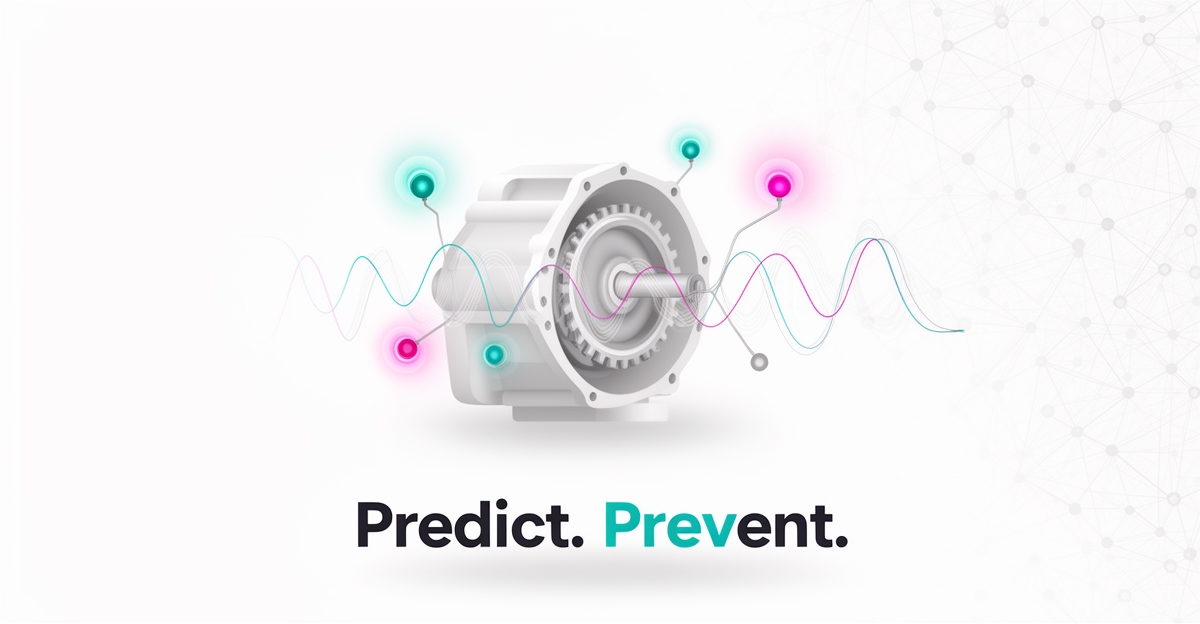
How AI Can Predict Transmission Failures Before They Happen
Key Facts
- Predictive diagnostics can reduce commercial vehicle maintenance costs by up to 25% according to market research
- AI-powered scan tools can cut diagnostic time by up to 90% compared to traditional methods per industry data
- Fleet operators represented roughly 36.8% of end users in advanced vehicle diagnostics based on 2025 market share data
- The global advanced vehicle diagnostics market is projected to grow from USD 7.3 billion in 2025 to USD 23.4 billion by 2035 per market forecasts
- Predictive and condition-based diagnostics held about a third of the diagnostic offerings market as of 2025
- Some modern vehicles contain as many as 1,400 computer chips per automotive technology analysis
- Nissan reduced root-cause investigation times from two weeks to just two days using vehicle-specific AI per case study results
Hire a team member that works 24/7 — for less than a part-time wage.
AI receptionists, SDRs, dispatchers and 99+ roles. Trained on your business, fully managed.
Not sure where to start? Ask our AI planner
The Hidden Cost of Reactive Transmission Repairs
A transmission rarely fails without warning—but when shops and fleets rely on fixed service intervals or wait for a breakdown, those warnings go unheard. The result is unplanned downtime, emergency towing, and repair bills that dwarf the cost of scheduled maintenance.
Traditional maintenance models are inherently reactive or time-based, which often produces unnecessary costs and unexpected breakdowns. A vehicle serviced "on schedule" may already have a degrading component, while another receives maintenance it didn't need. Neither scenario is efficient, and for fleet operators managing dozens or hundreds of vehicles, the financial exposure compounds quickly. Unplanned breakdowns in heavy commercial vehicle fleets generate significant financial losses, which is why logistics and transport companies are increasingly adopting remote fault detection and condition-based maintenance to minimize downtime and ensure regulatory compliance, according to market research.
The market data confirms that operators are voting with their wallets. Fleet operators represented the largest share of end users in advanced vehicle diagnostics at roughly 36.8% as of 2025, driven by the need to reduce unplanned downtime, optimize maintenance schedules, and lower total operating costs across multi-vehicle operations. The broader global market for advanced vehicle diagnostics is projected to grow from USD 7.3 billion in 2025 to USD 23.4 billion by 2035—a clear signal that predictive approaches are displacing reactive ones.
The costs of staying reactive show up in several ways:
- Unplanned downtime that strands vehicles and disrupts delivery schedules, customer commitments, and revenue
- Higher repair costs when minor issues—like abnormal transmission temperature or vibration—escalate into full component failure
- Inefficient service scheduling, with shops handling emergency work instead of planned, profitable bay time
- Shortened asset life, since a transmission that fails catastrophically often takes surrounding components with it
The economics of the alternative are compelling. Commercial vehicles equipped with telematics have demonstrated maintenance cost reductions of up to 25% through predictive diagnostics. AI-powered scan tools can also cut diagnostic time by up to 90% compared to traditional methods, freeing technicians to focus on repairs rather than troubleshooting.
Part of the challenge is sheer complexity. Some modern vehicles contain as many as 1,400 computer chips, generating data streams no manual inspection process can meaningfully interpret. Generic AI platforms often fall short here because they lack access to proprietary service records and technical documentation, and cannot correctly interpret complicated vehicle-specific information.
This is precisely where purpose-built predictive systems earn their keep. By analyzing vehicle history, driving patterns, and maintenance records, AI models can identify when a transmission is likely to fail—long before a warning light appears. AIQ Labs builds predictive models trained on real-world repair data, helping shops shift from emergency response to proactively scheduled maintenance that protects both vehicles and revenue.
The industry's trajectory is unambiguous. With predictive and condition-based diagnostics commanding roughly a third of the diagnostic offerings market as of 2025, the shops and fleets that continue operating reactively aren't just accepting higher costs—they're falling behind competitors who see failures coming.
How AI Turns Sensor Data Into Failure Predictions
The process of predicting transmission failures begins with capturing the right data. IoT sensors installed on the transmission system continuously monitor critical parameters such as oil temperature, gear vibration, and hydraulic pressure, providing a real-time stream of operational insights. This foundational data layer is essential, as advanced vehicle diagnostics systems leveraging such sensor inputs can reduce diagnostic time by up to 90% compared to traditional methods, turning guesswork into precise, actionable intelligence.
Once collected, this multidimensional data feeds into machine learning models designed to detect subtle degradation patterns. Recurrent Neural Networks, particularly Long Short-Term Memory (LSTM) architectures, excel at analyzing sequential sensor data to forecast the Remaining Useful Life (RUL) of transmission components. By identifying early warning signs invisible to routine inspections, these models enable maintenance teams to intervene before wear escalates into failure. AIQ Labs builds custom predictive models trained on real-world repair data, ensuring forecasts reflect actual failure modes observed in field operations rather than theoretical simulations.
To refine predictions and test intervention strategies, digital twins create virtual replicas of the transmission system. These simulations allow engineers to assess how specific driving patterns, load conditions, or maintenance histories impact component longevity without risking physical assets. For instance, a digital twin can model the effect of frequent stop-and-go driving on clutch wear, helping predict failure timelines under real-world usage. This capability transforms maintenance from a reactive cost center into a proactive strategy that extends asset life and reduces unplanned downtime—key advantages highlighted in market analyses showing predictive diagnostics can cut commercial vehicle maintenance costs by up to 25%.
Generic AI platforms often fall short in this context due to their inability to interpret proprietary OEM technical manuals, service records, or engineering logs. Vehicle-specific AI solutions, by contrast, integrate diverse data sources—including sensor streams, historical maintenance records, and manufacturer documentation—into a unified intelligence layer. This enables root-cause analysis that correlates, for example, abnormal vibration spikes with past service events or driving behavior, revealing causal chains that generic models miss. By combining IoT sensing, LSTM-based forecasting, and digital twin simulation within a vehicle-specific framework, AI-driven systems deliver not just failure predictions, but actionable insights tailored to each transmission's unique operational history.
- Deploy IoT sensors for continuous temperature, vibration, and pressure monitoring
- Apply LSTM models to forecast Remaining Useful Life from sensor data streams
- Use digital twins to simulate wear scenarios and test maintenance strategies
- Integrate vehicle-specific data sources for accurate root-cause analysis
- Establish closed-loop learning to improve predictions over time
This integrated approach ensures predictions are not only accurate but also contextually relevant, helping shops transition from scheduled maintenance to truly condition-based servicing that maximizes uptime and minimizes repair costs.
From Alerts to Action: Building a Proactive Maintenance Workflow
An alert that says "transmission anomaly detected" is only half the answer. The real value emerges when AI systems move beyond detection to reason about what the anomaly means, plan the appropriate response, and execute it—turning a stream of warnings into a coordinated maintenance workflow.
Traditional predictive maintenance platforms stop at recommendations, leaving humans to interpret alerts and act on them. The next generation of AI agent-driven systems goes further, deploying autonomous agents that don't just detect anomalies but reason, plan, and execute maintenance actions. In practice, this means specialized agents working in concert: a diagnostic agent identifies root causes and risk levels, a scheduling agent optimizes work orders, a digital twin agent tests scenarios before execution, and a closing agent learns from outcomes. The result is a continuous learning cycle where every maintenance action refines the system's knowledge base, making it smarter and more reliable over time.
The foundation of this workflow is a unified intelligence layer. Generic AI platforms often fail here because they lack access to proprietary OEM information and struggle to correctly interpret complicated technical manuals, service records, and engineering documentation. Vehicle-specific models solve this by combining vehicle data, diagnostics, logs, engineering documentation, and historical investigations into a single layer. This enables cross-domain correlation—reconstructing the causal chain that connects a temperature spike to a specific driving pattern to a known component weakness. The payoff is measurable: Nissan reduced root-cause investigation times from two weeks to just two days using this approach.
For repair shops, integrating vehicle history, driving patterns, and repair records into predictive models changes how service gets scheduled. Rather than waiting for a breakdown or following rigid time-based intervals, shops can proactively schedule maintenance at the optimal moment. The economics support the shift: commercial vehicles with telematics have demonstrated maintenance cost reductions of up to 25% through predictive diagnostics, and AI-powered scan tools can reduce diagnostic time by up to 90% compared to traditional methods.
Building this capability requires a closed-loop system where sensing, reasoning, and action converge:
- Coordinate data collection, analysis, and remediation workflows so no alert dies in a queue
- Automate evidence gathering from service records and historical investigations
- Run digital twin simulations to test what-if scenarios before committing resources
- Keep humans in the loop to govern critical decisions and track outcomes
- Capture knowledge from every action to build a pattern library for future predictions
This closed-loop structure matters because predictive models degrade over time if they aren't continuously retrained with new data. A system that learns from each transmission it monitors—and each repair it recommends—compounds its accuracy instead of fading. The outcome is a system that turns maintenance from a cost center into a strategic enabler of resilience and value.
The shops that win in this environment treat data integration as the core capability, not an afterthought. AIQ Labs builds this kind of capability through [AI Workflow Builds](/workflow-builds)—rebuilding the one workflow that costs your shop the most, at a fixed price and in phases—or as part of a full [AI Operating System](/ai-operating-systems) that connects diagnostics, scheduling, and service history into one operating layer your shop owns outright. No vendor lock-in, no subscription chaos. For SMB shops competing against larger operations, that ownership model makes enterprise-grade predictive analytics attainable.
The market momentum confirms the direction. The global advanced vehicle diagnostics and remote services market is projected to grow from USD 7.3 billion in 2025 to USD 23.4 billion by 2035, with predictive and condition-based diagnostics holding a dominant share of diagnostic offerings. Alerts are becoming actions—and the shops that build the workflow to capitalize on them will schedule tomorrow's repairs today. If you're ready to map what a proactive maintenance workflow could look like for your shop, start the two-minute Fit Check at [aiqlabs.ai/apply](/apply) and book a free 30-minute strategy call—no obligation, just clarity on whether there's a clear win for your operation.
Implementing Predictive Transmission Analytics With AIQ Labs
The path to preventing transmission failures starts with a clear, step-by-step implementation plan. Repair shops can begin by installing IoT sensors on transmissions to continuously monitor temperature, vibration, and pressure—providing the essential data stream for early fault detection. This real-time monitoring is the critical first layer in shifting from reactive to predictive maintenance, allowing shops to spot degradation before it leads to breakdowns.
Next, shops must enable continuous data collection from these sensors, ensuring a steady flow of information that captures both normal operating conditions and subtle anomalies. This dataset becomes the foundation for applying predictive analytics, where AI models—such as LSTM networks—analyze patterns to forecast Remaining Useful Life (RUL) and identify when maintenance should be scheduled. By using AI-driven insights, shops can move beyond fixed intervals and service based on actual component health, reducing unnecessary work and preventing costly surprises.
To deepen predictive accuracy, shops can integrate digital twin technology to create virtual replicas of transmissions. These simulations allow technicians to test how specific driving patterns or stress conditions affect wear, all without risking physical damage to customer vehicles. Combining this with diverse data sources—including vehicle history, service logs, and OEM technical documentation—creates a unified intelligence layer that supports root-cause analysis and continuous learning. AIQ Labs delivers this end-to-end approach through [AI Workflow Builds](/workflow-builds) for shops targeting one high-cost workflow, or a phased [AI Operating System](/ai-operating-systems) for operations that want the full connected layer—built in milestones, owned outright, with payment models (Start Monthly, Build in Milestones, Own It Outright) that match your stage. With 200+ multi-agent systems deployed and four live SaaS products running daily, the team builds systems that evolve with your data and expertise.
Still paying for 10+ subscriptions that don’t talk to each other?
We build custom AI systems you own outright. No vendor lock-in. Full control.
Not sure where to start? Ask our AI planner
Frequently Asked Questions
How does AI actually predict transmission failures before they happen?
What kind of data do IoT sensors collect for transmission failure prediction?
Can AI really reduce maintenance costs for fleets, and by how much?
Why can't generic AI platforms be used for vehicle transmission diagnostics?
What is a digital twin, and how does it help predict transmission failures?
How long does it take to implement an AI-powered predictive maintenance system in a repair shop?
Your Next Transmission Failure Doesn't Have to Be a Surprise
The story this article tells is straightforward: transmissions rarely fail without warning, and the tools to hear those warnings—IoT sensors, LSTM-based Remaining Useful Life forecasting, digital twin simulations, and closed-loop AI workflows—already exist and are already paying off. Shops and fleets using predictive diagnostics have reported maintenance cost reductions of up to 25% and diagnostic time cuts of up to 90%, and with the advanced vehicle diagnostics market projected to grow from USD 7.3 billion in 2025 to USD 23.4 billion by 2035, the question is no longer whether to make the shift, but who makes it first. The practical path forward starts small: instrument your highest-value vehicles, connect sensor data with service history, and let every repair refine your models. That's exactly the kind of vehicle-specific, owned-not-rented system AIQ Labs builds—predictive models trained on real-world repair data that your shop controls outright. If you want clarity on whether there's a clear win for your operation, start the two-minute Fit Check at [aiqlabs.ai/apply](/apply) and book a free 30-minute strategy call. No obligation—just a clear-eyed look at your data and your options.
Make AI your competitive advantage — not just another tool.
Strategy, implementation and ongoing optimization. One partner, end to end.
Not sure where to start? Ask our AI planner