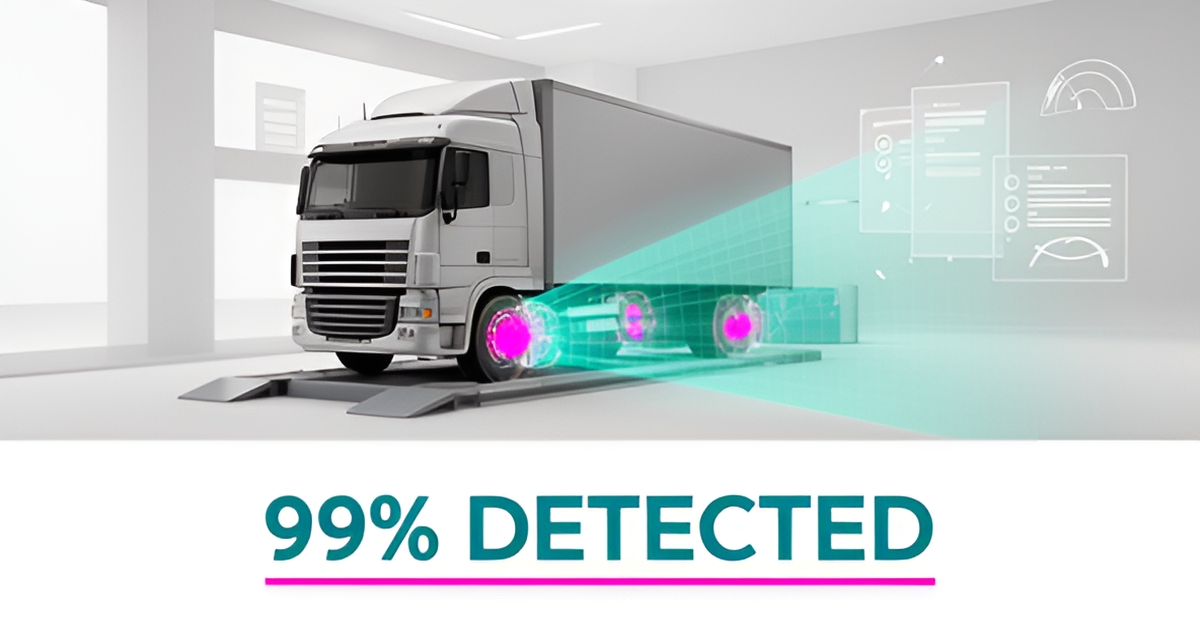
How AI Can Reduce Compliance Risks in Motor Vehicle Inspections
Key Facts
- Industry analyses report AI-assisted inspections can detect 95-99% of defects, versus roughly 75-80% for manual checks per industry analysis
- CVSA reported an 18.1% vehicle out-of-service rate at International Roadcheck 2025 due to critical safety violations according to CVSA data
- Safety regulation violations can carry penalties from $1,000 to $25,000+ per incident per regulatory enforcement data
- Fleet management studies report AI-powered monitoring can reduce preventable breakdowns significantly and save thousands per truck annually according to compliance research
- Digital inspection workflows are reported to cut inspection time by around 40% and paperwork by 70-80% per fleet management studies
- A majority of automotive companies report improved compliance and risk-management efficiency through AI-driven strategies according to sector reporting
Hire a team member that works 24/7 — for less than a part-time wage.
AI receptionists, SDRs, dispatchers and 99+ roles. Trained on your business, fully managed.
Not sure where to start? Ask our AI planner
The Hidden Cost of Manual Vehicle Inspections
Manual vehicle inspections remain a critical vulnerability in fleet operations, where paper-based processes create blind spots that compromise both safety and compliance. Handwritten checklists and subjective assessments open the door to human error, inconsistent evaluations, and overlooked defects—risks that translate directly into regulatory exposure and operational downtime. These inefficiencies are not merely inconveniences; they are tangible legal and financial threats to businesses responsible for vehicle safety.
The consequences show up in industry data. CVSA reported that 18.1% of vehicles were placed out of service at International Roadcheck 2025 due to critical safety violations—a signal of systemic gaps in inspection practices. Industry analyses also estimate manual inspections achieve only a 75-80% defect detection rate, well behind AI-assisted approaches that reach 95-99%. Fleets operating with undetected issues face accidents, fines, and costly repairs down the line.
Beyond missed defects, paper-based systems introduce administrative fragility. Lost or illegible forms, delayed data entry, and inconsistent record-keeping undermine audit readiness and make it hard to prove compliance during inspections or investigations. Violations can carry penalties from $1,000 to $25,000+ per incident, and those costs escalate quickly for fleets with recurring issues. Indirect expenses—vehicle downtime, deferred maintenance, reputational damage after a safety incident—compound the damage. The hidden cost of manual processes extends far beyond labor hours.
Addressing these challenges requires more than incremental tweaks to existing workflows—it demands a shift toward systems designed for accuracy, accountability, and real-time compliance. Digital inspection tools enhanced with AI directly target the weaknesses of manual methods by standardizing evaluations, capturing immutable data trails, and flagging deviations instantly. For organizations navigating an increasingly stringent regulatory landscape, moving beyond paper isn't just about efficiency—it's an essential step toward safeguarding operations and avoiding the steep price of non-compliance.
How AI-Powered Inspections Detect and Prevent Compliance Failures
AI-powered inspections are changing how fleets maintain compliance by detecting defects with a precision and consistency that manual processes often miss. Using computer vision and machine learning, these systems can identify subtle issues such as micro-cracks, worn brake components, or fluid leaks that may go unnoticed during visual checks. That detection capability helps ensure vehicles meet legal safety standards before returning to the road, reducing the likelihood of violations and penalties.
Industry analyses report AI-assisted inspections achieve a 95-99% defect detection rate, significantly outperforming the 75-80% estimated for manual inspections according to industry analysis. The improvement comes from AI's ability to analyze images and sensor data in real time, flagging deviations from regulatory specifications instantly. AI can automatically verify tire tread depth, light functionality, and brake system integrity against state and federal requirements, generating audit-ready reports that document compliance at every step.
- Automates documentation to eliminate manual entry errors and ensure complete records
- Flags regulatory deviations in real time, preventing non-compliant vehicles from operating
- Generates detailed audit trails with timestamps, images, and inspector notes for regulatory review
- Reduces inspection time by roughly 40% in reported deployments, allowing more frequent checks without disrupting operations per fleet management studies
- Integrates with existing maintenance and telematics systems to create a unified compliance workflow
AIQ Labs supports this transformation through AI Workflow Builds that rebuild your highest-cost inspection and compliance workflow at a fixed price, in phases. Automated compliance checks help organizations avoid penalties—reported at $1,000 to $25,000+ per violation as noted in regulatory compliance resources—by ensuring every inspection meets legal standards before a vehicle is cleared for use. Through real-time alerts and automated reporting, fleets gain actionable insight that turns compliance from a reactive burden into a proactive operational advantage.
The Business Case: Compliance, Cost Savings, and Efficiency Gains
Compliance risk in motor vehicle inspections is no longer a back-office problem—it's a direct threat to uptime, cost, and safety. Fleets that still rely on paper DVIRs and manual checks absorb penalties, missed defects, and preventable downtime that AI-powered inspection programs are designed to eliminate.
The financial case starts with speed and accuracy. Industry research reports a roughly 40% reduction in inspection time with digital solutions, while vehicle inspection app analysis documents a 70-80% reduction in paperwork. Faster, cleaner inspections free drivers and managers for revenue work instead of admin.
Accuracy drives the bigger savings. AI-assisted inspections are reported to achieve a 95-99% average defect detection rate compared with 75-80% for manual inspections. That gap matters when CVSA data shows an 18.1% vehicle out-of-service rate at International Roadcheck 2025, with violations carrying penalties from $1,000 to $25,000+. Catching issues before a roadside stop protects both budgets and operating authority.
Preventive impact compounds over time. Compliance-focused analysis reports large reductions in preventable breakdowns with AI-powered monitoring and annual repair savings that can reach thousands of dollars per truck. For a 100-truck fleet, that is a material risk reduction without adding headcount.
AI also changes how compliance is managed day-to-day. Instead of chasing forms after the fact, fleets capture and analyze inspection data in real time to ensure adherence to state regulations and avoid penalties. AIQ Labs builds automated compliance workflows that flag deviations in vehicle standards, ensuring every inspection meets legal requirements while building an auditable trail.
The business case extends beyond penalty avoidance to operational efficiency:
- Inspection time falls by roughly 40% with digital workflows, accelerating vehicle turnaround.
- Paperwork drops 70-80%, reducing admin burden and storage risk.
- Preventable breakdowns decline sharply with continuous monitoring, protecting delivery schedules and driver safety.
- Repair savings accumulate per truck through earlier defect detection.
When compliance is automated, it becomes a performance lever. A majority of automotive companies report enhanced compliance and risk management efficiency through AI-driven strategies, according to sector reporting. That efficiency is the foundation for safer operations that scale with fleet growth.
AIQ Labs approaches this as a compliance and risk-management capability, not a software add-on. With 200+ multi-agent systems deployed and four live SaaS products run daily, we build inspection and compliance workflows that fleets own outright—moving operations from reactive checks to proactive control.
Choosing and Implementing an AI Inspection Solution
Choosing and implementing an AI inspection solution requires a strategic approach that aligns technology with specific compliance needs and operational realities. Begin by assessing all applicable local, state, and federal regulations governing vehicle inspections in your jurisdiction, since non-compliance can result in penalties ranging from $1,000 to $25,000+ per violation according to regulatory enforcement data. This foundational step ensures the selected system is configured to flag only relevant deviations, avoiding both over-alerting and critical blind spots.
Next, evaluate your fleet size and inspection volume to determine scalability requirements. Reported gains—a roughly 40% reduction in inspection time and 70-80% less paperwork—depend on choosing a platform that matches your operational scale, as noted in industry adoption studies. Prioritize solutions with robust integration capabilities to connect with existing telematics, maintenance, or accounting systems, minimizing data silos and manual entry errors. During deployment, invest in role-specific training for drivers and inspectors to drive adoption—user resistance is a common challenge, but consistent use directly improves audit trail completeness and defect detection accuracy, which AI systems are reported to achieve at 95-99% rates versus 75-80% for manual methods per comparative performance analyses. Finally, verify that the solution generates immutable, time-stamped logs for every inspection action, creating the audit trail needed to demonstrate compliance during regulatory reviews. AIQ Labs supports this process through AI Workflow Builds—a fixed-price, phased rebuild of the one inspection workflow that costs you the most—and, for fleets ready to go further, AI Operating Systems that connect compliance into one operating layer you own outright.
Building a Compliance-First Operation with AI
Compliance risk in motor vehicle inspections compounds when regulations shift and manual checks miss subtle defects. A long-term compliance-first operation treats AI as an embedded partner that continuously monitors, adapts, and documents—rather than a one-time audit tool.
AI captures and analyzes inspection data to ensure adherence to state regulations and avoid penalties, turning fragmented checks into a consistent legal record. Digital vehicle inspection apps provide detailed documentation and audit trails that support regulatory requirements, while AI-powered systems enhance defect detection accuracy and reduce the risk of missed issues.
Accuracy gains are measurable. Industry comparisons report AI-powered inspections achieve 95-99% average defect detection rates compared to 75-80% with manual inspections. The same research notes digital inspection apps drive a 70-80% reduction in paperwork, freeing teams from administrative burden and improving data management.
A compliance-first operation with AI focuses on ongoing monitoring and adaptation, not point-in-time checks:
- Real-time defect alerts and automated documentation that create auditable trails for every inspection
- Continuous regulatory update monitoring so state and federal requirement changes are reflected in inspection criteria
- Secure data handling and audit-ready reporting to demonstrate compliance during inspections
- Proactive maintenance prompts based on detected trends to prevent out-of-service violations
Regulatory pressure continues. CVSA International Roadcheck 2025 data reported an 18.1% vehicle out-of-service rate, indicating a significant number of critical safety violations. Penalties for safety regulation violations can range from $1,000 to $25,000+, making consistent compliance a financial imperative.
Custom AI systems adapt as rules evolve. AIQ Labs builds compliance workflows—via AI Workflow Builds or a full AI Operating System—that flag deviations in vehicle standards, ensuring every inspection meets legal requirements. These systems monitor ongoing operations, update logic for changing requirements, and maintain data security and auditability across the inspection workflow, with payment models that fit your stage: start monthly, build in milestones, or own it outright.
By embedding AI into daily inspections, fleets move from reactive correction to predictable compliance. The result is fewer missed defects, faster documentation, and a defensible record when regulators ask for proof.
Still paying for 10+ subscriptions that don’t talk to each other?
We build custom AI systems you own outright. No vendor lock-in. Full control.
Not sure where to start? Ask our AI planner
Frequently Asked Questions
How much more accurate are AI-powered vehicle inspections compared to manual ones?
What kind of penalties can fleets face for safety violations caught during roadside inspections?
Can AI inspections actually save money on repairs and downtime?
How much time and paperwork do digital inspection tools actually save?
What happens if regulations change — does the AI system update automatically?
Is the 18.1% out-of-service rate from CVSA Roadcheck 2025 really that bad?
From Paper Blind Spots to Predictable Compliance
The numbers leave little room for debate: manual inspections are estimated to catch only 75-80% of defects, roughly one in five vehicles failed Roadcheck 2025, and a single violation can cost $1,000 to $25,000+. AI-powered inspections flip that equation—reported results include 95-99% defect detection, roughly 40% faster inspections, and meaningful annual repair savings per truck, according to compliance-focused industry research. But the real shift isn't just accuracy; it's moving from reactive paperwork to a compliance-first operation where every inspection generates an audit-ready record and every regulatory change is reflected in your criteria. The next step is practical, not dramatic: assess which regulations govern your fleet, evaluate where paper processes create your biggest exposure, and identify one workflow to rebuild first. AIQ Labs helps fleets take that step with fixed-price AI Workflow Builds and, when you're ready, a full AI Operating System you own outright. If you want clarity on where AI can reduce your compliance risk fastest, take the two-minute Fit Check at aiqlabs.ai/apply and book a free 30-minute strategy call—a working session with an engineer, not a sales pitch. If there's no clear win, we'll tell you that too.
Make AI your competitive advantage — not just another tool.
Strategy, implementation and ongoing optimization. One partner, end to end.
Not sure where to start? Ask our AI planner