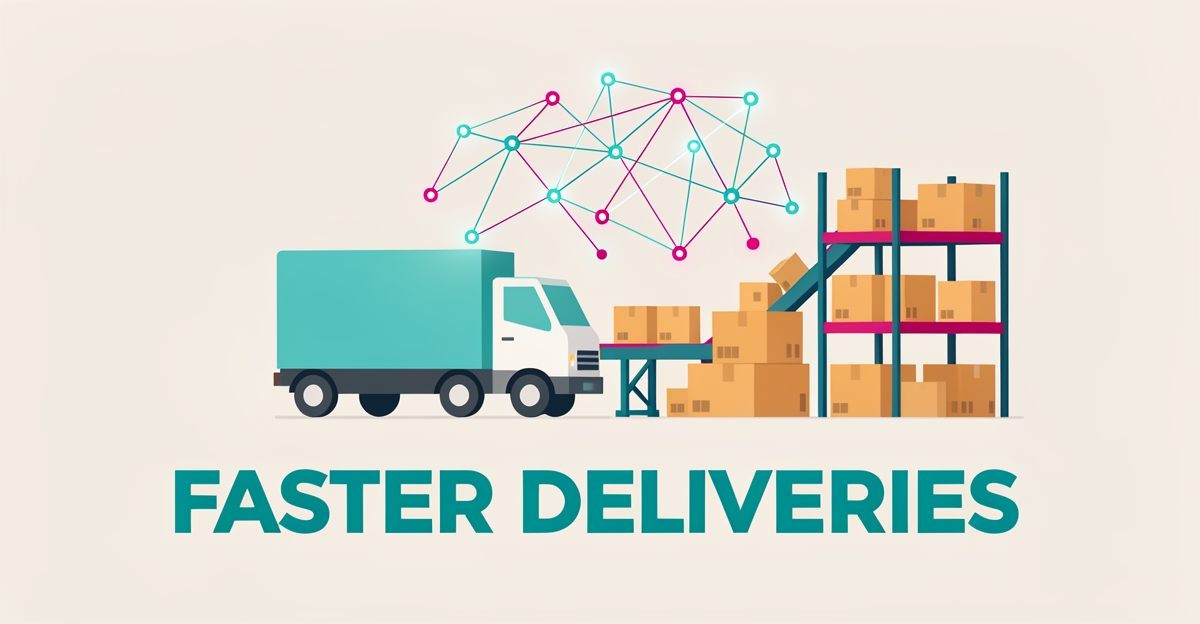
How AI Can Reduce Delivery Lead Times for Packaging Supply Chains
Key Facts
- AI can reduce delivery lead times by up to 40% in packaging supply chains, based on typical results reported across logistics automation deployments.
- Industry analyses of AI-enabled supply chains commonly report logistics cost reductions of around 15%.
- AI-driven demand forecasting can reduce forecasting errors by as much as 50% in well-implemented systems.
- Route optimization can cut delivery costs by 15-20% when traffic, fuel, and capacity are modeled dynamically.
- Procurement automation can compress cycle times by 50-70% in best-practice deployments.
- AI supply chain initiatives have improved inventory levels by up to 35% in industry studies.
- Demand forecasting can reduce overstock by up to 30% according to logistics automation analyses.
Hire a team member that works 24/7 — for less than a part-time wage.
AI receptionists, SDRs, dispatchers and 99+ roles. Trained on your business, fully managed.
Not sure where to start? Ask our AI planner
The Hidden Cost of Inefficient Packaging Logistics
Delivery delays in packaging rarely start on the loading dock. They start upstream, where disconnected systems and manual decisions quietly add days to every order.
Fragmented data keeps packaging teams blind to real constraints. Inventory lives in the ERP, orders sit in the WMS, and carrier capacity is checked by phone. That fragmentation forces reactive decisions, longer lead times, and rising expedite costs. Industry studies of AI-enabled supply chains commonly report logistics cost reductions of around 15% and inventory improvements of up to 35% once that fragmentation is addressed.
Manual routing and dispatch amplify the problem. Planners build routes on yesterday's traffic and static spreadsheets, then adjust on the fly when a pallet is short or a line is down. The result is missed windows, underutilized trucks, and customer service teams fielding status calls. Logistics automation analyses note route optimization can cut delivery costs by 15-20% when traffic, fuel, and capacity are modeled dynamically.
Inaccurate forecasting ties it all together. Packaging demand is volatile and product-specific, yet many teams still rely on historical averages and gut feel. That creates a cycle of overstock on slow SKUs and stockouts on fast movers. Well-implemented AI demand forecasting can reduce forecasting errors by as much as 50%, and logistics automation analyses report overstock reductions of up to 30%.
The hidden cost shows up as working capital trapped in excess packaging inventory, expedited freight to recover late orders, and lost repeat business when lead times slip. Procurement delays compound the issue: best-practice analyses indicate procurement automation can compress cycle times by 50-70%, cutting approval delays from weeks to hours.
Three pain points consistently inflate lead times:
- Fragmented data across ERP, WMS, and carrier systems prevents a single view of inventory and capacity
- Manual routing and warehouse dispatch create variability and missed delivery windows
- Inaccurate demand forecasts drive overstock, stockouts, and emergency replenishment
These inefficiencies erode customer satisfaction even when production is on time. Shippers promise dates they cannot reliably meet, and packaging buyers start dual-sourcing to protect themselves.
Connected AI workflows address this by linking real-time inventory data with demand forecasts to improve routing, delivery scheduling, and warehouse dispatch. Real-time visibility replaces batch updates, so dispatch decisions reflect actual stock and carrier availability. Predictive routing models traffic, weather, and driver performance to protect on-time delivery. AIQ Labs builds these systems through AI Workflow Builds, targeting the one workflow that costs you the most — and in well-run deployments, lead-time reductions of up to 40% are achievable.
AI-Driven Demand Forecasting and Inventory Intelligence
AI-driven demand forecasting transforms how packaging supply chains anticipate market needs, directly cutting delivery lead times. By analyzing historical sales, seasonality, and real-time market signals, AI models achieve significantly higher accuracy than traditional methods. In well-implemented systems, this approach can reduce forecasting errors by as much as 50%, enabling businesses to align production and procurement with actual demand patterns rather than reactive guesswork.
This precision directly supports inventory intelligence, allowing companies to maintain optimal stock levels without the costly trade-offs of overstock or stockouts. AI systems continuously recalibrate reorder points and safety stock based on forecast confidence, lead time variability, and service level targets. Industry studies report inventory improvements of up to 35% from AI-enabled supply chain initiatives, freeing up working capital while ensuring critical packaging materials are available when needed.
The combination of accurate forecasting and dynamic inventory control enables just-in-time fulfillment strategies that were previously too risky for volatile demand environments. AIQ Labs integrates real-time inventory data with these demand forecasts to trigger automated replenishment and production scheduling. This closed-loop approach minimizes excess inventory while preventing disruptions that delay customer shipments.
Key benefits of AI-driven inventory intelligence include:
- Reduced stockouts through predictive replenishment triggers
- Lower carrying costs from optimized safety stock levels
- Improved cash flow by decreasing excess inventory investment
- Enhanced responsiveness to demand spikes or supply disruptions
- Greater alignment between procurement, production, and delivery schedules
By grounding fulfillment decisions in data-driven forecasts rather than historical averages or manual estimates, packaging operations gain the agility to compress lead times without sacrificing service reliability. This foundation of demand accuracy and inventory optimization sets the stage for further gains in routing, dispatch, and last-mile delivery efficiency.
Smart Routing and Warehouse Dispatch Automation
AI is transforming how packaging supply chains move from warehouse to customer by making routing and dispatch decisions faster and smarter. When AI analyzes real-time traffic, weather, and delivery windows, it creates optimal paths that reduce fuel consumption and transit delays. This intelligent routing can cut delivery costs by 15-20% while ensuring packages arrive on time, directly shortening lead times across the distribution network. These efficiency gains compound when scaled across hundreds of daily shipments.
Warehouse dispatch automation takes this intelligence further by synchronizing inventory levels, order priorities, and carrier availability in real time. AI systems continuously monitor stock levels and demand signals, triggering dispatch only when the right product is available at the right moment. This eliminates unnecessary waiting and reduces the risk of stockouts or overstocking, creating a smoother flow from fulfillment to delivery. Accurate demand forecasting — with error reductions of up to 50% in well-implemented systems — gives dispatch the confidence to act decisively.
The result is a tightly integrated workflow where routing, dispatch, and inventory management operate as a single coordinated system. AIQ Labs builds these connected workflows by combining live inventory data with predictive demand models to ensure every dispatch decision aligns with actual customer needs. This synchronization is what makes lead-time reductions of up to 40% achievable, turning logistics from a reactive cost center into a proactive competitive advantage. Procurement automation — compressing cycle times by 50-70% in best-practice deployments — further accelerates the entire supply chain when paired with intelligent dispatch.
- Real-time traffic and weather data integration for dynamic route adjustment
- Inventory-level triggers that prevent premature or delayed dispatches
- Demand forecasting that aligns warehouse output with actual customer orders
- Carrier capacity matching to optimize load planning and reduce empty miles
- Continuous learning from delivery performance to refine future routing decisions
By replacing manual scheduling and guesswork with data-driven automation, companies gain more control over their delivery timelines while reducing operational waste. AIQ Labs implements these systems as owned, custom workflows that integrate directly with your existing ERP and logistics platforms — no rip-and-replace required, and no vendor lock-in. The outcome is a packaging supply chain that moves faster, costs less, and responds instantly to changing conditions, delivering reliability your customers can count on.
From Assessment to AI-Owned Workflow: Implementation with AIQ Labs
Assessing your current workflow is the essential first step toward reducing delivery lead times with AI. Begin by mapping each stage of your packaging supply chain — from order receipt and inventory checks to warehouse dispatch and last-mile delivery — to pinpoint where delays actually occur. AIQ Labs starts with a two-minute Fit Check followed by a free 30-minute strategy call, so the work targets your real bottleneck rather than adding complexity.
Once gaps are identified, the next phase involves preparing and standardizing data from ERP systems, inventory sensors, and logistics platforms so AI models work effectively. Clean, integrated data enables accurate demand forecasting and real-time decision-making, which are critical for optimizing routing and scheduling. With this foundation, AI models can analyze traffic patterns, delivery windows, and warehouse capacity to dynamically adjust routes and dispatch timing.
Implementation follows a phased approach with three clear entry points. You can Start Monthly with an AI Employee — a managed dispatcher or procurement agent that handles a defined role at roughly 80% less cost than a human hire. You can Build in Milestones with an AI Workflow Build, rebuilding the one workflow that costs you the most at a fixed price, in phases. Or you can Own It Outright with an AI Operating System — one connected operating layer built in phases and owned by you, with no ongoing rental. AIQ Labs has deployed 200+ multi-agent systems and runs four live SaaS products daily, so the build process is proven, not experimental.
After deployment, continuous monitoring and optimization ensure the workflow adapts to changing demand, seasonality, and operational shifts. Businesses using AI in supply chain operations commonly report logistics cost reductions around 15% and inventory improvements of up to 35%. By combining workflow assessment, tailored model training, and phased implementation, SMBs can move from manual processes to AI-owned workflows that cut delivery lead times by up to 40% — turning logistics from a cost center into a competitive advantage. To begin, take the two-minute Fit Check at aiqlabs.ai/apply and book your free strategy call.
Still paying for 10+ subscriptions that don’t talk to each other?
We build custom AI systems you own outright. No vendor lock-in. Full control.
Not sure where to start? Ask our AI planner
Frequently Asked Questions
How much can AI actually reduce delivery lead times in packaging supply chains?
What are the main reasons delivery lead times get delayed in packaging logistics?
Can AI really cut forecasting errors by half, and how does that help inventory management?
Is route optimization with AI worth it for packaging delivery fleets?
How does AI help with procurement delays in packaging supply chains?
Do I need to replace my existing ERP or WMS to use AI for packaging logistics?
The Supply Chain That Runs Ahead of Schedule
Packaging supply chains don't have to operate in reactive mode. When real-time inventory data, AI-driven demand forecasting, and predictive routing work together, the guesswork that inflates lead times disappears. Operations using this approach commonly report logistics cost reductions around 15%, inventory improvements of up to 35%, and forecasting error reductions of as much as 50%. The result is a fulfillment engine that ships on time because it knows what's needed, where it is, and how to get it there efficiently. AIQ Labs builds these connected workflows as owned systems — not rented tools — with 200+ multi-agent systems deployed and four live SaaS products running daily. The shift starts with identifying the single bottleneck costing you the most time. Take the two-minute Fit Check at aiqlabs.ai/apply to map your biggest delay and see where AI delivers the fastest return.
Make AI your competitive advantage — not just another tool.
Strategy, implementation and ongoing optimization. One partner, end to end.
Not sure where to start? Ask our AI planner