How AI Can Reduce Design Revisions in Commercial Space Planning
Key Facts
- Up to 30% of total project budgets can be consumed by revision cycles according to ROI analysis of AI audits
- AI-driven audits have been shown to reduce design revision cycles by roughly 40% per intelligent audit research
- 57% of companies reported improved productivity after adopting AI tools in a design workflow study
- Ineffective communication can reduce efficiency by as much as 25% according to design workflow research
- A majority of creative agencies have adopted AI-driven quality control tools to streamline design management
- Real-time design review catches issues before they become problems with AI tools
Hire a team member that works 24/7 — for less than a part-time wage.
AI receptionists, SDRs, dispatchers and 99+ roles. Trained on your business, fully managed.
Not sure where to start? Ask our AI planner
The Costly Problem of Endless Design Revisions in Commercial Projects
Design revisions in commercial space planning aren't just an inconvenience — they're a silent budget killer. Research suggests that up to 30% of total project budgets can be consumed by revision cycles alone, turning what should be a streamlined process into a costly exercise in rework.
The root causes are familiar to anyone who's managed a commercial project: miscommunication between stakeholders, unclear initial briefs, and client expectations that evolve as the project progresses. A study on design workflow efficiency found that ineffective communication can reduce efficiency by as much as 25%, creating a cascade of avoidable changes. When feedback arrives scattered across emails, meetings, and markup tools, designers waste hours deciphering intent rather than executing vision.
These revision cycles don't just drain budgets — they erode client trust and delay occupancy dates. Data from intelligent audit implementations indicates that a large share of creative agencies — around 70% by some estimates — have already adopted AI-driven quality control tools to stem this tide, recognizing that traditional review processes simply can't keep pace with modern project complexity.
- Vague or contradictory feedback from multiple stakeholders
- Late-stage discovery of code compliance or spatial conflicts
- Client visualization gaps — inability to "see" the design until it's built
- Sequential rather than parallel review workflows
- No systematic capture of institutional knowledge from past projects
AIQ Labs works with architecture and design firms to embed proactive feedback loops directly into the design process — catching spatial conflicts, code violations, and client misalignments before they become expensive change orders. The shift isn't about adding more tools; it's about connecting AI to deep project knowledge so context travels with every decision. For firms that want to start with the single most expensive workflow, AI Workflow Builds rebuild that one process at a fixed price, in phases.
How AI-Driven Feedback Loops Catch Issues Early and Cut Revision Cycles
Design revisions rarely fail at the drawing board — they fail in the gap between client intent and design execution. AI closes that gap by turning scattered input into structured feedback before a single line is finalized.
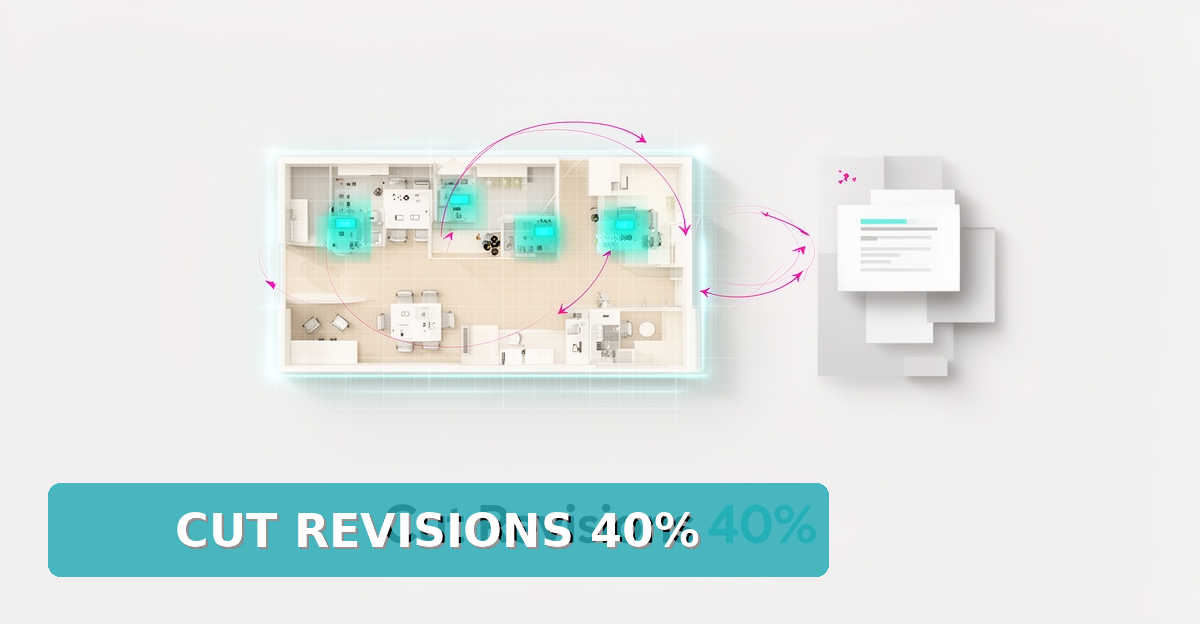
Early AI-driven feedback loops pull client input into design simulation and review in real time. This shifts quality control left, so misalignments surface while changes are inexpensive. Research on intelligent audits suggests AI-driven audits can reduce design revision cycles by roughly 40%. When issues are caught before final delivery, project delays shrink and client satisfaction rises.
Real-time review is the engine behind that reduction. AI tools provide instant feedback on compliance, brand standards, and spatial logic as designers work. Real-time design review catches issues before they become problems, reducing the need for costly revisions. The impact compounds because revisions consume budget: up to 30% of total project budgets can be accounted for in revision costs, according to ROI analysis of AI audits.
Productivity gains follow naturally. Industry research found 57% of companies saw improved productivity after adopting AI tools. That lift comes from clearer briefs, organized feedback, and fewer back-and-forth cycles.
In commercial space planning, AI enables proactive feedback at three critical moments:
- Client input capture and clarification to translate vague requirements into measurable design parameters
- Design simulation and automated audits that flag code, circulation, and brand deviations instantly
- Real-time review dashboards that consolidate scattered notes into prioritized revision lists
This approach mirrors how AI-driven customer relationship management strengthens retention through early intervention. By embedding feedback into the workflow, firms reduce friction with clients and protect margins.
AIQ Labs deploys AI systems that embed proactive feedback into the design process, connecting client input to simulation and intelligent audits. The result is fewer revision rounds and faster approvals without sacrificing design quality.
Teams that skip structured feedback risk the endless-revision trap. Ineffective communication can reduce efficiency by as much as 25%, per design workflow research. AI organizes raw feedback, clarifies vague instructions, and automates repetitive edits so designers focus on creative decisions.
Adoption is already mainstream. A large majority of creative agencies have adopted AI-driven quality control tools to streamline design management, showing the market shift toward proactive quality control rather than reactive fixes.
When AI is properly integrated into design workflows, the cycle shortens, budgets hold, and clients experience a smoother path from concept to completion.
Implementing AI in Your Design Process: From Ideation to Real-Time Review
Commercial design teams can transform their workflow by integrating AI at every stage—from initial concept to final review—creating a seamless process that minimizes costly revisions. AI-powered ideation tools enable teams to explore multiple creative directions in hours, not days, accelerating early-stage decision-making and reducing the likelihood of misaligned concepts later in the project. By organizing raw client feedback into structured, actionable insights, AI eliminates ambiguity and ensures that design iterations are driven by clear, consolidated input rather than scattered notes or vague instructions. Implementing real-time design review allows teams to catch potential issues—such as spatial conflicts, compliance risks, or aesthetic inconsistencies—before they escalate, maintaining design standards throughout the workflow and reducing the need for expensive rework.
- Use AI-powered ideation tools to explore multiple creative directions in hours, not days
- Organize raw feedback to avoid scattered notes and clarify vague instructions
- Implement real-time design review to catch issues before they become problems
According to industry research, 57% of companies saw improved productivity after adopting AI tools, while a study on intelligent audits found that AI-driven audits can reduce design revision cycles by roughly 40%. These gains stem from AI's ability to bridge communication gaps and apply contextual awareness across design workflows, ensuring that revisions are minimized not by adding more tools, but by connecting AI to deep brand knowledge, historical learnings, and feedback cycles. AIQ Labs supports this end-to-end integration through AI Workflow Builds — a fixed-price, phased rebuild of the one workflow that costs you the most — helping creative and operational teams embed proactive feedback loops directly into their design process. By embedding AI into the core of the design process, teams shift from reactive correction to proactive alignment—delivering projects faster, with fewer revisions and higher client satisfaction. For businesses ready to operationalize these benefits, the path forward starts with the 2-minute Fit Check, followed by a free 30-minute strategy call to identify high-impact AI opportunities in your design workflow.
Still paying for 10+ subscriptions that don’t talk to each other?
We build custom AI systems you own outright. No vendor lock-in. Full control.
Not sure where to start? Ask our AI planner
Frequently Asked Questions
How much of a project's budget is typically consumed by design revisions?
Can AI really reduce the number of design revision cycles in commercial projects?
What percentage of companies see improved productivity after adopting AI tools for design?
Why do design revisions happen so often in commercial space planning?
Is AI adoption common among creative agencies for design quality control?
How does real-time AI design review help prevent expensive revisions?
From Revision Cycles to Revenue Protection
Endless revisions are a budget and trust problem, not a design problem. Up to 30% of project budgets can be consumed by rework, driven by scattered feedback, late code conflicts, and visualization gaps that force sequential changes instead of parallel alignment. AI-driven feedback loops close that gap by capturing client input early, translating vague requirements into measurable parameters, and running real-time audits for compliance, circulation and brand standards before decisions are locked in. The result is fewer rounds, faster approvals, and margins protected without sacrificing quality, with research showing AI-driven audits can reduce design revision cycles by roughly 40% in commercial workflows. If you want to see where proactive feedback fits in your process, start with a focused assessment of your current revision pain points and map them to high-impact automation opportunities. AIQ Labs helps architecture and design firms embed these loops into their existing workflows. Start the Fit Check at https://aiqlabs.ai/apply — it takes two minutes — then book a free 30-minute strategy call at https://aiqlabs.ai/book to map your biggest bottleneck. You can also reach the team directly at [email protected].
Make AI your competitive advantage — not just another tool.
Strategy, implementation and ongoing optimization. One partner, end to end.
Not sure where to start? Ask our AI planner