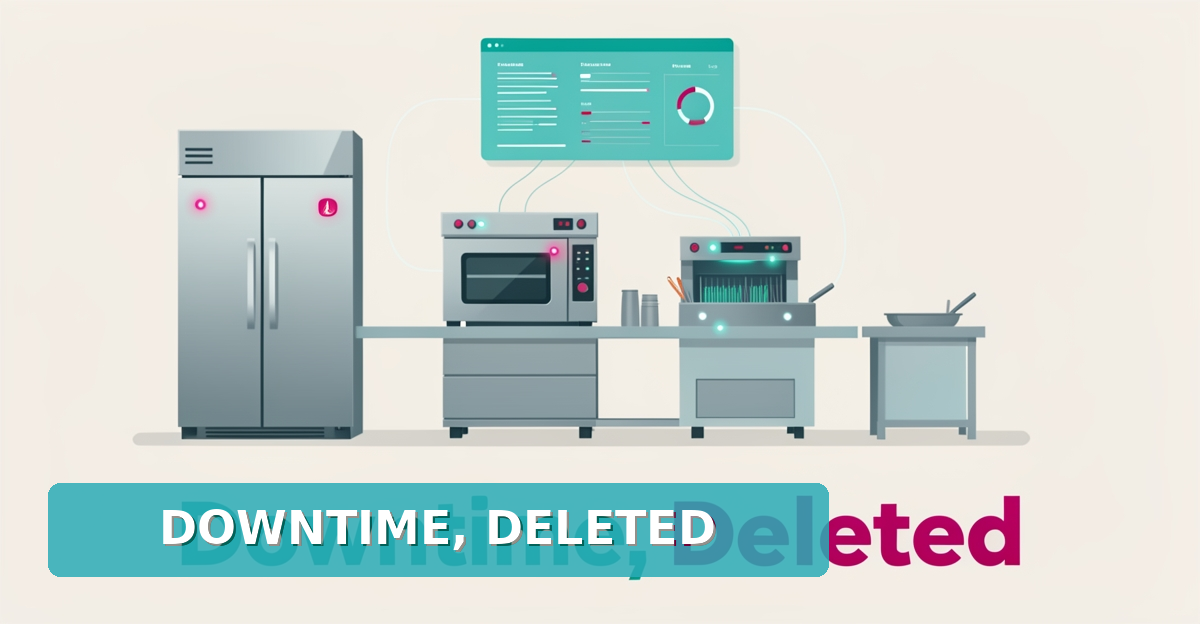
How AI Can Reduce Equipment Downtime in Restaurants (And Prevent Future Breakdowns)
Key Facts
- AI can reduce equipment downtime by 30-50% and cut maintenance costs up to 40% when implemented correctly
- Restaurants see 15-20% drops in sales during significant equipment outages according to industry data
- Predictive maintenance can forecast critical component wear up to 120 days before failure per research
- Predictive models have achieved 91% accuracy in fault prediction in controlled trials on bearing and gearbox data
- Reported cases show downtime hours per week falling from 9 to 4.2 hours, a 53% reduction with AI implementation
- A majority of predictive maintenance programs stall or show no measurable ROI within 18 months according to industry research
- True lifetime cost of an AI tool can reach several times the advertised price due to hidden fees
Hire a team member that works 24/7 — for less than a part-time wage.
AI receptionists, SDRs, dispatchers and 99+ roles. Trained on your business, fully managed.
Not sure where to start? Ask our AI planner
The True Cost of Reactive Maintenance in Restaurants
When a walk-in freezer fails on a Friday night, the repair bill is only the beginning. The real damage shows up in lost sales, spoiled inventory, and frustrated customers who may never return.
The numbers paint a stark picture. Restaurants typically see a 15-20% drop in sales during significant equipment outages. A single freezer failure can push food cost percentage from a healthy 28% to over 35% as thousands of dollars in inventory spoil. These aren't edge cases, they're the predictable outcomes of running critical equipment until it breaks.
The reactive approach creates a cascade of hidden costs:
- Emergency repair premiums that far exceed scheduled maintenance rates
- Idle staff who remain on the clock while equipment sits unusable
- Menu limitations that force customers toward lower-margin items or competitors
- Compounding pressure on kitchen teams already stretched thin by industry-wide staffing shortages
The scale of the problem extends far beyond individual restaurants. Unplanned downtime costs industrial manufacturers an estimated $50 billion annually, with midsized operations losing up to 30% of annual revenue to unexpected failures. While restaurant economics differ from manufacturing, the underlying dynamic is identical: fixing equipment after it breaks costs exponentially more than preventing the failure.
Yet most restaurants still operate in reactive mode, waiting for the compressor to seize or the fryer to fail before taking action. This approach made sense when margins were wider and customer expectations lower. Today, with staffing shortages still squeezing operators and competition fiercer than ever, unplanned downtime is a threat most businesses can't absorb.
The good news: the same sensor and AI technology that transformed manufacturing maintenance is now accessible for restaurant operations. Companies like AIQ Labs build systems that analyze equipment performance data and alert teams before failures occur, shifting maintenance from emergency response to planned prevention. The question isn't whether to adopt predictive maintenance, but how quickly you can implement it before the next breakdown hits.
How AI Predicts Failures Before They Happen
Predictive maintenance represents a fundamental shift from reactive "fix it when it breaks" approaches to proactive equipment management. By leveraging artificial intelligence to analyze real-time data from kitchen equipment, restaurants can identify potential failures weeks or even months before they occur, transforming how they manage critical assets like refrigeration units, ovens, and HVAC systems.
The technology operates through a network of sensors installed directly on equipment to monitor key performance indicators. These sensors continuously track variables such as temperature fluctuations, vibration patterns, pressure levels, and energy consumption. According to industry analysis, this data streams into AI-powered software that processes information in real-time, establishing baseline performance metrics for each piece of equipment.
Machine learning algorithms then analyze these data streams to detect anomalies and patterns that human operators might miss. The system learns to recognize the subtle signatures of impending failure, such as a compressor drawing slightly more power than usual or a refrigerator struggling to maintain consistent temperatures. Research indicates that predictive models can forecast critical component wear up to 120 days before failure occurs, providing maintenance teams with lead time to schedule repairs during off-peak hours.
The accuracy of these systems has reached impressive levels in the right conditions. In controlled trials across manufacturing environments, predictive models achieved 91% accuracy in fault prediction when trained on bearing and gearbox sensor data. This precision allows restaurant operators to distinguish between normal operational variations and genuine warning signs that require intervention.
The prediction process involves several interconnected components working in harmony:
- Sensor arrays that capture real-time performance data from critical equipment
- Machine learning algorithms that identify patterns and deviations from normal operating conditions
- Early warning systems that generate alerts when potential issues are detected
- Analytics dashboards that visualize equipment health and predicted failure timelines
When the system detects an anomaly, it doesn't simply flag a generic warning. Advanced AI analyzes the specific failure mode, estimates remaining useful life, and prioritizes alerts based on severity and operational impact. This intelligence enables maintenance teams to focus on the 20% of assets causing 80% of downtime costs, as noted by industry experts.
For restaurants working with AIQ Labs, this technology integrates with existing operations rather than replacing them. Through a focused AI Workflow Build, we rebuild the one maintenance workflow that costs you the most, sensor monitoring, alerting, and service dispatch, so failures get anticipated and prevented rather than repaired after the fact. The result is a kitchen that runs more reliably, with equipment issues handled proactively.
The Tangible Benefits: From Cost Savings to Operational Efficiency
The financial strain of unexpected equipment failures hits restaurants hard, draining revenue and disrupting daily operations. Reactive maintenance not only incurs emergency repair costs but also leads to spoiled inventory and lost sales during outages. AI-powered predictive maintenance shifts this paradigm by identifying issues before they escalate, delivering measurable improvements in uptime and cost control.
AI systems can reduce equipment downtime by 30-50% and cut maintenance costs by up to 40% when implemented correctly, directly addressing the pain points of reactive fixes. Restaurants often see a 15-20% drop in sales during significant equipment outages, while a walk-in freezer failure can ruin thousands in food products, pushing food costs from a healthy 28% to over 35%. Predictive maintenance can forecast critical component wear up to 120 days before failure, allowing teams to schedule repairs during off-peak hours and avoid disruptive breakdowns.
- Maintenance crew hours reduced by roughly 38% in reported predictive maintenance implementations
- Breakdown time reduced by about 35% with predictive maintenance
- Downtime hours per week reduced from 9 to 4.2 hours (a 53% reduction) in reported cases
Beyond immediate savings, AI extends equipment lifespan by enabling timely interventions that prevent cumulative wear. Operators commonly report saving 10-15% on maintenance costs annually with predictive maintenance, while improved energy usage from optimized equipment performance lowers utility expenses. These efficiencies free up staff to focus on customer service rather than emergency troubleshooting, enhancing overall operational resilience. AIQ Labs helps restaurants build custom predictive maintenance systems that analyze equipment usage patterns and alert service teams proactively, turning maintenance from a cost center into a strategic advantage.
A Practical Roadmap for Implementing AI in Your Restaurant
Getting started with AI-powered predictive maintenance requires a clear, phased approach that aligns with your restaurant's operational realities. Begin by identifying 5-10 high-impact assets, such as walk-in coolers, fryers, or HVAC units, that consistently generate quality sensor data and have documented failure patterns, as this focused selection drives the strongest return on investment according to industry guidance. Next, install appropriate sensors to capture critical metrics like temperature, vibration, and energy consumption, then extract 12+ months of historical operational data to build a clean, time-aligned dataset with engineered features for model training as outlined in implementation frameworks. Train multiple model types, such as LSTM networks for sequential degradation or Isolation Forest for limited failure history, and validate accuracy with your maintenance team to ensure alert thresholds match their capacity, avoiding overwhelming workflows with false positives based on technical best practices. Finally, integrate the AI inference pipeline into your existing maintenance workflows, create clear response runbooks, and deploy a production service with an alert dashboard that tracks prediction accuracy and enables continuous retraining with new failure data to sustain long-term optimization. AIQ Labs supports this journey through phased delivery, assessing readiness, building in milestones you approve, and refining custom systems that deliver measurable reductions in downtime and maintenance costs.
Navigating the Challenges: Ensuring a Successful AI Implementation
Here's an uncomfortable truth: a significant number of AI maintenance projects never pay off. According to industry research, a majority of manufacturers who started predictive maintenance programs either abandoned them or saw no measurable ROI within 18 months. The technology works, but only when implementation is handled thoughtfully.
The biggest hidden risk is cost inflation. The true lifetime cost of an AI tool can reach several times the advertised price due to transaction fees, hidden data-ingestion costs, and post-deployment support, according to one analysis. And only a small fraction of AI implementations deliver the promised cost reductions within the first twelve months. Restaurant operators should demand full cost transparency before signing anything.
Data quality is the other major pitfall. Roughly 70% of effort in predictive maintenance projects goes into data engineering, not model building. If your equipment rarely fails, you have little failure data to train on, and sensor drift or missing context variables like load and ambient temperature can teach models spurious correlations. Expect anomaly detection systems to start with 15-30% false alarm rates, improving to 5-10% only after careful tuning.
To avoid these traps, follow proven best practices:
- Start small and focused. Select 5-10 high-impact assets with clear failure patterns rather than trying to monitor everything at once.
- Use existing data first. Modern ovens, fryers, and refrigerators often have built-in sensors tracking temperature, cycle counts, and energy use before you buy anything new.
- Match alert thresholds to maintenance capacity. Twenty alerts per week will overwhelm a team that can only inspect three assets, leading to ignored alerts and eroded trust.
- Choose balanced governance. Combining vendor expertise with in-house knowledge delivers roughly double the uptime improvement of vendor-only solutions that miss local nuance.
Vocabulary alignment matters more than most operators expect. In one study, a majority of quality-control teams experienced misaligned vocabulary between cloud-based AI services and their own operational jargon, resulting in ignored alerts and reduced reliability. Your system should speak your kitchen's language.
This is where working with an experienced partner pays dividends. AIQ Labs builds custom systems that analyze equipment usage patterns and alert service teams proactively, systems businesses own outright, with transparent pricing provided in writing rather than hidden fees surfacing later. The reward for getting implementation right is substantial: properly deployed predictive maintenance can reduce downtime by 30-50% and cut maintenance costs by up to 40%, with ROI typically realized within 6-12 months.
As Dr. Jay Lee puts it: "The goal of predictive maintenance isn't to predict every failure, it's to prevent the failures that matter most. Focus on the 20% of assets causing 80% of downtime costs, and you'll see returns in the first year."
Still paying for 10+ subscriptions that don’t talk to each other?
We build custom AI systems you own outright. No vendor lock-in. Full control.
Not sure where to start? Ask our AI planner
Frequently Asked Questions
How much can AI really reduce equipment downtime in restaurants?
Is AI predictive maintenance worth the cost for a small restaurant?
How far in advance can AI predict equipment failures?
What kind of equipment should I start monitoring with AI?
Will AI create too many false alarms that my team will ignore?
How long does it take to see results from AI predictive maintenance?
Turn Equipment Anxiety Into Operational Confidence
Predictive maintenance powered by AI isn't just about avoiding broken freezers or fried compressors, it's about reclaiming control over your restaurant's most unpredictable cost center. By shifting from reactive fixes to data-driven foresight, you protect revenue, reduce waste, and free your team to focus on what matters: serving customers. The technology works, with reported reductions in downtime of 30-50% and maintenance costs cut by up to 40% when implemented thoughtfully. The real advantage comes not from the sensors or algorithms alone, but from partnering with a team that understands your kitchen's rhythm and builds systems you own outright, like AIQ Labs does through AI Workflow Builds and connected AI Operating Systems. If you're ready to stop guessing when equipment will fail and start planning with confidence, start with a 2-minute Fit Check to see if we're a fit, then map your highest-impact opportunities on a free strategy call. Schedule your free 30-minute strategy call and take the first step toward a kitchen that runs smoother, longer, and with fewer surprises.
Make AI your competitive advantage — not just another tool.
Strategy, implementation and ongoing optimization. One partner, end to end.
Not sure where to start? Ask our AI planner