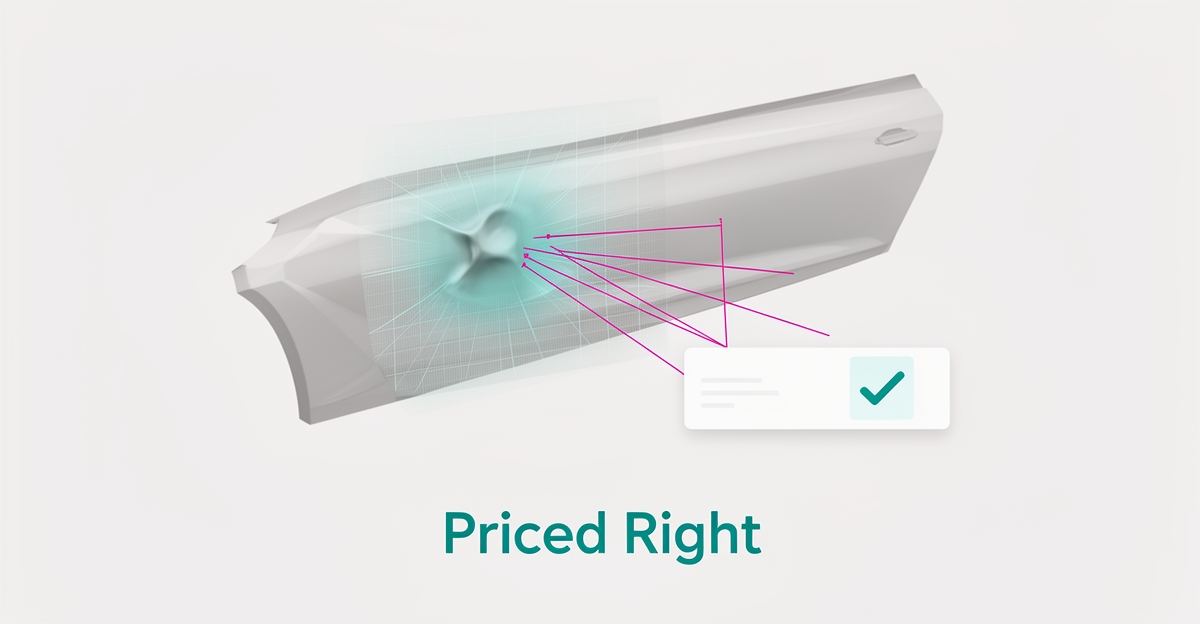
How AI Can Reduce Estimation Errors and Improve Pricing Accuracy in Collision Repair
Key Facts
- 57% of AI usage in professional roles is augmentation, with workers using AI as a collaborator according to workforce research.
- 36% of occupations now use AI for at least 25% of their tasks industry research shows.
- Only 4% of jobs rely on AI for at least 75% of their work, keeping humans in the loop per Statista data.
- Mitchell's specialty vehicle parts database is updated monthly with the latest safety information per Mitchell's estimating platform.
- VIN scanning automatically pulls accurate vehicle specifications into estimates, eliminating manual entry errors according to Mitchell.
- There is no best AI model, only the right model for the job enterprise evaluation frameworks conclude.
- Only 24% of organizations have a concrete reskilling strategy aligned with their AI investments, revealing a strategic imagination gap workforce research finds.
Hire a team member that works 24/7 — for less than a part-time wage.
AI receptionists, SDRs, dispatchers and 99+ roles. Trained on your business, fully managed.
Not sure where to start? Ask our AI planner
Introduction
Estimation errors in collision repair cost more than time. They erode trust with customers and insurers, inflate cycle times, and create disputes that linger long after the car leaves the shop.
AI is changing how damage is assessed and priced. By analyzing vehicle damage photos and repair history, AI can generate accurate quotes faster than manual estimation while reducing the input errors that drive disputes. This shift mirrors a broader enterprise trend where industry research shows 36% of occupations now use AI for at least 25% of their tasks.
The most effective implementations do not replace estimators. They augment them. Workforce data finds 57% of AI usage in professional roles is for augmentation, where workers use AI as a collaborator to refine and improve their work, rather than full automation. In collision repair, that means AI pre-populates estimates, flags inconsistencies, and matches historical pricing, while humans validate final quotes and handle complex nuances.
Accuracy depends on matching model capabilities to the workload. Multimodal reasoning is essential for interpreting damage photos, while safety-first, long-form reasoning supports compliant, hallucination-resistant quote generation. As experts note, there is no best AI model, only the right model for the job.
Reliable pricing also requires current, governed data. Specialized estimating systems maintain parts databases updated monthly with safety information and engine breakdown templates, and use VIN scanning to reduce manual entry errors. Without data integrity and integration, even capable models produce fragile results.
For SMB collision repairers, the opportunity is to build systems that fit existing workflows rather than create new silos. AIQ Labs builds custom AI systems that process images and historical data to deliver reliable, transparent pricing, cutting customer disputes and improving trust. The approach centers on human-AI collaboration:
- AI handles high-volume pattern recognition in photos and historical price matching
- Human estimators validate complex damage and final pricing decisions
- Systems integrate with existing management tools for seamless data flow
When AI augments rather than automates, shops shorten cycle times, improve pricing consistency, and redeploy estimator capacity to customer communication and high-value assessment.
Key Concepts
Estimation errors in collision repair rarely come from one mistake. They compound across photos, parts lookups, and historical pricing, which is why accuracy improves when AI is matched to the specific workload.
AI is already embedded in professional work. Industry research shows 36% of occupations now use AI for at least 25% of their tasks, with 57% of AI usage in professional roles focused on augmentation rather than full automation. That pattern fits collision repair, where human-AI collaboration reduces risk while increasing speed.
Model selection determines error reduction. Analyzing vehicle damage photos demands multimodal reasoning for image and text context, while generating final quotes requires safety-first, long-form reasoning to avoid hallucinations in parts and labor. Enterprise evaluations note there is no single best model, only the right model for the job. For compliance-heavy pricing, models built for safety and correctness are critical; for visual assessment, models built for large-scale multimodal reasoning are best suited.
Data integrity is the foundation of pricing accuracy. Specialized estimating systems maintain parts databases that are updated monthly with safety information, body parts, and engine breakdown templates. Mitchell’s specialty vehicle data is refreshed monthly to reduce errors from outdated lists. VIN scanning further cuts manual entry mistakes by automatically pulling accurate vehicle specifications into the estimate.
Human oversight remains essential for trusted results. Even as AI moves toward semi-autonomous support, human supervision is still critical to drive reliable outcomes, especially where physical damage nuances may not be fully captured digitally. DXC guidance on AI performance frames this as a learning journey in people, process, and technology.
In practice, AI can be applied to collision repair estimation as:
- Multimodal analysis of damage photos to pre-populate repair items and flag inconsistencies
- Historical price matching and parts database cross-reference for consistent quotes
- VIN-based specification retrieval to eliminate manual entry errors
- Augmented validation workflows where estimators review, refine, and finalize AI-generated estimates
This augmentation approach aligns with how AI is used across professions. Workers use AI as a collaborator to refine and improve their work, reallocating capacity to customer communication and complex assessments. AIQ Labs builds custom AI systems that process images and historical data to deliver reliable, transparent pricing, cutting disputes and improving trust through owned, integrated workflows rather than point solutions.
Best Practices
Implementing AI for collision repair estimation requires a deliberate strategy that matches the right model to the specific workload rather than chasing the latest hype. Research confirms there is no single "best" model; success depends on aligning capabilities—such as multimodal reasoning for damage photos or safety-first reasoning for compliant quotes—with the task at hand. According to industry evaluation frameworks, models like Gemini excel at large-scale multimodal analysis, while Claude is built for safety-first, long-form reasoning in compliance-heavy environments. This workload-matching approach ensures the AI augments human expertise where it matters most.
Data integrity is the foundation of pricing accuracy. Specialized estimating platforms maintain comprehensive parts databases updated monthly with the latest safety information, body parts, and engine breakdown templates. Coupled with VIN scanning to eliminate manual entry errors, these systems ensure AI outputs reflect current market reality. Before deployment, shops should verify training data provenance, decision traceability, and the ability to tune models for specific repair workflows.
- Define the exact workload: multimodal image analysis, historical data processing, or compliance-heavy quote generation
- Select models based on task fit: multimodal reasoning for photos, safety-first for final pricing, speed models only for low-complexity tasks
- Verify data currency and governance: monthly database updates, encryption standards, and audit trails
- Design human-in-the-loop workflows where AI pre-populates estimates and flags anomalies for estimator validation
- Invest in estimator reskilling to interpret AI outputs and manage AI-driven workflows effectively
The most effective implementations treat AI as a collaborator rather than a replacement. With 57% of professional AI usage focused on augmentation, the winning formula pairs AI speed and pattern recognition with human judgment on complex damage nuances. AIQ Labs applies this principle by building custom systems that process images and historical data to deliver reliable, transparent pricing—cutting customer disputes and improving trust. Continuous monitoring of cycle time, dispute rates, and pricing accuracy ensures the system evolves alongside the shop's operations.
Implementation
Implementing AI for collision repair estimation begins with a clear-eyed assessment of your specific workflow demands. There is no single "best" model; success depends on matching the right capability—multimodal reasoning for damage photos, safety-first logic for compliant quotes—to the exact task at hand. According to enterprise evaluation frameworks, leaders must verify training data provenance, decision traceability, and the ability to retrain models for niche use cases before deployment.
- Define the precise workload: image analysis, historical price matching, or compliance-heavy quote generation.
- Select models by strength: multimodal engines for visual assessment, safety-aligned models for final pricing.
- Demand data integrity: ensure parts databases update monthly and VIN scanning eliminates manual entry errors.
- Design human-in-the-loop workflows where AI augments—rather than replaces—estimator judgment.
- Invest in workforce reskilling so teams can interpret AI outputs and manage automated pipelines.
Research shows that 57% of professional AI use is augmentation, where humans collaborate with AI to refine outputs, while only 43% involves full automation. This hybrid approach is critical in collision repair, where physical damage nuance often exceeds what digital images capture. Systems like Mitchell Cloud Estimating demonstrate this principle by maintaining parts databases updated monthly with latest safety specifications, ensuring AI recommendations reflect current reality. AIQ Labs applies this same architecture—combining multimodal damage analysis with verified historical data—to build custom estimation systems that shops own outright. The goal is not just faster quotes, but transparent pricing that reduces disputes and builds trust with insurers and vehicle owners alike.
Conclusion
The collision repair industry stands at a pivotal moment where AI-driven estimation tools are reshaping how quotes are generated and validated. By combining multimodal analysis of damage photos with access to monthly-updated parts databases, AI reduces the manual errors that have long plagued pricing accuracy. Mitchell's specialty vehicle parts database ensures estimators work with current safety information and body templates, directly cutting discrepancies caused by outdated data. This technological shift isn't about replacing human expertise—it's about augmenting it, allowing estimators to focus on complex assessments and customer communication while AI handles repetitive data retrieval and pattern recognition.
Research confirms that 57% of AI usage in professional roles is for augmentation, where workers use AI as a collaborator to refine their work rather than fully automate it. In collision repair, this means AI can pre-populate estimates using VIN scanning to eliminate input errors, flag inconsistencies in parts selection, and cross-reference historical repair costs—all while the human estimator validates the final quote for compliance and nuance. Only 4% of jobs currently rely on AI for at least 75% of their work, underscoring that the most effective implementations keep humans in the loop for critical decisions, especially in regulated environments where pricing must align with insurer standards and customer expectations.
To harness these benefits, collision repair businesses should adopt a structured approach: first, define whether their priority is multimodal image analysis (favoring models like Gemini 3 Pro for depth) or compliance-heavy quote generation (better served by safety-first models like Claude 4.5). Second, verify that any AI tool integrates with existing shop management systems and provides audit trails for transparency. Third, invest in training estimators to interpret AI outputs—turning them into supervisors of automated workflows rather than data entry clerks. This human-AI collaboration model doesn't just improve accuracy; it builds trust by delivering transparent, consistent pricing that reduces disputes with insurers and customers alike.
For shops ready to move beyond manual estimation, AIQ Labs offers custom AI development services that build systems tailored to collision repair workflows—processing damage photos, accessing real-time parts data, and generating auditable quotes. These solutions integrate seamlessly with existing tools while giving businesses full ownership of their AI assets, eliminating vendor lock-in and ensuring long-term adaptability as estimating standards evolve. The goal isn't faster estimates alone, but estimates that are demonstrably accurate, defensible, and aligned with the operational reality of modern collision repair.
Still paying for 10+ subscriptions that don’t talk to each other?
We build custom AI systems you own outright. No vendor lock-in. Full control.
Not sure where to start? Ask our AI planner
Frequently Asked Questions
Will AI replace my estimators, or does it just help them work faster?
How does AI actually reduce errors in collision repair estimates?
What's the difference between AI for analyzing damage photos versus writing the final quote?
Can AI-generated estimates handle complex repairs, or do they only work for simple jobs?
How do I know if an AI estimation tool is reliable and not just hype?
What kind of ROI should I expect from implementing AI estimation?
From Faster Quotes to Trusted Pricing
Estimation errors compound across photos, parts lookups and historical pricing, which is why accuracy improves when AI is matched to the specific workload rather than applied generically. Multimodal reasoning handles damage photo analysis, safety-first reasoning supports compliant quote generation, and monthly-updated parts data with VIN scanning reduces manual entry mistakes. The most reliable results come from human-AI collaboration, where AI pre-populates estimates, flags inconsistencies and matches historical pricing while estimators validate complex damage and final decisions. That augmentation model is already the norm, with 57% of AI usage in professional roles focused on augmentation rather than full automation. For shops ready to move beyond manual estimation, start by defining your priority workload, verifying data currency and governance, and designing human-in-the-loop validation. AIQ Labs builds custom AI systems that process images and historical data to deliver reliable, transparent pricing that cuts disputes and improves trust. Start the Fit Check at https://aiqlabs.ai/apply for a free 30-minute strategy call to map your biggest bottleneck, or chat live with an AI Transformation Agent at https://aiqlabs.ai/chat for instant guidance.
Make AI your competitive advantage — not just another tool.
Strategy, implementation and ongoing optimization. One partner, end to end.
Not sure where to start? Ask our AI planner