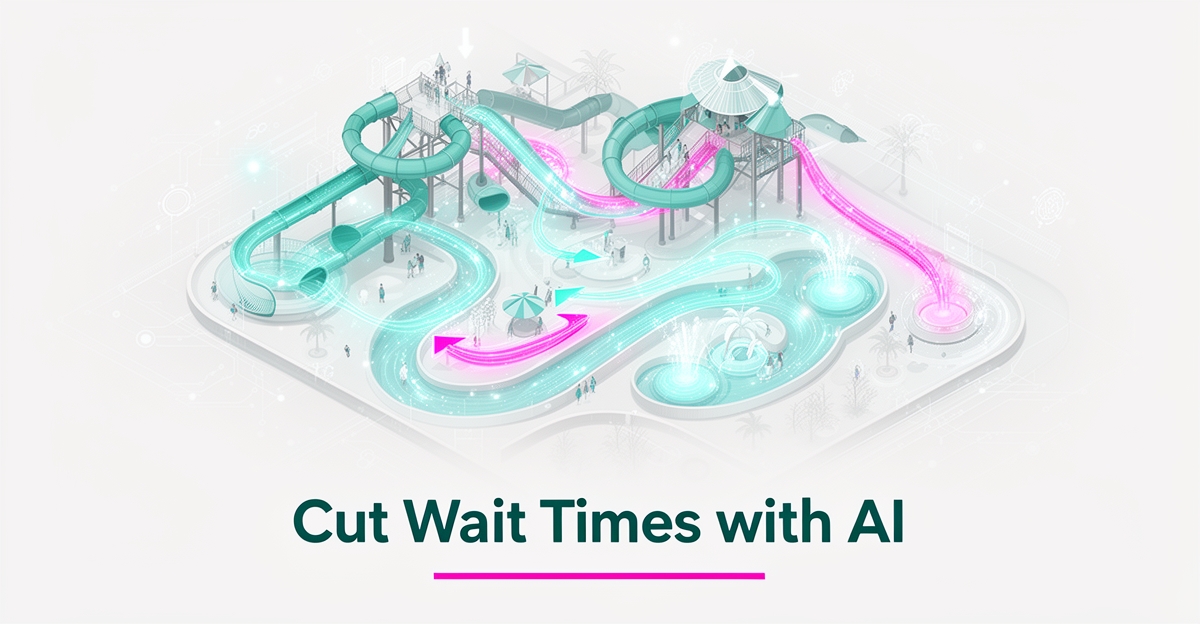
How AI Can Reduce Guest Wait Times at Water Parks Without Adding Staff
Key Facts
- Virtual queuing has reportedly saved visitors well over a billion minutes since 2021, per accesso industry analysis
- Hospitality surveys from 2023 reported AI chatbots cutting guest inquiry response time by roughly 78% across 300+ hotels
- Predictive maintenance using AI has been reported to cut equipment downtime meaningfully across large property samples in 2024
- A majority of U.S. hotels had integrated AI for predictive maintenance by late 2023, per industry surveys
- AI chatbot adoption among global hotel chains grew sharply between 2021 and 2023, per industry research
- AI workflow automation can pre-assign queues, predict bottlenecks, and dynamically allocate ride access
Hire a team member that works 24/7 — for less than a part-time wage.
AI receptionists, SDRs, dispatchers and 99+ roles. Trained on your business, fully managed.
Not sure where to start? Ask our AI planner
The Real Cost of Long Lines in Water Parks
Long lines remain one of the most persistent frustrations for guests at water parks, directly undermining the leisure experience they came for. When visitors spend excessive time waiting in queues, their overall satisfaction declines, and their willingness to spend on food, merchandise, or add-on attractions diminishes significantly. Industry analysis from accesso suggests virtual queuing systems have saved guests well over a billion minutes since 2021—time that gets reclaimed and redirected into concessions, retail, and premium experiences. Reducing wait times through intelligent queue management not only improves guest flow but also unlocks measurable revenue gains by letting visitors engage more freely with park amenities.
The financial impact of long lines extends beyond immediate dissatisfaction. Guests who perceive their time as wasted are less likely to return, hurting loyalty and lifetime value. Extended waits correlate with lower spending per visit, as frustrated visitors cut short their stays or skip optional experiences altogether. Conversely, parks that implement AI-powered workflow automation to pre-assign queues, predict bottlenecks, and dynamically allocate ride access see improvements in both guest satisfaction and secondary spending. These systems enable real-time adjustments based on attendance patterns, ride throughput, and guest behavior, ensuring optimal distribution of visitors across attractions without requiring additional staff.
- Virtual queuing technology has reportedly saved over a billion guest minutes since 2021, directly translating into increased revenue opportunities.
- AI-driven queue management reduces perceived wait times by optimizing ride access and minimizing physical congestion.
- Parks using intelligent automation typically report higher guest satisfaction scores and improved conversion on food, beverage, and merchandise sales.
By intelligently managing queue dynamics, AI-powered systems transform idle waiting time into active engagement with park offerings. This shift enhances the guest experience and drives incremental revenue without increasing operational headcount. For water parks aiming to boost profitability while maintaining high service standards, AI workflow automation presents a scalable, staff-neutral solution that addresses one of the industry's most visible pain points. AIQ Labs builds custom AI systems that integrate with existing park operations to deliver these gains—pre-assigning queues, forecasting demand surges, and dynamically allocating ride access to keep guests moving, spending, and satisfied. Learn more at AI Workflow Builds.
How AI Workflow Automation Solves Queue Management
Long lines don't just frustrate guests — they cap revenue and strain operations. AI-powered workflow automation changes the equation by pre-assigning queues, predicting bottlenecks, and dynamically allocating ride access using real-time data, all without adding headcount.
The hospitality industry has already proven this model at scale. Industry surveys from 2023 reported AI-powered chatbots reducing guest inquiry response time by roughly 78% across more than 300 hotels, while predictive maintenance was credited with cutting equipment downtime meaningfully across large U.S. property samples in 2024. Those same principles — real-time monitoring, predictive allocation, and automated decision-making — translate directly to water park queue management.
- Pre-assigned virtual queues eliminate physical line-standing and distribute demand across attractions
- Predictive models forecast congestion before it forms, triggering proactive ride allocation adjustments
- Dynamic access controls balance capacity in real time based on live guest flow data
- Integrated dashboards give operators visibility without manual tracking
Virtual queuing technology has reportedly saved visitors well over a billion minutes since 2021 — time guests redirect toward food, merchandise, and add-on experiences. The operational logic mirrors what AIQ Labs builds for clients across industries: custom multi-agent systems that ingest live data, reason through constraints, and execute workflows end-to-end — from dispatching and scheduling to intake and coordination. With 200+ multi-agent systems deployed, the same architecture that powers 24/7 AI receptionists and dispatchers can be applied to ride access, giving parks a self-optimizing queue layer that runs without constant human intervention. Explore managed AI staff at AI Employees.
Implementing AI Without Disrupting Operations
Long lines kill momentum at water parks, and adding staff is not always an option. AI-powered workflow automation lets parks manage demand with the systems they already run.
A phased rollout protects daily operations while building measurable gains. It starts with mapping how guests move, where queues form, and which data points already exist in ticketing, POS, and ride controls. That workflow analysis creates the baseline for automation without touching guest experience on day one.
Integration happens through existing connections rather than rip-and-replace. Using Model Context Protocol, AI agents can read real-time occupancy, ride status, and weather signals, then write back queue assignments and alerts to current dashboards. This mirrors the broader hospitality trend: industry surveys indicated a majority of U.S. hotels had integrated AI for predictive maintenance by late 2023.
The first live capability is usually virtual queuing and pre-assignment. Water park technology analysis confirms AI-powered workflow automation can pre-assign queues, predict bottlenecks, and dynamically allocate ride access. Guests receive return windows on their phones, freeing them for food, retail, and add-ons while staff focus on safety and service.
Scaling follows performance, not a fixed calendar. AIQ Labs structures deployments in phases with Build in Milestones payments, so each phase ships, is approved, and is paid before the next begins. Parks keep what is built and can pause or adjust anytime.
Typical rollout milestones include:
- Workflow analysis and data mapping of ticketing, rides, and guest flow
- MCP-based integration with existing operations systems for real-time data access
- Pilot of pre-assigned virtual queues on one high-demand attraction
- Performance review and expansion to additional rides and dynamic allocation
Staff adoption improves when AI handles the repetitive coordination work. Industry research from 2023 reported AI-powered chatbots reducing guest inquiry response time by roughly 78% across 300+ hotels surveyed, while chatbot adoption among global hotel chains grew sharply between 2021 and 2023. Similar efficiency shifts appear in parks when automation manages queue logic.
The result is shorter perceived wait times without hiring more staff, plus better data for capacity decisions. Parks can test, learn, and expand automation confidently because ownership stays with the business and integration respects current operations.
Still paying for 10+ subscriptions that don’t talk to each other?
We build custom AI systems you own outright. No vendor lock-in. Full control.
Not sure where to start? Ask our AI planner
Frequently Asked Questions
How can AI cut guest wait times at a water park without adding more staff?
Will guests actually use virtual queues instead of standing in line?
Is this AI queue approach proven in hospitality, or just theory?
Do we have to rip and replace our ticketing and ride systems to make it work?
What kind of revenue impact should we expect from shorter waits?
How long does it take to roll out AI queue management?
Turn Idle Minutes Into Revenue Without Adding Staff
Long lines cost water parks more than guest patience — they erode satisfaction, shorten visits, and suppress spending on food, retail and add-ons. AI-powered workflow automation changes that equation by pre-assigning virtual queues, forecasting bottlenecks before they form, and dynamically allocating ride access using real-time data, all without increasing headcount. Parks adopting intelligent queue management reclaim time that guests redirect toward concessions and premium experiences, while operators gain visibility and control without manual tracking. The shift is staff-neutral, phased and built on systems you already run. If you want to see where queue friction is costing you most, start with a workflow and data map, pilot virtual pre-assignment on one high-demand attraction, and expand based on measured gains in throughput and secondary spend. AIQ Labs builds custom AI systems that integrate with existing park operations to deliver those efficiency gains. Start the 2-minute Fit Check at https://aiqlabs.ai/apply, then book a free 30-minute strategy call at https://aiqlabs.ai/book to map your biggest bottleneck. Prefer email? Reach the team at [email protected].
Make AI your competitive advantage — not just another tool.
Strategy, implementation and ongoing optimization. One partner, end to end.
Not sure where to start? Ask our AI planner