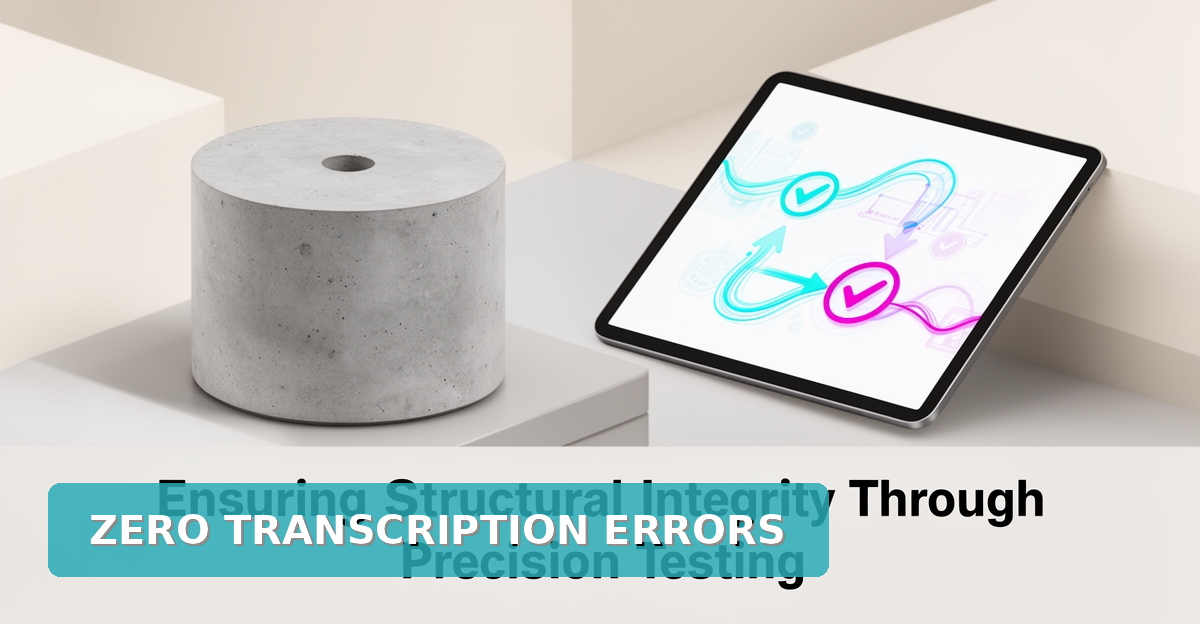
How AI Can Reduce Human Errors in Concrete Strength Test Documentation
Key Facts
- AIQ Labs builds custom AI systems that connect with laboratory information management systems to keep reporting accurate and standardized—reducing retesting and keeping construction projects on schedule.
- XGBoost models achieve an R² of 0.91 and RMSE of 4.37 for concrete strength prediction using 1,030 samples according to peer-reviewed research
- Piezoelectric sensor systems show prediction errors within approximately 15% when benchmarked against ASTM C39 standards according to a Nature Communications study
- IoT-based maturity method systems maintain percentage errors within acceptable limits per ASTM standards as validated in a Springer study
- The CONCRESENSE deep neural network achieves an R² of 0.996 and RMSE of 0.143 MPa for early-age compressive strength prediction as validated in controlled studies
- Industry analysis suggests contractors using real-time strength data and AI forecasts can build meaningfully faster by striking formwork at the precise safe moment according to industry reporting
Hire a team member that works 24/7 — for less than a part-time wage.
AI receptionists, SDRs, dispatchers and 99+ roles. Trained on your business, fully managed.
Not sure where to start? Ask our AI planner
The High Cost of Traditional Concrete Testing Documentation
Traditional concrete strength testing documentation has remained largely unchanged for over a century, and that creates persistent vulnerabilities in construction quality control. The process requires a 28-day waiting period for specimens to reach maximum strength before testing, during which any documentation error—whether in specimen preparation, curing conditions, or test result transcription—can force the entire process to be repeated. This labor-intensive approach is prone to human error at every stage, from manual data entry to report generation, leading to costly retesting, compliance delays, and project setbacks.
Research notes that traditional methods are time-consuming and prone to imprecise results, with inconsistencies arising from variations in specimen preparation, curing conditions, and testing protocols that can compromise the reliability of laboratory-based results. These documentation flaws directly impact project timelines, since a mistake can mean restarting the 28-day curing cycle. AI-powered document processing systems address this by automatically extracting test data, validating entries against standards, and generating standardized reports—eliminating the transcription mistakes that trigger costly process repetition.
- XGBoost models achieve an R² of 0.91 and RMSE of 4.37 for concrete strength prediction using 1,030 samples
- Piezoelectric sensor systems show prediction errors within approximately 15% when benchmarked against ASTM C39 standards
- IoT-based maturity method systems maintain percentage errors within acceptable limits per ASTM standards
By automating documentation workflows, AI reduces the risk of human error that has plagued concrete testing for generations. AIQ Labs builds custom systems—typically starting with an AI Workflow Build that rebuilds the one documentation workflow costing you the most—that connect with laboratory information management systems to keep reporting accurate and standardized. This approach turns a historically error-prone process into a reliable, auditable workflow that supports both quality assurance and timely project delivery.
AI-Powered Strength Prediction: Eliminating Manual Calculation Errors
Manual calculations in concrete strength testing often introduce avoidable errors that compromise documentation integrity and delay project timelines. Machine learning models now process data from over 1,030 concrete samples to predict compressive strength with strong accuracy, eliminating the need for error-prone manual computations. These systems transform raw sensor data into reliable strength predictions, reducing reliance on human interpretation and transcription.
The XGBoost ensemble model achieves an R² of 0.91 and an RMSE of 4.37 when predicting concrete strength from comprehensive datasets, demonstrating robust performance for practical applications according to peer-reviewed research. More advanced deep neural networks like CONCRESENSE push accuracy further, reaching an R² of 0.996 and an RMSE of just 0.143 MPa for early-age compressive strength prediction as validated in controlled studies. This level of precision helps ensure automated predictions consistently align with laboratory test results, minimizing discrepancies that trigger retesting or compliance reviews.
- Processes data from 1,030+ concrete samples to train predictive models
- Delivers real-time strength forecasts without manual calculation steps
- Reduces documentation lag between testing and reporting
- Eliminates transcription errors in strength value recording
- Enables faster formwork stripping decisions based on reliable predictions
By automating the prediction workflow, AI systems remove the manual steps where errors typically occur—such as unit conversions, formula applications, and data entry into logs. AIQ Labs builds custom implementations of these predictive models that connect directly with laboratory information systems, ensuring seamless data flow from sensor to report. This approach not only prevents costly retesting due to documentation mistakes but also accelerates construction schedules by providing trustworthy strength estimates when they are needed most. The result is a more reliable quality control process where human error is systematically engineered out of the strength verification chain.
Real-Time Monitoring Systems: Automating Data Collection and Reporting
Every hour a technician spends hand-copying sensor readings into a lab logbook is an hour where transcription errors can silently enter the permanent record. Real-time monitoring systems remove that step entirely by collecting, transmitting, and reporting strength data automatically—no clipboard, no re-keying, no second-guessing which decimal point was real.
The most advanced of these systems pairs piezoelectric sensors with deep learning models to enable real-time, in-situ monitoring without destructive testing or human intervention. In a landmark validation effort, researchers deployed over 100 piezoelectric sensors across slab pours and cylindrical samples during a one-year monitoring period, achieving prediction errors within approximately 15% when benchmarked against standard compression tests conforming to ASTM C39, according to a Nature Communications study. The system was validated across four large-scale highway construction projects, and its underlying sensing principle has since been incorporated into AASHTO T412—a significant step toward national standardization of the method.
The documentation benefits flow directly from the architecture. Because these systems use a direct mechanical-to-mechanical mapping, the extracted information is inherently unaffected by variations in chemical composition, curing conditions, or other human factors—the very sources of inconsistency that plague manually documented lab results. Data moves from sensor to centralized database without passing through human hands, which is precisely where transcription errors historically enter the workflow.
IoT-based systems offer a complementary, cost-effective path using the maturity method. One study deployed a system built on the Nurse-Saul maturity equation with easily accessible hardware and open-source software, tested on an actual construction site with continuous data transmission. The results showed high prediction accuracy, with percentage errors within acceptable limits as per ASTM standards.
The CONCRESENSE deep neural network system demonstrates what fully automated documentation looks like at scale. It integrates a network of temperature sensors, communication modules, and a centralized database server to collect, transmit, and analyze real-time curing data, achieving an R² value of 0.996 and RMSE of 0.143 MPa for early-age compressive strength prediction, per published research. Its architecture emphasizes scalability and integration with existing construction management systems.
Key components of an automated monitoring and reporting pipeline include:
- Sensor networks (piezoelectric, temperature, or wireless maturity sensors) embedded in the pour itself
- Communication modules transmitting readings continuously to a centralized database
- AI models that convert raw signals into validated strength predictions
- Automated report generation that feeds standardized documentation directly from the database
This is where AI document processing earns its keep in construction labs: raw sensor data flows in, key metrics are extracted, and standardized reports are auto-generated without a human ever re-typing a number. The same principle applies whether the data originates from piezoelectric impedance signals or temperature-based maturity readings. AIQ Labs builds custom systems tailored to specific test types—connecting the monitoring layer to the reporting layer so that documentation reflects what the sensors actually measured, not what someone remembered or mistyped.
The payoff extends beyond accuracy. Industry analysis suggests contractors using real-time strength data and AI forecasts can build meaningfully faster by striking formwork at the precise safe moment according to industry reporting. When documentation is automatic and trustworthy, decisions follow faster—and the retesting cycles caused by documentation mistakes simply disappear from the schedule.
Anomaly Detection and Explainable AI: Building Trust in Automated Documentation
Concrete strength documentation fails most often before a report is even written — when a bad batch or unauthorized change slips through unnoticed. AI-driven anomaly detection catches those deviations at the source, while Explainable AI makes the automated decisions auditable for engineers and compliance teams.
Systems learn the normal patterns of mixing from sensor data on batch plants, mixers, and delivery trucks and send alerts whenever parameters fall outside expected ranges. If one batch shows an unusual spike in temperature or an abnormally low slump, the AI can immediately flag it and notify the plant operator with a mix anomaly alert indicating a potential issue. This proactive monitoring prevents the documentation of defective batches and eliminates the need for subsequent retesting.
On site, the same approach detects risky human interventions. If a truck driver or crew member tries to add extra water to improve workability, sensors notice the sudden change in drum conditions or slump and the AI triggers an alert about deviation from the approved mix. The research notes this stops unauthorized water additions before they become part of the permanent record.
Trust is the barrier to adoption. Explainable Artificial Intelligence provides the tools to interpret machine learning model predictions, understand their behavior and influencing factors, and analyze the significance of classification features. The SHAP technique was employed to analyze the XGBoost model, providing civil engineers with insights to make informed decisions regarding concrete mix design and construction practices.
SHAP values are utilized to explain the output predictions of any machine learning model and employ the concept of game theory to compute the contribution of each feature to the final prediction. In practice, this means an engineer can verify why a batch was flagged or why a strength forecast changed.
Performance data supports the approach. An XGBoost model for concrete strength prediction using 1,030 samples achieved an R² of 0.91 and RMSE of 4.37. A piezoelectric sensor and deep learning system benchmarked against standard compression tests conforming to ASTM C39 achieved prediction errors within approximately 15%. In four independent field tests involving more than 30 sensors, predicted values deviated from proxy sample measurements by 1 to 2.5 MPa.
For labs moving toward automated documentation, anomaly detection and explainability work together:
- Real-time sensor streams from temperature, maturity and electromechanical impedance sensors feed continuous models
- Anomaly alerts fire before data is entered into test reports, blocking defective batches from documentation
- SHAP-based explanations provide transparent rationale for each automated flag and strength prediction
- Outputs map to standards such as AASHTO T412, which incorporated the underlying sensing principle for non-destructive testing
AIQ Labs builds custom AI systems tailored to specific test types in construction labs—scanning raw test data, extracting key metrics, and auto-generating standardized reports while keeping the reasoning visible. Explainable anomaly detection turns automated documentation from a black box into a verifiable quality control record.
Implementing AI Documentation Systems in Construction Labs
Implementing AI documentation systems in construction labs begins with deploying the right sensor infrastructure to capture real-time curing data. Temperature sensors monitor hydration heat, piezoelectric sensors detect electromechanical impedance changes, and wireless maturity sensors track strength development in slabs—all feeding continuous data streams that eliminate manual logging delays. AIQ Labs integrates these inputs into centralized systems that automatically compile and validate test records against project specifications.
Next, AI models must be trained on comprehensive datasets reflecting real-world variability in mix designs, curing conditions, and environmental factors. Historical data spanning cement types, aggregate sources, and water-to-cement ratios enables models like XGBoost to achieve R² values of 0.91 for strength prediction, while deep learning approaches such as CONCRESENSE reach R² of 0.996 by incorporating non-signal features into 1D CNN architectures. This training phase helps predictions remain accurate across diverse field conditions, reducing the risk of documentation errors caused by outdated or oversimplified assumptions.
Real-time data transmission protocols are then configured to stream sensor readings to cloud or edge servers with minimal latency, enabling immediate analysis and report generation. Anomaly detection alerts are programmed to flag deviations—such as unexpected temperature spikes or slump variations—before faulty batches are documented, preventing costly retesting. Finally, all outputs are validated against ASTM C39 compression tests, with piezoelectric systems showing prediction errors within 15% and IoT-based maturity methods falling within acceptable ASTM limits. These validation steps help ensure compliance while supporting faster construction cycles and reduced material waste through optimized workflows and minimized human intervention.
Still paying for 10+ subscriptions that don’t talk to each other?
We build custom AI systems you own outright. No vendor lock-in. Full control.
Not sure where to start? Ask our AI planner
Frequently Asked Questions
How does AI actually reduce human errors in concrete strength test documentation?
What accuracy can I expect from AI concrete strength prediction compared to manual calculations?
Do these AI systems meet ASTM standards for compliance documentation?
How does real-time monitoring eliminate documentation lag and transcription errors?
Can AI detect bad batches or unauthorized changes before they're documented?
How can I trust automated strength predictions without manual verification?
Turning Concrete Documentation into a Competitive Advantage
The evidence is clear: AI transforms concrete strength testing from a century-old liability into a streamlined, auditable process that removes costly human errors at every stage—from sensor data collection to final reporting. By automating documentation workflows, construction labs can prevent retesting cycles, accelerate project timelines, and ensure compliance without manual bottlenecks. AIQ Labs builds these systems to order—starting with an AI Workflow Build targeting the one documentation workflow that costs you the most, at a fixed price and in phases, with the option to own the system outright. The next step is to find where your current testing process creates the most friction. Take the 2-minute Fit Check, then book a free 30-minute strategy call to map your biggest bottleneck and identify high-ROI automation opportunities tailored to your lab's workflow. If there isn't a clear win, we'll say so—no sales pitch, just clarity on your AI opportunity.
Make AI your competitive advantage — not just another tool.
Strategy, implementation and ongoing optimization. One partner, end to end.
Not sure where to start? Ask our AI planner