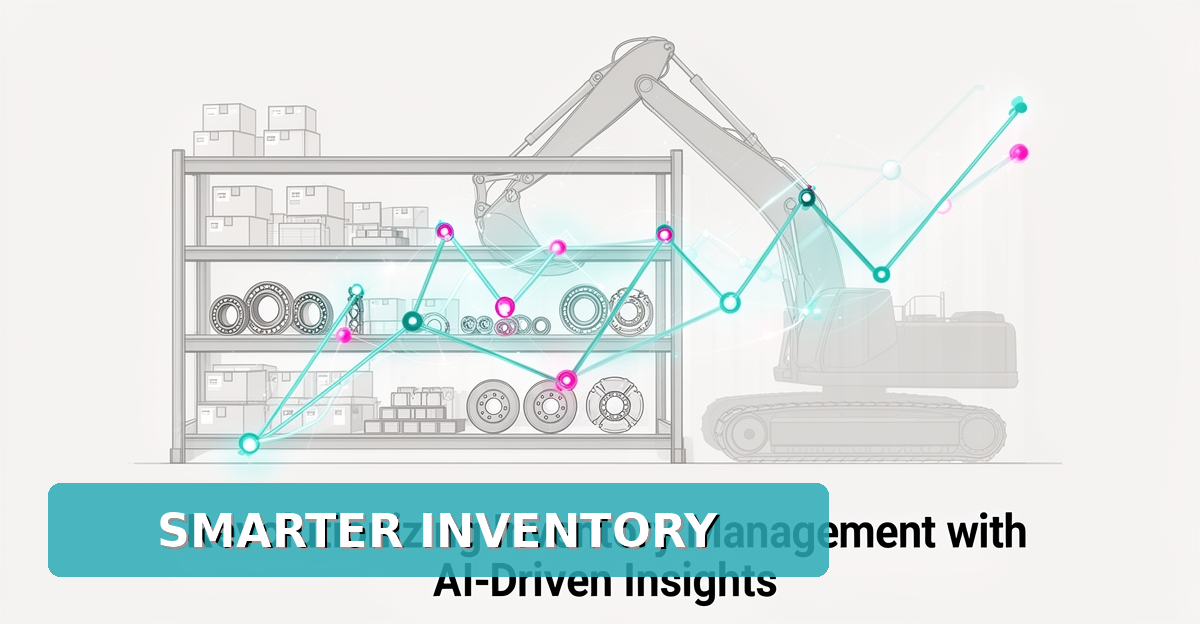
How AI Can Reduce Inventory Waste in Heavy Equipment Repair Shops
Key Facts
- Manual data entry error rates typically range from 1% to 4% per entry, according to industry research
- Automated inventory systems commonly achieve 99%+ accuracy in warehousing research
- Cycle count labor can drop 60-80% with automated tracking per warehousing analysis
- Out-of-stock errors can fall by up to 30% via predictive demand forecasting per inventory study
- Inventory carrying costs can drop meaningfully with optimized stock levels according to automation research
- Manual counts can consume up to 25 hours per month for small operations per industry data
- Emergency repairs typically cost several times more than planned maintenance in AI maintenance research
Hire a team member that works 24/7 — for less than a part-time wage.
AI receptionists, SDRs, dispatchers and 99+ roles. Trained on your business, fully managed.
Not sure where to start? Ask our AI planner
Introduction
Heavy equipment repair shops face mounting pressure to manage inventory efficiently while controlling costs and minimizing downtime. Traditional manual methods for tracking parts like brake pads, bearings, and gaskets are prone to errors, leading to costly overstocking or disruptive stockouts. These inefficiencies tie up capital, delay repairs, and affect customer satisfaction.
According to industry research, manual data entry error rates typically range from 1% to 4% per entry, with mistakes occurring in a meaningful share of manual operations. For small businesses, this often results in significant stock inaccuracies as order volumes grow, directly affecting parts availability in repair environments. The labor burden is significant too—manual counts can consume up to 25 hours per month, diverting skilled technicians from core repair work to administrative tasks.
AI-powered inventory systems address these challenges by transforming how repair shops forecast demand and manage stock levels. By analyzing historical repair data, seasonal usage patterns, and vehicle-specific maintenance needs, AI enables precise predictions for high-turnover parts. Automated systems commonly achieve 99%+ inventory accuracy while reducing cycle count labor by 60-80%, freeing staff to focus on value-added activities. Real-time synchronization with shop logs and supplier lead times ensures inventory reflects actual usage, triggering timely reorders before critical parts run out.
- AI can reduce out-of-stock errors by up to 30% through predictive demand forecasting
- Automated tracking improves order accuracy, minimizing incorrect shipments
- Inventory carrying costs drop when stock levels are optimized to actual demand
For heavy equipment repair shops, this means brake pads, bearings, and gaskets are stocked based on actual wear patterns rather than guesswork. AI integrates supplier lead times to adjust reorder points dynamically, preventing both excess inventory and emergency rush orders. As shops scale, these systems maintain accuracy without proportional increases in administrative overhead—unlike manual processes that struggle under growing complexity.
AIQ Labs builds inventory intelligence as part of its AI Workflow Builds, rebuilding the one workflow that costs your shop the most—often parts management—on a fixed price and in clear phases. By grounding predictions in real operational data, repair shops reduce waste, improve cash flow, and ensure the right parts are available when repairs demand them, without the burden of excess stock.
Key Concepts
Heavy equipment repair shops face a critical challenge: balancing part availability with inventory waste. Manual tracking methods create blind spots that lead to overstocking slow-moving gaskets or running out of essential brake pads during peak repair seasons. AI-powered inventory systems transform this reactive guessing game into a data-driven process that aligns stock levels with actual repair patterns.
By analyzing historical repair data, seasonal usage trends, and vehicle-specific maintenance needs, AI predicts demand for common parts with precision. Automated systems commonly achieve 99%+ inventory accuracy while reducing cycle count labor by 60-80%, eliminating the many hours per month small operations typically spend on manual counts. This level of accuracy prevents the stockouts that delay repairs and the overstocking that ties up capital in obsolete parts.
AI systems integrate directly with shop logs and supplier lead times to enable real-time optimization. When a bearing is installed, inventory levels update instantly, triggering reorders only when stock falls below dynamically calculated thresholds. This approach can reduce out-of-stock errors by up to 30% and cut inventory carrying costs through smarter reorder timing and quantity adjustments.
For heavy equipment repair shops, predictive capabilities extend beyond simple stock tracking. AI analyzes repair history to forecast when specific parts will fail based on actual equipment usage rather than fixed intervals. By syncing with supplier performance data, the system adjusts safety stock levels for long-lead-time components while minimizing excess inventory of fast-moving items like brake pads.
- Analyzes historical repair patterns to predict part demand
- Incorporates seasonal trends and vehicle-type variables
- Syncs with supplier lead times for dynamic reorder points
- Reduces manual counting labor by 60-80%
- Achieves 99%+ inventory accuracy through automation
AIQ Labs builds inventory intelligence that learns from each repair shop's unique workflow—whether as a standalone workflow rebuild or as part of a broader AI Operating System—turning inventory management from a cost center into a strategic advantage that reduces waste while ensuring critical parts are always available when needed.
Best Practices
To effectively reduce inventory waste, heavy equipment repair shops must implement AI-driven systems that go beyond basic tracking to actively predict and optimize part demand. Start by integrating repair history data—such as past failures of brake pads, bearings, and gaskets—into machine learning models that identify recurring patterns and forecast future needs with greater accuracy. This approach allows shops to move from reactive stocking to proactive replenishment, reducing the risk of both overstocking slow-moving parts and facing critical shortages during peak repair periods.
Next, layer in seasonal trends and vehicle-type-specific maintenance cycles to refine demand forecasts. AI systems can analyze how equipment usage changes with weather, workload shifts, or fleet composition, adjusting reorder points accordingly. For example, brake wear may increase in winter months due to icy conditions, while certain bearing types fail more frequently in high-use summer seasons. By syncing these insights with real-time inventory levels and supplier lead times, shops can automate reorder triggers that align with actual demand fluctuations. According to industry research, automated inventory systems can achieve 99%+ inventory accuracy while reducing cycle count labor by 60-80%, freeing up staff to focus on higher-value repair work rather than manual stock checks.
Finally, implement ABC analysis within the AI system to prioritize management efforts where they matter most. Classify parts into A-items (high-value, fast-moving like critical bearings), B-items (moderate turnover), and C-items (low-value, slow-moving gaskets) to apply tighter control where it prevents the most costly waste. AI can continuously update these classifications based on changing usage patterns, ensuring that inventory policies evolve with shop operations. This targeted approach not only minimizes carrying costs but also improves service reliability by ensuring the right parts are available when needed—directly supporting the goal of reducing waste through smarter, data-driven inventory control. To explore how these practices can be tailored to your shop's specific workflows, start with the 2-minute Fit Check and a free 30-minute strategy call to assess your current systems and identify high-ROI automation opportunities.
Implementation
Implementing AI-driven inventory management in heavy equipment repair shops begins with integrating historical repair data, seasonal trends, and vehicle-specific maintenance patterns into a predictive forecasting model. As highlighted in the research, automated systems can achieve 99%+ inventory accuracy while reducing cycle count labor by 60-80%, enabling shops to maintain optimal stock levels for critical parts like brake pads and bearings without manual intervention. This real-time synchronization ensures inventory reflects actual usage the moment a part is consumed, triggering reorders based on live demand and supplier lead times.
AIQ Labs supports this transition through fixed-price, phased AI Workflow Builds that sync with shop logs and supplier data, transforming reactive stocking into proactive optimization. By analyzing repair history, AI identifies recurring failure patterns—for example, predicting when specific bearing types will need replacement based on equipment usage cycles—while seasonal trend analysis adjusts forecasts for periods of higher wear, such as winter months affecting hydraulic systems. These insights allow shops to shift from fixed-schedule ordering to dynamic, demand-driven replenishment.
Key implementation steps include deploying sensors to monitor bin levels, integrating AI with existing POS or workshop management tools, and establishing automated reorder points that factor in supplier reliability and lead time variability. For high-turnover A-items like brake pads, tight control via frequent AI review prevents both stockouts and overstocking, while slower-moving C-items such as certain gaskets benefit from simplified bulk management. This approach reduces carrying costs and minimizes the risk of emergency repairs, which typically cost several times more than planned maintenance. Through continuous learning, the system refines predictions over time, adapting to changes in fleet composition, repair volume, and market conditions to sustain long-term inventory efficiency. Start the Fit Check to explore how AIQ Labs can tailor this system to your shop's unique workflow.
Conclusion
AI-powered inventory systems transform how heavy equipment repair shops manage critical components by turning reactive stocking into proactive, data-driven operations. Rather than relying on guesswork or manual logs, AI analyzes repair history, seasonal patterns, and vehicle-specific wear to forecast demand with precision. This shift reduces both overstocking and stockouts, freeing up capital and shop floor space while ensuring the right parts are available when needed.
According to industry research, automated inventory systems can achieve 99%+ accuracy and reduce out-of-stock errors by up to 30%. For parts like brake pads, bearings, and gaskets—where delays directly impact repair timelines—this level of reliability minimizes workflow disruptions. Additionally, AI-driven tracking cuts cycle count labor by 60-80%, allowing technicians to focus on repairs instead of inventory audits.
- Predict demand using historical repair data and seasonal trends
- Adjust reorder points based on real-time usage and supplier lead times
- Prioritize high-turnover parts through AI-enhanced ABC analysis
- Reduce carrying costs by optimizing stock levels and minimizing excess
- Scale inventory management without proportional increases in administrative overhead
By syncing with shop logs and supplier timelines, AI creates a responsive inventory ecosystem that adapts to changing repair volumes and equipment fleets. This capability is especially valuable for shops experiencing growth or seasonal fluctuations, where manual systems often break down under increased complexity. As noted in warehousing research, intelligent systems handle rising complexity without requiring proportional staff increases, making them ideal for scalable operations.
For repair shops ready to move beyond spreadsheets and reactive ordering, the path forward begins with assessing current inventory pain points and identifying high-impact automation opportunities. AIQ Labs partners with shops to build inventory intelligence that integrates with existing workflows—delivered through flexible payment models: start monthly, build in milestones, or own it outright. To explore how AI can optimize your parts management, start with the 2-minute Fit Check and a free 30-minute strategy call to map your biggest bottlenecks and ROI potential.
Still paying for 10+ subscriptions that don’t talk to each other?
We build custom AI systems you own outright. No vendor lock-in. Full control.
Not sure where to start? Ask our AI planner
Frequently Asked Questions
How much time can AI-powered inventory systems save heavy equipment repair shops on manual stock counting each month?
Can AI really improve inventory accuracy in repair shops, and by how much?
Will AI help reduce the cost of carrying excess inventory for parts like brake pads and bearings?
How does AI prevent stockouts of critical parts during peak repair seasons?
Is AI inventory management only practical for large repair shops with big budgets?
How does AI integrate with existing shop management tools to avoid disrupting current workflows?
Turning Inventory Insight into Repair Shop Advantage
Heavy equipment repair shops no longer need to choose between overstocking critical parts or facing disruptive stockouts. By leveraging AI to analyze repair history, seasonal trends, and vehicle-specific wear, shops can achieve 99%+ inventory accuracy while reducing cycle count labor by 60-80% and cutting carrying costs. This shift from reactive guessing to proactive, data-driven management ensures brake pads, bearings, and gaskets are available when repairs demand them—without tying up capital in excess stock. For shops ready to move beyond manual counts and spreadsheets, the path forward starts with understanding where AI can deliver the highest impact. AIQ Labs helps heavy equipment repair shops assess their current inventory challenges and identify high-ROI automation opportunities, starting with a 2-minute Fit Check followed by a free 30-minute strategy call. Begin your fit check today to explore how intelligent inventory systems can reduce waste and improve operational continuity.
Make AI your competitive advantage — not just another tool.
Strategy, implementation and ongoing optimization. One partner, end to end.
Not sure where to start? Ask our AI planner