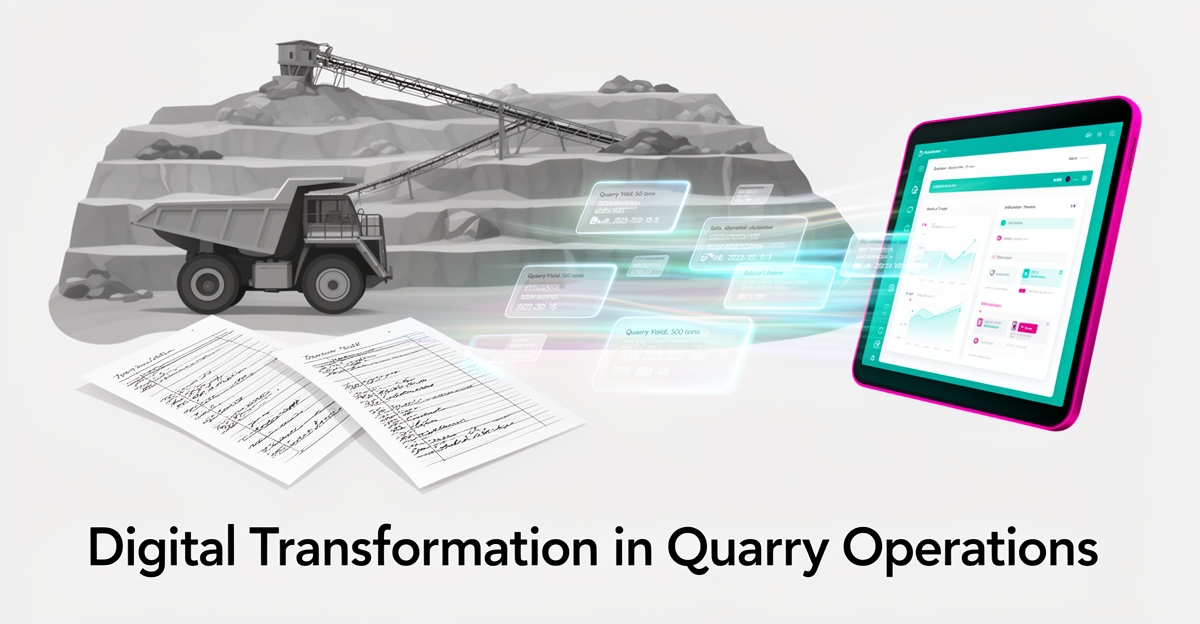
How AI Can Reduce Manual Data Entry in Quarry Operations
Key Facts
- Most businesses reclaim several hours per week by automating repetitive data entry tasks according to industry research
- Well-configured AI extraction systems routinely achieve accuracy rates well above manual keying as shown in document processing benchmarks
- Automated document workflows can cut per-document processing time from many minutes to a fraction of that per published automation case studies
- AI data entry automation handles diverse data types including unstructured field reports and handwritten logs proven in industrial settings
- Automated systems enable real-time data availability for faster response to operational changes improving compliance and decision-making
- Scalability improvements allow AI systems to handle fluctuating data volumes without added labor supporting peak season operations
- Eliminating manual transcription reduces error rates linked to fatigue and inconsistent formatting critical for regulated quarry operations
Hire a team member that works 24/7 — for less than a part-time wage.
AI receptionists, SDRs, dispatchers and 99+ roles. Trained on your business, fully managed.
Not sure where to start? Ask our AI planner
Introduction
Quarry operations run on precision, yet many still rely on paper logs, handwritten shift reports, and scattered spreadsheets to capture critical data. Every manual entry introduces risk — a transposed equipment ID, a missed maintenance threshold, a compliance gap that surfaces only during an audit.
The hidden costs compound quickly. Employees already managing physically demanding conditions burn out faster when saddled with repetitive data transcription. Error rates climb, and those errors cascade into maintenance delays, inventory discrepancies, and safety reporting gaps. Industry analysis identifies five recurring issues: employee burnout, high error rates, slow processing, limited scalability, and compliance risks.
AI-powered document processing changes the equation. Optical Character Recognition, Natural Language Processing, and Intelligent Document Processing work together to extract structured data from unstructured field documents — equipment inspections, material tickets, environmental logs — and route it directly into centralized systems. Research suggests most businesses reclaim several hours per week by automating repetitive data tasks, and published case studies show per-document processing times dropping from many minutes to a fraction of that once workflows are automated.
- Paper equipment logs → searchable digital records
- Handwritten safety reports → structured compliance data
- Spreadsheet material tracking → real-time inventory visibility
- Manual shift summaries → automated KPI dashboards
AIQ Labs builds document processing pipelines that understand quarry-specific formats, regulatory requirements, and operational workflows — typically as an AI Workflow Build, where we rebuild the one workflow that costs you the most at a fixed price, in phases. The result: field crews stay focused on production, supervisors gain real-time visibility, and compliance teams work from verified data — not reconstructed spreadsheets.
Key Concepts
Quarry operations face mounting pressure to modernize data workflows that still rely on paper logs and manual spreadsheet updates. These time-intensive processes not only slow decision-making but also introduce avoidable errors in safety reports, equipment tracking, and compliance documentation. By shifting from manual entry to intelligent automation, quarries can reclaim valuable operational bandwidth while improving data integrity across critical functions.
AI-powered document processing transforms unstructured field notes, inspection forms, and production logs into structured, actionable data with minimal human intervention. Technologies like Optical Character Recognition (OCR) and Natural Language Processing (NLP) enable systems to interpret handwritten notes, scanned PDFs, and varied spreadsheet formats — common in remote quarry environments where connectivity and document quality can be inconsistent. This capability ensures that data from daily shift reports, material hauls, and equipment maintenance checks flows reliably into centralized systems without rekeying.
According to industry research, most businesses save several hours per week by automating repetitive data entry tasks — time that quarry staff can redirect toward equipment maintenance planning, safety protocol refinement, or resource optimization. For operations processing high volumes of daily logs, this translates to hundreds of hours annually recovered from administrative burden.
AIQ Labs develops document processing pipelines that integrate directly with quarry-specific tools such as fleet management systems, inventory trackers, and environmental compliance platforms. These pipelines extract key data points — like material tonnage, crusher output, or blast timing — from diverse sources and normalize them into a unified format. By eliminating manual transcription, companies reduce error rates linked to fatigue or inconsistent formatting, which is especially vital in regulated industries where inaccurate logs can trigger compliance risks.
Automated data entry delivers measurable efficiency gains, with published case studies showing per-document processing times dropping from many minutes to well under five once extraction and routing are automated. In quarry contexts, similar improvements apply to daily production logs, vendor delivery tickets, and safety inspection forms — turning hours of clerical work into near-instant digital updates.
Scalability and real-time visibility further strengthen the case for automation. AI systems handle fluctuating data volumes without added labor, enabling quarries to scale operations during peak seasons without bottlenecks. Meanwhile, centralized access to structured data supports faster response to equipment issues, more accurate forecasting, and auditable trails for regulatory reviews — turning data from a liability into a strategic asset.
Best Practices
Quarry operations face a growing burden from manual data entry that drains time and increases risk. Paper logs, handwritten equipment reports, and spreadsheet updates consume valuable hours that could be spent on safety oversight or production planning.
AI-powered document processing transforms these repetitive tasks into automated workflows. Most businesses report saving several hours per week by eliminating repetitive data entry, directly freeing staff for higher-value activities like equipment maintenance planning or compliance monitoring. AIQ Labs builds pipelines that extract data from field logs, inspection forms, and operational spreadsheets with high accuracy, reducing errors that can compromise safety or regulatory adherence.
Implementing these systems starts with identifying the most time-consuming manual tasks. Prioritize processes like equipment log transcription or material quantity tracking where errors have the greatest operational impact. Choose an automation approach that supports your existing tools — whether equipment monitoring software, inventory systems, or compliance databases — and connect them through secure API integrations.
Map data fields carefully to ensure critical information like timestamps, equipment IDs, and material quantities flows correctly between systems. Test workflows thoroughly with real data before full deployment, paying attention to edge cases such as incomplete forms or poor scan quality. Establish monitoring routines to catch failures early and maintain data integrity through validation rules that flag inconsistencies before they propagate.
Expand gradually by adding triggers for maintenance alerts or compliance reporting once core workflows stabilize. This incremental, milestone-based approach builds reliability while delivering immediate time savings. With AI handling routine data capture, quarry teams gain the bandwidth to focus on proactive safety measures and operational optimization — turning a costly bottleneck into a strategic advantage.
Implementation
Implementing AI-powered data entry solutions in quarry operations requires a systematic approach that balances technological capability with practical operational needs. The transition from manual to automated processes represents a fundamental shift in how industrial operations handle information management.
Begin by identifying your most time-consuming manual tasks. According to industry research, most businesses save several hours per week by automating repetitive data entry tasks, making this initial assessment crucial for maximizing ROI. Focus on processes like equipment log transcription, material quantity tracking, or compliance report generation that consume significant staff time.
Select an implementation approach that matches your operational complexity. For straightforward workflows between standard business tools, off-the-shelf automation platforms offer accessible entry points. More complex quarry operations requiring conditional logic and specialized integrations benefit from custom-built systems — the kind of work AIQ Labs delivers through AI Workflow Builds, priced at a fixed rate and delivered in phases so you can verify value at every step.
- Connect all relevant systems including equipment monitoring software, inventory management platforms, and compliance tracking tools
- Map data fields carefully between systems to ensure accurate information flow
- Test workflows thoroughly with real data before full deployment
- Establish monitoring protocols to track performance and identify issues quickly
Data validation represents a critical implementation component. Well-configured AI extraction routinely outperforms manual keying on accuracy, but this requires proper configuration and ongoing monitoring. Establish validation rules that check for required fields, format consistency, and logical data relationships before information enters your systems.
Consider the unique challenges of quarry environments when planning implementation. Remote locations may require offline-capable solutions, while harsh conditions demand robust hardware and backup procedures. Research indicates that AI data entry automation can handle diverse data types including unstructured field reports and handwritten logs common in industrial settings.
AIQ Labs develops document processing pipelines that address these specific industrial challenges. Our approach combines OCR, NLP, and intelligent workflow automation to create systems that understand quarry operations' unique data formats and regulatory requirements — and you own the system outright once it's built.
Start with a pilot project focusing on one high-impact workflow. This allows your team to adapt to new processes while demonstrating tangible benefits. Published case studies show organizations cutting per-document processing time from many minutes to a fraction of that through systematic implementation.
Remember that successful implementation extends beyond technology deployment. Staff training, change management, and ongoing optimization ensure long-term success. The goal is creating a sustainable system that grows with your operation while maintaining data integrity and operational efficiency.
Conclusion
The journey to reduce manual data entry in quarry operations begins with recognizing the hidden costs of repetitive tasks — employee burnout, error-prone processes, and delayed decision-making that ripple through safety, compliance, and resource management. By implementing AI-powered document processing, quarries can transform paper logs, spreadsheets, and field notes into structured, actionable data without the burden of manual transcription.
Most businesses report saving several hours per week by automating repetitive data entry tasks, directly freeing skilled personnel for higher-value activities like equipment maintenance planning and safety protocol development according to industry research. AI technologies such as OCR, NLP, and Intelligent Document Processing work together to extract accurate information from diverse formats — including handwritten logs and poorly scanned forms — reducing human error rates significantly while ensuring data integrity for regulatory reporting as noted in automation case studies. These systems enable real-time data availability, allowing quarry managers to respond swiftly to operational changes and maintain compliance with environmental and safety standards.
- Start by identifying your most time-consuming manual data entry tasks, such as equipment log transcription or material quantity tracking
- Choose an automation approach that integrates with your existing quarry management systems and supports conditional logic for complex workflows
- Map data fields carefully between source documents and destination systems to ensure accurate transfer of critical information like timestamps, equipment IDs, and material volumes
- Test workflows thoroughly with real field data before deployment, then monitor performance and expand gradually as confidence builds
AIQ Labs builds document processing pipelines that understand the unique data formats and operational workflows of quarry operations — and hands you full ownership of the finished system. To explore how AI can reduce manual data entry in your specific quarry operations, start with the 2-minute Fit Check, then book a free 30-minute strategy call. This working session focuses on mapping your biggest bottlenecks and determining whether a clear win exists — without obligation or sales pressure.
Still paying for 10+ subscriptions that don’t talk to each other?
We build custom AI systems you own outright. No vendor lock-in. Full control.
Not sure where to start? Ask our AI planner
Frequently Asked Questions
How much time can quarry operations save by automating manual data entry with AI?
Can AI systems handle handwritten logs and poorly scanned documents common in quarry environments?
What are the biggest risks of continuing with manual data entry in quarry operations?
How does AI improve compliance and reporting in quarry operations?
Is it necessary to replace all existing systems to implement AI data entry in a quarry?
What's the first step to reduce manual data entry in our quarry using AI?
Turning Data Bottlenecks into Operational Advantage
Quarry operations stand at a pivotal moment where the hidden costs of manual data entry — burnout, errors, and delayed decisions — can finally be addressed through intelligent automation. By transforming paper logs, handwritten reports, and scattered spreadsheets into structured, actionable data, AI-powered document processing frees skilled teams to focus on what truly drives value: proactive maintenance, safety refinement, and resource optimization. The pattern is consistent across industry research: most businesses reclaim several hours per week by automating repetitive data tasks, with per-document processing times dropping sharply once extraction and routing are automated. For quarries ready to move beyond manual bottlenecks, the path forward starts with identifying your highest-impact workflow — and AIQ Labs can help you rebuild exactly that, at a fixed price, in phases, with you owning the result outright. To see where your operation stands and what's possible, take the 2-minute Fit Check at aiqlabs.ai/apply, then book a free 30-minute strategy call to map your biggest data challenges and uncover clear wins — no obligation, just clarity.
Make AI your competitive advantage — not just another tool.
Strategy, implementation and ongoing optimization. One partner, end to end.
Not sure where to start? Ask our AI planner