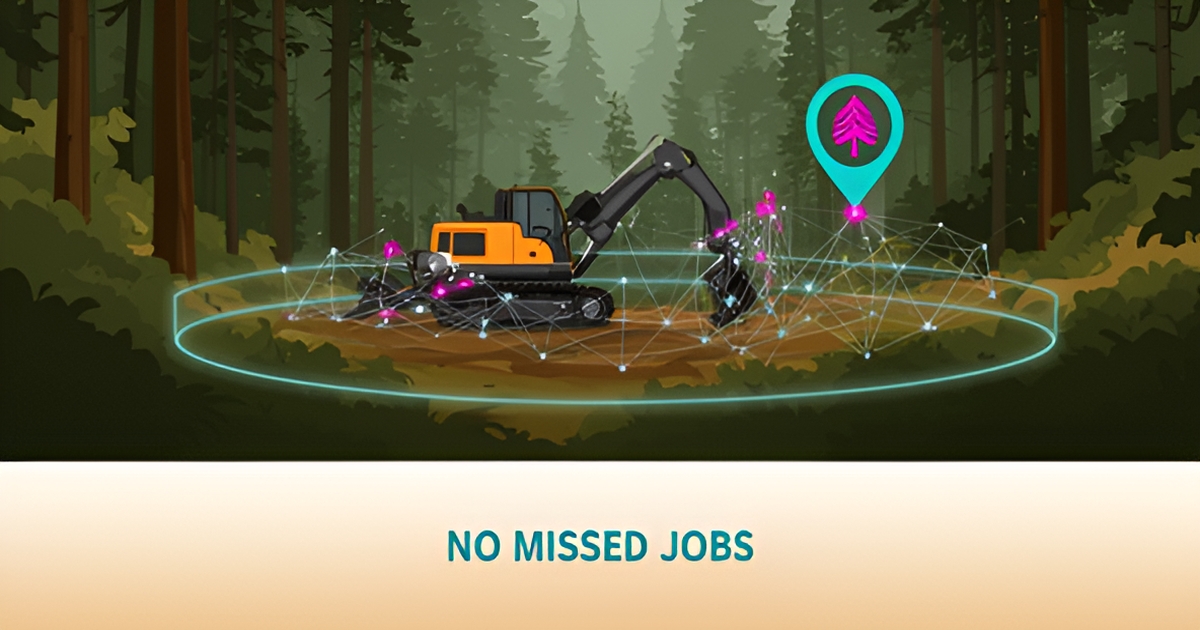
How AI Can Reduce Missed Jobs in Forestry Mulching Services
Key Facts
- Industry data has indicated that a large majority of the global workforce—figures cited around 80%—lacks enough time or energy to do their work according to Microsoft data cited by TechRadar
- A majority of meetings reportedly happen as ad hoc calls outside the scheduled day per Microsoft report via TechRadar
- McKinsey research suggests up to 30% of natural resource management tasks could be automated by 2030 as cited in the Forester guide
- Demand for AI skills in resource management has risen sharply in recent years, with Gartner figures cited around 40% over two years per the Forester guide
- Forestry 5.0 shifts from automation to augmentation with human-centered AI Current Forestry Reports analysis
- The primary barrier to forestry AI adoption is logistical and environmental challenges, not the technology itself Springer study finds
Hire a team member that works 24/7 — for less than a part-time wage.
AI receptionists, SDRs, dispatchers and 99+ roles. Trained on your business, fully managed.
Not sure where to start? Ask our AI planner
The Hidden Costs of Missed Jobs in Forestry Mulching
A single missed mulching job doesn't just leave a gap in the schedule—it erodes the trust that secures the next contract. In an industry where crews navigate remote sites, shifting weather, and heavy equipment logistics, the margin for error is razor-thin.
Research on workplace exhaustion highlights why these breakdowns happen. Industry data has indicated that roughly 80% of the global workforce reports lacking enough time or energy to do their work, while a majority of meetings occur as ad hoc calls outside the pre-scheduled day. For dispatchers and field managers juggling crew locations, equipment availability, and client windows, this cognitive overload turns into missed calls, double-booked sites, and silent cancellations.
The shift toward Forestry 5.0 underscores a critical reality: the gap between potential and practical implementation is rarely about the technology itself. According to forestry sector analysis, the primary barriers are logistical, infrastructural, and environmental challenges unique to the field. When communication fragments across radios, texts, and paper tickets, the operational picture fractures.
- Revenue loss from idle crews and mobilized equipment sitting unused
- Client churn driven by unreliable service windows
- Safety risks when last-minute changes bypass standard protocols
- Reputational damage that compounds across regional networks
McKinsey research suggests that up to 30% of tasks in natural resource management could be automated by 2030, yet many operations still rely on manual coordination that cannot scale. Forester workforce research cites Gartner data pointing to a roughly 40% rise in demand for AI skills in resource management roles over two years—a signal that the industry recognizes the gap. AIQ Labs addresses this through AI Employees that monitor field activity in real time, flagging scheduling conflicts and resource gaps before they become missed jobs. The goal isn't more dashboards—it's a system that works alongside the crew, ensuring the right equipment reaches the right site at the right time.
Why Human-Centered AI Is the Right Fit for Forestry Operations
Field teams in forestry don’t need another screen to manage. They need relief from the mental load that drives missed jobs and last-minute cancellations.
Forestry 5.0 marks a deliberate shift from automation to augmentation. Unlike Industry 4.0’s focus on autonomous machines, current forestry research describes a human-centred AI approach that integrates humans into the loop rather than replacing them. The goal is to make automation a team-player in joint human-AI activities.
That framing matters for mulching operations where dispatchers juggle weather windows, equipment availability, site access, and crew fatigue. AI augments rather than substitutes field judgment, aligning with human intelligence, social values, and legal requirements to ensure secure, safe, trustworthy interactions.
Cognitive overload is already a workplace crisis. Workplace analysis has reported that around 80% of the global workforce lacks enough time or energy to do their work. The market isn’t asking for more technology. It’s asking for relief.
In forestry, the barrier to adoption is not the technology itself but logistical, infrastructural, and environmental challenges unique to the sector. Research on Forestry 5.0 emphasizes a multidisciplinary approach where technologists, ecologists, policymakers, and practitioners balance productivity, nature conservation, social licence, worker safety and satisfaction.
Human-centred AI reduces mental load by handling repetitive monitoring and pattern recognition so operators can focus on decision quality. Support looks like:
- Proactive risk flagging for weather, access, and equipment conflicts before crews are dispatched
- Real-time alerts and geofencing that surface exceptions without requiring constant manual checks
- Augmented scheduling that respects crew capacity and site constraints, not just calendar availability
This is augmentation in practice. AI supports dispatchers and operators by reducing mental load and improving decision-making under uncertainty.
The sector is moving. Industry guides for foresters note a McKinsey study suggesting up to 30% of tasks in natural resource management could be automated by 2030, alongside Gartner-reported growth of roughly 40% in demand for AI skills in resource management roles over two years.
AIQ Labs designs this augmentation model for field services through AI Employees—managed AI staff that monitor activity and proactively flag risks, ensuring consistent service delivery. The approach keeps humans in control while letting AI handle the continuous monitoring that drives missed jobs.
The result is a safer, more trustworthy human-AI partnership where technology amplifies field expertise instead of eroding it.
AI-Powered Scheduling, Geofencing, and Real-Time Alerts
The gap between a planned mulching job and a completed one often lives in the messy middle: weather shifts, equipment failures, and crews navigating remote sites without real-time visibility. Research on the transition to Forestry 5.0 confirms that the primary barrier to AI adoption isn't the technology itself, but the logistical and environmental complexities unique to the sector. Solving this requires moving beyond static calendars to systems that actively monitor field conditions and adapt instantly.
Intelligent scheduling engines now ingest live weather feeds, equipment telemetry, and crew availability to dynamically resequence jobs before conflicts arise. Rather than relying on a dispatcher to manually shuffle a whiteboard, these systems evaluate thousands of permutations in seconds, protecting margins on tight mulching windows. Industry analysis suggests up to 30% of natural resource management tasks could be automated by 2030, with scheduling and logistics representing the highest immediate ROI. Workplace data indicates a majority of coordination happens in ad-hoc calls outside scheduled hours—precisely the chaos AI eliminates.
Geofencing closes the verification loop by automatically logging crew arrival and departure at job sites, replacing paper timesheets and "trust me" texts with reliable location data. This triggers downstream workflows: customer notifications, progress photo prompts, and invoice generation fire the moment a crew crosses the virtual boundary. Real-time alerting layers on top, flagging risks—like a mulcher overheating or a storm cell approaching the site—before they cascade into cancellations.
- Dynamic rescheduling based on live weather and equipment status
- Automated crew check-in/out via geofence triggers
- Proactive risk alerts for equipment health and site conditions
- Instant customer ETAs derived from actual GPS position
AIQ Labs deploys AI employees that function as always-on dispatchers, monitoring these data streams around the clock and intervening only when human judgment is required. This human-centered approach keeps operators in control while offloading the cognitive overload of tracking dozens of moving variables. The result is a schedule that breathes with the reality of the field, not against it.
How AI Employees Monitor Field Activity and Prevent Failures
Forestry operations run on tight margins where a single missed job cascades into lost revenue, damaged client trust, and crews idling at the wrong site. The shift toward Forestry 5.0 reframes AI not as a replacement for human judgment but as a constant teammate that augments field teams around the clock, keeping humans firmly in control of every decision.
Research into the evolving forestry paradigm shows that the primary barrier to adoption has never been the technology itself, but the logistical, infrastructural, and environmental realities of the woods. A study in Current Forestry Reports emphasizes that successful deployment requires a human-centered framework where AI aligns with worker safety, social license, and ethical principles. This philosophy mirrors the AI Employee model, where managed digital staff monitor job status, geofence boundaries, and crew check-ins continuously without losing focus.
AIQ Labs deploys these AI Employees as dedicated Dispatchers and Field Managers that integrate directly with scheduling software, GPS telematics, and communication channels. They don't just send reminders; they actively verify that equipment is en route, confirm site access with landowners, and flag weather or access risks before a crew rolls. When a discrepancy appears — a gate code change, a missing permit, a machine offline — the AI Employee escalates instantly to the human operations lead with full context, preventing the silence that lets jobs slip through the cracks.
- Continuous geofence monitoring with automated arrival/departure validation
- Proactive client communication on ETAs, delays, and scope changes
- Real-time crew status tracking against scheduled work orders
- Instant escalation protocols for exceptions requiring human authority
- Audit-ready logs for compliance, billing, and performance review
The workforce pressure driving this shift is measurable: industry data has reported that roughly 80% of the global workforce lacks the time or energy to complete their work, and that a majority of meetings occur as ad-hoc interruptions outside the planned day. In mulching operations, that cognitive overload translates directly into missed check-ins, forgotten follow-ups, and scheduling conflicts. An AI Employee absorbs that administrative noise — confirming permits, chasing signatures, re-optimizing routes — so foremen and operators stay focused on the cut.
Industry analysts suggest that up to 30% of natural resource management tasks could be automated by 2030, with demand for AI skills in the sector rising sharply in recent years. The companies capturing that value aren't buying standalone tools; they're hiring managed AI staff that plug into existing workflows, learn the operation's rhythm, and improve continuously under expert supervision.
Getting Started: Implementing AI to Protect Your Schedule
The gap between knowing AI can help your forestry mulching operation and actually implementing it stops most business owners before they start. Yet the barrier isn't technological—it's logistical. According to research on forestry digital transformation, the primary challenge lies not in the AI itself, but in navigating the operational complexities unique to field service environments. The key is starting with augmentation, not replacement.
Begin by auditing where your schedule actually breaks down. Track every missed job for two weeks—note whether the cause was equipment failure, weather miscommunication, crew availability, or client no-shows. This baseline reveals which workflow needs immediate attention. The Forester AI Tools Guide indicates that up to 30% of tasks in natural resource management could be automated by 2030, but successful implementation starts with identifying your specific 30%—the repetitive coordination tasks consuming your office manager's day.
Integration works best when AI connects to tools you already use rather than forcing a complete system overhaul. Your calendar, GPS tracking, and customer database contain the data needed for predictive scheduling. Human-centered AI—where technology augments rather than replaces your team's judgment—proves most effective in field services. Research from Current Forestry Reports emphasizes keeping humans in control of AI decisions, ensuring your dispatchers maintain final authority while receiving intelligent recommendations.
Consider the phased approach that minimizes operational disruption:
- Assessment: Map your current scheduling workflow and identify the single biggest point of failure
- Pilot: Deploy geofencing alerts for one crew or territory to test automated arrival notifications
- Integration: Connect AI monitoring to your existing calendar and customer communication tools
- Scale: Expand to full schedule optimization once the pilot proves reliable
This incremental method addresses the cognitive overload that derails many technology adoptions. A Microsoft report cited by TechRadar found that a large majority of the global workforce lacks sufficient time or energy to complete their work—a fatigue that makes complex software rollouts fail. By starting with a single automated alert system rather than a complete operational overhaul, you protect your team from change fatigue.
AIQ Labs approaches forestry mulching implementations through this exact phased methodology. Rather than demanding you abandon current processes, we deploy AI employees that integrate with your existing dispatch systems to monitor field activity and flag risks before jobs fall through. Whether you start with a single workflow build on a fixed price or a monthly AI employee pilot, the goal remains consistent: quick wins that prove value without stopping your operation. You can see the full range of payment models—Start Monthly, Build in Milestones, or Own It Outright—on our pricing page.
The businesses succeeding with AI aren't those with the biggest budgets—they're the ones that start with a specific problem, implement a targeted solution, and expand only after seeing results. Your missed jobs aren't a scheduling problem; they're a visibility problem. Solve that first, and the rest follows.
Still paying for 10+ subscriptions that don’t talk to each other?
We build custom AI systems you own outright. No vendor lock-in. Full control.
Not sure where to start? Ask our AI planner
Frequently Asked Questions
How does AI reduce missed jobs in forestry mulching without replacing human workers?
What specific features do AI Employees provide to prevent scheduling conflicts in remote forestry operations?
Is the main barrier to AI adoption in forestry the technology itself, or something else?
What percentage of natural resource management tasks could be automated by 2030, and how does this relate to forestry mulching?
How does cognitive overload contribute to missed jobs in forestry mulching, and can AI help reduce it?
What is a practical first step for a forestry mulching business looking to implement AI without disrupting operations?
Turning Missed Jobs into Momentum: Your Next Step
Missed mulching jobs don’t just leave gaps in the schedule—they erode trust, waste resources, and compound across client relationships. As we’ve seen, the root cause isn’t a lack of technology, but cognitive overload in a field where weather, equipment, and crew availability shift constantly. AI Employees from AIQ Labs don’t replace your team—they augment it, handling real-time monitoring, geofencing, and proactive alerts so your dispatchers can focus on judgment calls, not data juggling. The result is fewer silent cancellations, safer operations, and a schedule that breathes with the reality of the woods. If you’re ready to stop losing jobs to visibility gaps, start with the two-minute Fit Check to see if your operation is a match, then book a free 30-minute strategy call to map your biggest bottleneck and see where AI can deliver quick wins without disruption. Book your strategy call and take the first step toward a schedule that works as hard as your crew does.
Make AI your competitive advantage — not just another tool.
Strategy, implementation and ongoing optimization. One partner, end to end.
Not sure where to start? Ask our AI planner