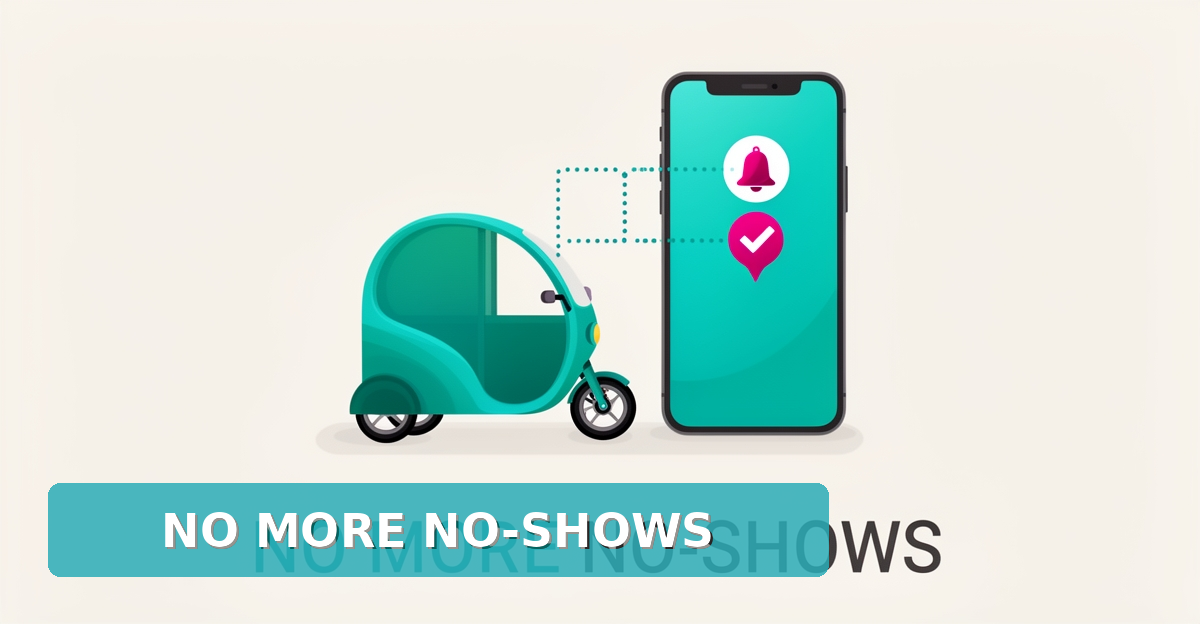
How AI Can Reduce No-Show Rates in Pedicab Services
Key Facts
- No-shows are usually a communication problem, not a discipline problem—automated confirmations remove reliance on human memory
- AI assistants in customer-facing roles typically resolve more issues per hour, meaning faster responses when bookings change
- Scalable AI workflows maintain performance during peak demand without added labor costs
- Process validation before automation prevents building a system around a broken workflow
- AIQ Labs builds communication workflows in phases, at a fixed price, that you own outright
Hire a team member that works 24/7 — for less than a part-time wage.
AI receptionists, SDRs, dispatchers and 99+ roles. Trained on your business, fully managed.
Not sure where to start? Ask our AI planner
The No-Show Problem Draining Pedicab Revenue
Manual booking processes in pedicab services create communication gaps that directly impact revenue and rider trust. When confirmations and reminders rely on human memory, appointments get forgotten, leading to empty slots and lost income. This becomes especially costly during peak demand, where scaling manual efforts is impractical and errors multiply. As of late 2026, AI adoption has spread across service-oriented sectors of every size, and routine coordination work—confirmations, reminders, follow-ups—is exactly the kind of task automation handles best.
The core issue is inconsistency. Without automated systems, there is no reliable way to ensure riders receive timely confirmations or drivers are alerted to upcoming pickups. Missed appointments waste driver time and erode confidence in the service, making riders less likely to book again. AIQ Labs addresses this with automated communication workflows that proactively notify both parties, reducing dependence on fallible human recall. These systems send booking confirmations, timely reminders, and last-minute updates—creating a consistent communication loop that minimizes forgetfulness. Routine task automation also lets your team focus on higher-value work while eliminating duplicate data entry, and it works best when processes are mapped first so the solution targets actual bottlenecks like missed communications.
Scaling these benefits requires a system that grows with demand without increasing labor costs. Traditional methods fail here because they depend on adding more staff or stretching existing teams thinner—both costly and inefficient. In contrast, AI-powered reminders operate consistently regardless of volume, delivering immediate notifications without fatigue or oversight. For pedicab services, this means transforming a fragile, memory-dependent process into a reliable, scalable operation—directly cutting no-shows, protecting revenue, and rebuilding rider trust through consistency.
- Automated confirmations reduce reliance on human memory for booking accuracy
- Timely reminders decrease forgotten appointments and idle driver time
- Consistent communication improves service reliability and rider retention
- Scalable workflows maintain performance during peak demand without added labor
- Proactive notifications create a dependable loop between riders and drivers
AI-Powered Reminder Systems That Close the Communication Loop
Pedicab services face a persistent challenge: riders forget bookings, drivers miss notifications, and no-shows erode both revenue and trust. AI-powered reminder systems close this communication loop by proactively notifying both parties at every critical touchpoint—from booking confirmation to last-minute updates—ensuring no detail slips through the cracks.
These automated workflows transform what was once a reactive, error-prone process into a reliable, scalable operation. Studies of generative AI in customer-facing roles consistently show assistants resolving more issues per hour and cutting the time spent drafting routine communications—gains that apply directly to creating and delivering reminders at scale.
AIQ Labs designs these systems to handle three key scenarios: instant confirmation upon booking, timely reminders 24 hours before pickup, and real-time alerts for route changes or delays. Each notification is personalized, context-aware, and delivered via the rider’s and driver’s preferred channel—SMS, email, or in-app—eliminating the guesswork that leads to forgotten appointments.
- Booking confirmation with unique reference ID
- Pre-ride reminder with estimated arrival window
- Last-minute update for traffic or weather changes
By removing reliance on human memory and manual follow-ups, these systems create a consistent communication rhythm that builds reliability. Riders gain confidence their ride is secured, drivers receive clear expectations, and dispatch teams spend less time chasing confirmations. The result is a self-reinforcing cycle: fewer no-shows lead to higher trust, which encourages more bookings and further reduces abandonment rates.
For pedicab operators, this isn’t just about reducing empty seats—it’s about creating a service people can depend on, rain or shine. When every booking is met with clear, timely communication, the entire experience becomes more predictable, professional, and ultimately, more human. If this kind of communication workflow is the one that costs your business the most, AIQ Labs rebuilds it at a fixed price through AI Workflow Builds.
From Manual Chaos to Automated Reliability: Implementation Roadmap
No-shows thrive in the gap between booking and pickup. In pedicab services, that gap is filled with manual calls, missed messages, and forgotten rides. Closing it requires automating the communication loop before scaling it.
Reliable automation starts with process validation, not software. Process mapping before automation prevents building a factory around a broken workflow. The same principle applies to rider and driver notifications: map the flow first, automate second.
A practical roadmap moves from manual clarity to automated reliability. First, map the current booking flow end-to-end and log where drop-offs occur. Next, identify every communication touchpoint that matters to riders and drivers, from confirmation to last-minute change alerts.
AIQ Labs approaches this through AI Workflow Builds: we rebuild the one workflow that costs you the most, at a fixed price, in phases. The design phase defines timing, channel, and message tone for new bookings, reminders, cancellations, and changes—so you see exactly what you're getting before the next phase begins.
Testing protects trust. Run the workflows manually first to verify accuracy, then enable automation once the messages are proven. Prototypes should be proved before factory-scale deployment—automation is earned, not switched on blindly.
Implementation follows a disciplined sequence:
- Map current booking-to-service conversion and pinpoint no-show triggers
- Identify communication touchpoints for riders and drivers
- Select and test an AI platform capable of automated messaging and system integration
- Design scenario-based workflows with validated timing and copy
- Deploy, monitor no-show metrics, and integrate with dispatch systems
Once live, monitor no-show rates and satisfaction continuously. Early microeconomic evidence on generative AI in customer support consistently points to more issues resolved per hour—similar gains are achievable when reminder systems reduce forgotten pickups.
The final step is integration. The AI reminder system must connect seamlessly with existing booking, scheduling, and dispatch tools so updates flow automatically without duplicate entry. When the process is validated first and the automation is built to own, process validation before automation becomes the foundation for service reliability and rider trust.
Measuring Impact: From No-Shows to Predictable Revenue
The difference between a chaotic schedule and predictable revenue often comes down to communication consistency. When riders and drivers receive timely, automated confirmations and reminders, no-show rates drop and trust compounds with every completed trip.
Manual reminder systems rely on human memory and availability, creating gaps that AI-powered workflows eliminate. Research on generative AI in operational roles consistently shows meaningful time savings on routine communications and quality improvements when AI handles them—gains AIQ Labs applies directly to pedicab operations, building communication workflows that notify both parties at every critical touchpoint.
- Instant booking confirmations sent to rider and driver simultaneously
- Automated reminders at 24-hour, 2-hour, and 30-minute intervals
- Real-time change notifications for weather, traffic, or schedule adjustments
- Post-ride feedback loops that reinforce accountability on both sides
The comparison is stark: traditional systems suffer from variable response times, limited scalability, and higher error rates, while automated workflows deliver immediate, consistent communication that scales across hundreds of daily bookings. For pedicab operators, that translates directly into fewer empty seats, more predictable driver utilization, and revenue you can forecast with confidence. And if reminders are just one piece of a bigger operational puzzle, AI Operating Systems connect booking, dispatch, and communication into one layer you own outright.
Still paying for 10+ subscriptions that don’t talk to each other?
We build custom AI systems you own outright. No vendor lock-in. Full control.
Not sure where to start? Ask our AI planner
Frequently Asked Questions
How much can AI-powered reminders actually reduce no-show rates in pedicab services?
Do I need to replace my current booking system to use AI reminders for pedicabs?
What specific types of automated messages do AI reminder systems send for pedicab bookings?
Is there proof that AI reminder systems actually improve productivity in service-based businesses like pedicabs?
Will riders and drivers find automated messages impersonal or robotic?
How long does it take to see results after implementing an AI reminder system for pedicab services?
Every Empty Seat Is a Conversation That Never Happened
No-shows in pedicab services aren't a discipline problem—they're a communication gap. As this article has shown, manual booking processes leave confirmations and reminders to human memory, and forgotten rides follow. AI-powered reminder systems close that gap with instant booking confirmations, timed reminders, and real-time change alerts delivered to both riders and drivers, turning a fragile, memory-dependent process into a scalable operation that protects revenue and rebuilds rider trust. Your next step is simple: map your booking flow, identify where riders and drivers lose touch, and validate the process before automating it. AIQ Labs builds these communication workflows at a fixed price, in phases, as systems you own outright—and we start every engagement with a free 30-minute strategy call to map your biggest bottleneck honestly. If there's no clear win, we'll tell you. Take the two-minute Fit Check at aiqlabs.ai/apply and find out whether automated reminders are the fix your schedule has been waiting for.
Make AI your competitive advantage — not just another tool.
Strategy, implementation and ongoing optimization. One partner, end to end.
Not sure where to start? Ask our AI planner