How AI Can Reduce No-Shows and Improve Parking Space Utilization
Key Facts
- AI-based parking systems have been reported to reduce search times by roughly 30% in industry cost-benefit analyses.
- AI-assisted facilities typically report space usage in the 85-95% range, versus roughly 60-70% for traditional systems.
- Smart parking deployments have been credited with reducing parking-related traffic by up to 40% in some cities.
- AI parking management can typically increase capacity utilization by 20-30% over manual operations.
- Peer-reviewed research suggests AI-powered parking management can reduce operational costs by up to 30%.
Hire a team member that works 24/7 — for less than a part-time wage.
AI receptionists, SDRs, dispatchers and 99+ roles. Trained on your business, fully managed.
Not sure where to start? Ask our AI planner
The Hidden Costs of No-Shows and Inefficient Space Utilization
No-shows and underutilized parking spaces create financial and operational strain for parking facilities, often going unnoticed until revenue losses become substantial. Traditional parking systems typically achieve only 60-70% space utilization, leaving a substantial portion of valuable real estate idle despite demand. Industry analyses confirm that this inefficiency directly translates to lost income, as empty spaces represent missed opportunities to serve customers and maximize asset productivity. Beyond direct revenue impact, low utilization increases per-space operational costs, as fixed expenses like maintenance, lighting, and security are spread over fewer paying users.
The ripple effects extend to customer experience and urban mobility. When drivers encounter full lots despite available spaces—due to poor allocation or no-shows holding spots—they spend extra time circling, contributing to congestion and frustration. Smart parking deployments have been credited with reducing parking-related traffic by up to 40% in some cities by minimizing the time vehicles spend idling or searching for spots. This not only improves air quality but also enhances the overall efficiency of urban transportation networks. Facilities relying on manual processes or basic digital tools lack the predictive capabilities to anticipate drop-offs or reallocate spaces dynamically, perpetuating cycles of underuse and user dissatisfaction.
Addressing these challenges requires more than sensor deployment—it demands intelligent systems that learn from historical patterns to optimize every phase of the parking lifecycle. By integrating predictive analytics with automated workflows, facilities can shift from reactive management to proactive space optimization. The result is higher utilization rates, reduced operational waste, and a smoother experience for drivers—turning parking infrastructure from a cost center into a responsive, revenue-generating asset.
How AI Optimizes Parking Space Allocation and Reduces No-Shows
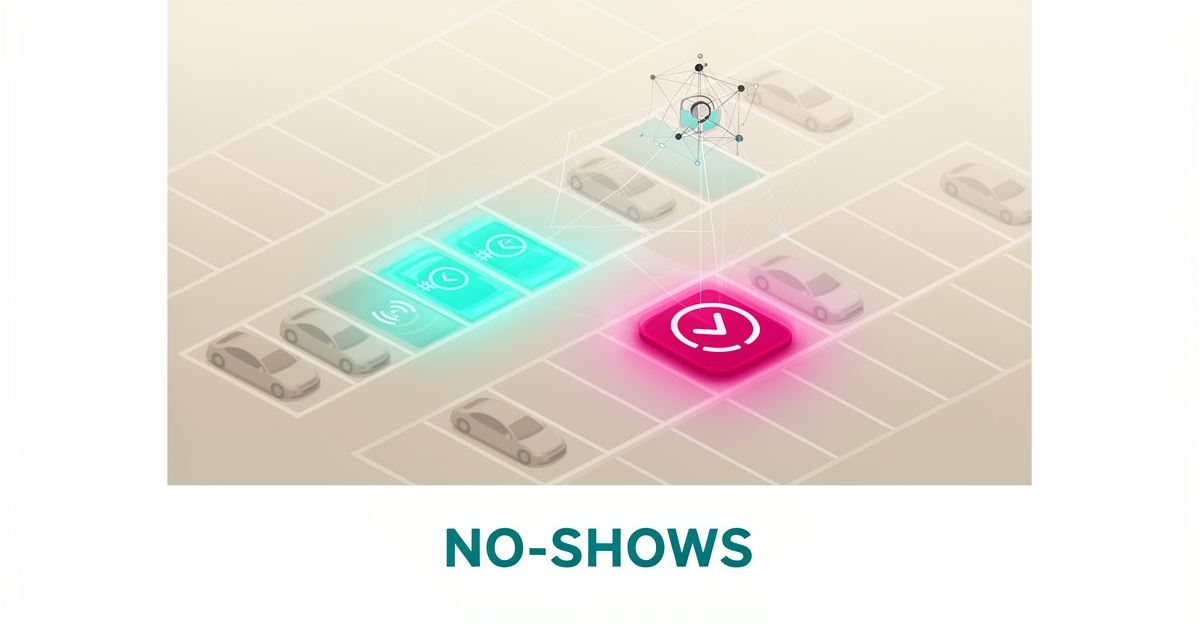
Empty parking bays at peak hours are lost revenue. AI changes that by learning from daily arrival patterns and acting before a no-show becomes a gap in occupancy.
AI systems predict drop-offs by analyzing historical booking data, time-of-day trends, and external factors to forecast which reservations are likely to be missed. When risk is detected, the system triggers automated reminders via SMS or email, reducing no-shows and freeing space for waitlisted drivers. This predictive layer is exactly the kind of high-cost, repetitive workflow AIQ Labs rebuilds through AI Workflow Builds—a fixed-price, phased rebuild of the one workflow that costs you the most.
Space allocation becomes dynamic instead of static. Real-time data and predictive analytics identify available spots and guide drivers to the nearest available bay, shortening search time and improving throughput. Industry cost-benefit analyses report that AI-based parking systems can reduce search times by roughly 30% and lift space usage into the 85-95% range, compared to 60-70% for traditional systems.
Dynamic allocation also means overbooking can be managed safely. The system holds a buffer based on predicted no-show rates, releases held bays as reminders confirm attendance, and reassigns them instantly when a cancellation occurs. Efficiency reviews suggest AI can typically increase capacity utilization by 20-30% while cutting the time spent searching for parking.
AIQ Labs has deployed 200+ multi-agent systems that learn from daily operations and dynamically adjust scheduling to maximize occupancy. The approach turns parking management into a closed-loop workflow: predict, notify, reallocate, and learn.
How the optimization works in practice:
- Predictive no-show scoring uses booking history and pattern signals to flag high-risk reservations early
- Automated reminders are sent at optimal times and channels to confirm attendance and reduce drop-offs
- Real-time space allocation reassigns vacated or unclaimed bays to waiting drivers without manual intervention
- Continuous learning refines forecasts as new arrival and cancellation data feeds back into the model
The result is higher utilization with less congestion. By minimizing circling and idle time, AI-driven smart parking reduces parking-related traffic and supports smoother facility operations. Facilities gain revenue from previously wasted bays, drivers find spots faster, and staff spend less time managing exceptions.
With the right data foundation, AI turns parking from a reactive service into a proactive revenue engine that adapts to demand minute by minute.
Real-World Applications: AI-Powered Parking Management Systems
Empty bays sitting idle while customers circle the lot is lost revenue. AI-powered parking management is closing that gap by turning reservations, arrivals, and departures into predictable, automated workflows.
Real deployments show measurable gains in utilization and traffic flow. AI-based parking systems have been reported to reduce search times by roughly 30% and lift space usage into the 85-95% range, compared with 60-70% for traditional systems. That shift directly cuts congestion and emissions.
Smart parking systems have been credited with reducing parking-related traffic by up to 40% in some deployments. By minimizing idling and circling, cities see improved air quality alongside smoother traffic, and adoption continues to grow as of late 2026.
License plate recognition is a core enabler in these systems. Automated entry and exit remove bottlenecks at gates and provide real-time occupancy data for dynamic pricing and space allocation.
Predictive analytics completes the loop. Efficiency reviews suggest AI can reduce the time spent searching for parking and typically increase capacity utilization by 20-30%. Models learn from historical patterns to forecast drop-offs and no-shows, then trigger automated reminders and reallocate holds.
Common real-world capabilities include:
- Real-time slot detection and guidance to the nearest available bay
- License plate recognition for touchless entry, exit, and enforcement
- Predictive no-show modeling with automated SMS/email reminders
- Dynamic space allocation that adjusts pricing and reservations by demand
These outcomes are what AIQ Labs builds every day: multi-agent systems that learn from daily operations and dynamically adjust scheduling to maximize occupancy. For operators that want the reminder and reallocation work handled without adding headcount, AI employees run these workflows around the clock at a fraction of the cost of a human hire. Larger operators can go further with an AI operating system—one connected layer across reservations, gates, payments, and staffing, built in phases and owned outright.
The result is higher revenue per space, less congestion, and a better driver experience without adding staff.
Implementing AI in Your Parking Operations: Steps and Considerations
Deploying AI for parking starts with a clear operational map, not a vendor demo. No-shows waste valuable parking space and revenue, and a structured rollout turns that waste into predictable occupancy.
Start with data readiness and integration planning. AI models need clean, consistent inputs from gate logs, reservations, payment systems, and sensors. High-quality data is a prerequisite for reliable predictions, and technical issues emerge when legacy systems cannot sync in real time. A readiness assessment identifies gaps in data quality, API access, and privacy controls before build begins.
Design the workflow around the three value drivers: reminders, prediction, and dynamic allocation. AI-powered parking management systems can optimize space allocation, predict drop-offs, and send automated reminders, leading to increased revenue and reduced congestion. Industry research reports AI-based parking systems can reduce search times by roughly 30% and improve space usage into the 85-95% range, compared to 60-70% for traditional systems.
Build the core agents and connect them to existing operations. Real-time data and predictive analytics identify available spots, guide drivers, and adjust pricing or release holds when no-shows are likely. AIQ Labs builds multi-agent workflows that integrate with CRM, access control, and payment tools—delivered in milestones so you can validate each phase before the next.
Address privacy and compliance early. The use of AI in parking management can raise concerns about data privacy and security. Define data retention policies, consent flows for reminders, and audit trails for license plate recognition. Governance should include human-in-the-loop escalation for exceptions and clear limits on data sharing.
Pilot in a contained zone, measure, then scale. A focused pilot validates accuracy of no-show predictions, reminder effectiveness, and space utilization lift before expanding across the portfolio.
Key implementation steps include:
- Audit data sources and establish a single source of truth for reservations, entry/exit, and payment events
- Map the no-show journey and design automated reminder sequences with opt-out controls
- Train predictive models on historical patterns to forecast drop-offs and release inventory proactively
- Integrate AI agents with gate systems, mobile apps, and staff dashboards for real-time actions
- Monitor ROI metrics such as occupancy rate, search time, and operational cost reduction
Operational efficiency follows when the system runs continuously. Smart parking systems have been credited with reducing parking-related traffic by up to 40% in some deployments by minimizing idling and circling. Peer-reviewed analysis suggests AI-powered parking management can reduce operational costs by up to 30% when automation replaces manual reconciliation.
Maximize ROI by treating AI as an owned asset. With AIQ Labs' Own It Outright model, you keep the system, the code, and the customization—no vendor lock-in—while managed AI employees handle reminders and reallocation 24/7 without added headcount.
Still paying for 10+ subscriptions that don’t talk to each other?
We build custom AI systems you own outright. No vendor lock-in. Full control.
Not sure where to start? Ask our AI planner
Frequently Asked Questions
How much can AI actually improve parking space utilization?
Can AI really reduce no-shows at parking facilities?
Will AI parking help reduce traffic and circling around lots?
What about data privacy and security with license plate recognition?
Do I need to replace my existing gate and payment systems to use AI?
How quickly can AI parking pay for itself?
From Idle Spaces to Intelligent Revenue: The AI Parking Advantage
AI transforms parking from a passive cost center into a proactive revenue engine by predicting no-shows, optimizing space allocation, and guiding drivers to available spots in real time. The result is higher utilization—typically 85-95% versus 60-70% for traditional systems—reduced congestion, and an improved driver experience, all while cutting operational waste. For facility operators, this means reclaiming lost revenue from empty bays and turning underused assets into consistent income streams. To see how AI can deliver these gains in your specific operation, start with AIQ Labs' 2-minute Fit Check, then book a free 30-minute strategy call to map your biggest bottlenecks and identify high-ROI automation opportunities. Every empty bay at peak hour is revenue someone else collects—finding out what yours are worth takes minutes.
Make AI your competitive advantage — not just another tool.
Strategy, implementation and ongoing optimization. One partner, end to end.
Not sure where to start? Ask our AI planner