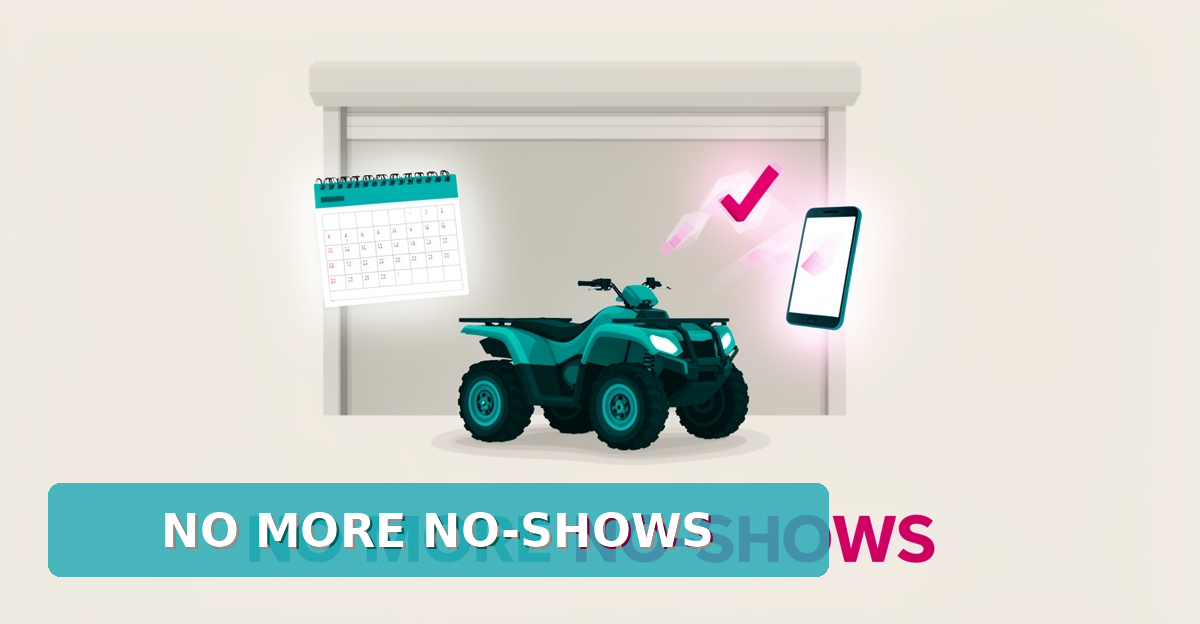
How AI Can Reduce No-Shows in ATV Service Appointments
Key Facts
- Service industries commonly report no-show rates in the 10-30% range according to SchedulingKit.Industry guides estimate the average business loses tens of thousands of dollars per year to no-shows per SchedulingKit's guide.Missed appointments are estimated to cost businesses over $100 billion annually per Schedly's analysis.Healthcare no-show rates are typically cited around 25-30% per TRTC's analysis.AI-powered reminders are reported to cut no-shows by roughly a third to a half per SchedulingKit.Voice calls are consistently reported to reach far more customers than SMS alone per industry analytics.AI waitlist management is reported to recover a majority of last-minute cancellations according to SchedulingKit.
Hire a team member that works 24/7 — for less than a part-time wage.
AI receptionists, SDRs, dispatchers and 99+ roles. Trained on your business, fully managed.
Not sure where to start? Ask our AI planner
The True Cost of No-Shows for ATV Service Shops
Every empty service bay on a sunny spring Saturday is money walking out the door of your ATV shop. Across service industries, no-show rates commonly run between 10-30% of all scheduled appointments, and industry guides estimate the average business loses tens of thousands of dollars per year to appointments that simply never happen.
For ATV and powersports service departments, those numbers sting even more. Riding season is short, demand is concentrated, and every missed slot is capacity you can never recover. When a customer books a tune-up and doesn't show, the losses compound quickly:
- Technician hours scheduled and paid for, with no billable work to show for them
- Idle service bays during your highest-demand weeks of the year
- Parts ordered and staged for a machine that never arrives
- Backlogged customers turned away who would have happily taken that slot
- Front-desk staff consumed by rescheduling calls instead of serving walk-ins
The scale of the problem is well documented beyond powersports. Healthcare typically sees no-show rates in the 25-30% range, dental practices report similar figures, and veterinary clinics — a close analogue for seasonal service scheduling — commonly report rates in the low-to-mid teens. Across the economy, missed appointments are estimated to cost businesses well over $100 billion annually.
What makes no-shows especially painful for ATV shops is the seasonal math. A no-show in July isn't just one lost appointment; it's a lost slot during a compressed window when your service department should be running at full utilization. Multiply a 20% no-show rate across a peak-season calendar, and the revenue gap becomes the difference between a strong season and a mediocre one.
The good news is that this problem is highly solvable. Industry analyses suggest businesses that combine systematic reminders, confirmations, and smart waitlist management can cut no-show rates by half or more. That's why many service businesses are turning to automated, personalized outreach: AI agents that confirm appointments, follow up proactively based on each customer's history, and backfill cancellations in real time. Companies like AIQ Labs build these systems so the follow-up happens automatically, freeing your service advisors to focus on customers standing in front of them.
Before exploring how the technology works, it's worth being clear-eyed about what no-shows actually cost your shop — because once you quantify the gap, the case for fixing it becomes impossible to ignore.
Why Reminders Alone Fail (and What AI Does Differently)
Generic reminders often fail because they lack personalization and timing intelligence—sending the same message to every customer regardless of their history or appointment type. Industry analyses suggest that AI-powered appointment reminders can reduce no-shows by roughly a third to a half when they adapt to client behavior and service specifics, moving beyond one-size-fits-all alerts. SchedulingKit's findings indicate that dynamic, data-driven reminders outperform static messages by aligning with when and how customers are most likely to engage.
What makes AI different is its ability to orchestrate multi-touch, multi-channel sequences that evolve based on real-time responses. Instead of blasting a single SMS, AI systems might send an initial email, follow up with a text if no reply is received, and trigger a voice call for high-risk appointments—each touchpoint tailored to the customer's past behavior and the service's complexity. This adaptive sequencing ensures reminders feel helpful, not intrusive, increasing the likelihood of acknowledgment and action.
Voice confirmation calls, in particular, demonstrate AI's edge: industry analytics consistently report that voice calls reach substantially more customers than SMS alone. When powered by AI, these calls don't just remind—they confirm, reschedule, or capture feedback in natural conversation, taking the entire follow-up burden off your front desk. For ATV service providers, this means fewer empty bays, better technician utilization, and a smoother customer experience—all driven by AI that learns and improves with every interaction.
AI Waitlist Management: Turning Cancellations into Booked Revenue
AI waitlist management transforms unavoidable cancellations into immediate revenue opportunities by filling vacant service bays in real time. This approach directly addresses the financial reality that an unfilled slot during peak riding season represents income that cannot be recovered later, making proactive gap-filling essential for profitability. AI-powered waitlist systems automatically notify customers on a prioritized list when a cancellation occurs, enabling rapid rebooking within minutes.
Industry reports suggest these systems can recover a majority of last-minute cancellations, significantly mitigating the impact of no-shows on overall schedule efficiency. By intelligently matching available slots with customers most likely to accept short-notice appointments—based on historical behavior and preferences—AI ensures that rebooking efforts are both timely and effective. The result is wasted capacity turned back into productive service time.
For ATV service shops, this means every bay remains utilized during high-demand periods, directly protecting revenue streams that are especially vulnerable to seasonal fluctuations. AIQ Labs integrates this capability into broader AI workflow builds, where intelligent agents manage waitlist outreach alongside reminder and confirmation systems to create a seamless, self-optimizing appointment ecosystem. This end-to-end approach minimizes administrative overhead while maximizing schedule integrity.
- Real-time notification of cancellations to waitlisted customers
- Behavior-based prioritization for higher rebooking acceptance
- Automated rebooking without staff intervention
- Dynamic adjustment of waitlist priority based on response history
- Integration with calendar systems for instant slot visibility
How to Implement AI No-Show Prevention in Your Service Department
The gap between knowing your no-show rate and fixing it comes down to implementation. With no-shows commonly running 10-30% across service industries, ATV service departments that deploy AI systematically can cut those losses substantially—but only if the rollout follows a clear sequence.
Step 1: Deploy AI-Powered Reminders
Start with automated reminders across text, email, and voice. Industry analyses suggest AI-powered reminders can reduce no-shows by roughly a third to a half, largely because they optimize timing based on each client's behavior and appointment type rather than blasting everyone at the same interval. For ATV service, that means a customer booking a seasonal tune-up gets a different cadence than one waiting on a repair part.
Step 2: Add AI Voice Confirmation Calls
Text messages alone leave gaps—voice calls consistently reach more customers than SMS. Voice agents confirm the appointment, flag cancellations early, and free your service advisor from dialing. An AI receptionist can handle confirmation calls, answer routine questions, and reschedule on the spot, all without adding headcount.
Step 3: Layer in Waitlist Automation
Cancellations become opportunities when a waitlist runs automatically. AI-powered waitlist management is reported to recover a majority of last-minute cancellations by filling gaps in real time—offering the slot to the next customer the moment it opens. Paired with confirmation workflows, this keeps bay utilization high through peak season.
Step 4: Personalize with Proactive AI Agents
The most effective systems go beyond static reminders. The winning formula is a multi-touch, multi-channel reminder sequence tailored to client behavior and appointment type. AI agents that reason, plan, and act can follow up based on a customer's history, reschedule proactively, and escalate to your team when needed.
Addressing the Real Challenges
Honest considerations matter here. Implementation requires an upfront investment in technology and training, and it works best when your booking policies and processes adapt alongside it. The upside: businesses that combine technology, communication, and smart policies routinely report cutting no-show rates by half or more, recovering revenue that was previously written off.
This is where the build partner matters. AIQ Labs handles the architecture, training on your actual booking workflow, and integrations with your scheduling and communication tools—then hands over full ownership of the code, agents, and data, so there's no vendor lock-in and no subscription treadmill. Setup effort lands on the build partner, not your service advisors.
If you want to see what this would look like for your service department, start the two-minute Fit Check at aiqlabs.ai/apply and book a free 30-minute strategy call. It's a working session with an AI engineer—not a sales pitch—and if there isn't a clear win, they'll tell you that too.
Getting Started: Prove the ROI Before You Scale
Getting started with AI-driven no-show reduction means proving value before scaling. The typical no-show rate across service industries ranges from 10-30%, costing businesses thousands in lost revenue each month. For ATV service shops, even a modest improvement in attendance can translate to meaningful gains during a short riding season. This kind of return makes a targeted AI workflow fix not just feasible, but financially compelling from day one.
A low-risk entry point begins with automating a single high-impact workflow, such as appointment reminders or confirmation calls, using an AI Employee like an AI Service Scheduler or Receptionist. These AI agents engage customers via personalized text, email, or voice follow-ups based on historical behavior, significantly improving response rates and reducing missed appointments. Unlike traditional tools, AI Employees work 24/7, integrate with existing scheduling and CRM systems, and continuously learn from interactions to optimize timing and messaging—all at a fraction of the cost of a human hire.
Start by deploying this focused solution, then measure the recovered revenue from reduced no-shows over 4-6 weeks. Use those results to validate the ROI before expanding to waitlist management, rescheduling automation, or a fuller AI operating system for your whole shop. This phased approach minimizes upfront risk while building confidence in AI's impact on your bottom line.
Ready to see where AI can make the biggest difference in your ATV service business? Start the Fit Check — a two-minute assessment — then schedule a free 30-minute strategy call with our team to map your biggest bottleneck and identify high-ROI automation opportunities. We'll give you a clear, honest assessment—if there isn't a win, we'll say so. No obligation, just clarity on your AI opportunity.
Still paying for 10+ subscriptions that don’t talk to each other?
We build custom AI systems you own outright. No vendor lock-in. Full control.
Not sure where to start? Ask our AI planner
Frequently Asked Questions
How much money do ATV service shops typically lose each year due to no-shows?
Can AI really reduce no-show rates by 50% or more in service businesses like ATV shops?
Why don't generic text reminders work well for reducing no-shows in ATV service?
How effective are AI-powered voice confirmation calls compared to SMS for reducing no-shows?
How does AI waitlist management help recover revenue from last-minute cancellations in ATV service?
What's a low-risk way to start using AI to reduce no-shows in my ATV service department?
Turn Empty Bays into Steady Revenue
No-shows don't just cost ATV service shops money—they cost opportunity, especially during the short, high-demand riding season when every service bay should be turning. We've seen how AI-powered reminders, voice confirmations, and smart waitlist management work together to cut no-show rates substantially, recovering revenue that would otherwise be written off. The best part? These aren't just efficiency gains—they're direct protections of your seasonal income stream, giving technicians consistent work and customers reliable service. If you're ready to see what that looks like in your shop, start with a quick, no-pressure Fit Check to uncover your biggest scheduling bottleneck and map out a clear, ROI-focused path forward—because the best time to fix a leak is before the season's in full swing.
Make AI your competitive advantage — not just another tool.
Strategy, implementation and ongoing optimization. One partner, end to end.
Not sure where to start? Ask our AI planner