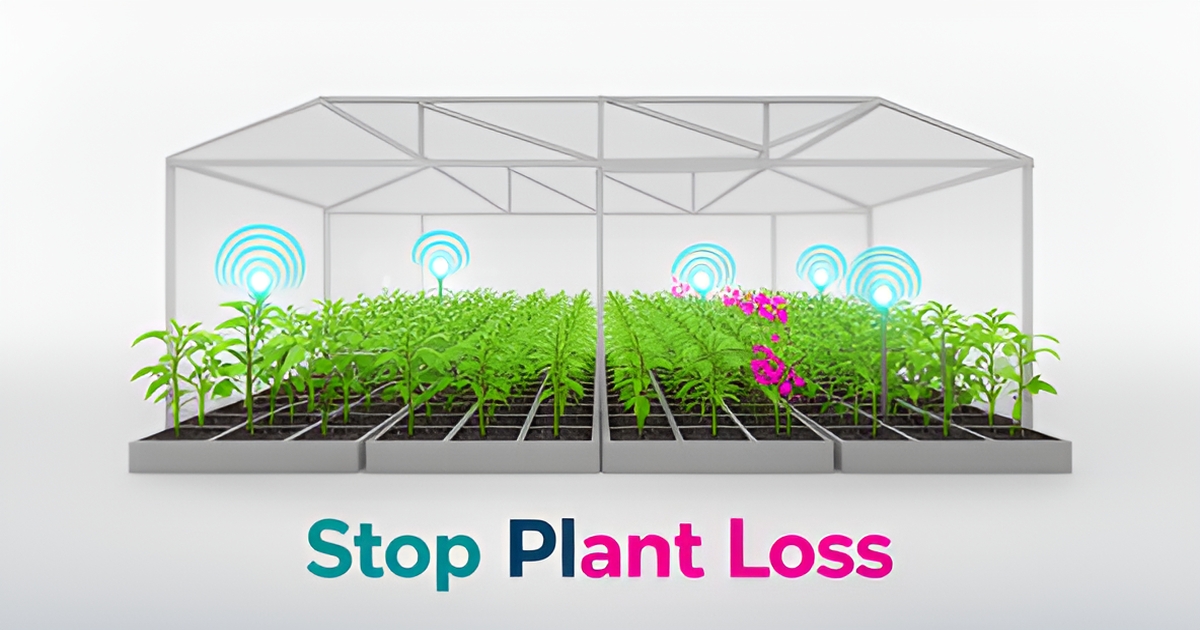
How AI Can Reduce Plant Loss in High-Risk Tree Nurseries
Key Facts
- AI-powered monitoring identifies crop stress before visual symptoms appear, giving growers days or weeks to respond.
- Nursery industry analyses report that AI-powered computer vision can reduce crop losses by roughly 15–25%.
- Predictive irrigation systems can reduce water usage by 20–30% while improving plant health, according to nursery benchmarks.
- AI analyzes subtle leaf pixel changes, spotting disease long before yellowing appears, as noted in plant health research.
- Field case studies of comparable crops report loss reductions in the 28–41% range from AI-driven irrigation and aerial scouting.
Hire a team member that works 24/7 — for less than a part-time wage.
AI receptionists, SDRs, dispatchers and 99+ roles. Trained on your business, fully managed.
Not sure where to start? Ask our AI planner
The Hidden Cost of Plant Loss in Tree Nurseries
The true cost of plant loss in tree nurseries extends far beyond the price of a single seedling. When pests, disease, or environmental stressors strike, they trigger a cascade of financial and operational setbacks that can undermine an entire season's productivity. Preventable crop losses cost global agriculture enormous sums each year, with a significant portion stemming from failures in early-stage plant care where seedlings are most vulnerable. This vulnerability is amplified in nurseries, where young propagation plugs face heightened risks from nutrient deficiencies, aggressive pathogens, and fluctuating conditions that can go unnoticed until visible damage appears.
Seedlings and young propagation plugs are incredibly fragile, making them highly susceptible to stressors that can escalate rapidly without intervention. Unlike mature plants, they lack the resilience to withstand even minor disruptions in moisture, temperature, or pest exposure. A single overlooked infestation or irrigation gap can wipe out entire trays of stock, leading to replanting delays, labor inefficiencies, and disrupted supply chains. These losses aren't just absorbed as operational noise—they directly erode profit margins and strain resources that could otherwise support growth or innovation.
- AI-powered monitoring systems can detect crop stress at the individual plant level before visual symptoms appear, providing critical lead time for intervention.
- Early detection of fungal infections, bacterial blight, and pest infestations through AI diagnostics directly correlates with reduced plant mortality rates.
- Predictive irrigation and greenhouse optimization driven by AI can improve plant health while reducing water and energy usage by up to 30%.
By shifting from reactive responses to proactive prevention, nurseries gain the ability to protect their most vulnerable stock before losses become inevitable. AIQ Labs supports this shift through AI Workflow Builds that integrate field sensor data, trigger real-time alerts, and guide corrective actions—transforming passive monitoring into active plant health management. This approach doesn't just reduce waste; it strengthens operational resilience in an industry where every seedling represents both cost and potential.
How AI Enables Early Detection and Precision Intervention
By the time a nursery worker spots yellowing leaves or wilting stems, the underlying problem has often been spreading for days. AI flips this equation by detecting stress, disease, and pest threats at the individual plant level—long before symptoms become visible to the human eye.
The technology stack combines three layers. Computer vision analyzes subtle changes in leaf pixels, spotting fungal, bacterial, and pest patterns that precede visible damage. Environmental sensors track soil moisture, temperature, and humidity in real time. Predictive analytics then correlate these data streams to flag risk before an outbreak takes hold. A systematic review in Discover Plants describes how this integration of machine learning, IoT sensors, and real-time monitoring is transforming pest and disease management across horticultural production.
The lead time this creates matters enormously. AI-powered monitoring identifies crop stress before visual symptoms appear, giving growers days or even weeks to respond. In one reported case, a wheat operation caught wheat streak mosaic virus three weeks early using satellite-based AI scouting—enough time for targeted intervention instead of widespread loss.
Reported results in comparable high-risk crops include:
- A California almond operation reportedly reduced hull rot losses by 41% through AI-powered irrigation management
- An Iowa corn operation reportedly cut northern corn leaf blight losses by 28% using AI aerial scouting
- A Bordeaux wine estate reportedly reduced fungicide applications by 47% through AI disease modeling
For tree nurseries specifically, the stakes are higher because seedlings and young propagation stock are exceptionally fragile. Early detection directly translates to lower mortality rates—keeping propagation tables full and healthy rather than writing off entire batches.
This is where precision intervention replaces blanket treatment. Instead of spraying an entire greenhouse when disease appears, AI pinpoints affected zones for localized treatment. Instead of calendar-based irrigation, systems deliver water based on actual plant needs. Industry analyses of nursery AI report 15–25% reductions in crop losses alongside 20–30% water savings through predictive irrigation.
At AIQ Labs, we build automated workflows that connect field sensors and monitoring data directly to alert systems—so the right person gets notified at the right moment to act. The goal is not replacing grower expertise but extending it, turning reactive crisis management into proactive plant health optimization.
AI-Driven Workflows for Automated Monitoring and Response
The shift from reactive scouting to continuous, data-driven oversight is where AI delivers its most immediate value in high-risk nurseries. Instead of relying on periodic walk-throughs that catch problems after damage is done, custom AI workflows ingest real-time feeds from soil moisture probes, microclimate sensors, and high-resolution cameras to build a living picture of every block. A systematic review of AI in horticulture confirms that sensors, drones, and robots now enable real-time crop monitoring and automated decision-making across pest management, yield prediction, and loss prevention.
- IoT sensor arrays feed temperature, humidity, and substrate data into predictive models that flag stress before visual symptoms appear
- Computer vision cameras scan canopy color and texture at the individual plant level, detecting fungal spores or pest eggs days earlier than the human eye
- Multi-agent orchestration correlates weather forecasts, irrigation logs, and scouting history to recommend precise interventions
When a threshold is breached—say, leaf wetness duration combined with temperature spikes that favor Phytophthora—the workflow doesn't just send an alert. It can trigger a zone-specific irrigation pause, dispatch a targeted biological spray via automated boom, or adjust shade cloth deployment, all without waiting for a manager to approve each step. Nursery AI benchmarks suggest this early detection and automated response typically cuts crop losses by 15–25% while reducing pesticide applications.
AIQ Labs designs these workflows through our AI Workflow Builds service—rebuilt in phases at a fixed price, and owned outright by your nursery rather than rented as a black-box SaaS. That means you retain full control over your data and logic. The same architecture connects sensor networks, ERP platforms, and field crews into a single decision layer that runs 24/7. Growers gain continuous protection without adding headcount, and every automated action leaves an audit trail for compliance and continuous improvement. For operations that want to go further, an AI Operating System can connect monitoring, inventory, and production planning into one layer.
Measurable Outcomes: Healthier Stock, Higher Yields, Lower Costs
High-risk tree nurseries lose margin every day to invisible stress. AI shifts the game from reactive scouting to continuous, plant-level prevention.
AI-powered computer vision systems detect early signs of disease, pest infestations, or nutrient deficiencies. Industry analyses report crop loss reductions of 15–25% along with minimized pesticide usage. This early detection window is critical because seedlings and young propagation plugs are incredibly fragile and highly susceptible to environmental stress and aggressive pathogens. AI analyzes subtle leaf pixel changes, spotting fungal, bacterial, and pest patterns long before visual symptoms like yellowing show up to the human eye.
Water is another major cost lever. Predictive irrigation systems can reduce water usage by 20–30% while improving overall plant health and eliminating labor-intensive manual irrigation monitoring. Those savings come from precision control that responds to real-time crop stress rather than fixed schedules. The integration of artificial intelligence in horticulture is increasingly important for enhancing sustainability and efficiency, particularly in the face of climate change and resource scarcity. A systematic review confirms AI tools like sensors, drones, and robots help monitor crops in real time, automate tasks, and support better decision-making.
Overproduction and misgrading erode cash flow in nurseries. Automated inventory tracking and demand forecasting can reduce overproduction waste by 10–20% and improve cash flow through better production planning. Production analyses also suggest optimized greenhouse conditions can increase growth rates by 15–20% and reduce energy costs. Field case studies of comparable crops report loss reductions ranging from 28% to 41%—for example, a large corn operation reducing northern corn leaf blight losses by 28% with AI-powered aerial scouting, and an almond operation reducing hull rot losses by 41% with AI-powered irrigation management.
These gains come from workflows that monitor, alert, and correct continuously. AIQ Labs builds owned systems and managed AI employees that automate monitoring, alerts, and corrective actions to minimize losses and maintain healthier stock.
Measurable outcomes nurseries typically track after deployment include:
- 15–25% reduction in crop loss from early disease and pest detection
- 20–30% water savings through predictive irrigation and stress-based triggers
- 10–20% less overproduction waste via automated inventory and demand forecasting
- 15–20% faster growth rates from optimized greenhouse conditions
By shifting from reactive treatment to proactive prevention, smart nursery management systems allow growers to maximize crop yields, protect vulnerable seedlings, and drastically reduce plant mortality. This approach keeps propagation tables full and healthy while protecting crop investments.
Continuous optimization is what turns initial gains into sustained advantage. AIQ Labs builds automated workflows that integrate with field data and trigger alerts for early intervention, helping nurseries maintain healthier stock and higher yields with lower operational costs.
Still paying for 10+ subscriptions that don’t talk to each other?
We build custom AI systems you own outright. No vendor lock-in. Full control.
Not sure where to start? Ask our AI planner
Frequently Asked Questions
How does AI actually detect plant diseases before I can see them?
What's the real ROI for a tree nursery implementing AI monitoring?
Can AI really reduce water usage without stressing my plants?
What happens when the AI detects a problem—does it just send an alert?
How much lead time does AI actually give me compared to visual scouting?
Do I need to replace my entire irrigation system to use AI monitoring?
From Reactive Loss to Proactive Growth
The shift from reactive scouting to AI-driven prevention isn't just about saving plants—it's about protecting the significant investment each seedling represents. By detecting stress at the individual plant level before visual symptoms appear, automating precision interventions, and optimizing resource use, nurseries can transform their most vulnerable stage into a competitive advantage. Industry analyses report 15–25% reductions in crop losses alongside water savings of up to 30%. AIQ Labs builds the workflows that make this possible—integrating sensor data, automating alerts, and triggering corrective actions so your team can focus on growing healthy stock rather than managing crises. If plant loss is eating into your margins, the first step is understanding where automation can deliver the highest return. Take the 2-minute Fit Check, then book a free 30-minute strategy call to map your biggest vulnerabilities and identify practical, owned solutions that fit your operation.
Make AI your competitive advantage — not just another tool.
Strategy, implementation and ongoing optimization. One partner, end to end.
Not sure where to start? Ask our AI planner