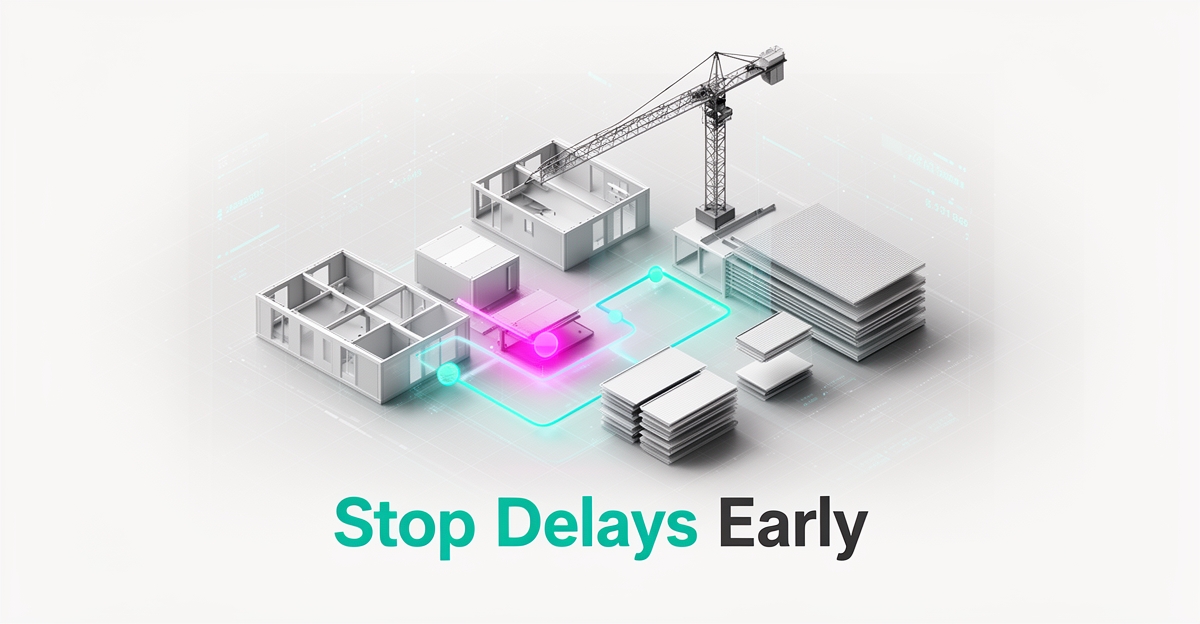
How AI Can Reduce Project Delays in Pre-Fab Construction Through Real-Time Progress Tracking
Key Facts
- AI-driven planning has been reported to reduce project duration by double digits in construction according to ALICE Technologies
- AI-powered preconstruction software is reported to deliver meaningful labor and equipment cost savings per ALICE Technologies findings
- AI project management tools can reduce planning time and improve scheduling accuracy per Atlassian guidance
- Real-time tracking enables proactive prevention of delays by surfacing bottlenecks early
- AI systems analyze performance data continuously to predict risk and trigger alerts
- Continuous monitoring covers timelines, material arrivals, and workforce activity to prevent idle time
Hire a team member that works 24/7 — for less than a part-time wage.
AI receptionists, SDRs, dispatchers and 99+ roles. Trained on your business, fully managed.
Not sure where to start? Ask our AI planner
The Hidden Cost of Delays in Prefab Construction
Prefab timelines look tight on paper until reality hits the factory floor and the site. Delays cascade fast when schedules, deliveries, and crews fall out of sync, turning small slips into costly overruns.
Fragmented scheduling is a primary driver. Design changes, permitting shifts, and manual updates stall planning cycles and create conflicting instructions across teams. AI project management guidance notes that AI-powered preconstruction software can reduce planning time and improve scheduling accuracy before work begins.
Late material deliveries compound the problem in just-in-time models. Prefab relies on precise sequencing; a missing panel or component idles crews and forces expensive re-mobilization. Real-time visibility is limited when procurement, logistics, and site teams use disconnected systems.
Labor misalignment adds another layer of risk. Crews arrive for work that isn’t ready, or skilled trades sit idle while waiting for materials. Without live coordination, managers react after delays occur instead of preventing them.
The financial impact is measurable. ALICE Technologies research reports that AI-driven planning can deliver double-digit reductions in project duration alongside meaningful labor cost savings, with additional equipment savings when scenarios are explored and resourced more intelligently. Exact figures vary by project type and baseline maturity.
Delays in prefab typically stem from:
- Fragmented scheduling across design, fabrication, and site teams
- Late material deliveries driven by poor demand visibility
- Labor misalignment where crews and tasks are not synchronized
- Last-minute surprises from miscommunication between subcontractors and stakeholders
These issues intensify because prefab rewards speed and penalizes idle time. A single bottleneck can ripple through fabrication, transport, and installation, eroding margin and client trust.
Real-time tracking changes the dynamic. AI systems can monitor timelines, material delivery, and labor schedules continuously, surfacing bottlenecks before they impact delivery dates. Performance data is analyzed live to predict risk and trigger alerts.
AIQ Labs deploys AI systems that continuously analyze performance data and alert managers to potential bottlenecks before they impact delivery dates. The approach shifts management from reactive firefighting to proactive prevention by making misalignments visible early. For teams that want to start with the single workflow that costs the most, an [AI Workflow Build](/workflow-builds) targets exactly that.
When visibility improves, teams stay aligned from the start. Decisions improve, rework falls, and projects finish closer to plan without sacrificing quality.
How AI Enables Real-Time Progress Tracking and Prediction
Pre-fab construction moves fast until a missing panel or crew bottleneck stops everything. AI changes that by turning scattered sensor feeds, project management updates, and supply chain signals into a live picture of progress.
AI-powered systems continuously monitor timelines, material arrivals, and workforce activity by integrating data from sensors, project management tools, and supply chain platforms. This integration creates a single operational view where AI-driven preconstruction software can explore scenarios before work starts and then track execution in real time.
Predictive analytics sit on top of that live data stream. The models learn normal flow patterns for each trade and flag deviations as they emerge, not after the delay is baked in. Real-time tracking and collaboration keeps teams, subcontractors, and stakeholders aligned, reducing miscommunication and eliminating last-minute surprises.
The impact is measurable. ALICE Technologies findings report double-digit reductions in project duration alongside labor and equipment cost savings on projects using AI-enabled planning and monitoring. Those gains come from spotting constraints early and reallocating resources before idle time accumulates.
AI also compresses planning itself. AI project management guidance notes that AI-powered preconstruction software can reduce planning time and improve scheduling accuracy, while generative AI leverages technology and historical data to push out responses faster. That speed matters in pre-fab where design changes ripple through fabrication and delivery.
In practice, continuous monitoring covers three critical inputs:
- Timelines: sensor and site data feed progress against the critical path with automated variance alerts
- Material arrivals: supply chain platforms sync delivery confirmations to fabrication and install schedules
- Workforce activity: labor schedules and crew check-ins are compared to planned tasks to predict bottlenecks
When a risk is detected, the system surfaces options immediately. Teams can test resequencing, shift crews, or expedite a shipment and see the downstream effect before committing. This is the core of AI performance monitoring: continuously analyzing performance data and alerting managers to potential bottlenecks before they impact delivery dates.
AIQ Labs deploys AI systems that continuously analyze performance data across these domains, connecting project management, IoT sensors, and supplier feeds into owned, production-ready monitoring layers. Managed [AI Employees](/ai-employees) can handle the routine monitoring and stakeholder notifications, while larger operations can consolidate tracking into a connected [AI Operating System](/ai-operating-systems) built in phases and owned outright. The result is fewer surprises, tighter handoffs between factory and site, and projects that finish closer to plan.
Implementing AI-Driven Tracking: From Data to Action
Implementing AI-driven tracking in pre-fab construction begins with identifying high-impact workflows where real-time data can prevent delays before they escalate. Material logistics and crew scheduling are ideal starting points, as delays in these areas frequently cascade into broader project setbacks. By focusing AI monitoring on these critical paths, teams can gain immediate visibility into bottlenecks and take corrective action swiftly.
Successful implementation requires seamless data integration across existing systems such as project management software, supply chain platforms, and time-tracking tools. AIQ Labs’ implementation methodology emphasizes assessing current data infrastructure during discovery to design connectors that feed real-time inputs into AI models without disrupting ongoing operations. This foundation enables continuous analysis of progress metrics against planned schedules.
Team training and change management are essential for adoption. Workers and supervisors must understand how AI-generated alerts translate into actionable insights—such as rerouting material deliveries when a supplier delay is detected or adjusting crew shifts based on real-time progress updates. AIQ Labs’ AI Employee model supports this transition by providing managed AI agents that monitor data streams, flag deviations, and notify stakeholders through familiar communication channels, reducing the burden on human teams to constantly interpret dashboards.
Starting small with a targeted workflow fix allows organizations to validate the system’s value quickly. For example, deploying AI to track just-in-time material arrivals can reduce idle time and storage costs, addressing the labor and schedule savings documented in industry research. As confidence grows, the system can expand to include equipment utilization and subcontractor coordination.
Ongoing optimization ensures the AI tracking system evolves with the project. Regular performance reviews help refine alert thresholds, improve prediction accuracy, and identify new opportunities for automation. AIQ Labs offers flexible engagement models—Start Monthly, Build in Milestones, or Own It Outright—so clients can scale AI capabilities across workflows while maintaining alignment with business goals. This iterative approach transforms real-time tracking from a one-time deployment into a sustained advantage in pre-fab construction delivery.
Still paying for 10+ subscriptions that don’t talk to each other?
We build custom AI systems you own outright. No vendor lock-in. Full control.
Not sure where to start? Ask our AI planner
Frequently Asked Questions
How much can AI reduce project duration in prefab construction according to research?
What specific cost savings can AI bring to prefab construction projects?
How does AI improve scheduling accuracy in prefab construction before work begins?
What are the main causes of delays in prefab construction that AI can help prevent?
How does real-time AI tracking help teams avoid bottlenecks in prefab construction?
Can AI help with just-in-time material delivery challenges in prefab construction?
Turning Visibility into Velocity: Your Next Step Toward On-Time Delivery
AI-driven real-time tracking transforms how prefab construction teams manage the relentless pressure of just-in-time delivery. By continuously monitoring timelines, material flows, and workforce activity, AI surfaces bottlenecks before they cascade into delays—enabling proactive adjustments that keep projects on schedule and margins intact. Industry research points to measurable gains in project duration and labor costs for teams using AI-powered planning and monitoring. For prefab builders ready to shift from reactive firefighting to predictable execution, the path forward starts with a focused assessment. AIQ Labs helps SMBs in construction and beyond identify high-impact workflows where AI tracking delivers immediate value, then builds and manages the systems that turn insight into action—without the complexity of point solutions or the risk of vendor lock-in. To explore where AI can eliminate your biggest delays, start with a free, no-obligation strategy call to map your opportunities and see if there’s a clear win.
Make AI your competitive advantage — not just another tool.
Strategy, implementation and ongoing optimization. One partner, end to end.
Not sure where to start? Ask our AI planner